Reviewed · BUCHAREST TOURS
Best of Romania in 10 Days
This is an appealing way to see Romania fast, without sprinting solo between cities. You get small-group travel (max eight people), a packed-but-logical route, and a guide who keeps the story straight as the scenery changes from Wallachia to Transylvania and back to Bucharest.
I especially like two things: the nine nights of included, centrally located hotel stays (so you’re not sleeping in the middle of nowhere), and the hands-on guidance from a top-notch leader like Emil, who brought Romanian history, local traditions, and even local jokes into the mix. One fair consideration, though, is the schedule: this is a road-trip style tour with long driving days and limited free time in each stop.
If you’re the type who wants the big highlights plus the cultural context, this is a strong fit. Just make peace with the idea that your “down time” is mostly evenings, and mornings are when the best sights hit.
Key things that make this tour work
- Max 8 travelers, which means questions get answered and the day stays organized
- 9 nights in centrally located hotels, so you can actually walk around after sightseeing
- Entrance fees, breakfast, and most guided time included, so you spend less time managing tickets
- Transfagarasan Highway and the Carpathians, with standout photo stops along the way
- UNESCO Painted Monasteries in Bucovina, including Voronet with its famous blue
- Castles and fortified churches, from Bran and Peles to Saxon churches and Sighisoara
Why the Best of Romania route makes sense in 10 days
Romania is big, and most highlights are spread out. The value here is that you’re not just collecting famous names, you’re moving through regions in a sensible order. That matters on a short trip. By the time you reach Transylvania, you already understand the Wallachian and Transylvanian context, and by the time you’re back in Bucharest, the history stops feeling random.
The small group also changes the feel. With up to eight people, the guide can pace the walking tours, keep transport efficient, and cover details without turning everything into a race. Emil, for example, was noted for history, traditions, and humor, and that combination keeps long driving days from feeling dead.
One more practical benefit: the tour includes all-inclusive transportation in a modern vehicle, plus entrance fees for the listed stops. That reduces decision fatigue. You still decide how much you eat, where you linger, and how much you photograph, but you’re not constantly checking ticket prices or figuring out logistics.
More Bucharest options to weigh up
- Bucharest: Dracula’s Castle, Peles Castle, & Brasov Old Town
★ 4.5 · 17,858 reviews - Bucharest: Dracula Castle, Peles Castle & Brasov Old Town
★ 4.6 · 10,891 reviews - Bucharest: Dracula’s Castle, Peleș Castle & Brașov Day Trip
★ 4.4 · 6,100 reviews
Price and what you actually get for your money
At $2,907.69 per person, you’re paying for a guided, door-to-door style route that strings together major sites across the country. In plain terms, you get:
- Professional English-speaking guide
- 9 nights in centrally located hotels
- Breakfast included (9) and at least one traditional dinner
- Entrance fees for the scheduled attractions
- Airport pickup and drop-off
- Hotel pickup and departure within Bucharest
If you’re used to cobbling together your own transport and buying tickets one by one, this price starts to look less “tour markup” and more like buying time and structure. Yes, you could DIY some of these stops. But for a 10-day itinerary that hits Bucovina monasteries, Transfagarasan, fortified villages, and two of Romania’s best-known castles, doing it alone usually costs you energy and extra planning.
Also note the pricing condition: it’s per person based on two people sharing a double room. If you want a single room, you’ll pay the single supplement.
Day 1: Curtea de Arges Monastery, Transfagarasan Highway, and Sibiu
Your day starts with a pickup in Bucharest and a road trip west toward Curtea de Arges Monastery, built between 1512 and 1517. This place is famous not only for the architecture, but for the Romanian legend of Manole, the idea that creating something lasting takes sacrifice. It also serves as a royal resting place for members of Romania’s royal house. Even if you only catch the main carvings and layout, the monastery gives you an immediate sense of how storytelling and stonework intertwine here.
Then comes the big scenic payoff: Transfagarasan Highway. The road threads through the Southern Carpathians, reaching about 2,042 meters, and it’s timed perfectly for photos. You’re not stuck in a museum. You’re seeing mountains the way locals and road-trip travelers do, with quick stops that let you look, breathe, and take in the scale.
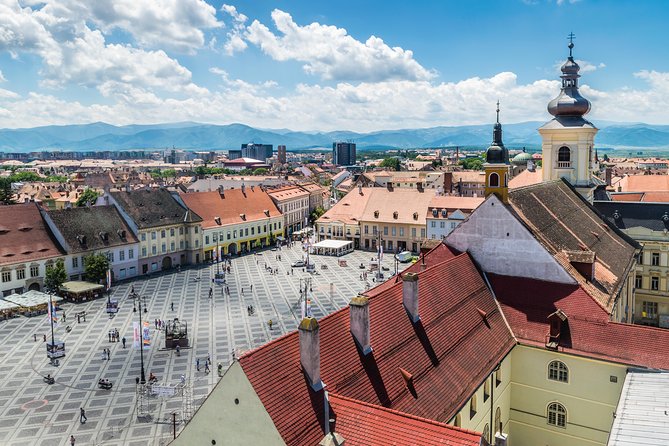
Finally, you end in Sibiu and walk through Piata Mare (Big Square) in the medieval city center. It’s a good first “arrival city” because it’s walkable. You get that feeling of settling in, then you check into your hotel for the night.
How to get the most out of Day 1: keep your phone charged and your shoes comfortable. This day is about moving plus a few focused stops, not long lounging.
Day 2: Corvin Castle, Alba Iulia fortress, and Turda Salt Mine
Day 2 opens in Hunedoara at Castelul Corvinilor (Corvin Castle). This is one of those castles with a lot of character, tied to the history of John Hunyadi, also known as Hunyad Castle. It has a distinct look compared to more “storybook” castles. You’re likely to spend your time looking at towers, stone details, and defensive features.
Next you head to Alba Iulia, the town linked to the major moment of the Union of Transylvania with Romania. The key visit is Alba Carolina Fortress, built between 1715 and 1738 in the Vauban style by more than 20,000 Romanian peasants. That scale detail matters. You’re not just viewing a wall, you’re seeing the result of a massive labor push.
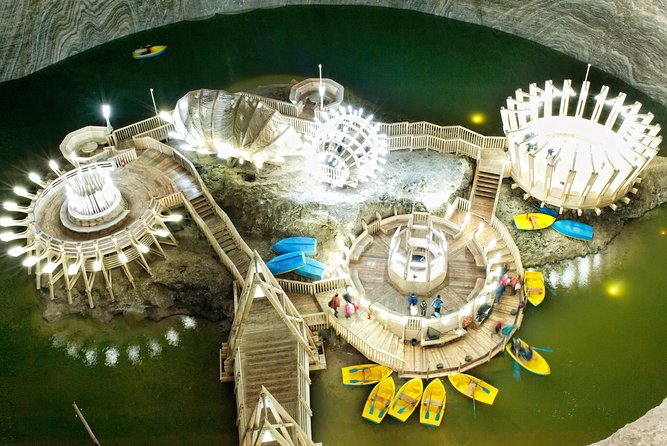
Then comes Turda Salt Mine, often a surprise hit. It has 13 underground floors and a theme park setup underground, with a Ferris wheel, mini-golf, tennis, and even a lake. If you want a contrast after castles and fortresses, this delivers. You trade steep staircases and historic stone for an underground world that feels different and fun.
You wrap the day in Cluj-Napoca, the largest city in Transylvania and known as a student center. After a walking tour in the Old City Center, you get free time to explore nearby cafes and restaurants.
The main consideration for Day 2: it’s a lot of “big stops” in a row. Pace yourself with snacks and water, so your energy doesn’t dip halfway through the salt mine.
Same base, a completely different day:
- Bucharest: Palace of Parliament Tickets and Guide
★ 4.3 · 3,182 reviews - Bucharest: Day Trip to Dracula Castle, Peles Castle & Brașov
★ 4.4 · 3,049 reviews - Bucharest to Dracula Castle, Peles Castle and Brasov Guided Tour
★ 4.5 · 2,933 reviews - Bucharest: Palace of Parliament Tickets and Guided Tour
★ 4.4 · 1,877 reviews
Day 3: Bistrita to Voronet Monastery in Bucovina
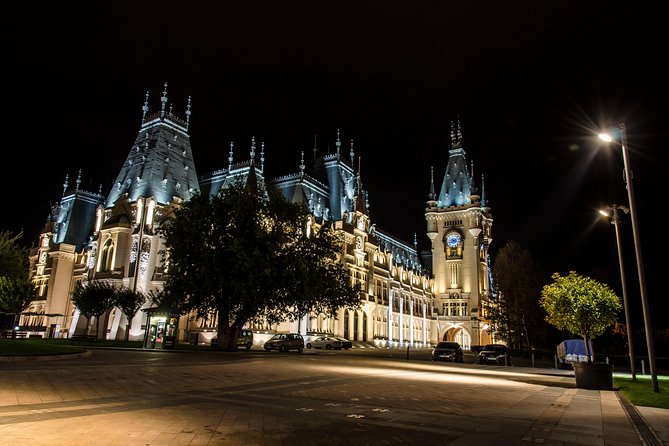
This is the day that shifts your trip into UNESCO territory in a very visual way. You stop in Bistrita, located near the foothills of the Bargau Mountains. Here, the tour connects local settings to the Dracula story. Bram Stoker’s character, Jonathan Haker, is linked to this area before meeting Count Dracula. Even if you’re not a horror purist, it’s a neat way to watch fiction latch onto real places.
Then you reach Voronet Monastery, one of the eight UNESCO Painted Monasteries of Bucovina. Built in 1488, it’s famous for its shade of blue, called the Blue of Voronet. This is the kind of sight where you’ll want to slow down and look at how the colors sit against stone. The guide’s storytelling helps too, because the paintings often connect to faith and community life, not just decoration.
The day ends with an included evening traditional Romanian dinner and hotel check-in.
My practical advice: if you care about photos, this is one of your best days to do more than quick snapshots. The blue tones are the whole point, and they reward a slightly patient look.
Day 4: Moldovita and Sucevita monasteries, then Iasi’s Old City
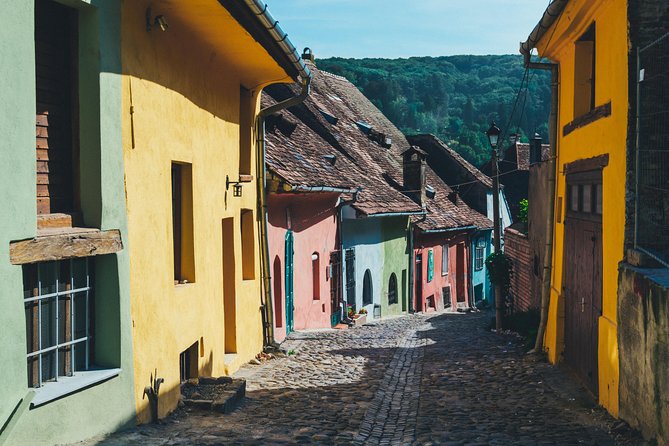
Day 4 continues the Bucovina theme with two major stops.
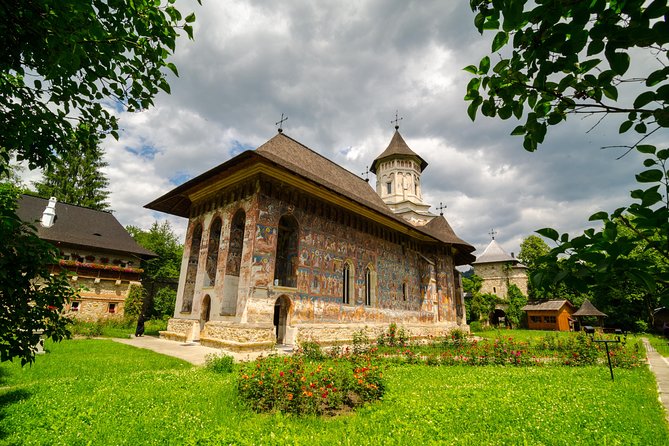
First is Moldovita Monastery, built between 1532 and 1537, and included in the UNESCO World Heritage Centre in 1993. It’s one of those monasteries where the age shows in the texture, and where carvings and painted details feel tied to specific periods, not generic “old church” vibes.
Then you visit Sucevita Monastery. Built in 1585, it carries a legend about materials brought by a woman using a cart pulled by oxen to redeem sins. Legends like this matter on tours like this, because they give you a reason to pay attention to what you’re seeing beyond “this is old.”
In the evening you arrive in Iasi, described as Romania’s second-largest city. You get a short tour of its historic and romantic character, then check in.
This day is more about focused viewing and less about the “theme park” energy of Turda. If you’re traveling with people who prefer quieter sightseeing, this is usually a good match.
Day 5: Neamt Citadel and Piatra Neamt’s cable car ride
From Iasi you head to Targu Neamt for Neamt Fortress, also called Neamt Citadel, connected with the reign of Peter I (1375 to 1391). Fortresses tell their story in layers. You’re often seeing not just a building but a strategic idea, and the guide can help you connect the terrain to why a place would be fortified.
Next you reach Piatra Neamt, and in the evening you’ll take a cable car ride before checking in. Even when a cable car isn’t the highlight for everyone, it usually improves your day because it changes perspective fast.
This day’s good for travelers who like a mix: a historical site plus a practical transport-based viewpoint.
Day 6: Bicaz Gorges, Red Lake, and Saxon church stops in Transylvania
Day 6 is where the scenery and the culture blend in a strong way.
You go through the Bicaz Gorges on your way to Red Lake, a body of water known for its unusual color. The tour explains the origin: in 1837, storms caused part of Mt. Ucigasu to fracture and block streams, and the reddish deposits shaped the lake. That is the kind of detail that makes a view more interesting. It’s not just pretty. It’s a story tied to geology.
After the lake, you stop at Corund, a major pottery center in Transylvania. The tour mentions that locals also work with woodworking and trade, and that clay for pottery is extracted from a nearby stream. If you like craft traditions, Corund makes the region feel lived-in.
Then you visit Biertan Fortified Church, a UNESCO village with fortified churches in Transylvania. Saxon colonists settled here beginning in the 13th century, partly because rich soil supported winemaking. That link between economy and settlement is the kind of context that keeps religious buildings from feeling isolated.
The day ends in Sighisoara, with Centrul Istoric Sighisoara as your stop. It’s known as the last inhabited citadel in Europe and was built by Saxon colonists in the 12th century. It’s a UNESCO site too, and walking there tends to feel like stepping into a city designed for defense.
If you want one tip for Day 6: wear layers. Gorge weather can shift, and you may be in and out of vehicles more than you expect.
Day 7: Viscri fortified church, Brasov walking tour, and Transylvania’s calmer side
On Day 7 you head to Viscri, a village that’s tied to Prince Charles, with an emphasis on the simplicity of the place and how traditions are preserved. You also meet women known for culinary skills, and you visit the Viscri Church.
This day works as a breather between “big castle energy” and the final cluster of famous names. Fortified churches and village life are slower, more human-paced, and that helps your brain reset after driving days.
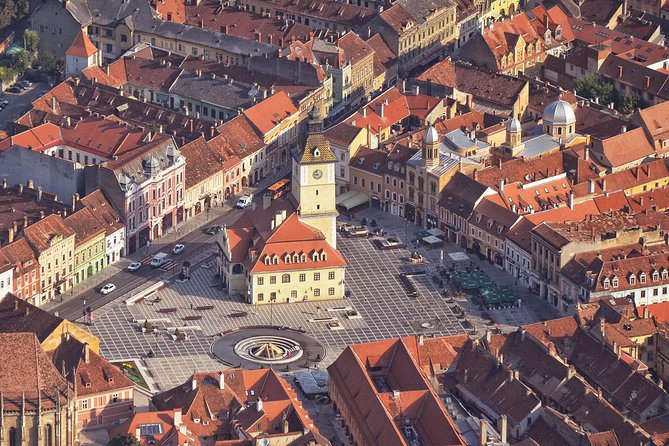
Then you reach Brasov for a short walking tour in the historic center. Brasov is a classic anchor city in Transylvania. It gives you a sense of modern life alongside the older sites.
Practical note: keep your walking pace steady. Even short tours in older centers can add up.
Day 8: Bran Castle, Peles Castle, and a Bucharest night return
Day 8 is a two-castle day, and it’s one of the most “famous list” days of the tour.
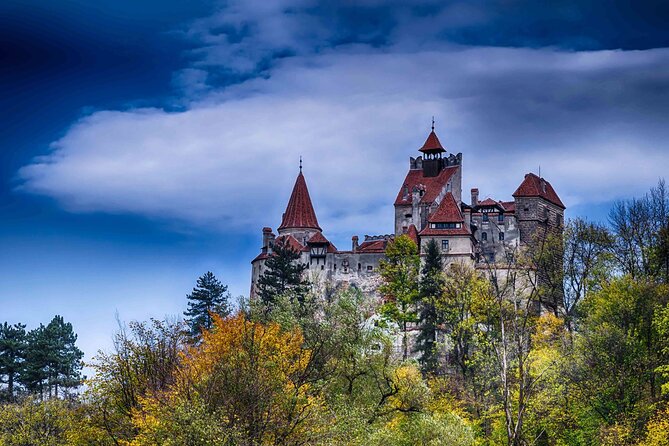
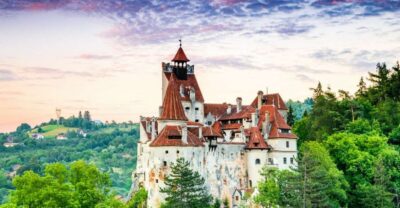
First is Bran Castle, about 30 minutes away from Brasov. It’s known worldwide as Dracula’s Castle through Bram Stoker’s Dracula. But what the tour really emphasizes is the connection to Vlad the Impaler (Vlad Tepes) and the history behind how the story stuck to the location.
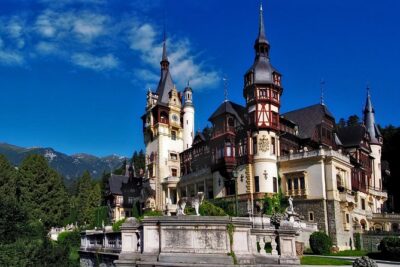
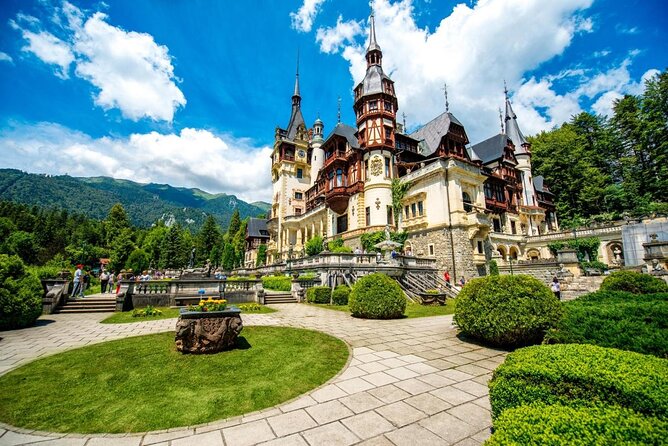
Then you move to Sinaia for Peles Castle. The tour highlights it as the first fully electrified castle in Europe and notes its scale: 3200 square meters, 160 rooms, and over 30 bathrooms. You’ll also hear about a major collection of paintings and over 4,000 European and Oriental weapons. That mix is why Peles can feel surprising. It’s not just a fortress look. It’s art, design, and collecting culture in one package.
At night, you return to Bucharest. You’ll have an Old Town stop, which is a good way to land after a full day.
If you’re a photo-first person: Day 8 is time-sensitive. You’ll see iconic buildings, but you also need to move through them efficiently so you don’t feel rushed later.
Day 9: Palace of the Parliament, Old Town free time, and Bucharest Village Museum
Your penultimate full day brings you into Bucharest at its most intense.
The tour includes a visit to the Palace of the Parliament, described as the second-largest building in the world. It’s also known as the People’s House, tied to Nicolae Ceausescu’s communist-era project. The tour points out a few design ideas: it was planned to house state organs and built with resilience in mind, including safety features against earthquakes and nuclear attacks.
After that, you go to Bucharest’s Old Town for free time for lunch. This is your chance to eat without the timeline pressure of guided stops.
Finally, you end with the Bucharest Village Museum, opened in 1936. It covers 14 hectares, with 380 monuments, 60,000 traditional objects, and over 250,000 archived documents tied to traditional Romanian life. If you want to understand how people actually lived, not just what rulers built, this museum is a strong closing note.
Day 10: Airport transfer when your flight schedule matters
Day 10 is simple and functional: transfer to Otopeni Airport (OTP Parking Parcare Aeroport Otopeni) according to your flight schedule. There’s no sightseeing to squeeze in, which is a relief on a trip that has been busy all week.
If you like a clean end to your travel days, this structure helps. You won’t be hunting for one last thing to see.
Who this tour suits best, and who should think twice
This tour suits you if you want:
- A country-crossing route in 10 days without the hassle of arranging everything yourself
- History with context, not just stop-and-go photos
- A smaller group experience with a guide like Emil who brings stories, traditions, and humor to the day
- A mix of monasteries, castles, fortified churches, and major city sights
You might think twice if you:
- Need lots of free time each day. This trip is scheduled, and mornings are active.
- Get stressed by long drives. The itinerary is built for efficient movement across regions.
- Prefer very slow travel. This is more “see a lot with guidance” than “linger and wander.”
Should you book this Best of Romania tour?
I think you should book it if your goal is to feel like you covered Romania in a smart arc, from monasteries in Bucovina to Transylvania’s fortified sites and castles, then back to Bucharest’s biggest landmarks. The included structure is real value: hotels for nine nights, breakfast, entrance fees, and guided transport mean you spend your energy enjoying the sights instead of managing details.
And if you care about story, the guide factor matters. Emil is a standout example of how history can be lively, practical, and even funny, without turning into a lecture. That’s the kind of guiding that makes a road-trip itinerary actually work.
If you want quiet, independent time, or you dislike packed days, you’ll likely prefer a slower regional tour. But for a short trip where you want the best hits plus cultural context, this one is hard to beat.
FAQ
How big is the group?
This tour has a maximum of 8 travelers.
What’s included in the tour price?
It includes dinner, a professional English-speaking guide, accommodation for 9 nights in centrally located hotels, transportation by modern vehicle, airport pickup and drop-off, entrance fees, and breakfast for 9 days.
Are breakfasts included?
Yes. Breakfast is included for 9 days.
Where do you pick up in Bucharest, and what time does the tour start?
Pickup is from any hotel in Bucharest, with a start time of 9:00 am.
Is the tour offered in English?
Yes, it is offered in English.
Are entrance fees included?
Yes. Entrance fees are included for the listed stops.
Do I need to pay extra for a single room?
Yes. The price is based on two people sharing a double room, and single room travelers must pay a single supplement fee.
Can I cancel for a full refund?
Yes. You can cancel up to 24 hours in advance for a full refund.
Latest reviews from around Bucharest
- ATV Adrenaline Race in Carpathian – Private Tour★ 5.0 · 4 reviews
- Private Tour of Jewish Bucharest★ 5.0 · 4 reviews
- In Search of Dracula and the Teutons in Transylvania Full-Day Private Tour★ 5.0 · 4 reviews
- Bulgaria One Day Private Tour from Bucharest★ 5.0 · 4 reviews
- Discover Medieval Transylvania Small Group Tour – 7 days★ 5.0 · 4 reviews
- Bulgaria Day Trip – Private Tour from Bucharest – Veliko Tarnavo & Arbanasi★ 5.0 · 4 reviews
- Private tour: Medieval cities of Transylvania, 2 Days from Bucharest★ 5.0 · 4 reviews
- Black See, Constanta and Mamaia Beach – Day Trip from Bucharest★ 5.0 · 4 reviews
Bucharest Tours, compared.
Bucharest: Dracula’s Castle, Peles Castle, & Brasov Old Town
Read our review →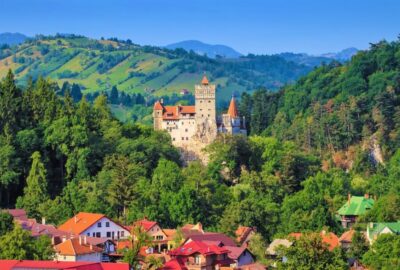
Bucharest: Dracula Castle, Peles Castle & Brasov Old Town
Read our review →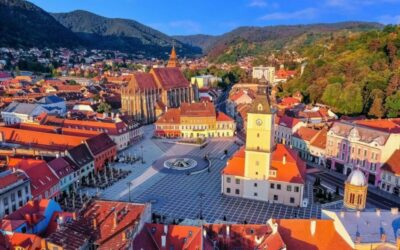
Bucharest: Dracula’s Castle, Peleș Castle & Brașov Day Trip
Read our review →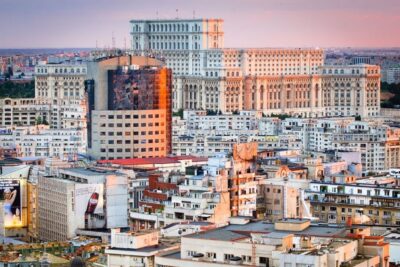
Bucharest: Palace of Parliament Tickets and Guide
Read our review →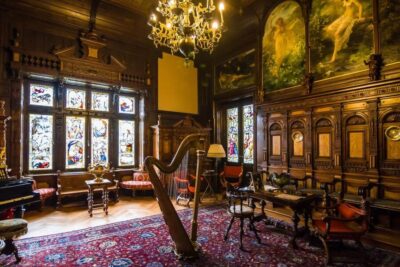
Bucharest: Day Trip to Dracula Castle, Peles Castle & Brașov
Read our review →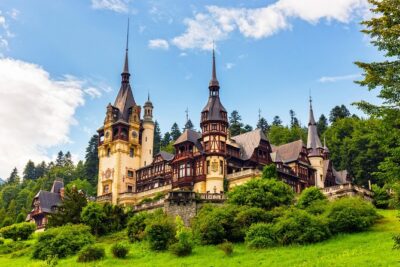
Bucharest to Dracula Castle, Peles Castle and Brasov Guided Tour
Read our review →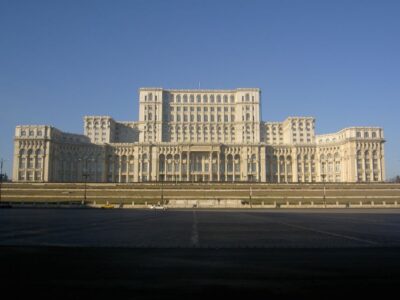
Bucharest: Palace of Parliament Tickets and Guided Tour
Read our review →