Reviewed · PRIVATE
Private -RedPatrol Tour of Bucharest with a Romanian Vintage Car
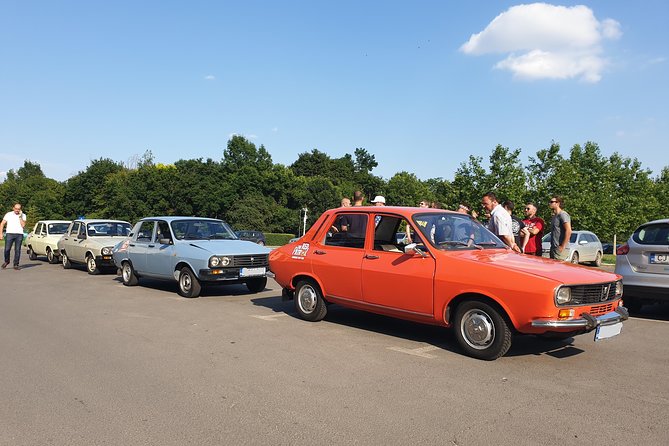
What makes this Bucharest tour feel different is the way you travel. You roll through Communist-era sights in a restored Dacia 1300, so history is not just something you read on a sign. It’s a moving, story-based tour with real street time.
I love two things most: the private format with pickup from your address, and the guide’s hands-on story telling. In particular, Serban’s personal perspective on everyday life under communism adds a layer you will not get from a standard walking tour. One possible drawback to plan for is that these cars are from the 1970s and 80s, so you should expect no modern driver aids and no AC.
Key highlights worth centering your trip
- Restored 1970s Dacia 1300 that turns city driving into part of the experience
- Private tour with only your group, plus pickup from all Bucharest addresses
- Stop-by-stop Communist landmarks linked by a clear narrative arc
- Photography and story time at the big sites, not just drive-bys
- Admission mixed in (some stops are free or included, others are not)
Why a restored Dacia tour makes Bucharest click
Bucharest can be a funny city for history, because the landmarks are big, dramatic, and sometimes confusing at street level. This tour fixes that. You see the Communist-era buildings and housing blocks, but you also get the logic behind them, why they were built, and what they meant for daily life.
The car matters more than you might think. A restored Dacia 1300 is slow and mechanical in a very human way. That means you naturally pay attention to the streets, the intersections, and the views unfolding between stops. It is also a fun contrast against the imposing architecture, especially around the grand buildings that can feel like they belong to another planet.
You will also get a real guide in the car, not a rushed handoff at each corner. Serban’s story telling is a big reason this tour gets top marks, and it shows up in how the route is explained. Instead of listing dates only, you get context and cause-and-effect. That makes it easier to remember what you saw and why it matters.
More Bucharest options to weigh up
- Bucharest: Dracula’s Castle, Peles Castle, & Brasov Old Town
★ 4.5 · 17,858 reviews - Bucharest: Dracula Castle, Peles Castle & Brasov Old Town
★ 4.6 · 10,891 reviews - Bucharest: Dracula’s Castle, Peleș Castle & Brașov Day Trip
★ 4.4 · 6,100 reviews
Revolution Square: where the story of communism turns
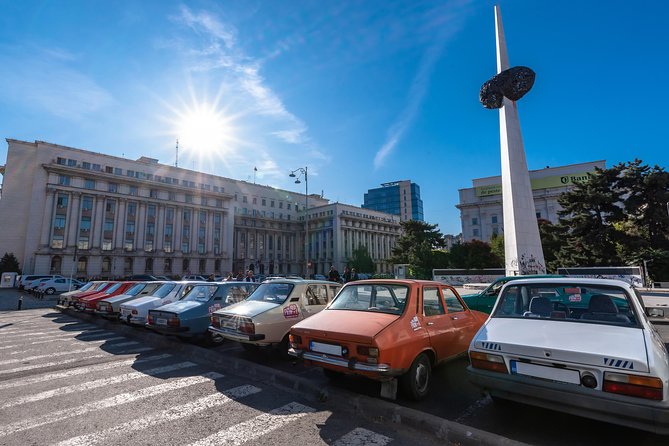
Your first major stop is Revolution Square, and it is timed well at about 30 minutes. This is where communism started and ended in Romania, and the framing here is important. You are not just visiting a plaza, you are stepping into the physical “hinge” where an era ended in the streets.
If you are the type who likes a strong beginning, this works. You start with a place that anchors the tour’s theme, then you move outward into buildings and neighborhoods that reflect the system. That order helps. Even if you already know the basics, you will likely pick up the way the guide connects the square to later sites tied to Romania’s political power.
Since admission there is free, you do not have to budget extra at this stage. Use the time to get oriented, look at the surrounding architecture, and ask yourself how a city communicates control, then remember that idea as the route gets more specific.
From Casa Radio to Academia Română: the “ghost palace” feeling
After Revolution Square, you head toward Casa Radio, where you spend about 20 minutes. This building gets described as a Communist-era ghost palace of Bucharest, and you can feel why. It has that heavy, official look, but it does not feel friendly. It feels planned, staged, and controlled, like the building was made to project power more than welcome people.
This stop also includes time for stories and photos. That matters because places like this can look similar from a distance, until you hear what to look for. The guide’s explanation turns the angles, the scale, and the mood into something you can recognize later.
Then comes Academia Română, where you get a brief presentation and pictures in about 10 minutes. You will be looking at a Socialist Academy of Romania, and the point is not to linger on details you cannot verify. It’s to connect how the regime shaped institutions, not just propaganda billboards.
At both Casa Radio and Academia Română, admission tickets are not included. If you know you want to go inside, you will need to plan for separate ticket costs. If you prefer to focus on the outside and the street-level context, you can still get a satisfying experience without paying extra.
Palace of Parliament and the Communist city blocks you can read
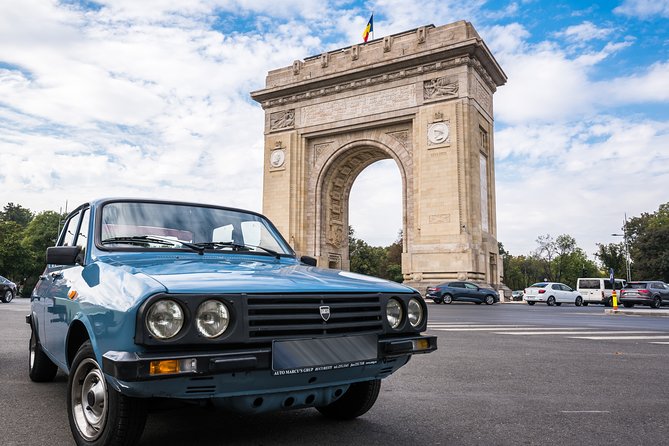
Next up is the Palace of Parliament, and you spend about 30 minutes here. It is described as the second world’s largest administrative house of Bucharest, and the scale shows immediately. Even if you have seen photos, seeing it at street level gives you a different sense of how “administration” became a visible spectacle.
This is one of those stops where the guide’s narration does the heavy lifting. The building is impressive, but it can also be intimidating. The better you understand the political purpose behind the size, the more it stops being just a giant structure and becomes a symbol with a job.
Admission is not included for this stop, so keep that in mind. You can still appreciate it from the planned viewpoint and through the car-based orientation if your goal is understanding over ticketed entry.
After that, you shift from landmark buildings to the Communist quarter blocks of flats. You get an exploration of these residential zones as the tour moves through the city. This part is valuable because Communism in Romania was not only about palaces. It was also about how people lived day to day, how communities were designed, and how neighborhoods were organized to serve the system.
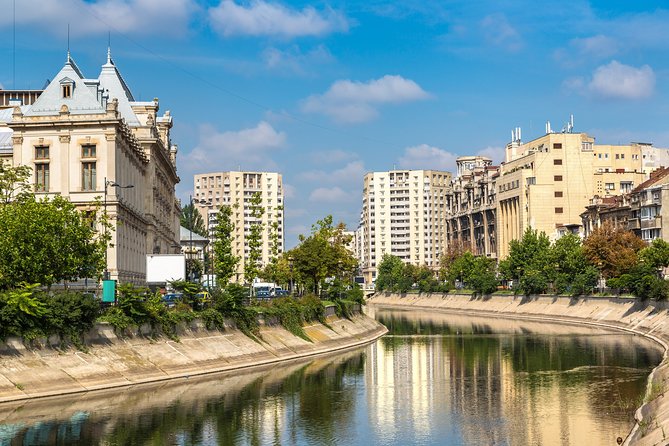
You also get a look at the Residential Quarter of Bucharest built in the early 1900s, plus a panoramic tour including the Palace of the Romanian Government. That blend is helpful. It gives you a sense of how different eras layered onto each other, instead of treating Bucharest as one uniform style.
Same base, a completely different day:
- Bucharest: Palace of Parliament Tickets and Guide
★ 4.3 · 3,182 reviews - Bucharest: Day Trip to Dracula Castle, Peles Castle & Brașov
★ 4.4 · 3,049 reviews - Bucharest to Dracula Castle, Peles Castle and Brasov Guided Tour
★ 4.5 · 2,933 reviews - Bucharest: Palace of Parliament Tickets and Guided Tour
★ 4.4 · 1,877 reviews
The Ceaușescu House stop: private power, public impact
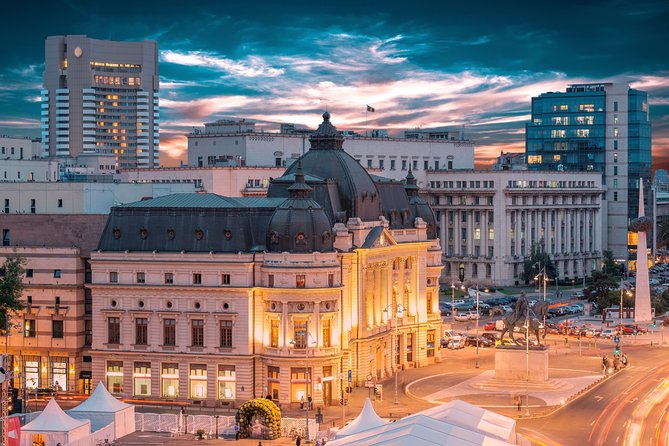
Now you land on a more personal piece of the story: the Ceaușescu House, where you get about 15 minutes. This is presented as the private residence of Nicolae Ceaușescu, and the framing here is key. You are not just looking at a home. You are looking at the contrast between private comfort at the top and the wider reality for everyone else.
There is no admission included at this stop, so you should expect a shorter presentation rather than a full interior experience. Even so, this stop tends to land well because it turns political history into something human. The guide’s talk helps you connect power, symbolism, and the physical separation between leadership and ordinary life.
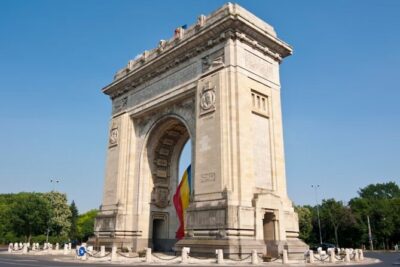
Right around here, the tour also includes a presentation of Romania’s unification monument. This moment broadens the story slightly, reminding you that national identity and political change did not move in a straight line. It makes the route feel less like a single-topic lecture and more like a connected narrative.
House of the Free Press and the old boulevards of Bucharest
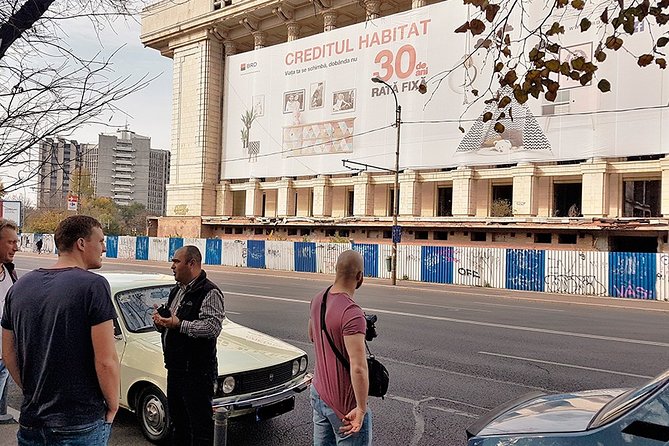
The tour finishes with the House of the Free Press area, including about 20 minutes of exploration. This is described as a Communist press palace area, and since the press was such a controlling tool, the stop fits the overall theme.
Here, admission is included. That is a practical advantage if you like having at least one paid entry handled for you. If you are more interested in how regimes shaped information, this is the stop that usually clicks hardest. It is easy to understand why a place built around communication becomes a political instrument.
You also get a full car ride along one of the oldest boulevards from Bucharest. This ride segment matters more than it sounds. It helps you connect the buildings to the city’s movement patterns, where major roads funnel attention, and where monuments and institutions sit within daily geography.
By the end, the route feels like it has a rhythm. You start with a turning point, move through key institutions and large administrative power, then zoom into private power and information control.
Price and value: what $120.68 buys you in real terms
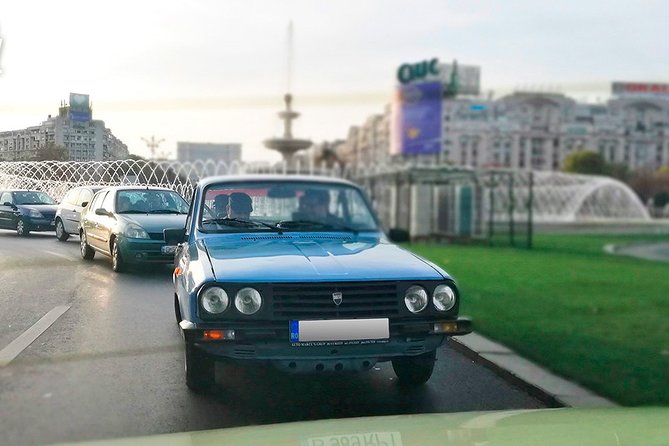
At $120.68 per person, this tour sits in the category of paid experiences that should deliver more than “just see a few buildings.” The value comes from the package details you get together.
You get hotel pickup and drop-off from Bucharest addresses, which saves you time and reduces stress. You get a professional local guide in your car, plus a restored classic Dacia used as transportation, not just a theme. Bottled water is included, and you also receive a tour newspaper plus a personalized gift, which adds a nice physical souvenir without feeling like extra fluff.
There is also flexibility baked in: you can choose a start time that works for you, and if you do not want to drive, a private driver is included. That matters for value because it keeps the experience accessible even if you are not comfortable driving a vintage car.
One thing to watch for is entrance fees. Several stops do not include admission tickets, so your final spend might vary depending on what you choose to enter. Still, the tour structure covers the story well even if you stay focused on what is planned for each stop.
Given the private setup and the high rating score, the strongest argument for the price is not the car alone. It is the guide narration with the specific Communist-era route and the fact that pickup and transportation are handled end to end.
Driving the Dacia 1300: fun, but plan for the old-school limits
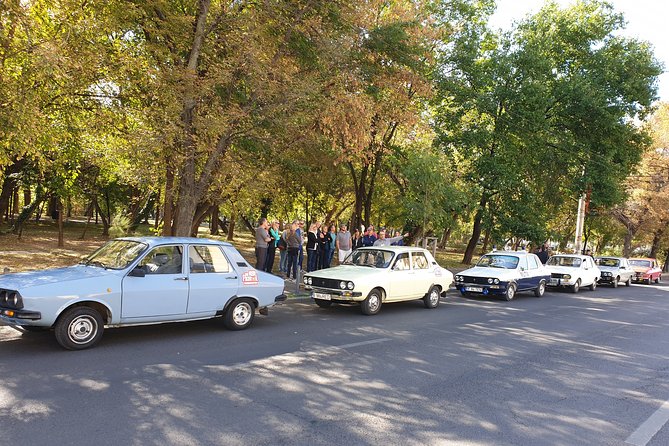
This is the kind of tour where you might end up driving, and the details are worth taking seriously. The cars are restored Dacia 1300 or 1310 classics from the 1970s and 80s. They do not include AC, ABS, GPS navigation, or servo-direction, and they are not automatic.
That does not mean you cannot enjoy it. It means you should set your expectations. If you are used to modern cars, this will feel more physical: you will feel more of the road, and you will rely on your own focus more.
If you want to drive, you will need a driver with a valid driving license on the date of the tour. If you do not want to drive, you can ride with a private driver included.
The tour also suggests wearing a comfortable outfit for driving. That is smart advice. You should plan for getting in and out, shifting your body in the seat, and spending time holding steady while the guide is talking. If you visit in winter, the cars are heated, which helps with comfort.
What your guide narration is really doing for you
The best tours do more than show places. They teach you how to see. In this case, the guide builds an argument as you move: revolution first, then the institutional infrastructure of a regime, then the everyday and the control systems.
Serban’s personal experiences with communism are a standout detail from the feedback, and it makes the tour more than a visual checklist. Instead of you guessing what life might have been like, the guide offers lived framing. That helps you connect buildings to behavior and design choices to human impact.
You will also notice that the itinerary alternates between big public monuments and the city fabric. That balance matters. The Palace of Parliament and other official sites can blur together if you do not get context. The blocks of flats, residential areas, and press-related places keep the story grounded.
Who this tour suits best, and who should rethink it
This experience makes the most sense if you want a guided, story-led Communist-era route from inside Bucharest street life. You will probably enjoy it most if you like history but get tired of textbook timelines. This route turns ideas into visible places.
It also suits couples, friends, and small groups who want privacy. Because it is private, it is only your group, so you can ask questions in a way that feels natural rather than rushed.
On the other hand, this is not the right fit if you want a car with modern comfort features. The lack of AC and ABS means you should be prepared for a more old-school ride. It is also not permitted for pets or children under 10.
Most travelers can participate, and pickup is offered from all addresses in Bucharest. That gives you a practical starting point, especially if you are staying outside the core tourist lanes.
Should you book the RedPatrol private Dacia tour?
Book it if you want an efficient, guided Communist-era overview with a memorable twist: you are traveling in a restored Dacia, not just being taken around in a van. The guide storytelling, especially Serban’s personal perspective, is the kind of value you will feel most on the drive between stops. You also get pickup, drop-off, water, and a small set of inclusions that make the experience smoother.
Consider skipping or adjusting your expectations if you are sensitive to vintage-car comfort limits or you plan to rely on lots of paid interior entries at multiple stops. Several key sites do not include admission, so your total cost may rise depending on what you choose to enter.
If you like history that is explained like a conversation, with stops that make sense as a sequence, this is an excellent way to spend a half-day in Bucharest.
FAQ
How long is the private Bucharest tour with the vintage car?
It runs about 3 to 3.5 hours.
Is hotel pickup and drop-off included?
Yes. Pickup and drop-off from Bucharest addresses are included.
Can I choose my start time?
Yes. The tour offers a choice of start time.
Do I have to drive the vintage Dacia?
No. You can drive if you want, and if you do not want to drive, a private driver is included.
What kind of car is used?
You will drive a fully restored Dacia 1300 or 1310 classic from the 1970s to 1980s.
Does the Dacia have modern features like AC or GPS?
No. The car does not include AC, ABS, GPS navigation, or servo-direction, and it is not automatic.
What is included for admission tickets?
Some stops include tickets or are free (Revolution Square is free, and House of the Free Press includes admission). Other stops are not included.
Is there a cancellation policy if weather is bad?
The experience requires good weather. If it is canceled due to poor weather, you will be offered a different date or a full refund. You can cancel for free up to 24 hours before the experience starts for a full refund.
Latest reviews from around Bucharest
- ATV Adrenaline Race in Carpathian – Private Tour★ 5.0 · 4 reviews
- Private Tour of Jewish Bucharest★ 5.0 · 4 reviews
- Discover Medieval Transylvania Small Group Tour – 7 days★ 5.0 · 4 reviews
- Bulgaria One Day Private Tour from Bucharest★ 5.0 · 4 reviews
- In Search of Dracula and the Teutons in Transylvania Full-Day Private Tour★ 5.0 · 4 reviews
- Bulgaria Day Trip – Private Tour from Bucharest – Veliko Tarnavo & Arbanasi★ 5.0 · 4 reviews
- Private tour: Medieval cities of Transylvania, 2 Days from Bucharest★ 5.0 · 4 reviews
- Black See, Constanta and Mamaia Beach – Day Trip from Bucharest★ 5.0 · 4 reviews
Private, compared.
Castles of Transylvania: Private Day Trip from Bucharest
Read our review →
Bucharest: Best of Bucharest Private Tuk-Tuk Tour
Read our review →
Dracula’s Castle, Peles Castle and Brasov – Private Day Trip from Bucharest
Read our review →
Bucharest Panoramic Sightseeing – Private City Tour
Read our review →
THERME “Take It Easy” Pack: Full Spa Access + Private Transfers
Read our review →
Piatra Craiului National Park Private Hiking Tour from Brasov
Read our review →