Reviewed · BUCHAREST TOURS
The Real Story of Roma – Slavery in Romania
Bucharest can feel glamorous, but this 3-hour walk makes the city more truthful. It follows the threads of Roma history in Romania, including the legacy of slavery, then brings you to living culture through craft.
I especially like how the stops are organized around real locations and short, focused explanations, so you do not get lost in theory. I also like that the tour is in English and guided by Mihai, who answers questions and adds useful context about Bucharest. One caution: the route includes heavy material, including a Holocaust Memorial tied to Roma persecution, so bring a respectful, steady mindset.
Key things to know before you go

- A 3-hour, small-group walk (max 15) that stays paced and conversational
- Free entry at every stop, so you are paying for the guide and narrative, not museum fees
- Stops that connect history to specific Bucharest sites, from an old slave-market location to remembrance landmarks
- English guidance led by Mihai, with time for questions and clear explanations
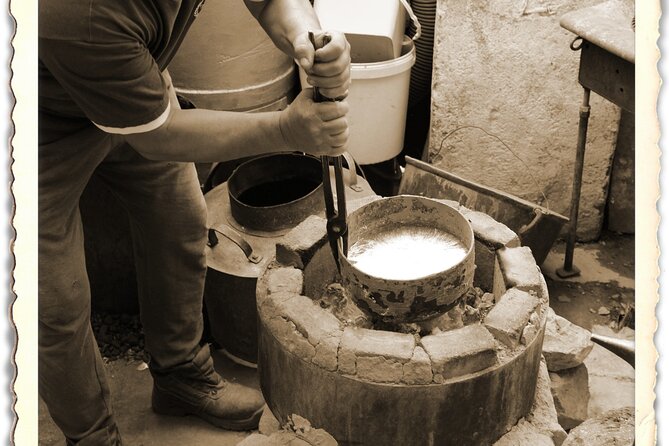
- A craft-focused finish at Mesteshukar ButiQ, where Roma artisans work with copper
The real point of this tour: Bucharest’s painful story, on foot

This tour is built for travelers who want more than photos and facts. You walk past places that shaped Roma identity, and you hear how the trade in human lives was part of Romania’s complex history with the Roma community. The effect is not just “sad history,” but a chain of meaning, from past persecution to how culture is still expressed today.
What makes the experience click is the structure. The guide keeps each stop tight, usually around 10 to 15 minutes, then you move on with purpose. Even with the serious topics, the flow feels manageable, because you are not stuck staring at one plaque for an hour.
The route also ends in a different emotional register. After the remembrance moments, you reach Mesteshukar ButiQ and see Roma craftsmanship with copper. That change matters. It helps you leave with a fuller picture, not only the darkest chapter.
More Bucharest options to weigh up
- Bucharest: Dracula’s Castle, Peles Castle, & Brasov Old Town
★ 4.5 · 17,858 reviews - Bucharest: Dracula Castle, Peles Castle & Brasov Old Town
★ 4.6 · 10,891 reviews - Bucharest: Dracula’s Castle, Peleș Castle & Brașov Day Trip
★ 4.4 · 6,100 reviews
Stop 1, Platoul Piata Amzei: the old slave-market site

Your tour starts near Romana Square at Teatrul „Ion Creangă” and quickly heads to Platoul Piata Amzei. Here, you visit the site of an old slave market, a place that becomes a doorway into the history behind the trade in human lives and its impact on Roma identity.
This is the moment where the tour’s title stops being abstract. You are not just hearing about slavery in a textbook sense. You are standing in Bucharest, in a real public space, and learning how such cruelty left a long shadow.
What I like about this first stop is the emphasis on context. You are given the why, not just the what. That matters because it makes later stops easier to understand, including the remembrance sites and the moments that show how perceptions were formed and reshaped over time.
A practical consideration: this is heavy content right at the start, so if you like a gentler warm-up, you might want to do your pre-walk reading the night before. You will be better prepared emotionally once you arrive.
Stop 2, Palatul Stirbei: a palace tied to Roma history
Next comes Palatul Stirbei, a beautiful palace built in 1835. The guide connects the building and its owner to one of the most important moments of Roma history in Romania. In other words, you are not just admiring architecture. You are learning how power and privilege intersected with Roma lives.
This stop is valuable because it pushes back against the idea that history is only found in monuments. Sometimes the story is literally in the walls. A palace can look elegant from the outside, but the tour frames it as part of a system that affected real people.
One drawback to expect here: you may notice how easy it is to get distracted by aesthetics. If you tend to focus on the “pretty” parts first, you will need to let the guide steer you. The best experience comes when you accept that beauty and harm can be in the same location.
Stop 3, Ateneul Roman: national pride, arts, and perception

You then pass by Ateneul Roman, the Romanian Athenaeum, described as a symbol of national pride and cultural heritage. This stop shifts your attention from politics and persecution to how arts and public culture can shape perceptions of the Roma community.
What I find smart about this angle is that it explains why stories about Roma people did not stay trapped in private. They became part of the public imagination, and public imagination influences everything from policy to everyday treatment.
You do not spend a long time here, but it functions like a lens. It helps you read the rest of the route with more nuance. Even when the tour turns back toward somber places, you understand that the “how” of stigma and misunderstanding often travels through cultural narratives too.
Same base, a completely different day:
- Bucharest: Palace of Parliament Tickets and Guide
★ 4.3 · 3,182 reviews - Bucharest: Day Trip to Dracula Castle, Peles Castle & Brașov
★ 4.4 · 3,049 reviews - Bucharest to Dracula Castle, Peles Castle and Brasov Guided Tour
★ 4.5 · 2,933 reviews - Bucharest: Palace of Parliament Tickets and Guided Tour
★ 4.4 · 1,877 reviews
Stop 4, Cismigiu Parc: myths, memory, and a slower pace
After the more formal landmarks, the tour takes a calmer turn in Cismigiu Parc, the oldest and largest garden in Bucharest. Here, you take a leisurely stroll and hear more truths and myths about the history of this special ethnic group.
This is a useful pause. Parks give your brain a break, and they also help you process what you have heard. The garden setting makes it easier to separate emotion from understanding, even when the subject matter stays complicated.
If you like to ask questions, this can be a good moment to do it. You are outdoors, walking at an easier pace, so the conversation flow tends to feel natural.
Still, keep your expectations realistic. This is a walking tour with set timing, so do not plan on wandering. You get a guided stroll, not free time to explore the entire park in depth.
Stop 5, Holocaust Memorial: remembrance with a Roma focus
Then the tour takes a somber turn at an important Holocaust Memorial in Romania. This is where you pay homage to victims of a dark chapter in history, including the thousands of Roma lives lost to persecution and genocide.
This stop deserves a serious tone. It is not the place for jokes or side quests. The tour’s value is that it explicitly includes Roma history within the larger Holocaust story, so you leave with a more complete understanding instead of a narrowed one.
If you are sensitive to memorial experiences, plan your day accordingly. I would also suggest arriving with enough time to get there without stress, since the atmosphere at memorial sites matters.
Stop 6, Iuliu Maniu Statue: when Roma were called Roma

Next you stop at the Iuliu Maniu Statue, connected to another significant moment in Roma history, specifically a time when Roma people were still very much called Roma.
This kind of stop can be surprisingly powerful. Names are not neutral. They carry attitudes, stereotypes, and power. By focusing on the shift in naming and identity, the tour helps you understand how language can both describe and distort real communities.
You spend about 15 minutes here, which is enough to land the point without dragging. It also sets up the final stop nicely, so you end with a sense of continuity from history into everyday cultural expression.
Stop 7, Mesteshukar ButiQ: Roma copper craftsmanship to finish

The tour ends at Mesteshukar ButiQ, a small shop where products are manufactured by Roma craftsmen. The experience includes a chance to witness Roma craftsmanship firsthand, with copper work at the center.
This ending matters because it adds balance. After memorial and slavery history, you get something tangible: skill, craft, and continuity. It is not a “happy ending,” but it is a human ending, tied to making and tradition.
What to expect here is straightforward. You are guided to the shop and shown the craftsmanship. If you are the type who likes to see how culture lives today, you will appreciate this finale.
Also, since this is a shop stop, keep an eye on timing so you do not feel rushed when the tour concludes. If you want to ask questions, ask them before you leave the guided portion, since that is when you are most likely to get the clearest answers.
Price, pacing, and logistics that actually affect your day
The price is $30.04 per person for about 3 hours. At this rate, you are not paying for expensive entrances, because the tour is built with free admission ticket stops. So the value comes from the guided story, the route, and the ability to connect multiple sites in a coherent way.
Pacing is the other big value factor. The tour includes set stop durations and leaves room for walking time. You also get a small group size, up to 15 travelers, which helps with questions and keeps the experience from turning into a loud march.
It runs in English, and the guide experience stands out in the feedback you can count on: Mihai is described as very informative, with good English and real willingness to answer questions. Even if you have only a few, that flexibility makes the tour more useful for your personal interests.
Practical details that help:
- Start time is 10:00 am
- Start point is Teatrul „Ion Creangă” (Sala Mare), Strada Piața Amzei 13
- End point is Mesteshukar ButiQ, Bulevardul Mihail Kogălniceanu 12
- You get a mobile ticket
- It is near public transportation
- Confirmation happens at booking, and there is free cancellation up to 24 hours before start time for a full refund
Who should book, and who might want to think twice
This tour is a great fit if you want:
- A focused walking experience that connects multiple key Bucharest sites
- A Roma-focused historical narrative that includes slavery and persecution, not just generic city history
- A guide-led conversation style, especially if you like asking questions
It might not be the best fit if you are looking for a light, casual stroll. The route includes slavery context and a Holocaust Memorial with Roma-specific references. You will likely leave informed, but it will not feel “easy.”
If you do book it, do two things to get the most out of it. First, wear comfortable shoes. Second, give yourself a little emotional space after the tour, so you can digest what you learned instead of immediately hopping to something upbeat.
Should you book this tour? My clear take
Yes, I think it is worth booking if you care about learning the full, uncomfortable parts of Bucharest, not only the photogenic ones. The small group size, the English-speaking guide Mihai, and the fact that every stop is free to enter make it a strong value for a 3-hour window.
Choose it especially if you like history that stays connected to place. Watching copper work at the end is a smart way to balance the heavy subject matter. You leave with both understanding and a visible sense of continuity.
FAQ
What is the duration of the tour?
The tour lasts about 3 hours.
How much does it cost?
It costs $30.04 per person.
Is the tour offered in English?
Yes, it is offered in English.
Where does the tour start and end?
It starts at Teatrul „Ion Creangă” (Sala Mare), Strada Piața Amzei 13 in Bucharest, and it ends at Mesteshukar ButiQ, Bulevardul Mihail Kogălniceanu 12.
How big is the group?
The tour has a maximum of 15 travelers.
Are there any paid entry tickets at the stops?
The admission ticket is listed as free at each stop.
How much time is walking?
The remaining time (about 1 hour 20 minutes) is allotted for walking.
Is the tour near public transportation?
Yes, it is near public transportation.
What is the cancellation policy?
You can cancel up to 24 hours in advance for a full refund.
Latest reviews from around Bucharest
- ATV Adrenaline Race in Carpathian – Private Tour★ 5.0 · 4 reviews
- Private Tour of Jewish Bucharest★ 5.0 · 4 reviews
- Bulgaria One Day Private Tour from Bucharest★ 5.0 · 4 reviews
- Discover Medieval Transylvania Small Group Tour – 7 days★ 5.0 · 4 reviews
- In Search of Dracula and the Teutons in Transylvania Full-Day Private Tour★ 5.0 · 4 reviews
- Bulgaria Day Trip – Private Tour from Bucharest – Veliko Tarnavo & Arbanasi★ 5.0 · 4 reviews
- Private tour: Medieval cities of Transylvania, 2 Days from Bucharest★ 5.0 · 4 reviews
- Black See, Constanta and Mamaia Beach – Day Trip from Bucharest★ 5.0 · 4 reviews
Bucharest Tours, compared.
Bucharest: Dracula’s Castle, Peles Castle, & Brasov Old Town
Read our review →
Bucharest: Dracula Castle, Peles Castle & Brasov Old Town
Read our review →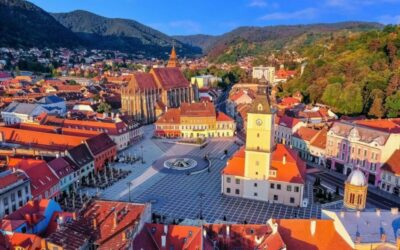
Bucharest: Dracula’s Castle, Peleș Castle & Brașov Day Trip
Read our review →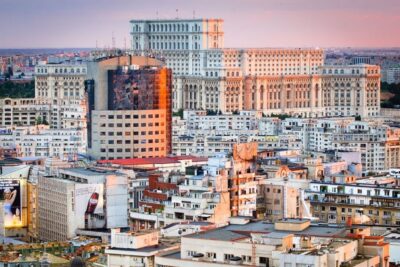
Bucharest: Palace of Parliament Tickets and Guide
Read our review →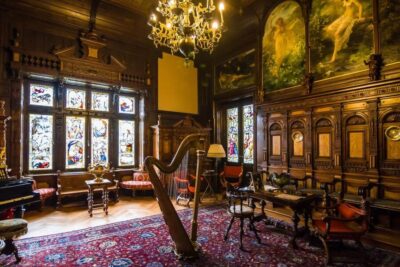
Bucharest: Day Trip to Dracula Castle, Peles Castle & Brașov
Read our review →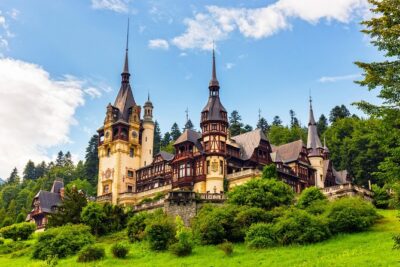
Bucharest to Dracula Castle, Peles Castle and Brasov Guided Tour
Read our review →
Bucharest: Palace of Parliament Tickets and Guided Tour
Read our review →