
Sibiu’s Baroque masterclass is interesting because it teaches you to read churches and palaces like someone wrote them on purpose. In about 45 minutes, you practice seeing how illusion works, then you carry that new eye into the Brukenthal Palace salons.
I love two things here. First, you get a fully private, scholar-led session in one Catholic church, with a guide trained at École du Louvre. Second, the focus is not on collecting rooms, it is on understanding how trompe l’oeil, light, and space persuade you.
One consideration: you are walking cobblestones and there are a few steps along the route, so this is not a great choice if you need wheelchair-friendly access. Also, it is a tight, focused format, so you may leave wanting more time in the churches.
Key points to know before you go
- One Baroque church, chosen for you (Holy Trinity, Ursuline, or Franciscan), so you learn depth instead of doing a checklist.
- Trompe l’oeil with practical optics: grids, perspective, mirrors, and how the craft tricks your brain.
- Space as a language: light, gesture, rhythm, and even acoustics inside the vault.
- Brukenthal Palace salons for context: courtly taste, seating and sightlines, and staged rank.
- Private guiding, licensed and trained (École du Louvre) for a dialogue-based pace.
- Tickets included for selected salons, plus a post-visit reference note and a small printed card keepsake.
Starting in Piața Mare: how the Baroque church choice works
The experience starts at the Holy Trinity Roman Catholic Church portal on Piața Mare 3. If a service is underway, your confirmation may shift the start to the Ursuline Church (Str. General Magheru 36-38) or the Franciscan Church (Str. Șelarilor 12-14). That switch matters because Baroque interiors do not all “speak” the same way. You will still get the same lesson style, but the visual details and emphasis can feel different from church to church.
You might also see two different “start” labels connected to the same activity: one calls out the Holy Trinity portal, and another lists Sibiu Tourist Info Center as the starting location. In practice, just follow what is on your confirmation. It is the fastest way to avoid arriving in the wrong spot and spending energy rerouting.
This is a private group format, so the guide can pace you based on questions. That sounds like a small perk, but it changes the whole feel of a museum-style visit. You are not getting streamed through. You are learning, then testing what you learned by looking again, right away.
More Sibiu options to weigh up
- Sibiu: Daily Sightseeing Guided Tour
★ 4.7 · 247 reviews - From Sibiu: Day Tour to Brasov and Dracula’s Castle
★ 4.7 · 120 reviews - SB01 – City Tour Sibiu: Exploring the Heart of Transylvania
★ 4.8 · 99 reviews
Reading Baroque space in a real Catholic church
Inside the church, the masterclass treats the building like a text you can decode. You are not just staring at decorations. You are practicing how Baroque design guides attention step by step, almost like punctuation.
You begin by considering how the church’s shapes and surfaces direct your eye. Side altars, the way plaster and stucco meet at angles, and the placement of gilded elements all create a kind of visual choreography. The idea is simple and useful: the art is doing communication, and you can learn the rules.
You will also keep an eye on movement and attention, not just objects. In Baroque design, where you stand and how you turn your head affects what you feel. That is why this works best as a guided masterclass rather than a quick walk-through.
As with any active place of worship, keep your tone quiet and your clothing modest. If you need flash photography for anything, skip it. The visit includes photo guidance, and you should always respect services and posted signs.
Trompe l’oeil: turning plaster into marble (and getting the trick)
The headline lesson is trompe l’oeil, the illusion painting and sculptural effects that make you believe you are seeing materials you are not. In this class, you do not just get told that something is fake. You learn how it is made to look convincing.
A key part of the training is how optics and craft work together. You consider techniques like foreshortening, which can make ceilings feel higher or architecture feel closer. You also look at proportional tricks that help your brain “finish” the illusion.
The guide focuses on process. That means grids, perspective, and even how mirrors and reflective surfaces influence what you see. If you have ever looked at a painted ceiling and felt your mind accept the illusion without checking, this is where you learn the “why.” The goal is not to ruin the magic. The goal is to give you a toolset, so the magic becomes repeatable.
Acoustics, light, and the architecture of persuasion
Baroque space is not only visual. You get a quick but meaningful look at acoustics, and how the vault carries sound. Even if you do not hear a full performance during your visit, the architecture still changes how sound moves. That matters because music and architecture were designed to cooperate.
Then you shift to light and the human body as part of the system. The masterclass treats light like a spotlight cue. When gilded stucco catches light, it is not decoration for its own sake. It is a signaling system that helps you notice what matters.
Gesture and rhythm enter the conversation too. Baroque interiors often stage attention like a sequence of beats. The guide helps you see those beats: where your gaze should land, where you pause, and how the space pulls you forward.
If you like learning that you can use immediately, this is where it clicks. You walk in and see the church like an observer. You walk out seeing it like the designer intended, with a stronger sense of how the space tells a story.
Same base, a completely different day:
- Sibiu Old Town Exploration Game and Self-Guided Tour
★ 4.5 · 82 reviews - Sibiu: Alba Iulia and Corvin Castle Guided Tour
★ 4.7 · 66 reviews - Exclusive Tour: Corvin Castle, Alba Iulia and traditional villages from Sibiu
★ 5.0 · 33 reviews - Private Walking Tour of Sibiu
★ 5.0 · 27 reviews
From devotion to display: Brukenthal Palace salons as social engineering
After the church, you move into the Brukenthal Palace salons for a different kind of lesson. Here the conversation shifts from devotion to display. The point is not to see more rooms. It is to understand why the rooms are arranged the way they are.
You study courtly taste through details: fabrics and mirrors, seating plans and sightlines, and the choreography of entrances and exits. That might sound theatrical, but it is practical. In these salons, design helps people read rank, hospitality, and social role at a glance.
You also learn how ornament references older cultures and ideas, not just style for style’s sake. Color and sheen become signals. Small arts like stucco, gilding, and marquetry support the illusion, just like the church effects do, only now the “message” is social rather than sacred.
The masterclass approach stays consistent: you are looking for the logic behind the look. When you notice that, you stop thinking of ornament as random. You start seeing it as a language of persuasion.
A helpful detail is that entry tickets to Brukenthal Palace (for the selected salons) are included. That lets you focus on the teaching without adding an extra line of logistics in your head.
Your guide: private, licensed, and trained for this kind of teaching
This is built as a fully private experience with a live guide trained at École du Louvre. That training shows up in how the lesson is structured. It is not a lecture dump. It is a dialogue. Your questions can steer what you focus on next.
The experience is offered in Romanian and English. If you want to ask follow-up questions, you can do that without feeling like you are interrupting a group that is rushing to the next stop. That is one of the best parts of a private masterclass. You can ask the basic questions, like why one optical trick works and another does not, and you can still get a satisfying answer.
In recent sessions, the guide experience has been described as both scholarly and human, with meticulous attention to detail. Even if you do not care about the credentials, you will feel the difference in how carefully you are guided from one observation to the next.
Price and time: is $23 really value for this kind of focus?
The price is $23 per person, and for the content you get, it can feel like good value if you like learning how to look. You are paying for specialized interpretation in a private format, plus entry to Brukenthal Palace for selected salons.
The visit is described as 45 minutes, but the included description also mentions a private 2-hour session. That mismatch likely means the schedule length can vary by availability and the exact session format. Either way, do not plan your day like it is a full afternoon tour. Treat it as a short, high-impact block and confirm the exact timing on your confirmation.
Where this price shines is in the depth. One church, selected palace salons, and a tight theme: reading Baroque as a system. If you want an encyclopedia of Sibiu’s churches, you will probably want a longer tour later. If you want a clearer eye for the art that is already in front of you, this is the kind of experience that pays you back quickly.
What to wear, what to bring, and how to photograph respectfully
Plan for a little legwork. Expect cobblestones and a few steps along the route. If you have mobility limits, this is the kind of tour where you should ask questions in advance about how the guide handles the walking.
For clothing, keep it modest since the church is an active place of worship. Comfortable shoes matter more than fancy ones here, because the ground is uneven.
Photography is allowed where permitted, but you should avoid flash and follow posted guidance. That is the right approach anyway, especially inside churches. If you like taking photos of ceilings and altarpieces, ask the guide what works best at your chosen church, since the lesson depends on where you stand and where light hits.
After the visit: keep learning without dragging your feet around town
One of the best “quiet” perks is that you receive a short post-visit note with references for further looking and listening, delivered digitally. You also get a small interpretive keepsake in print.
That matters because the masterclass gives you a new set of questions. The reference note helps you keep using those questions after you are back in your hotel, or when you visit another Baroque church later. It turns the experience into something you can reuse, instead of a one-time snapshot.
Who should book this masterclass?
Book it if you love art that has hidden rules. You will enjoy this more if you like learning how something is made to work, not just what it looks like.
It also fits well if you want a break from long museum circuits. One church, a focused lesson, then a targeted palace segment. You will see less on paper, but you will understand more of what you see.
It is also a strong pick for couples or friends who want a shared learning experience without being lost in a crowd. The private format and dialogue-based approach make it easier to stay present.
Should you book the Sibiu Scholar-Led Baroque Masterclass?
I think you should book this if you want your Sibiu visit to change how you see Baroque design. The combination of a live church lesson, practical explanation of trompe l’oeil and optics, and the move into Brukenthal Palace salons makes the experience feel coherent.
Skip it only if you are chasing a wide, free-form sightseeing day. This is a masterclass, not a sweep through every site. It is also not built for wheelchair-friendly routing due to cobblestones and steps.
If your priority is value through focused interpretation, and you like asking questions, this one is a smart bet.
FAQ
Where does the masterclass start?
Your meeting point is listed as in front of the Holy Trinity Church portal on Piața Mare 3. If a service is underway, your confirmation may list the Ursuline Church (Str. General Magheru 36-38) or the Franciscan Church (Str. Șelarilor 12-14) as the start.
How long is the experience?
The duration is listed as 45 minutes. The included description also references a private 2-hour session, so it is worth checking your exact time on your confirmation.
Is the tour private?
Yes. It is described as a fully private experience with a live licensed guide.
What is included in the price?
Included are private guiding in one Catholic church, admission to Brukenthal Palace for selected salons, and a post-visit note with references (digital). A small printed interpretive card is also included.
Are photos allowed?
Photos are allowed where permitted, and you should avoid flash. The visit asks you to respect services and posted signs.
Is the route wheelchair friendly?
No, it is not ideal for wheelchairs. Expect cobblestones and a few steps along the route.
Latest reviews from around Sibiu
- Private Transfagarasan&Balea Lake★ 5.0 · 3 reviews
- From Sibiu: day trip to Dacian Fortress, Hunyadi Castle and Alba Iulia Citadel★ 5.0 · 3 reviews
- Private Walking Tour of Alba Iulia Citadel with Wine Tasting★ 5.0 · 4 reviews
- Transfagarasan, Vidraru and Poenari Fortress Tour from Sibiu★ 4.5 · 5 reviews
- Explore the Beauty of Sibiu with Full-Suspension E-Bikes!★ 5.0 · 5 reviews
- Exclusive tour: Sighisoara, Medias and Biertan tour from Sibiu★ 5.0 · 9 reviews
- Exclusive Tour on Transfagarasan, Balea Lake, Balea and Capra Waterfalls★ 5.0 · 9 reviews
- City Tour Sibiu in English★ 4.5 · 12 reviews
Sibiu Tours, compared.
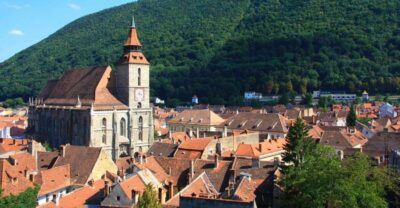
From Sibiu: Day Tour to Brasov and Dracula’s Castle
Read our review →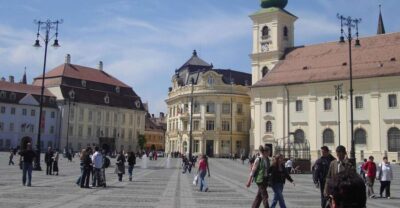
SB01 – City Tour Sibiu: Exploring the Heart of Transylvania
Read our review →
Sibiu Old Town Exploration Game and Self-Guided Tour
Read our review →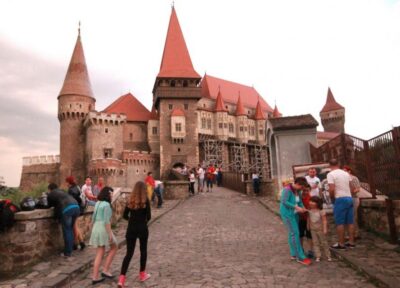
Sibiu: Alba Iulia and Corvin Castle Guided Tour
Read our review →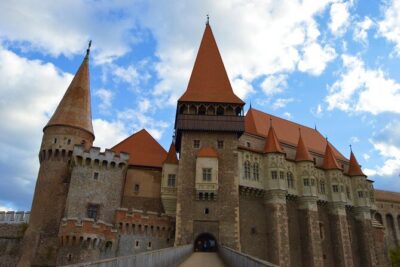
Exclusive Tour: Corvin Castle, Alba Iulia and traditional villages from Sibiu
Read our review →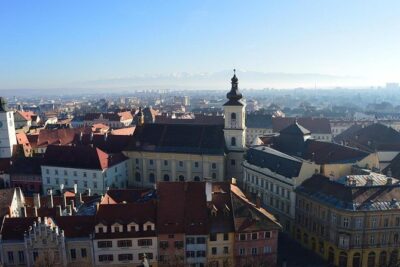
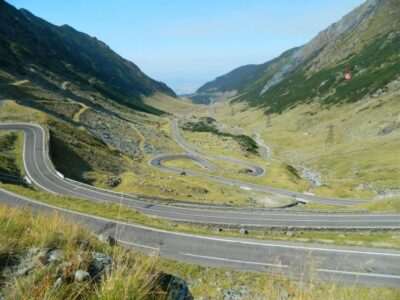
SB09-Transfăgărășan Wonders:Journey through Bâlea Lake,Avrig
Read our review →Browse the lists this tour appears in