Reviewed · BUCHAREST TOURS
Bucharest: The Italian emigration in Romania
This kind of tour hooks you fast, because it turns Bucharest streets into a real story about how Italian emigration in the late 1700s and early 1800s left marks you can still see. I love how the walk connects Victory Road to specific landmarks you can point at, and I love that you also get design details, not just dates. Guides like Roberto are known for making the city feel personal, with clear explanations and street-level context.
My only caution is the format: it’s a 2-hour walking route, and it is not suitable for people over 95. If your legs need frequent breaks, it is worth thinking twice before you join.
Key Highlights to Watch For
- Victory Road as a timeline: You’ll walk the avenue where the Italian influence shows up in the layout and in the buildings tied to city development.
- Dambovita River orientation: The route starts by crossing the river and using big landmarks to get your bearings quickly.
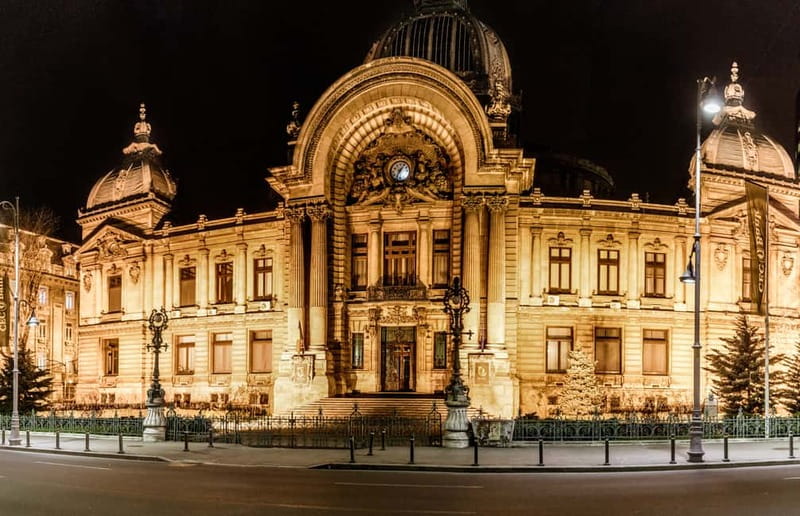
- CEC Palace and Revolution Square: These civic landmarks help explain why communities mattered to Bucharest’s growth.
- Italian Church stop: You’ll see how religion and heritage show up in the city’s oldest layers.
- Old Town recap: The tour ends with a wrap-up that ties everything together so you leave with a clearer mental map.
Italian Emigration Meets Walkable Bucharest
What makes this experience interesting is the angle. Instead of doing the usual highlights tour, you follow a specific thread: Italian emigration in Bucharest from the late 18th century into the early 19th century. That one focus changes the way you look at the old center.
You’ll learn how Italians contributed to Bucharest’s development and city history, then you’ll walk past the places where that influence still reads on the street. I like this approach because it keeps your sightseeing grounded. You’re not just collecting photos, you’re building a story.
And since the tour is only 2 hours, you get a focused hit of context without committing your whole day. It’s an efficient way to understand Bucharest for first-timers who want something more meaningful than a generic stroll.
More Bucharest options to weigh up
- Bucharest: Dracula’s Castle, Peles Castle, & Brasov Old Town
★ 4.5 · 17,858 reviews - Bucharest: Dracula Castle, Peles Castle & Brasov Old Town
★ 4.6 · 10,891 reviews - Bucharest: Dracula’s Castle, Peleș Castle & Brașov Day Trip
★ 4.4 · 6,100 reviews
Where the Tour Starts, and How to Avoid the Usual Meeting-Point Stress
You meet your guide at the Transylvanian Wonders office on Bulevardul Natiunile Unite 4, Bloc 107/A, then you’ll meet again in Piata Natiunile Unite, about 100 meters from the office. That small detail matters. If you show up late, you can easily miss the group, especially if you rely on distance alone.
You’ll be on your feet, so I strongly suggest comfortable shoes and weather-appropriate clothing. You also cannot bring alcohol or drugs, and audio recording is not allowed. (That last one can surprise people who like to capture every fact, so plan to take notes instead.)
One more practical point: the tour language is Italian. If you speak Italian, you’ll get the full value. If you do not, you might still enjoy the architecture and the rhythm of walking, but your understanding will depend on how much Italian you can follow.
Crossing the Dambovita River to the Palace of Justice Area
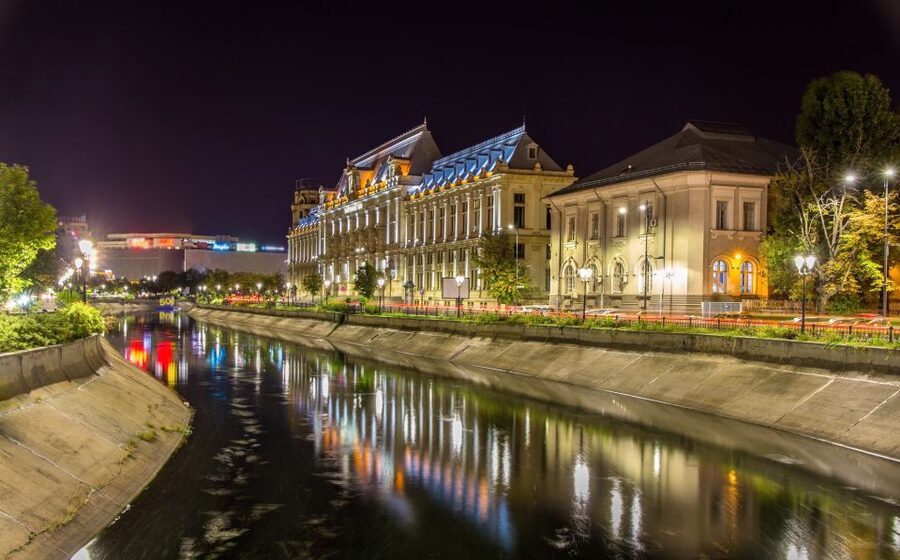
The walk begins by heading toward Piata Natiunile Unite, then crossing the Dambovita River. That move is a smart setup because it separates the start point from what you’ll see next, and it helps you understand why these neighborhoods connect the way they do.
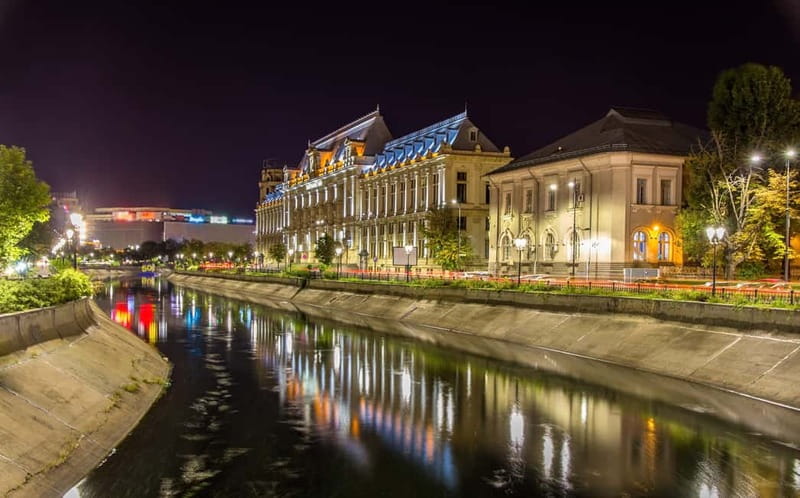
One of the highlights you’ll encounter in this opening stretch is the Palace of Justice on the riverfront. Even if you do not know the building’s details yet, it works as a visual anchor. Big civic architecture on a river tells you, immediately, that this city grew around major institutions and public life.
From here, the tour transitions into the “surreal” feel of Victory Road. That doesn’t mean it becomes fantasy. It means the street layout, monumental buildings, and layered history start to feel like a walk through time.
Victory Road: Where the Italian Footprints Show Up in Plain Sight
This is the heart of the experience. On Calea Victoriei, you’ll see how Bucharest’s most famous avenue carries history on its façade and in its cultural landmarks. You’ll walk on the traces of Italian immigration and its influences, while also passing major points that explain Bucharest’s evolution.
As you move along, you’ll pass by several key buildings, including:
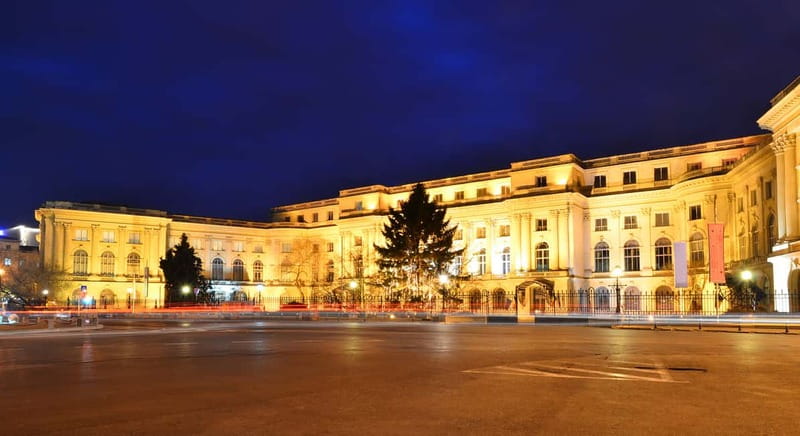
- National History Museum
- CEC Palace
- Revolution Square
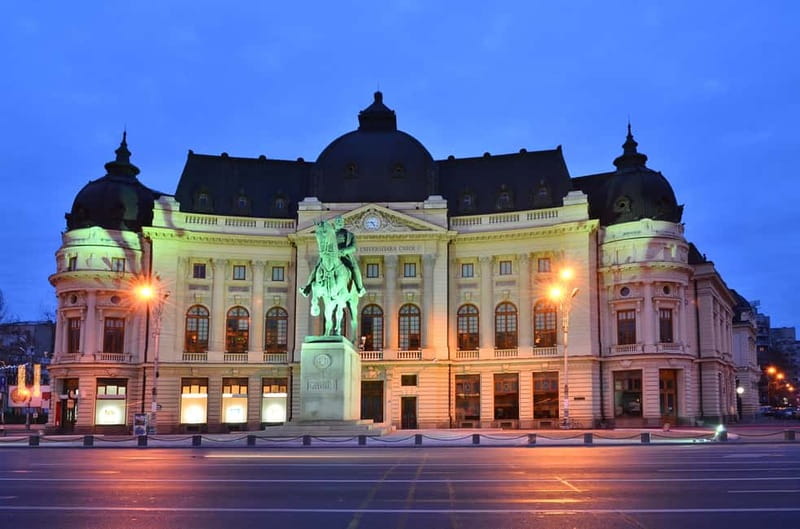
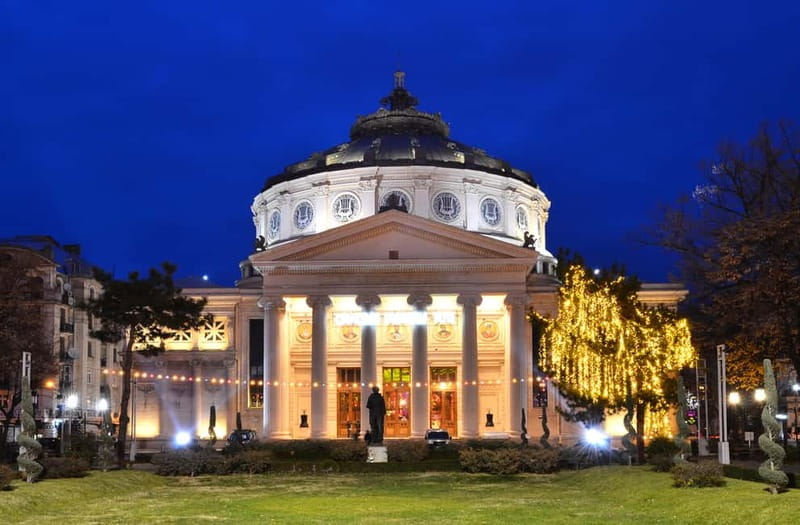
- Atheneum
- Italian Church
- The old Senate house area
Same base, a completely different day:
- Bucharest: Palace of Parliament Tickets and Guide
★ 4.3 · 3,182 reviews - Bucharest: Day Trip to Dracula Castle, Peles Castle & Brașov
★ 4.4 · 3,049 reviews - Bucharest to Dracula Castle, Peles Castle and Brasov Guided Tour
★ 4.5 · 2,933 reviews - Bucharest: Palace of Parliament Tickets and Guided Tour
★ 4.4 · 1,877 reviews
The National History Museum stop
When you see the National History Museum, the context clicks. Even without going inside, the exterior presence helps you understand why historic narratives matter here. It frames what you’re learning about Italian emigration as part of the wider development of Romanian life and institutions.
CEC Palace: architecture that makes explanations feel real
The CEC bank building is one of the places you’ll want to slow down. The tour specifically invites you to admire it, which usually means your guide will point out features that relate to the city’s identity and growth.
I like CEC Palace on a walking tour because it gives you something solid to look at while you learn. Instead of repeating facts into the air, the building supports the story. You get to connect influence and design, not just immigration dates.
Revolution Square and the old Senate house
Revolution Square and the old Senate house help shift the focus from culture to civic power. If Italian emigration shaped the city’s development, you want to understand where decisions were made and where public life gathered. These stops give that context.
You also get a sense of scale. The avenue and the squares feel like Bucharest talking to itself, and that makes the later Italian Church stop land better, because you start seeing the city as a system of places, not isolated buildings.
Atheneum and the Italian Church: Culture, Community, and Identity
After the civic-heavy stops, the tour leans into culture and community.
The Atheneum is part of the route, and it’s an important one for understanding how public culture evolved alongside political and social change. Even if you only catch the building from the outside, your guide can connect it to the larger idea that city life is shaped by more than government and commerce.
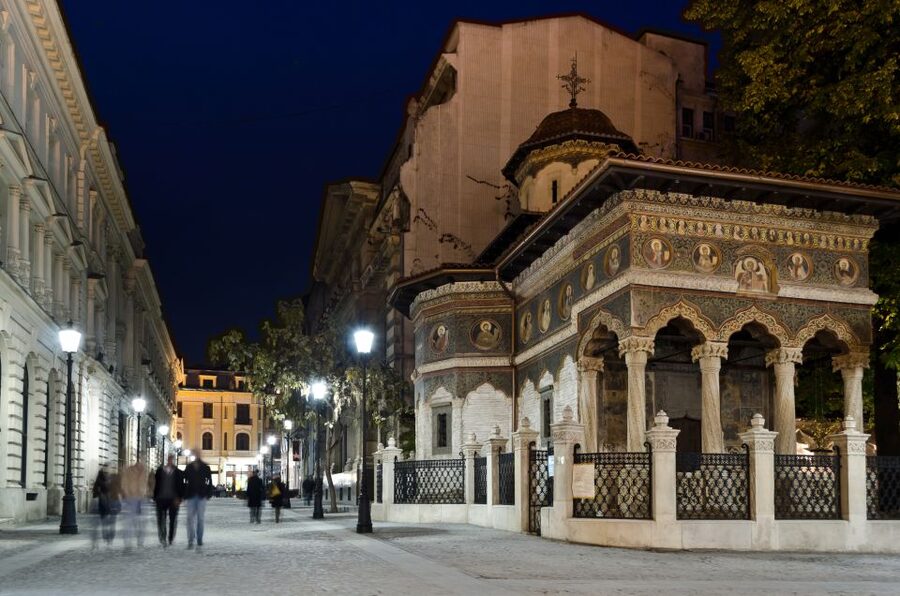
Then comes the Italian Church. In a tour like this, a church stop is not just about architecture. It’s about belonging. You can feel why the city would preserve an Italian community’s spiritual life and why that kind of presence would leave an imprint.
One practical tip: if you spot the “old church” moment your guide mentions, pay attention. The experience works best when you let that stop slow you down a little. Take a minute to look, not just pass through, because it’s the kind of location that makes the Italian-emigration theme feel tangible.
Ending in Old Town With a Clearer Mental Map
The tour ends in Bucharest’s old town, with a quick recap of the historic importance of Italian immigration in Bucharest and Romania. This wrap-up matters more than it sounds.
Walking through multiple landmarks can blur into one long photo line if you do not get the connections spelled out. Ending with a structured summary helps you remember what you saw and why it mattered. You leave with a story you can tell yourself on future walks.
And since this is only 2 hours, it’s also a good primer. Afterward, you can return on your own to the places you want to see more closely, especially around Victory Road and the riverfront area.
Price and Value: Why $11 Can Be a Great Deal Here
At $11 per person for a 2-hour guided walk, the value is strong if you like learning while you sightsee. You’re not just paying for someone to point at buildings. You’re paying for a professional local guide who gives you the why behind what you’re seeing.
The best value comes from how packed the stops are. In a short time, you cover major landmarks like:
- Palace of Justice by the Dambovita
- CEC Palace
- Revolution Square
- Atheneum
- Italian Church
- The Victory Road corridor
That’s a lot to assemble on your own, especially on a first trip. If your budget is tight or you only have a morning or afternoon slot, this is one of those deals that can help you make the rest of your day feel smarter.
Who Should Book This Tour, and Who Might Want to Skip It
This tour fits you best if you want:
- A focused, theme-based way to understand Bucharest
- Italian culture and immigration history tied to real landmarks
- A short walk that still covers big-name sights like Victory Road and major squares
It might not fit if:
- You do not speak or understand Italian, since the guide language is Italian
- You need extensive breaks, because it is a walking route
- You are over 95, since the tour is not suitable for that age group
- You want to record audio, because audio recording is not allowed
Also, consider the meeting-point reality. The tour meets in a specific area (Piata Natiunile Unite, about 100 meters from the office). Arrive a little early so you can get your bearings and avoid any last-minute confusion.
Should You Book Bucharest: The Italian Emigration in Romania?
I’d book it if you like street-level history and you want a quick way to connect Italian emigration in the late 1700s and early 1800s to the city’s most recognizable spaces. The theme is specific, the route is short, and the landmarks are the kind you can reuse later as anchors for your own wandering.
I would hesitate only if Italian language would block you completely, or if walking for two hours is hard for you. If that’s your situation, you can still enjoy Bucharest, but this particular format will feel less satisfying.
If you can handle a 2-hour walk and Italian explanations, this is a smart buy for the price, and it can make Victory Road and old town streets feel like a story rather than a checklist.
FAQ
How long is the tour?
The tour lasts 2 hours.
Where do I meet the guide?
You meet at the Transylvanian Wonders office on Bulevardul Natiunile Unite 4, Bloc 107/A. Your guide is met in Piata Natiunile Unite, about 100 meters from the office.
What language is the tour in?
The live tour guide speaks Italian.
What should I bring?
Bring comfortable shoes and weather-appropriate clothing.
Is audio recording allowed?
No, audio recording is not allowed.
Is this tour suitable for seniors?
It is not suitable for people over 95 years.
Latest reviews from around Bucharest
- ATV Adrenaline Race in Carpathian – Private Tour★ 5.0 · 4 reviews
- Private Tour of Jewish Bucharest★ 5.0 · 4 reviews
- In Search of Dracula and the Teutons in Transylvania Full-Day Private Tour★ 5.0 · 4 reviews
- Bulgaria One Day Private Tour from Bucharest★ 5.0 · 4 reviews
- Discover Medieval Transylvania Small Group Tour – 7 days★ 5.0 · 4 reviews
- Bulgaria Day Trip – Private Tour from Bucharest – Veliko Tarnavo & Arbanasi★ 5.0 · 4 reviews
- Private tour: Medieval cities of Transylvania, 2 Days from Bucharest★ 5.0 · 4 reviews
- Black See, Constanta and Mamaia Beach – Day Trip from Bucharest★ 5.0 · 4 reviews
Bucharest Tours, compared.
Bucharest: Dracula’s Castle, Peles Castle, & Brasov Old Town
Read our review →
Bucharest: Dracula Castle, Peles Castle & Brasov Old Town
Read our review →
Bucharest: Dracula’s Castle, Peleș Castle & Brașov Day Trip
Read our review →
Bucharest: Palace of Parliament Tickets and Guide
Read our review →
Bucharest: Day Trip to Dracula Castle, Peles Castle & Brașov
Read our review →
Bucharest to Dracula Castle, Peles Castle and Brasov Guided Tour
Read our review →
Bucharest: Palace of Parliament Tickets and Guided Tour
Read our review →