
Reviewed · SELF-GUIDED TOURS
Orsova: Entire Area Boat Tours with Audio Guide
This boat tour is interesting because it strings together some big-ticket sights along the Danube in one smooth 2.5-hour ride, including the Danube Cauldrons and the Iron Gates area. You also get famous landmarks like Tabula Traiana and the Decebalus Rock Sculpture, plus quick photo stops that keep the pace friendly.
I really like the small size of the experience. The boat holds 14 passengers, and you get a multilingual audio guide so you can follow along without crowd noise drowning everything out.
One thing to consider: parts of the tour depend on optional choices and safety rules. For example, Veterani Cave has an entry fee and may involve a separate cave visit run by other guides, and the tour is not suitable for several mobility or health situations.
Key highlights worth your attention
- Danube Cauldrons + Iron Gates in one trip, with multiple landmark stops and guided commentary
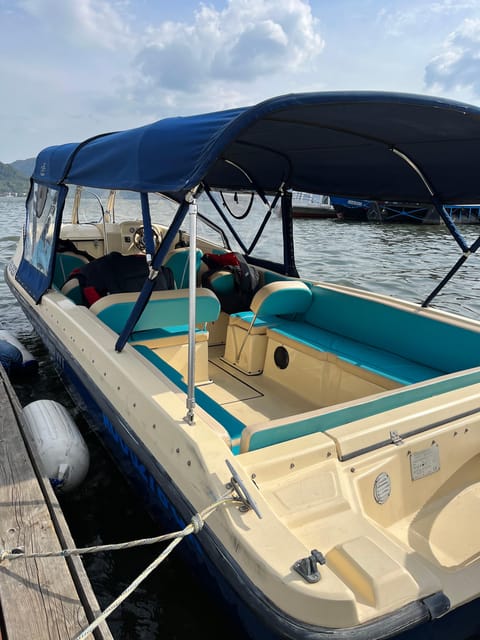
- 14-seat boat with a sunroof, so you can actually see and photograph comfortably
- Audio guide in English, Hungarian, Spanish, and German, plus a guide greeter in English and Romanian
- Stops built for photos, including time for pictures at Trajan-related sites and rock formations
- Veterani Cave is optional, with an extra entrance cost (and group agreement matters)
Orșova to the Danube Cauldrons: what makes this stretch special
Orșova is your launch point, sitting in Mehedinti County at Cerna Bay, which took shape after the Iron Gates I Dam was completed in the early 1970s. That matters because the Danube here feels powerful and controlled at the same time, like a river being reshaped by engineering and time.
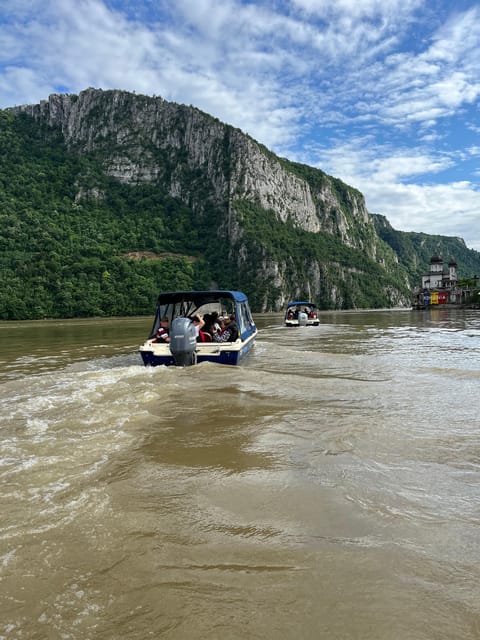
The heart of the experience is the drive through the Danube Cauldrons, where the water tightens between towering rock formations. It is not just scenic. You get the feeling that the river has always been a road, and a barrier, for people moving through this region. When the audio guide talks as you go, the landmarks start to make more sense as part of the same long story.
On top of nature, you also get Roman-era references and later history woven into the stops. That combination is why this works well as a first Danube trip from Romania, even if you do not plan to cover every museum in the area.
More Boat Trips in Romania
- Orsova: Danube’s Cauldrons Boat Tours with Audio Guide
★ 4.8 · 28 reviews - Boat Trip to Caraorman Forest – Danube Delta (5-6 hours)
★ 4.6 · 42 reviews
Comfort on a 14-seat boat, plus the audio guide edge
This is a private group format, and the boat is designed for intimacy. With 14 seats, you avoid the chaos of big group rides. You are also closer to the water, which helps when you are aiming your camera at rock faces, plaques, or the big man-made structures downstream.
The boat has a sunroof, which is a small detail that pays off. When the light is good, you can keep your eyes on the water and the cliffs without constantly ducking or twisting for shade. Safety is covered with life jackets provided for everyone, so you can focus on the scenery.
The audio guide is another big plus. You get a multilingual audio guide (English, Hungarian, Spanish, German). Since you may be hearing explanations while the boat turns or when you are paused at a landmark, having your own channel matters. Just remember the practical tip: bring headphones. The tour info explicitly asks for them, and it will make the experience much more comfortable.
Price and value: $392 per group up to 6
The cost is $392 per group (up to 6 people) for about 140 minutes on the water. If you fill all six spots, that works out to roughly $65 per person. If you travel in a smaller group, the per-person cost rises because the price is grouped, not per-seat in your party planning.
What you get for that money is not just “sit on a boat.” Your ticket includes guided commentary along the Danube River, stops at 8 main attractions, and photo opportunities at key places. You also have the audio guide plus the round-trip ticket from Orșova.
To judge value fairly, ask yourself what you would pay for similar guided river time plus multiple stops if you were booking separate mini-excursions. Here, the advantage is time. You cover several major sights on one route, without needing to coordinate separate transport.
Finding the meeting point at Debarcader WT, near Hotel Apolodor
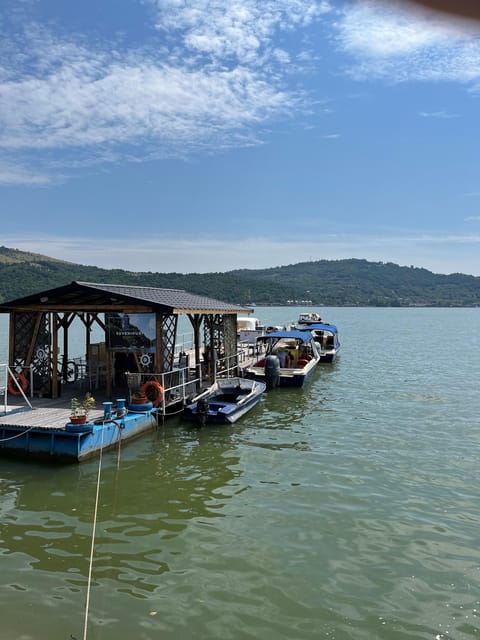
You meet at a wooden platform by the shore’s walking path, identifiable by a pontoon with a black roof. The operator notes that two banners with their logo will be visible, and the meeting point is a short distance from Hotel Apolodor.
This is the kind of trip where arriving a few minutes early saves stress. The shore setup is real, and you do not want to be searching while everyone else is boarding.
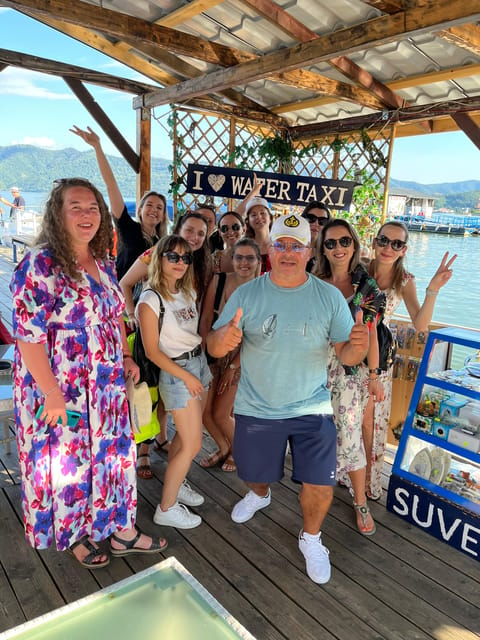
When you get there, look for the pontoon and the banners, then check in with the English and Romanian host or greeter. The tour info makes it clear that a greeter is available, which can help if you are not sure which side of the pontoon is the right one.
Stop by stop on the Danube: plaques, rock art, monastery quiet, caves
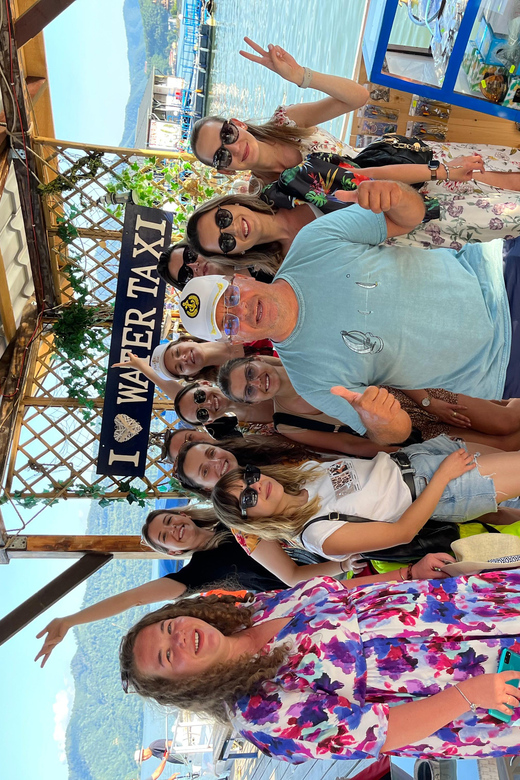
This trip is built around a sequence of meaningful stops, with a mix of quick photo stops and short guided visits. Here is how each one tends to land in real life.
Trajan’s Plaque (Tabula Traiana area) and the Roman anchor
The tour starts with a photo stop and guided sightseeing at Trajan’s plaque. This is your first “context hit.” It links the river to Roman engineering and authority in the region. Even if Roman history is not your main interest, the plaque gives you something concrete to point to as you continue downstream.
The timing matters. Early on, you are still fresh, and the group gets oriented fast. That makes the rest of the trip easier to follow through the audio guide.
Decebalus Rock Sculpture: Europe’s tallest rock monument feel
Next comes the Rock Sculpture of Decebalus, another photo stop with guided sightseeing. This is the kind of landmark that can look like a photo prop until you see it at river level. The scale hits harder in person because you get that vertical sense of rock and human carving in the same frame.
If you like photography, this is a natural moment to experiment. Boats shift position slightly as they line up, and the audio guide helps you know what to aim at instead of guessing.
Mraconia Monastery: a calmer historical pause
After the rock monument, you switch from dramatic stone to a quieter spiritual marker at Mraconia Monastery. You get another photo stop and guided tour here.
Monasteries on rivers tend to feel like they were placed for a reason. Even without going deep into the details, you can feel the human side of the river corridor, not just the military or monumental side. It also breaks up the intensity of the geological sights.
Veterani Cave: optional, extra cost, and group agreement rules
Veterani Cave is a stop where you need to read the fine print and plan your expectations. The tour includes a guided tour and a visit for about 20 minutes. But there is also a note that entry ticket to Veterani cave is an extra cost of about $2 at the entrance.
The operational detail you should care about is this: the “extra cave visit” is handled by other guides, and drop-off at their ponton depends on security measures first. Also, all passengers must agree for the group cave visit option. If you decide not to go in, you will still have the audio guide on the boat.
So treat this as two choices:
- If you want the cave itself, budget the entrance fee and be ready for a separate guided arrangement.
- If you do not, you can stay with the boat commentary and still enjoy the experience.
Peștera Ponicova – Vest: another cave stop with guided time
Then you reach Peștera Ponicova – Vest, again with a photo stop and guided visit. The details here are more limited than Veterani in the info you have, but the structure suggests a similar rhythm: short viewing, guided explanations, then back to the boat for the next big sight.
If caves are on your list, this is one of the reasons the trip is more than just “scenery.” Caves connect the geology to human use, routes, and survival needs in this region.
Tabula Széchenyi: engineering heritage made visible
Next is Tabula Széchenyi, another photo stop with guided sightseeing. This one ties history to engineering, which is a smart pairing after the earlier Roman anchor. You are moving from who built old power to who managed the river in modern times.
The tabula format is important too. It gives you a “readable” object to focus on. It is not only about seeing. It is about understanding what changed and why.
Iron Gates: the grand hardware of the river
Finally comes Iron Gates, with guided tour and sightseeing. This is the big finale because it is the culmination of the river corridor story. Even if you are not an engineering person, you get why the area is so famous: the Danube here is shaped by structures that changed navigation and local life.
This is also when the audio guide and the on-site explanations help you interpret what you are looking at. Without that context, it can feel like “just another dam.” With it, you start to see how the river corridor became both accessible and altered.
Ada-Kaleh and the lost island view: what you should expect
Near the end, there is information about Ada-Kaleh, including a note about a 40-minute extra downstream tour close to Iron Gates with a stop for Ada-Kaleh views and historical information. The important detail is that the actual island is now about 30 meters under the water.
That shapes the way you experience it. You are not going to step onto a Turkish-era island. Instead, you are absorbing the idea of a place that used to be there, and seeing it from the river’s vantage point as it exists now.
If you like layered history, this is the kind of stop that makes the Danube feel bigger than just a river ride. It reminds you that when dams reshape water, they also reshape memory.
What to bring (and what will slow you down)
Bring comfortable shoes and comfortable clothes. You are walking around for photo stops and guided sightseeing. Also bring sunglasses and sunscreen. River light can be sharp, and the sunroof means you may actually feel it.
The tour info specifically asks for headphones. Even though the audio guide is included, you still need your own headphones to listen comfortably.
Pack cash, because Veterani Cave entry has an extra cost at the entrance.
Do not bring oversize luggage or large bags. The tour states that oversize luggage and luggage are not allowed. Pack like you are going for a half-day walk, not like you are moving into a hotel room.
Who this is best for, and who should skip it
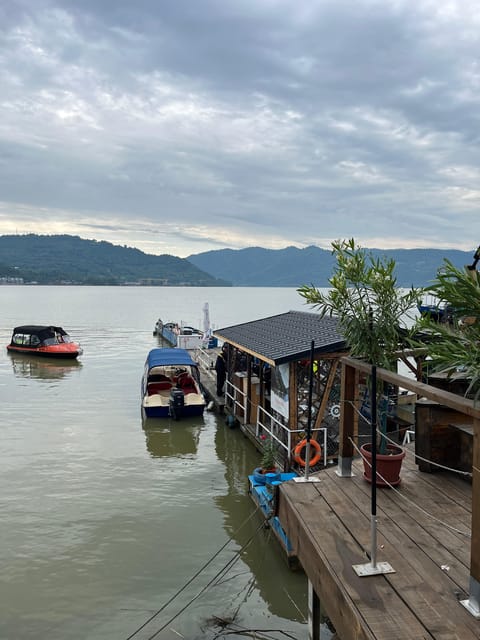
This trip suits people who want a guided Danube day without a long travel puzzle. It is a good fit for:
- Couples who want a calmer, guided river outing with plenty of photo pauses
- Families who prefer a structured route with stops rather than a long self-guided day
- History and monuments fans who like Roman plaques, rock monuments, and engineering markers
- Nature-minded folks who want the Danube Cauldrons without climbing steep trails
It is not suitable for pregnant women, people with back problems, people with mobility impairments, wheelchair users, or people with recent surgeries. If any of those apply, you should look for an option with less physical strain and better medical suitability.
Service style that matters: friendly staff and quick fixes
One of the most consistently praised elements of this kind of operation is how smoothly the day runs and how people are treated when plans go sideways. Here, the staff are described as supportive and friendly, and the team handles issues quickly if there is an early problem.
There is also a simple lesson that keeps you from wasting time: read carefully what you are paying for. Some parts are included, some are optional, and at least one cave stop involves an extra entrance fee and a separate cave visit setup.
If you go in knowing where the optional parts are, you keep the day relaxed.
Should you book the Orșova Danube Cauldrons boat tour?
Book it if you want a guided Orșova Danube boat experience that hits multiple major sights in a single stretch, especially Danube Cauldrons, Iron Gates, Tabula Traiana, and the Decebalus Rock Sculpture. The small boat size and the audio guide make it feel less like a cattle line and more like a real guided walk on water.
I would skip it if you cannot handle the physical nature of short visits, or if you need wheelchair-accessible logistics. Also, consider your comfort level with optional add-ons, because Veterani Cave includes an extra fee and group agreement rules.
FAQ
How long is the boat tour?
It lasts about 140 minutes, or roughly 2.5 hours.
What is the price per booking?
The price is $392 per group for up to 6 people.
Where do we meet for the tour?
You meet at Debarcader WT, a wooden platform by the shore’s walking path, near a pontoon with a black roof. The info says there are two banners with the logo, a short distance from Hotel Apolodor.
What language audio is included?
The audio guide is included, with languages listed as English, Hungarian, Spanish, and German.
How many attractions are stopped at during the tour?
The tour includes stops at 8 main attractions.
Is entry to Veterani Cave included?
No. The Veterani Cave entry has an extra cost at the entrance, listed at approximately $2.
Is the Veterani Cave visit optional?
Yes. The extra cave visit is described as an additional option with rules about group agreement. If you do not visit, you will still have the audio guide from the boat.
Are food and drinks included?
No. Food and drinks are not included.
What should I bring?
Bring comfortable shoes, sunglasses, sunscreen, comfortable clothes, headphones, and cash.
Is this tour suitable for people with mobility issues or recent surgery?
No. It is not suitable for wheelchair users, people with mobility impairments, people with back problems, pregnant women, or people with recent surgeries.
More Self-Guided Tours in Romania
- Sibiu Old Town Exploration Game and Self-Guided Tour
★ 4.5 · 82 reviews - Sighisoara Fortress Quest: Exploration Game and Tour
★ 4.5 · 33 reviews - King Matia Secret Treasure Exploration Game in Cluj-Napoca
★ 4.5 · 30 reviews - Brasov’s Haunted Past: Self-Guided Tour & Quest
★ 5.0 · 7 reviews
Latest reviews from around Romania
- Orsova: Danube’s Cauldrons Boat Tours with Audio Guide★ 4.8 · 28 reviews
- From Cluj: Mountain Bike around Lake Dragan★ 5.0 · 4 reviews
Self-Guided Tours, compared.

Sibiu Old Town Exploration Game and Self-Guided Tour
Read our review →
Sighisoara Fortress Quest: Exploration Game and Tour
Read our review →
King Matia Secret Treasure Exploration Game in Cluj-Napoca
Read our review →
Orsova: Danube’s Cauldrons Boat Tours with Audio Guide
Read our review →
Brasov’s Haunted Past: Self-Guided Tour & Quest
Read our review →
Life in Communist Bucharest: Self-Guided Puzzle Quest
Read our review →
Bucharest 1989 Revolution Walking Tour with Smartphone App
Read our review →Browse the lists this tour appears in