
Reviewed · CITY TOURS
2-Hours Private Bucharest City Tour
This tour is interesting because it squeezes a lot of real Bucharest meaning into just 2 hours, from Communist-era power to everyday Romanian tradition. You get a private car so you do not waste time figuring out routes, and you can keep the pace tight.
I especially like the way this itinerary mixes big monuments with human-scale context. You will get a clearer picture of how political systems shape a city, and you will also see Romanian village life recreated at the National Village Museum.
One possible drawback: some stops are visually spectacular but emotionally heavy. If you prefer light, mostly cheerful sightseeing, you might find the Communist and Revolution sections a bit intense.
Key highlights worth your time
- Hotel pickup and round-trip transfers so you start and end stress-free
- A licensed English guide/driver with your group from stop to stop
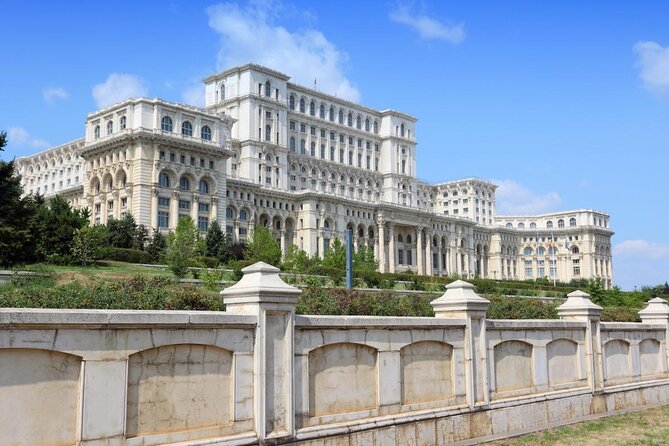
- People’s House and Senate Palace context that explains what those places meant
- National Village Museum showing Romanian homes, churches, and rural tradition in one visit
- Arch of Triumph exhibits plus a close look at its size and symbolism
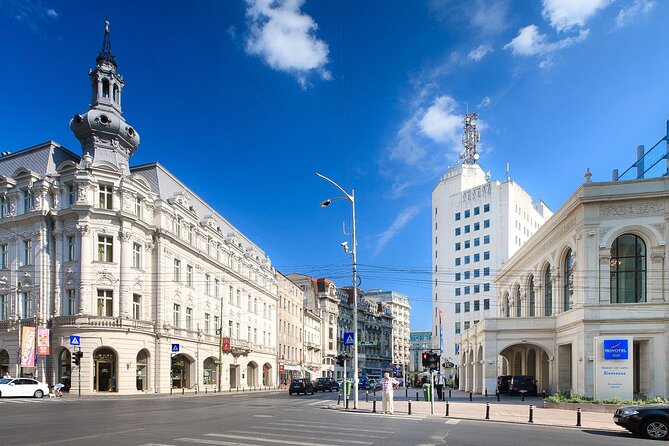
- Romanian Athenaeum and the central area for photos of culture, institutions, and architecture
How a private 2-hour Bucharest tour actually helps you

Bucharest can feel confusing at first. Big boulevards, shifting neighborhoods, and landmarks that carry major political weight. This private format is built for focus. In about 2 hours, you get picked up, driven between sights, and guided by someone who can connect what you see to why it matters.
You get two practical advantages right away. First, round-trip transfers mean you do not spend your limited time on logistics. Second, the guide’s explanations give you a structure to hold onto, especially when you are looking at places tied to the Communist era and the Revolution of December 1989.
The tour is also flexible. You can customize the itinerary based on what you care about, even after you start. That matters in Bucharest because you might want more time on one stop, or you might want to move faster if you are traveling with kids or just do not do long museum time.
And yes, this is private. Only your group rides together in the car, which makes the experience feel more like a guided day with friends than a timed group shuffle.
More City Tours in Bucharest
- Bucharest: City Highlights Guided Walking Tour
★ 4.9 · 1,482 reviews - Bucharest: Communism and History Guided City Walking Tour
★ 4.9 · 918 reviews - Bucharest: 2-Hour City Highlights Bike Tour
★ 4.8 · 269 reviews
The People’s House and Palace of Parliament, where power gets cold and huge
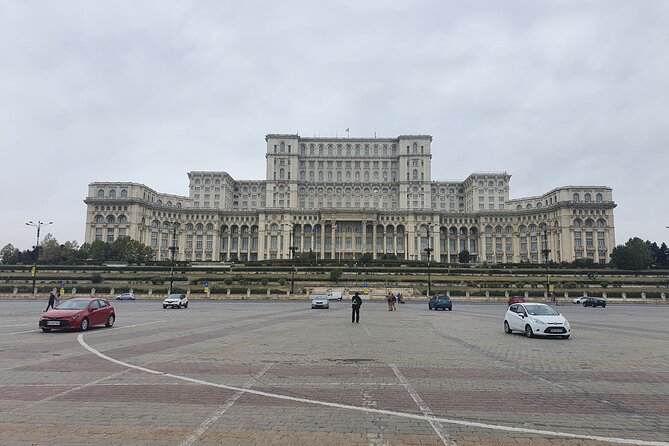
Your first major stop is the Palace of Parliament, also known as the People’s House. The point here is not only to admire scale, it is to understand impact. You will learn how a totalitarian regime can damage a nation, using the building as a dramatic example of opulence and megalomania.
Here are the details that make this stop hit harder. The palace is described as the second-largest administrative building on the planet, after the Pentagon. That alone gives you perspective. Then the guide frames what that size represents in human terms: money poured into prestige while society pays the price.
If you are wondering what the experience feels like, it is usually this. You arrive expecting architecture, then you walk away thinking about how governments use buildings to project control. The tour’s language emphasizes that you should feel small in the face of it, not just impressed. It is meant to make you notice the contrast between grand stone and the lives affected by the system that created it.
Possible consideration: if you are sensitive to heavy historical themes, plan your mental pacing. You are also moving quickly to other stops, so if you need a break, ask your guide. In a private tour, that kind of adjustment is usually easier than in a large group.
National Village Museum, Romanian tradition in one footprint
Next up is the National Village Museum. This is a different mood from the Palace of Parliament, and that balance is one of the smartest choices in the itinerary. Instead of state power, you get everyday culture.
The museum is presented as an embodiment of Romanian traditions. You will see how villagers built a more ecological and sustainable environment, described through the idea of a backyard that works with its surroundings. You also get a glimpse of a simple, modest rural lifestyle, connected to social and spiritual harmony.
The most useful part for your planning is what the museum covers. You are not limited to one type of house or one region. You will step into a world of traditional Romanian homes made of wood and adobe, but also stone and other materials. The guide also points out national symbols such as a mill or a wooden church.
Why this matters: when you visit the museum with context, the structures stop being just photo backgrounds. You start to understand how buildings, crafts, and community spaces helped people stay connected across time.
A practical tip: because your whole tour is only about 2 hours, the museum visit is likely to be focused rather than slow. If you love folk architecture and want deeper time, you can use the tour flexibility to adjust your pace. Ask your guide to spend a little more time on the village features you care about most.
Revolution of December 1989 sites, and why the Senate Palace is more than a building
Later, you move into the storyline of the Revolution of December 1989. One stop is described at the Senate Palace, including its former role housing the Central Committee of the Romanian Communist Party.
This is where the tour connects the dots between place and turning points. You will see where the revolution began and understand what that meant for toppling power. The emphasis is clear: it was not just political change. It involved human force and sacrifice.
The Senate Palace stop also fits with the theme of the earlier People’s House building. Both represent the reach of Communist power, but they feel different. The People’s House is about spectacle. The Senate Palace is about administration and decisions. Together, they help you understand the system from multiple angles.
If you are the kind of traveler who likes a clear narrative, you will appreciate how this section is framed. It is not only where things happened. It is also what the guide wants you to take away about risk, control, and the cost of authoritarian rule.
More Bucharest options to weigh up
- Bucharest: Dracula’s Castle, Peles Castle, & Brasov Old Town
★ 4.5 · 17,858 reviews - Bucharest: Dracula Castle, Peles Castle & Brasov Old Town
★ 4.6 · 10,891 reviews - Bucharest: Dracula’s Castle, Peleș Castle & Brașov Day Trip
★ 4.4 · 6,100 reviews - Bucharest: Palace of Parliament Tickets and Guide
★ 4.3 · 3,182 reviews
The Ceaușescu Mansion, personal life inside a political fortress

The itinerary includes the Ceaușescu Mansion, described as the private residence of Nicolae and Elena Ceaușescu and their children, Nicu, Zoia, and Valentin, covering 1965 to 1989.
This stop changes the lens again, from national mechanisms to personal space. The tour sets it up like a story of privilege behind closed doors, and you are meant to reflect on what private comfort looks like when it is powered by the same political system you just learned can be destructive.
The mansion segment is also useful because it makes the names more concrete. Once you hear a human set of details like those family names and the time span, the Revolution story feels less abstract.
Possible consideration: because your tour time is tight, you may not get deep exploration of interiors, if any are accessible. Use your guide’s explanations to get the meaning even if you are mostly viewing from outside or at key viewpoints.
Arch of Triumph, size, symbolism, and exhibits you can actually follow
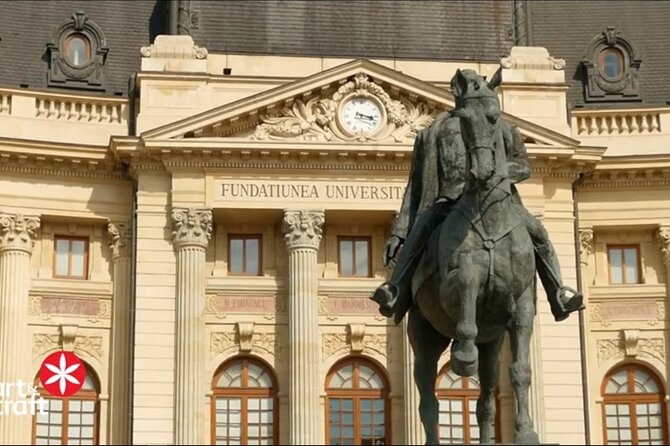
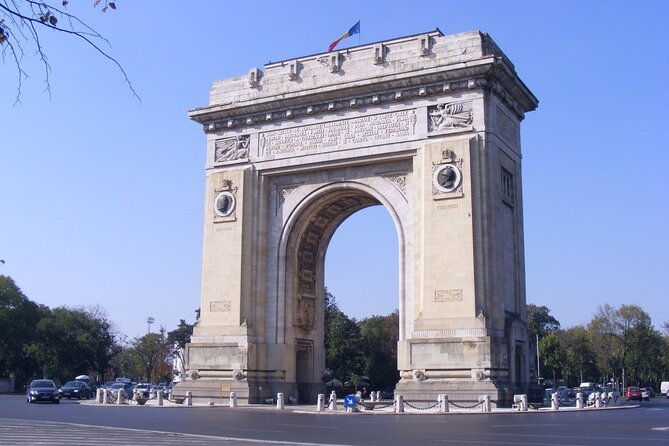
Then comes the Arch of Triumph, described as measuring 27 m in height, about 16 times a person’s average height. That number is a great mental hook. You will look up, feel the scale, then hear how the design connects to other triumphal arches, with a strong comparison to the Arc de Triomphe in Paris.
This stop is presented as a symbol of the fight for freedom. If you are lucky, you can also admire four exhibits. The itinerary lists them clearly, which is a gift for travelers because you know what to look for:
- The Great War for the Unification of Romania (photography and film)
- The Heraldry of the Great Boyar Families (bronze effigies and photographs)
- The Arch of Triumph in Pictures (photographs and scale models)
- The Great Union of 1918
This is one of the best “value” moments on the tour because it offers more than one layer. Even if you only have time for the exhibits quickly, you walk away with themes of unification, noble lineages, visual storytelling, and nation-building dates.
If you like photography, this is a natural stop for angles. The arch is built for it, and the fact that the guide sets up the symbolism helps you frame the photos beyond just architecture.
Romanian Athenaeum and Bucharest’s central pocket for photos and culture
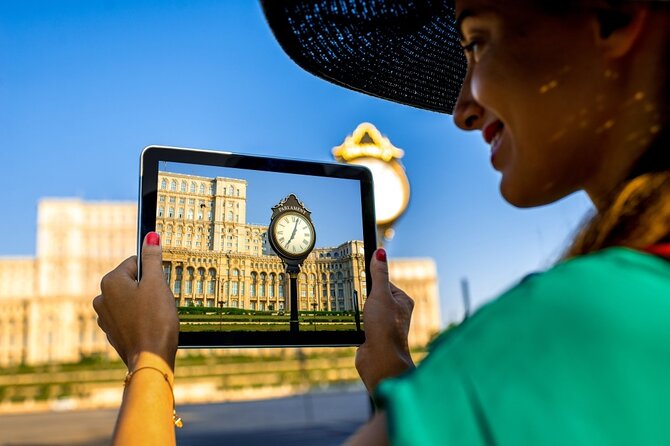
At the Romanian Athenaeum, you will stand in front of a symbol of Romanian culture, described as often considered a symbol of Bucharest as well.
This is the moment where the tour shifts toward cultural atmosphere. Instead of heavy political context, you get a streetscape vibe, where history and everyday life overlap. The itinerary then points you toward an area filled with things worth photographing: boyar houses, luxury stores, churches, restaurants, cafes, inns, museums, casinos, state institutions, and statues.
The list of major landmarks in this central zone is long, but it helps you understand what you are walking through. You can expect to see or be near:
- The Royal Palace
- The Senate Palace or the Central Committee of the Romanian Communist Party, where Ceausescu fled during the Revolution
- The National History Museum, formerly the Post Palace
- The Lady’s Church
- The CEC Palace, including CEC headquarters
- The Palace of the National Military Circle
- Cantacuzino Palace
- Hotels and the Central University Library
In other words, this is your visual wrap-up. The guide helps you see the connection between different eras. You leave with a sense that Bucharest is not one story. It is many layers written on top of each other.
Practical note: since your time is limited, treat this part as a guided walk and orientation period. You will likely want to come back later for one or two specific museums or palaces if you fall in love with a particular style.
Private guide plus private car: what you gain for $140.58 per person
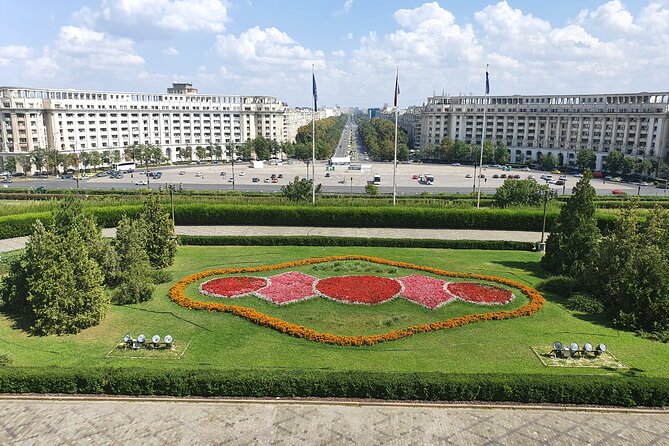
Let’s talk value. At $140.58 per person for about 2 hours, you are paying for three things that usually cost travelers time and stress: private transport, a guide available throughout, and a smooth flow between major sites.
This is not just a taxi with a script. The tour includes a private car reserved only for your group. It also includes all car expenses, including gasoline, parking, and road tolls, plus all taxes. That means you are not constantly budgeting on the fly for transport.
You also get a licensed English-speaking guide/driver available during the tour. That matters a lot for Bucharest because many sites carry political and cultural meaning that you will miss if you only rely on signage.
What is not included is straightforward: food and drinks. If you plan to keep your schedule tight, you might want a quick snack before you start, or plan your meal right after. Since the tour is only 2 hours, hunger can become the main distraction.
Is it worth it? If you are short on time, traveling with family, or you want a story rather than a checklist, the private format makes this price easier to justify. If you are the type who enjoys wandering and reading slowly on your own, you might get by cheaper with public transport and a map. But you lose the fast narrative thread.
Also consider that the itinerary is structured like a historical sweep. You are not just collecting sights. You are building context quickly, which is often the difference between a forgettable trip and one that sticks.
Who this tour fits best
This private tour works best if you:
- Want a guided historical overview without spending hours on transit
- Like seeing the contrast between Communist-era power and Romanian cultural tradition
- Travel as a small group where you want flexibility and a customized pace
- Prefer hotel pickup and a driver so you can relax and focus on the sights
It may be less ideal if:
- You want mostly casual, light sightseeing with little political context
- You are hoping for a long museum day, since this is about 2 hours and stays efficient
If you are traveling with kids, the guide’s pacing will matter. The tour covers intense themes, but a good guide can keep it age-appropriate through explanation and tone. In a private setting, you can ask for that adjustment.
Quick practical notes before you go
A few details from the tour format that help you prepare:
- You can request the pickup time and address, and you should receive confirmation at booking.
- You get a mobile ticket.
- Service animals are allowed.
- The tour is designed for most travelers to participate, and it runs as a private activity with only your group.
- The itinerary is flexible, so if one stop is more interesting to you than another, use that adjustment time.
Should you book this private Bucharest city tour?
If you want Bucharest with a clear storyline, this is an easy yes. The tour is efficient, private, and built around meaning, not just stops. The standout value is how the guide connects the massive political sites, the Revolution setting, and the Romanian tradition of rural life, so you leave with more than photos.
I would book it when your time is limited or when you are traveling with people who would rather learn than hunt for information. This kind of guided sweep helps you get your bearings fast, especially in a city where history is built into the architecture.
If you hate emotional or political content, you might choose a lighter itinerary instead. But if you can handle a bit of weight, you will come away with a sharper understanding of how Bucharest got to where it is now.
Latest reviews from around Bucharest
- LiBEARty Brown Bear Sanctuary and the most important castles from Romania★ 5.0 · 4 reviews
- Hike Bulgaria Love Swing, Veliko Tarnovo and Tarevet Fortress★ 5.0 · 4 reviews
- Bucharest Private Tour with Dracula’s Grave and Ceaușescu Mansion★ 5.0 · 4 reviews
- Hiking in Bucegi Mountains in the Carpathians, Private tour★ 5.0 · 4 reviews
- Dracula Experience In Transylvania★ 5.0 · 4 reviews
- Bucharest Sightseeing – Half-Day Private Tour★ 5.0 · 4 reviews
- Bison Sanctuary, Vlad the Impaler Princely Court & Dracula Grave★ 5.0 · 4 reviews
- Private 6-Day Dracula Tour in Transylvania from Bucharest★ 5.0 · 4 reviews
City Tours, compared.
Bucharest: City Highlights Guided Walking Tour
Read our review →
Bucharest: Communism and History Guided City Walking Tour
Read our review →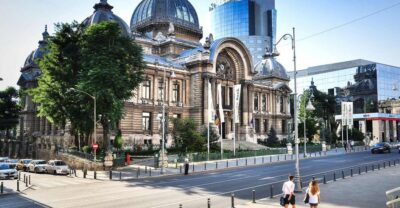
Bucharest Panoramic Sightseeing – Private City Tour
Read our review →
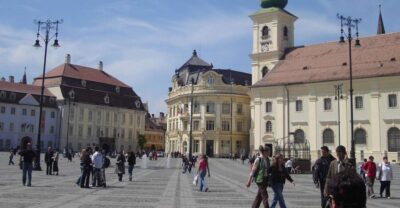
SB01 – City Tour Sibiu: Exploring the Heart of Transylvania
Read our review →Browse the lists this tour appears in