Reviewed · COMMUNIST-ERA BUCHAREST
Bucharest: Communism and History Guided City Walking Tour
This Bucharest communism tour is interesting because it teaches the 20th century using the city you can stand in. You walk the story, so the big political themes feel grounded, not abstract. On-foot context makes the history easier to hold in your head.
I also like how the tour turns monuments into everyday meaning. You’ll connect power to daily life, from nationalization to rationing and surveillance, with guides like Andreea, Daniela, Mihai, and Octavian praised for clear storytelling and good pacing.
One drawback to plan for: this is a 3-hour walking tour and it runs rain or shine. It’s not suitable if you have back problems, and it is not wheelchair-friendly, so bring that in mind before you book.
Key highlights to watch for
- House of People exterior view with real context about Nicolae Ceaușescu’s building mania
- Patriarchal Cathedral start that links religion to the push toward communist rule
- Antim Monastery and moved buildings showing what Bucharest saved during destruction
- Everyday life stops like an old Alimentara grocery store and what people faced day to day
- Calea Victoriei clues tied to communist symbols and the Secret Police
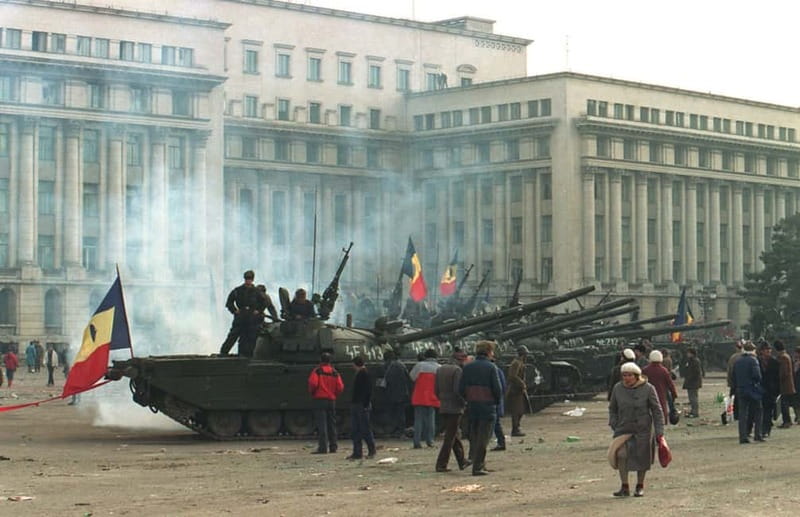
- Revolution Square ending in 1989 so you get the story arc to democracy
Walking Bucharest’s communist timeline, one street at a time
Bucharest has a way of keeping its past visible. This tour helps you read it. Instead of treating communism as a museum topic, you learn how it shaped churches, neighborhoods, shopkeepers, and fear.
What makes the experience especially practical is the pacing. You’re not sprinting from stop to stop. You get a route that moves like a real walk through the city, with a planned rhythm that lets you absorb names, causes, and consequences.
Also, this is not a “light history” outing. You will hear about demolitions and the influence of the Secret Police, including symbols tied to torture. If you want only architecture or only politics, you might find the tone heavy at points, but it’s the accurate tone.
More City Tours in Bucharest
- Bucharest: City Highlights Guided Walking Tour
★ 4.9 · 1,482 reviews - Bucharest: 2-Hour City Highlights Bike Tour
★ 4.8 · 269 reviews - Bucharest Tuk Tuk city tour
★ 5.0 · 188 reviews
Starting at Patriarchal Cathedral: religion in the new political order
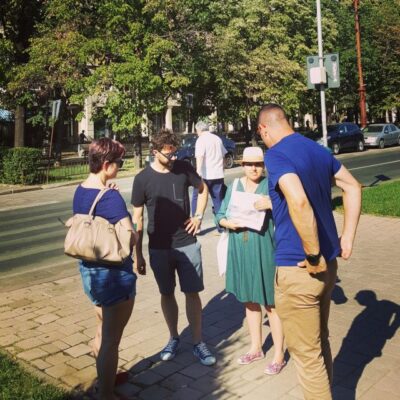
You meet in front of the Patriarchal Cathedral, and the tour begins with the relationship between religion and the communist era. The guide connects historical events that helped set the stage for communism in Romania, so you’re not just learning a random church story.
This first stop matters because it changes how you view later landmarks. When communism tries to control society, places like churches become more than spiritual sites. They become symbols, targets, and tools depending on the regime’s needs.
Practical tip: the closest metro station is Piata Unirii (Union Square). You’ll climb the hill from there up toward the cathedral, so wear shoes you trust on uneven ground.
The nationalization neighborhood: when property becomes policy
From the cathedral area, you head into a nearby neighborhood where you see results of nationalisation. Even if you don’t spot one single “nationalization building” right away, the guide helps you connect what you see to what changed in people’s lives.
This is where the tour’s theme turns into something you can feel. Nationalization wasn’t just paperwork. It affected who worked where, who owned what, and how ordinary routines got reshaped by the state.
You’ll also encounter a short “secret stop” along the way. These quick inserts are useful because they give you a specific detail or turning point, then you return to the walk with a clearer sense of why the next street matters.
House of People from the outside: the price of Ceaușescu’s ego
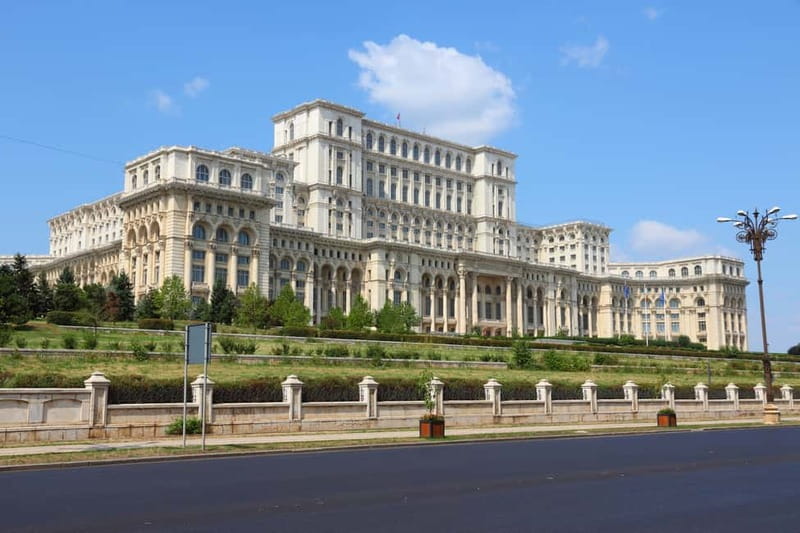
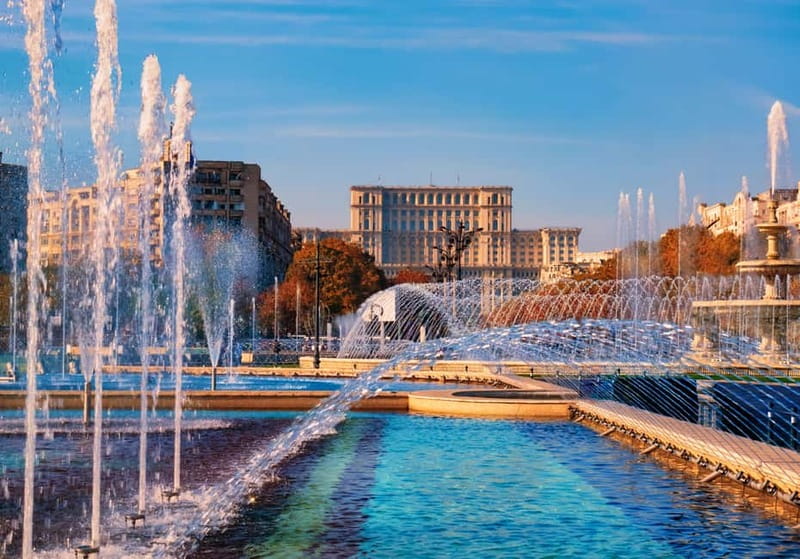
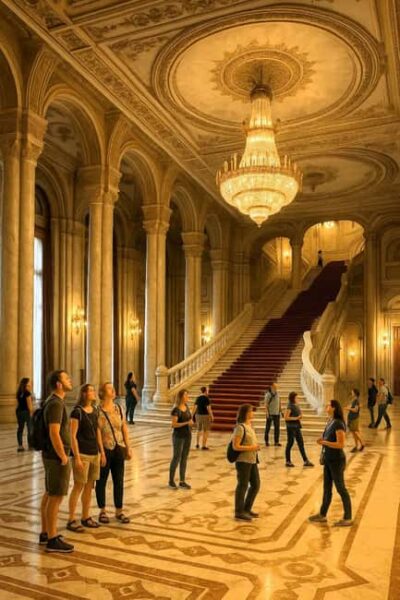
At some point, you reach a big viewpoint over the House of People, today known as the Parliament building. Since the tour only includes an outside view, you won’t be paying museum-entry time for this stop. You’re meant to look up, understand the scale, and hear why it was built this way.
Here, the guide frames the building as a symbol of communism and megalomania tied to Nicolae Ceaușescu. That perspective is the key. If you only see the building as a photo spot, you miss the emotional meaning behind it, the sense of a regime trying to dominate space.
This stop is also a reminder that “history” is not always inside walls. Sometimes it’s in the way a city was reshaped, planned, and forced to accommodate power.
More Historical Tours in Bucharest
- Bucharest: 3-Hour Dark History Tour with a Local
★ 4.9 · 301 reviews - Bucharest: Small Group History, Art & Secrets Tour
★ 4.7 · 152 reviews - Guided Walking Tour of Historical Bucharest
★ 5.0 · 84 reviews - Roma Culture, Realities and Slavery History, Walking tour
★ 4.9 · 52 reviews
Antim Monastery and the buildings that were moved to survive
Next comes Antim Monastery, with a guided explanation while you pass by and then spend a short amount of time there. The tour includes this stop for a reason: it shows how Bucharest’s communist-era destruction wasn’t one simple story.
You’re told about buildings that were moved to save them from destruction, and Antim Monastery becomes one of the examples. That matters because it prevents communism from turning into a single-colored story of ruin. There were still choices, rescues, and survivors built into the chaos.
If you care about architecture, this is one of the stops that feels grounded. You’re not just learning slogans. You’re seeing a specific structure that endured because someone tried to preserve it.
The short break: snack time and a reality check
Midway through, you get a break at a local café. The break is about 15 minutes, and you handle anything you want to eat or drink separately, beyond what the tour provides.
You also receive a communist type of snack. The point isn’t food tourism. It’s a small, memorable way to illustrate everyday conditions and the mood of rationing and scarcity, which you’ll hear about later in the tour.
I like that the guide builds this break into the route. It helps you stay present. You get a mental reset before the tour shifts into the more uncomfortable parts of the story.
Old Alimentara stop: how daily well-being got managed
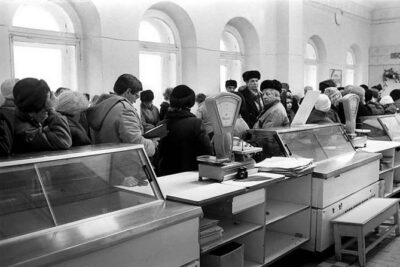
After the break, you’ll stop in front of an old Alimentara grocery store. This part of the tour focuses on well-being and what everyday life felt like under communism.
It’s easy to think of communism only as politics, but this stop keeps pulling you back to basic needs: getting food, finding products, dealing with shortages. You’ll hear how the system impacted what people could buy and how it shaped daily decisions.
If you’re the type who enjoys understanding how people lived, not just what leaders did, you’ll likely find this segment one of the most memorable. It’s the “human scale” portion of the walk.
Calea Victoriei and the Secret Police symbols
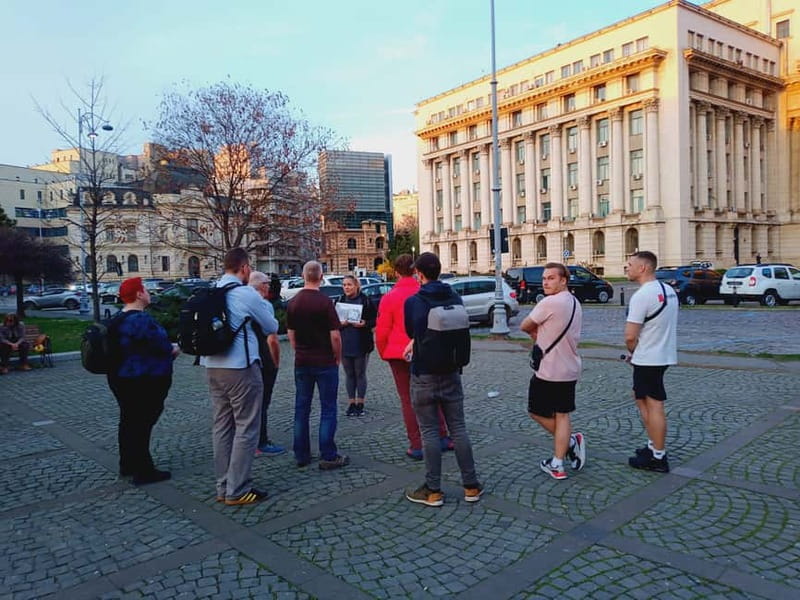
From here, you walk in a normal pace along Calea Victoriei Boulevard, one of Bucharest’s most beautiful streets. The contrast is intentional. You get elegance and beauty in the present, while the guide explains what kind of power watched over people in the past.
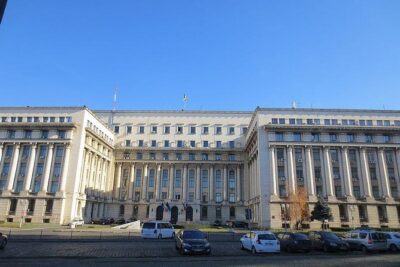
Along Calea Victoriei, you’ll see communist symbols. The most intense part is a reference to where the Secret Police used to operate, including connections to torture. This is not watered down. The tour is straightforward about what the regime did to control society.
You’ll also pass Caru’ cu bere during this section. It’s brief, but it helps you see how different Bucharest eras overlap. The architecture and famous spots don’t disappear just because politics changed. The city kept layering itself.
There’s at least one more short “secret stop” around this area, plus another walking segment. These brief inserts keep the narrative from becoming a straight line of monuments. You get specific story points, then movement again.
Hidden gem moments and why the guide uses short stops
The tour includes a “hidden gem” stop and several short secret stops. You might not recognize every place as famous at first glance, but that’s part of the strategy.
Short stops work like footnotes in real time. They let the guide explain a precise moment, symbol, or effect tied to the communist era, without forcing you to sit through a long lecture. You’ll leave understanding not only what happened, but where it happened in Bucharest.
If you’re worried about fatigue, these brief pauses can actually help. The route gives you little breathing spaces, while still keeping the story moving.
Ending at Revolution Square: the 1989 turn to democracy
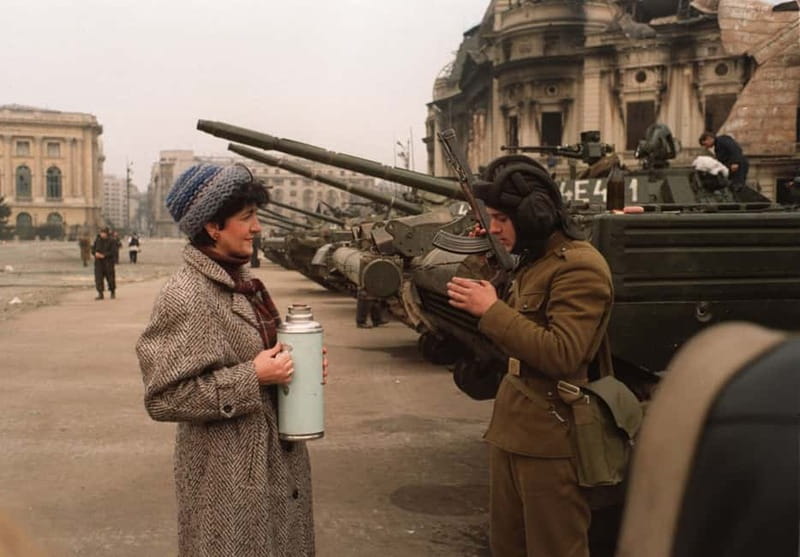
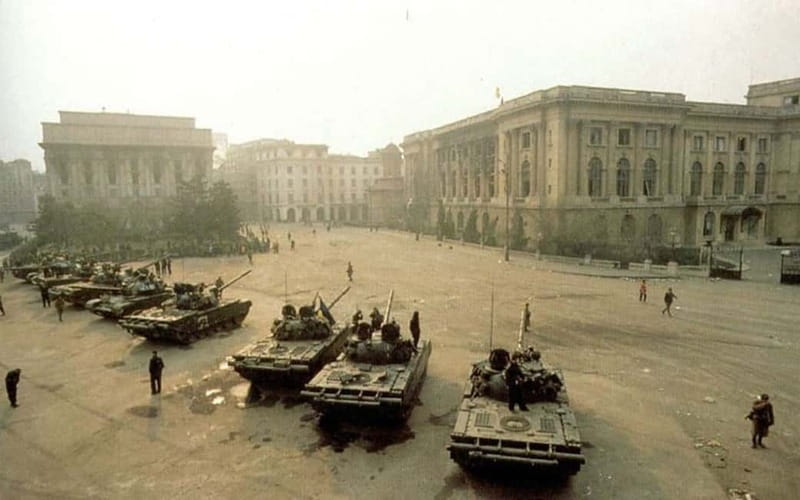
The final stop is Revolution Square in Bucharest. This is where the tour wraps up with the story of the end of the communist regime in 1989 and the beginning of democracy.
This ending matters because it completes the emotional arc. Earlier you learned about fear, demolitions, and control. Then you get what changed, and why that shift was so significant for Romania.
From a practical travel viewpoint, this also helps you anchor the rest of your trip. Once you understand 1989 in a clear sequence, you’ll start noticing how political change still shapes the city’s identity and how people talk about their past.
Price, time, and value: what $31 buys you here
At around $31 per person for a 3-hour guided walk, you’re paying for interpretation, not entry tickets. In a city like Bucharest, it’s the difference between seeing buildings and understanding why they matter.
You also get a lot of structured value: about 15 objectives marking different moments in the communist timeline, an outside view of the House of People, a guided visit area at Antim Monastery, plus stops that focus on daily life like the old Alimentara store. That’s a lot of narrative coverage for one route.
The tour also gives you a small included snack, which is more meaningful than it sounds. It’s one of those tiny sensory reminders that helps the story stick.
If you only have one afternoon and you want context fast, this price feels fair. If you already know Romanian history deeply, you might read it as a refresher, but you’ll still come away with Bucharest-specific connections you can’t easily guess from a map.
Who should book, and who should skip it
This tour is a great fit if you’re visiting Bucharest for the first time and want a fast, organized way to understand communism’s impact. It’s also a good choice if you care about how regimes affect real routines: shopping, living space, church life, and fear.
It works especially well for people who like questions. Many guides, including Andreea, Daniela, Mihai, Octavian, and Octavia, are praised for answering questions and telling stories in clear English. That makes the experience better if you want to go beyond facts and understand the “why.”
Skip it if you have back problems or if you need wheelchair accessibility. The tour is walking-focused, and it’s designed for people who can handle a steady city pace.
Should you book this Bucharest Communism and History walking tour?
Book it if you want Bucharest to make sense. This tour helps you connect the big landmark photos, the quieter neighborhood changes, and the darker Secret Police side of the story into one timeline that you can carry with you.
Don’t book it if you want only upbeat sightseeing or if you need a fully seated or low-impact experience. The topics include torture-linked references and political repression, so mentally prepare for serious material.
If you’re doing Bucharest efficiently, I’d schedule this earlier in your stay. You’ll understand the city’s meaning sooner, and that makes everything else you do feel more grounded.
FAQ
How long is the Bucharest communism walking tour?
It lasts 3 hours.
Where does the tour start?
You meet in front of the Patriarchal Cathedral. The nearest metro station is Piata Unirii (Union Square), and you climb the hill to reach the cathedral.
Do we visit the House of People inside?
No. The House of People (Parliament) is only viewed from outside.
What are some of the main places you see on the route?
You visit or pass by places including Patriarchal Cathedral, Antim Monastery, the House of People (Parliament) from outside, Calea Victoriei Boulevard, Caru’ cu bere, and you finish at Revolution Square. The tour also includes about 15 objectives and several short secret stops.
Is there a break during the tour?
Yes. There is a short break at a local café, about 15 minutes.
Is hotel pickup or drop-off included?
No. Hotel pickup and drop-off are not included.
What should I bring?
Bring comfortable shoes. The tour involves walking.
Does the tour run in bad weather?
It takes place rain or shine. If conditions become unsafe, such as heavy rain, blizzard, extreme wind, or extreme heat, the tour may be canceled with a full refund or rescheduled.
Is the tour suitable for wheelchair users or people with back problems?
No. It is not suitable for wheelchair users or people with back problems.
More Communist-Era Bucharest
- The Real tour of Communism
★ 5.0 · 666 reviews - Life under Communism
★ 5.0 · 358 reviews - 3-Hour Guided Tour of Communist Bucharest
★ 4.9 · 303 reviews - Bucharest: Parliament, Ceausescu House & Village Museum Tour
★ 5.0 · 208 reviews
More Walking Tours in Bucharest
- Bucharest Highlights Walking Tour
★ 5.0 · 469 reviews - Bucharest: Hidden Markets Walking Tour with Tastings
★ 4.9 · 329 reviews - Bucharest: Ghost Stories & Romanian Mythology Walking Tour
★ 4.9 · 287 reviews - Bucharest: Guided Walking Tour with Romanian Snack
★ 4.9 · 228 reviews
Latest reviews from around Bucharest
- LiBEARty Brown Bear Sanctuary and the most important castles from Romania★ 5.0 · 4 reviews
- Bucharest Private Tour with Dracula’s Grave and Ceaușescu Mansion★ 5.0 · 4 reviews
- Hike Bulgaria Love Swing, Veliko Tarnovo and Tarevet Fortress★ 5.0 · 4 reviews
- Dracula Experience In Transylvania★ 5.0 · 4 reviews
- Hiking in Bucegi Mountains in the Carpathians, Private tour★ 5.0 · 4 reviews
- Bucharest Sightseeing – Half-Day Private Tour★ 5.0 · 4 reviews
- Bison Sanctuary, Vlad the Impaler Princely Court & Dracula Grave★ 5.0 · 4 reviews
- Private 6-Day Dracula Tour in Transylvania from Bucharest★ 5.0 · 4 reviews
Communist-Era Bucharest, compared.
Bucharest: Parliament, Ceausescu House & Village Museum Tour
Read our review →
Bucharest Essential Tour: Old Town, Calea Victoriei & Communism
Read our review →
Communism in Bucharest – Landmarks, Museum & Communist Appetizers
Read our review →
Palace of Parliament, Ceausescu House & Village Museum
Read our review →