
Reviewed · COMMUNIST-ERA BUCHAREST
Life under Communism
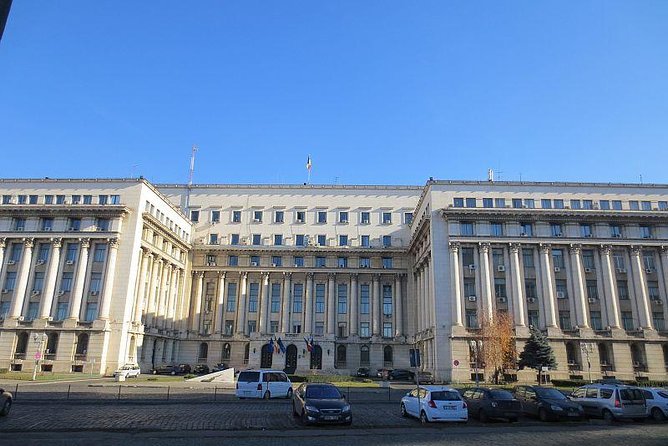
This Bucharest experience is interesting because it uses real places to explain how Communist power took hold, how daily life worked, and how it finally cracked. I like that it links political history to architecture you can still see today, including big-ticket symbols like the Palace of Parliament.
I also like the human side of the story, with guides sharing clear, personal context about daily routines, surveillance, and what changed after 1989. One possible drawback: it is a walking tour, so if you struggle with distances or standing, plan on comfortable shoes and a slower pace.
Key things to know before you go
- Small group size (up to 20) makes it easier to ask questions without feeling rushed
- English-language guide with a reputation for clear communication, including accommodating different needs
- Stop-to-stop storytelling that moves from early repression to the 1989 revolution
- Palace of Parliament is not included in the ticket price, so you may need to pay admission separately
- You’ll see both monumental and everyday Communist traces, not just the obvious landmarks
- Mobile ticket plus a straightforward meet-up in central Bucharest
A 3-hour walk that turns Communist rules into visible places
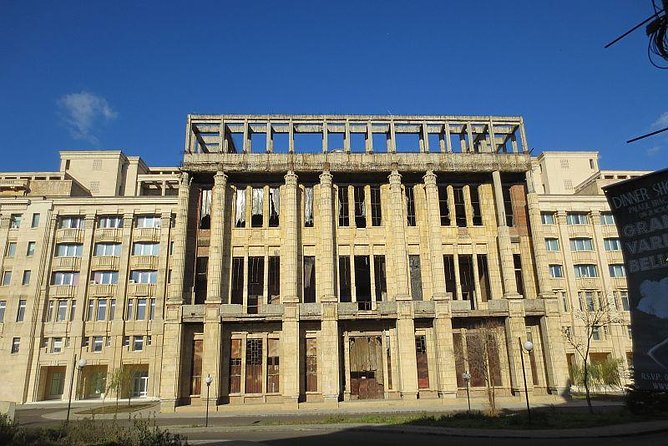
This tour works because it does not treat Communism as a distant concept. You move through Bucharest and watch the story “snap into focus” at the landmarks tied to power, propaganda, and resistance.
It also stays practical. In about three hours, you get a sequence that goes from the rise of the system, to what it did to ordinary people, to the moment it collapsed.
More of communist-era Bucharest:
- Bucharest: Communism and History Guided City Walking Tour
★ 4.9 · 918 reviews - The Real tour of Communism
★ 5.0 · 666 reviews - 3-Hour Guided Tour of Communist Bucharest
★ 4.9 · 303 reviews
Meeting point, walking pace, and where you’ll end
You start at Aleea Dealul Mitropoliei 19, București 030167, and you finish at Revolution Square (Piața Revoluției). That end point is fitting because the tour is built around the break that came in 1989.
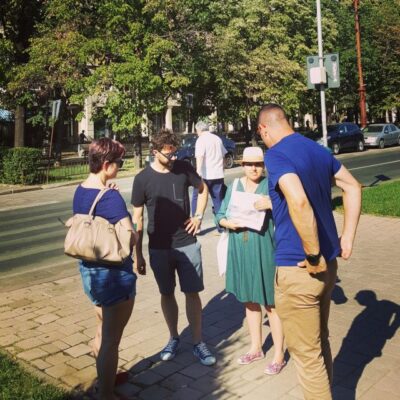
Because it is a walk through central Bucharest, the best prep is simple: wear comfortable shoes and expect some time spent on your feet. The route is designed for “most travelers,” and the group size is capped at 20, which helps keep things moving without feeling chaotic.
Catedrala Patriarhala: where the story begins with coercion
The first stop is Catedrala Patriarhala, and the guide frames it as a starting point for how Communist rule began with violence and pressure. Even if you know the broad timeline, this kind of opening helps you understand that power was not handed over politely.
This is also a good place to get your bearings. You’re not thrown straight into the most dramatic monument yet, so the group can settle into the story before stepping into the bigger symbols later.
What you should notice here
- How the guide sets the tone for the rest of the tour
- The contrast between religious space and state control, which becomes a recurring theme
More Bucharest options to weigh up
- Bucharest: Dracula’s Castle, Peles Castle, & Brasov Old Town
★ 4.5 · 17,858 reviews - Bucharest: Dracula Castle, Peles Castle & Brasov Old Town
★ 4.6 · 10,891 reviews - Bucharest: Dracula’s Castle, Peleș Castle & Brașov Day Trip
★ 4.4 · 6,100 reviews - Bucharest: Palace of Parliament Tickets and Guide
★ 4.3 · 3,182 reviews
Palace of Parliament: politics in stone, and what the ticket means
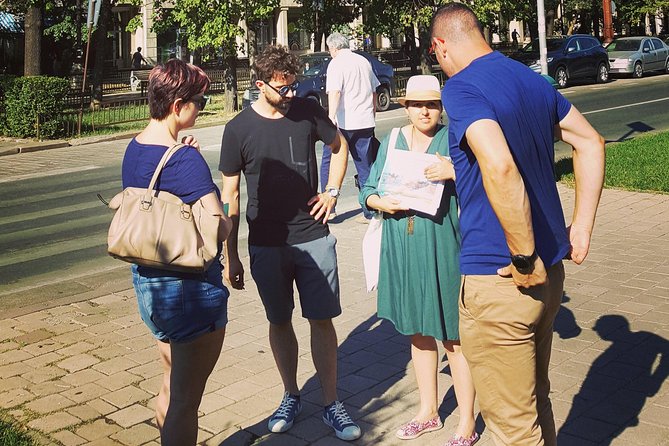
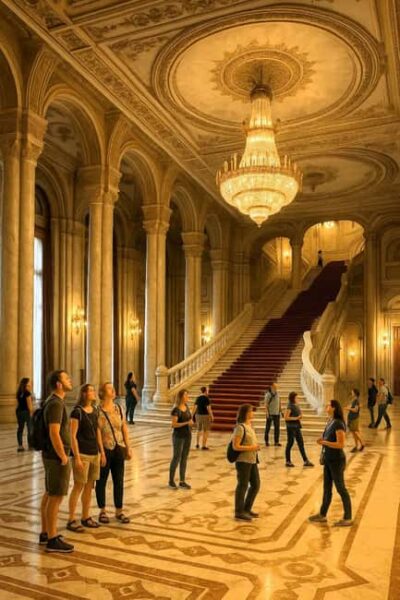
Next comes the Palace of Parliament, the building that often gets described as the world’s second largest administrative structure. The guide explains why that kind of scale mattered, and how the regime used construction to project authority.
Important practical note: admission is not included for this stop. So if you want to go inside, you should expect to pay the ticket separately.
Why this stop is worth planning for
This is one of those places where the outside alone tells a story. The building looks like the state is bigger than the people, and that idea lands quickly when your guide connects it to how power worked.
Manastirea Antim: medieval beauty with Communist pressure in the background
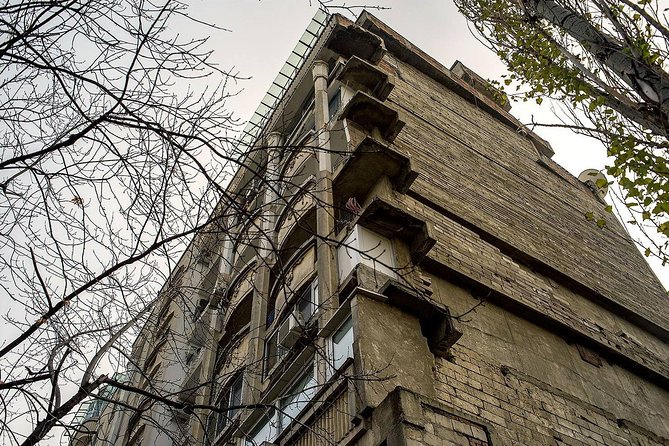
Then you head to Manastirea Antim, a picturesque monastery that adds a quieter, older layer to the day. The angle here is how religion was affected under Communism, meaning this is not just a postcard stop.
What makes it meaningful is the way a medieval setting helps you feel the stakes. When governments try to control ideas, churches and religious communities become part of the political conflict, even if they are not doing politics in the everyday sense.
Quick tips for this stop
- Take a moment to slow down, because it is one of the more scenic pauses
- Use it as a “reset” point before moving into the city’s heavier revolutionary sites
Old Town and Caru’ cu bere: diplomacy played out in public space
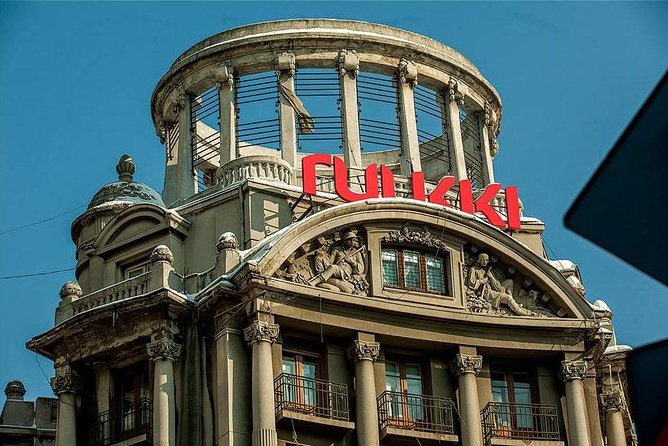
In the Old Town area, the tour points you toward Caru’ cu bere, and ties it to foreign policy under Communism. That detail matters because it shows a different side of the regime.
This is where the story stops being only about what happened to Romanian citizens and becomes about how the world got managed. A place tied to diplomacy helps you see the balance between performance and control.
What I like about this portion of the walk
It nudges you beyond the usual “tanks and dictators” version of history. You get a sense of how regimes can operate in everyday social spaces, not just behind closed doors.
Small Communist remnants you might spot along the way
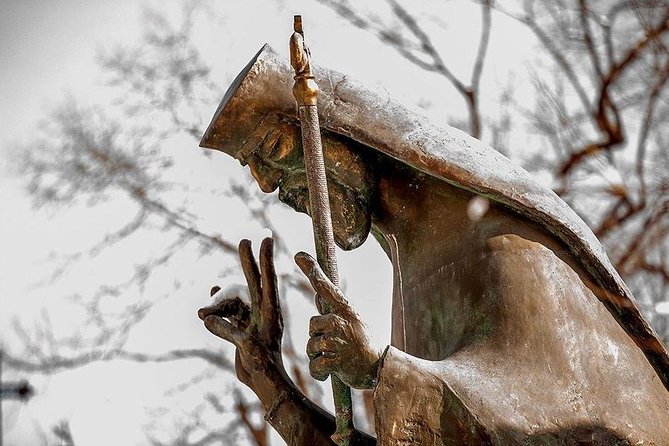
One reason this tour often feels memorable is that it does not limit itself to famous monuments. On the route, the guide may point out smaller Communist leftovers in random-looking corners, including relics connected to surveillance, old food distribution lines, and other everyday signs that the system was everywhere.
Those moments help you understand Communism as a total environment. The architecture is one part, but the routine people lived through is another.
Piața Revoluției: the fall of Ceaușescu in the place it happened
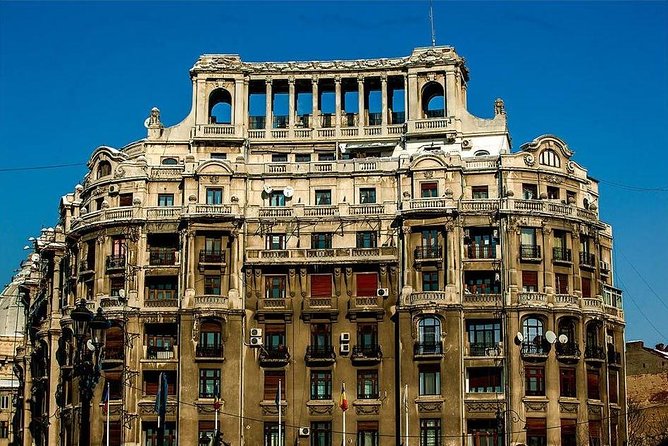
The final stop is Revolution Square (Piața Revoluției), where the tour focuses on the violent collapse of Communism and Ceaușescu’s downfall. This is the emotional landing point of the whole walk.
If you care about 1989, this stop is the reason the itinerary makes sense. The guide ties events to physical space, and that makes the end of the system feel less abstract.
What to expect at the end
- A clear explanation of how the revolution unfolded at street level
- A focus on the shift from repression to rupture
- Room for questions, which helps you turn facts into understanding
Guides make the difference, and you have strong options in English
The best thing about this tour, based on the guide feedback, is the way it gets delivered in English with clarity. Christina is repeatedly praised for being an excellent communicator, including guests who needed clear spoken English and help finding spots to sit or lean during stops.
The tour also lists other guide names you might see depending on the day, including Stefan and Victor. Across these names, the common thread is storytelling that connects political events to lived experience.
A balanced tone matters on this topic
Communism is emotionally loaded. The guide approach is not about cheering or condemning in a one-note way, but about presenting what happened and why it mattered, including both positive and negative costs in people’s lives.
Price and value: $42.33 for a focused, city-based education
At $42.33 per person for about 3 hours, this is a fairly direct value proposition. You’re paying for a professional guide plus a route that does not just show buildings, it explains what those buildings meant.
You do need to factor in one cost possibility: Palace of Parliament admission is not included. That is not a reason to skip the tour. It just means you should budget a little extra if you want full access at the Palace.
And since it is usually booked around 25 days in advance, it can be a good idea to reserve early if your dates are fixed.
Logistics that affect your comfort
This tour includes a professional guide, and it offers mobile tickets. There is no hotel pickup or drop-off, so you should plan on making your own way to the meet point.
The tour also runs in weather, with a note to dress appropriately. Cancellation may happen if weather is too poor, in which case you should expect either a different date or a full refund.
Finally, you can bring service animals, and the tour is near public transportation. That makes it easier to combine with other Bucharest stops before or after.
Who this tour is best for
This is a great fit if you want history that feels connected to street level. You’ll enjoy it if you like political history, the Cold War era, and the way architecture can reflect control.
It is also a good option for first-time Bucharest visitors because it helps you get organized fast. You learn what to look for, not only where to go.
You might want to choose something else if…
If you have very limited mobility and cannot handle a walking route, you may find the pacing challenging. In that case, consider whether you can still manage short segments between stops, and bring a plan for breaks.
Practical tips to get the most out of your 3 hours
Bring questions. This tour is built for conversation, and the guide typically uses that energy to make the story click.
Also, don’t treat each stop as a stand-alone attraction. The power of this experience is the chain of ideas, so pay attention when the guide links one place to the next.
Lastly, pack for real conditions. Even if it is not freezing, Bucharest can be changeable, so dress for comfort and be ready to keep moving.
Should you book Life under Communism in Bucharest?
I think you should book it if you want the Communist era explained through places you can actually stand in. The strong English delivery, the small group size, and the way the tour connects both grand monuments and everyday remnants make it a smart use of time.
Skip it only if you are looking for a light, purely visual city stroll. This one is intentionally heavy, centered on politics, repression, and the 1989 collapse, with real context rather than surface-level impressions.
If you want one solid afternoon in Bucharest that turns buildings into meaning, this tour is an easy yes.
FAQ
How long is the Life under Communism tour?
It lasts about 3 hours (approximately).
What is the starting point and where does it end?
You start at Aleea Dealul Mitropoliei 19, București 030167 and end at Revolution Square (Piața Revoluției).
Is the tour offered in English?
Yes. The tour is offered in English.
How much does the tour cost?
The price is $42.33 per person.
What’s included in the price?
The tour includes a professional guide.
Is food included?
No. Food and drinks are not included, unless specifically noted.
Is the Palace of Parliament admission included?
No. Admission to the Palace of Parliament is not included.
Is this tour a walking tour, and what should I wear?
It involves walking. Wear comfortable shoes, and dress appropriately since it operates in all weather conditions.
What’s the maximum group size?
The tour has a maximum of 20 travelers.
What if I need to cancel?
You can cancel for free up to 24 hours in advance for a full refund. If you cancel less than 24 hours before the start time, the amount paid is not refunded.
Latest reviews from around Bucharest
- LiBEARty Brown Bear Sanctuary and the most important castles from Romania★ 5.0 · 4 reviews
- Bucharest Private Tour with Dracula’s Grave and Ceaușescu Mansion★ 5.0 · 4 reviews
- Hike Bulgaria Love Swing, Veliko Tarnovo and Tarevet Fortress★ 5.0 · 4 reviews
- Hiking in Bucegi Mountains in the Carpathians, Private tour★ 5.0 · 4 reviews
- Dracula Experience In Transylvania★ 5.0 · 4 reviews
- Bucharest Sightseeing – Half-Day Private Tour★ 5.0 · 4 reviews
- Bison Sanctuary, Vlad the Impaler Princely Court & Dracula Grave★ 5.0 · 4 reviews
- Private 6-Day Dracula Tour in Transylvania from Bucharest★ 5.0 · 4 reviews
Communist-Era Bucharest, compared.

Bucharest: Communism and History Guided City Walking Tour
Read our review →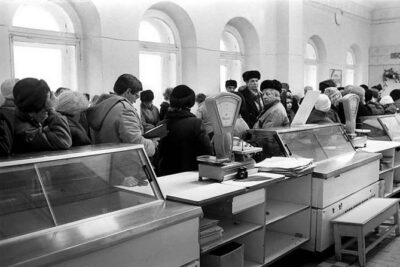
Bucharest: Parliament, Ceausescu House & Village Museum Tour
Read our review →
Bucharest Essential Tour: Old Town, Calea Victoriei & Communism
Read our review →
Communism in Bucharest – Landmarks, Museum & Communist Appetizers
Read our review →
Palace of Parliament, Ceausescu House & Village Museum
Read our review →
Bucharest: Relics of Communism 3-Hour Walking Tour
Read our review →Browse the lists this tour appears in