
Reviewed · COMMUNIST-ERA BUCHAREST
The Real tour of Communism
Bucharest’s communist past is right there in the streets, not stuck behind glass. What makes this tour click is the way the guide turns politics into everyday details, with stories that help you picture how people actually lived. I love how the tour uses real-life context to make the era feel understandable, not distant.
I also like that you hit the big visual anchors without dragging your feet through endless stops. You’ll see the Palace of Parliament scale up close and walk past the places tied to the 1989 turning point at Revolution Square. It is history with directions, so you always know where you are in the story.
The only real drawback is that this is a walking tour for around 3 hours, so you need good shoes and a plan for cold, rain, or wind.
Key highlights worth your time
- Small group pace (max 15 travelers): you can ask questions and keep up without feeling rushed.
- Major Bucharest landmarks, explained: Palace of Parliament, Revolution Square, and more, with clear context.
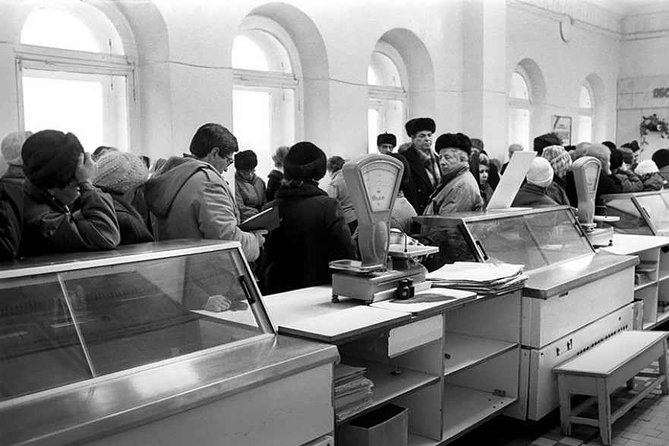
- Daily life under communism, not just dates: rationing, power structures, and how rules shaped routines.
- Balanced storytelling: connects the Ceaușescu period to the broader shift after 1989.
- A mid-tour break with snacks: a snack and warm-up stop help you stay comfortable.
Bucharest’s communist story, told on foot from power to protest
This is the kind of Bucharest tour that changes how you read the city. The buildings, the street layout, and even the “who ate where” details all point back to one thing: centralized power. When you walk it in order, communism stops being a textbook topic and becomes something you can map onto real streets.
The core value here is interpretation. You are not just collecting facts. You are learning what the system did to architecture, food routines, public spaces, and how people navigated daily life. Guides who have led this tour, like Octavian, Daniela, Andrea, Mihai, and John, are repeatedly praised for tying history to human experience and for answering questions well.
Yes, it is focused on communism, but it also sets up the shock of 1989. That matters, because the Romanian revolution had its own shape and stakes, and the tour gives you enough context to understand why the uprising played out the way it did.
More of communist-era Bucharest:
- Bucharest: Communism and History Guided City Walking Tour
★ 4.9 · 918 reviews - Life under Communism
★ 5.0 · 358 reviews - 3-Hour Guided Tour of Communist Bucharest
★ 4.9 · 303 reviews
Meeting at the Patriarchal Cathedral, then walking into power
You start at the Patriarchal Cathedral on Aleea Dealul Mitropoliei 25, Bucharest. It is a real landmark meeting point, but plan to approach it carefully. One helpful heads-up: the cathedral area can involve walking up a slope inside the estate to reach the meeting spot, so wear shoes with grip.
From the start, you are already moving through the kinds of spaces communism tried to control or repurpose. That makes the first stretch feel like the tour has momentum right away. Also, since the tour is near public transportation, you do not need a private ride to get there.
Practical tip: bring layers. The tour runs in all weather conditions, which means you will be outside in whatever Bucharest decides to do that day. For a smooth experience, I’d pack a small umbrella or a rain shell and wear something warm enough that you can stand still for a few minutes without getting miserable.
Stop 1: Patriarchal Palace and the Great National Assembly legacy
Your first stop is the Catedrala Patriarhala area, specifically connected to the Patriarchal Palace, which served as the former headquarters of the Great National Assembly during the communist period. That is a key idea for this tour: structures that look religious or historic on the surface often have multiple chapters.
What you learn here is how power can hide in plain sight. You are not touring a single-purpose museum. You are seeing a space that had authority functions, then later shifted back into a different role. Even if you only spend about 15 minutes on this stop, it sets the tone for the day.
Good news: admission here is listed as free, so you are not paying to learn the opening context. That makes this tour feel like it gets straight to the point early.
What to watch for: listen for how the guide describes the shift from public ideology to physical space. It is the same theme you’ll keep seeing later at the larger government sites.
Stop 2: Palace of Parliament, Romania’s giant and what it represented
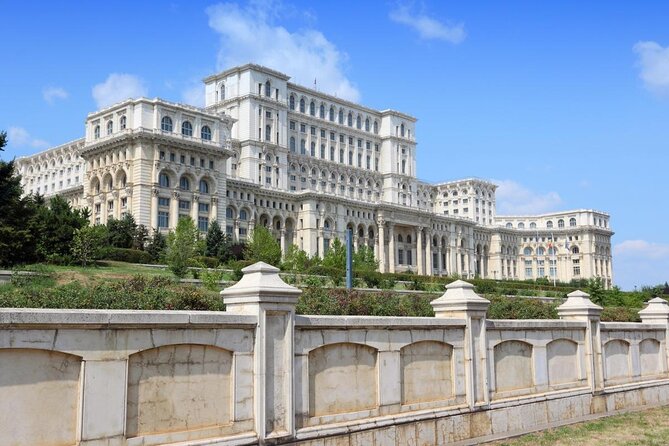
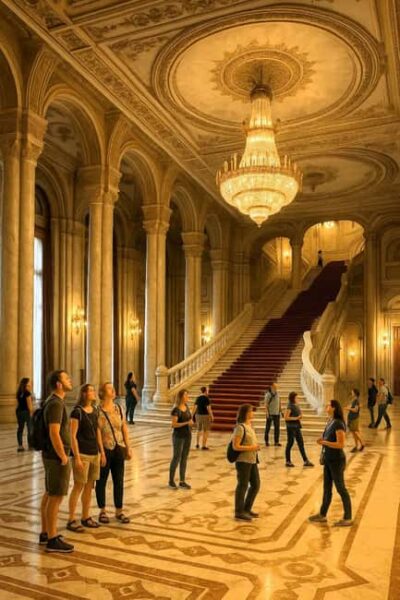
Next comes the Palace of Parliament, one of the city’s most striking buildings. The tour frames it as the story behind the second largest building in the world, which is a dramatic hook, but the real value is what the scale meant in practice.
This stop is about how architecture can act like propaganda. When you stand in the shadow of a massive state project, it is easier to understand why people felt watched, limited, or controlled. Even if you are not focused on building design, the “why this exists” explanation can snap everything else into place.
Time here is about 15 minutes, and admission is not included. That is an important practical point. You may still get a lot from the outdoor or exterior context, but if you want full access inside, budget separately and be ready for that added cost.
Drawback consideration: because the entrance ticket is not included, you should decide ahead of time whether you want to pay for more interior time. If you prefer a walk-and-explain style, you may be fine sticking with what the group covers. If you want museum-style details inside, plan for extra money and time.
More Bucharest options to weigh up
- Bucharest: Dracula’s Castle, Peles Castle, & Brasov Old Town
★ 4.5 · 17,858 reviews - Bucharest: Dracula Castle, Peles Castle & Brasov Old Town
★ 4.6 · 10,891 reviews - Bucharest: Dracula’s Castle, Peleș Castle & Brașov Day Trip
★ 4.4 · 6,100 reviews - Bucharest: Palace of Parliament Tickets and Guide
★ 4.3 · 3,182 reviews
Stop 3: Mihai Voda Monastery and churches that were literally moved
Then you shift from state power to preservation and survival. At the Mihai Voda Monastery, you learn the story of churches from the 16th and 17th centuries that were fortunate enough to be moved or translated rather than demolished.
This is one of those stops that adds texture. It is not only about how communism reshaped Bucharest, it is also about what resisted, what changed hands, and what got saved in the process. The idea that something could be physically relocated so it lived to tell the story today makes the era feel more real.
Admission here is free, and the stop is about 15 minutes. That makes it a smart pause in the middle of heavier political storytelling. You get a break in tone without losing the theme.
If you care about how cities evolve, this stop helps you see that transformation is not always one-direction. Sometimes it is brutal, sometimes it is complicated, and sometimes the “outcome” is survival in a new place.
Stop 4: Old Town favorites and how leadership shaped everyday life
Old Town is where the tour gets personal. You walk through the Old Town of Bucharest, focusing on the favorite restaurants of the communist leadership. Instead of treating food as a side note, the guide connects dining choices to power and routine.
This is a great stop for your understanding of everyday life under communism. It gives you a “how did power show up in daily behavior” angle. You start thinking about who had access, who decided what was available, and how everyday spaces could mirror the hierarchy of the system.
This stop is also free, and it takes about 15 minutes. That short timing keeps the pace moving while still giving you a memorable “ordinary life” lens.
Practical note: Old Town sidewalks can be uneven in places. Keep your balance, especially in wet weather, since the tour is designed to run in all conditions.
Stop 5: Revolution Square and the last days of Ceaușescu
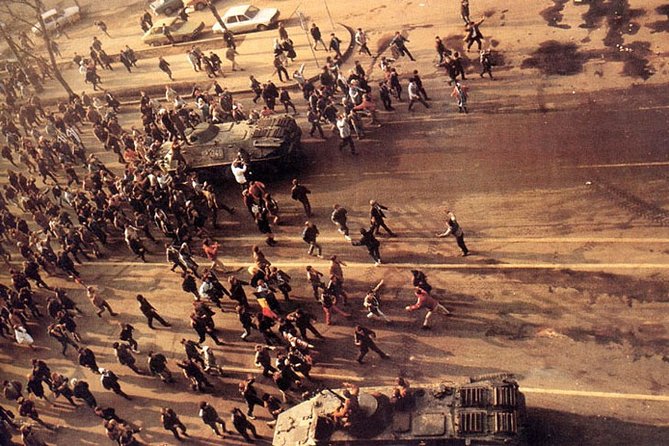
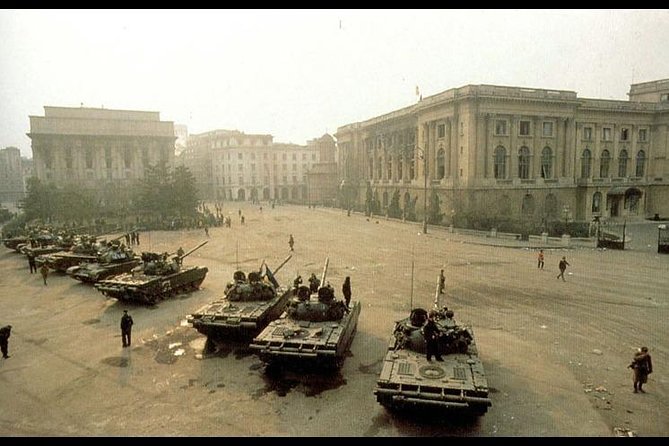
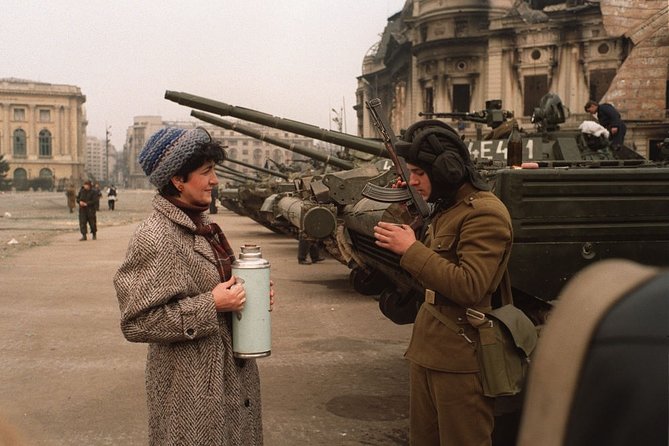
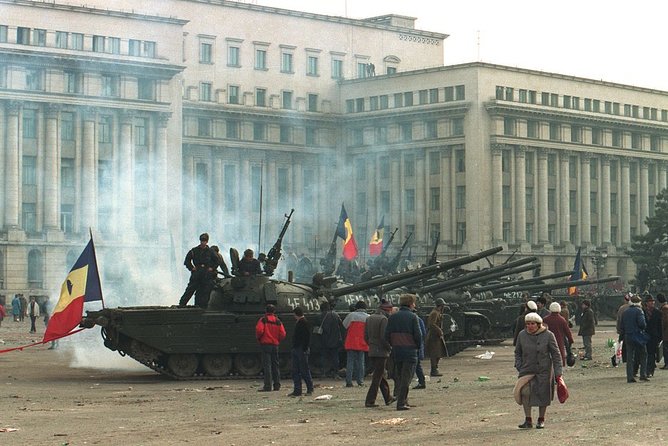
Your final stop is Piața Revoluției, known as Revolution Square. This is the emotional close to the walk, and the tour describes the revolution against the Romanian communist party as the only bloody one among the former Iron Curtain countries.
You will connect the final days of Nicolae Ceaușescu to the first days of freedom after more than 40 years of communist rule. That framing matters. Without it, it is easy to see 1989 as one big date. With it, you understand the transition as something people had to live through, not just witness.
Admission is not something you’re paying for here, since it is a public square stop. You get to stand in the setting and let the guide’s story give the place meaning.
If you’ve only read about the revolution, this stop is where the story starts to feel like a lived event. It is also the stop where questions tend to pop up, because so many myths and simplified versions of 1989 float around online. A good guide helps you sort what matters.
Snacks, coffee breaks, and why this tour feels complete in 3 hours
A lot of walking tours skim the surface because they try to pack too much in. This one has a clear rhythm: five stops, around 15 minutes each, and a tour length of about 3 hours. That time window is a sweet spot for Bucharest, where you want to learn, but you also want to keep energy for the rest of your day.
In the included items, you get snacks, and the tour specifies a snack that survived to present days from communist times. That is a small detail, but it is the kind of detail that makes the era tangible. Food is an easy entry point into the lived reality of scarcity, habit, and what people could actually get.
Some guides also use a mid-tour warm-up and restroom break, with a chance to get a coffee. Even if you do not care about coffee, treat it as a weather survival tool. On a cold day, staying comfortable means you listen better.
Also, keep this in mind: the tour is designed for moderate physical fitness. The route is walkable, but it adds up. You should plan to keep a steady pace and not expect long sitting time.
Price and value: $32.65 for a focused, landmark-based walk
The price is listed as $32.65 per person, and that is easier to judge when you look at what is included. You get a 3-hour guided walking tour in English, with snacks. You also have a small group limit of up to 15 travelers, which usually means less crowding and more room for questions.
From a budget point of view, admissions are mixed. The Palace of Parliament admission is not included, while other stops like the cathedral area and Mihai Voda Monastery are free. So your total cost can depend on whether you decide to pay for the Palace interior.
In other words, you should think of this as paying mainly for the guide and the storytelling, not for museum tickets. If you are the type of traveler who learns fastest when someone connects the dots for you, the value often feels strong.
One more practical hint: this tour is often booked about 22 days in advance on average. That is not “panic book now,” but it is a good sign. If you want a specific date, pick it earlier rather than later.
Who this tour suits best in Bucharest
This tour works especially well if you:
- want to understand Ceaușescu-era Romania without getting lost in too many dates
- like walking tours where the guide explains why buildings and places matter
- appreciate the human side of history, including daily routines and constraints
It may not be ideal if you:
- want a lot of indoor museum time, since the major building stop has admission not included and much of your experience is walking and explaining
- struggle with cold or rain, because the tour runs in all weather conditions and you will be outdoors for the full walk
If you are traveling with someone who likes politics and architecture, you will both get something here. The scale of the Palace draws one kind of interest, and the “how life worked” stories draw another.
Should you book this Bucharest communist walking tour?
If you’re planning a Bucharest visit and you want communism explained in a way you can actually remember, I think you should book this. It is short enough to fit into a busy day, it hits the key landmarks you will keep seeing around town, and it uses real human details to keep the story from turning into a lecture.
The biggest reason to choose it is the blend: major sites plus everyday life context. The biggest reason to hesitate is the outside-walking reality plus the fact that Palace of Parliament admission is not included.
If your travel style is walk, listen, ask questions, and then go explore on your own with sharper eyes, this tour is a strong match.
FAQ
How long is the tour?
It’s about 3 hours.
Is it offered in English?
Yes, the tour is offered in English.
What does the tour price include?
The tour includes the 3-hour walking tour and snacks.
Are tickets included for all stops?
No. Palace of Parliament admission is not included, while Catedrala Patriarhala and Mihai Voda Monastery are listed as free.
Does the tour run in bad weather?
It operates in all weather conditions, but if it is canceled due to poor weather, you will be offered a different date or a full refund.
Can I cancel for a full refund?
Yes. You can cancel up to 24 hours in advance for a full refund. If you cancel less than 24 hours before the start time, the amount you paid is not refunded.
Latest reviews from around Bucharest
- LiBEARty Brown Bear Sanctuary and the most important castles from Romania★ 5.0 · 4 reviews
- Bucharest Private Tour with Dracula’s Grave and Ceaușescu Mansion★ 5.0 · 4 reviews
- Hike Bulgaria Love Swing, Veliko Tarnovo and Tarevet Fortress★ 5.0 · 4 reviews
- Hiking in Bucegi Mountains in the Carpathians, Private tour★ 5.0 · 4 reviews
- Dracula Experience In Transylvania★ 5.0 · 4 reviews
- Bucharest Sightseeing – Half-Day Private Tour★ 5.0 · 4 reviews
- Bison Sanctuary, Vlad the Impaler Princely Court & Dracula Grave★ 5.0 · 4 reviews
- Private 6-Day Dracula Tour in Transylvania from Bucharest★ 5.0 · 4 reviews
Communist-Era Bucharest, compared.

Bucharest: Communism and History Guided City Walking Tour
Read our review →
Bucharest: Parliament, Ceausescu House & Village Museum Tour
Read our review →
Bucharest Essential Tour: Old Town, Calea Victoriei & Communism
Read our review →
Communism in Bucharest – Landmarks, Museum & Communist Appetizers
Read our review →
Palace of Parliament, Ceausescu House & Village Museum
Read our review →
Bucharest: Relics of Communism 3-Hour Walking Tour
Read our review →Browse the lists this tour appears in