
Reviewed · CITY TOURS
5h Bucharest City Tour by Car/Minivan – Small Group max 7 people
Bucharest can feel like two cities at once, old communism right next to fresh city nature and daily life. This max-7 half-day tour is interesting because it strings those contrasts together in one smooth car-and-minivan loop, with quick stops where the guide explains what you are actually looking at.
I like two things a lot. First, you get a small-group format that helps you ask questions and get pointed answers. Second, many of the main photo stops are free to enter, so you are not constantly adding tickets. The one drawback to plan for is the schedule: most stops are about 15 minutes, so it is great for getting oriented, not for slow sightseeing.
Key highlights at a glance
- Small-group max 7 means more guide attention and fewer people to dodge for photos
- Hotel pickup makes this an easy first-day or reset-day activity
- Free major sites keep costs down compared with tours that bundle paid entrances
- Sebastian’s pacing aims to use the full time, not rush you out early
- Văcărești Natural Park adds a real nature break, not just buildings
- Two paid add-ons to budget for: Village Museum and the Romanian Athenaeum
Why this 5-hour Bucharest car tour is a smart first move
If you are trying to get your bearings fast, this is the kind of tour that helps you later explore on your own. Bucharest has big landmarks and also small meanings behind them, and seeing the main ones in a single run helps you understand how the city is laid out and why certain places matter.
The format is also practical. You ride in a car or minivan for the transfers, then stop for photos and stories. That means you spend less time crossing traffic and more time looking at the details the guide calls out.
And because it is a small group, it tends to feel less like a checklist and more like a guided walk through themes: power and architecture, religion and identity, revolution and aftermath, plus a surprisingly calm nature stop.
More City Tours in Bucharest
- Bucharest: City Highlights Guided Walking Tour
★ 4.9 · 1,482 reviews - Bucharest: Communism and History Guided City Walking Tour
★ 4.9 · 918 reviews - Bucharest: 2-Hour City Highlights Bike Tour
★ 4.8 · 269 reviews
Price and value: what you are really paying for
At $95.12 per person for about 5 hours, you are paying mainly for two things: the guided interpretation and the convenience of pickup and routing. The admissions picture is a big part of the value too.
Most stops are marked as free admission, so your day is not dominated by ticket lines or cash math. The two exceptions are explicitly not included:
- Village Museum (Muzeul Satului Dimitrie Gusti): 40 RON per person
- Romanian Athenaeum (Ateneul Roman): 15 RON per person, cash only
So what does that mean for your budget? If you go to both of those paid stops, the tour price is only part of your day’s total. If you skip one, you still get a strong highlights sweep, especially around the Parliament area, central squares, and memorial-style landmarks.
Logistics that make a difference: hotel pickup and a tight max-7 group
The tour starts at 9:30 am and includes hotel pickup, which matters in Bucharest because mornings are when it is easiest to cover more ground before the day gets chaotic. You will also get a mobile ticket, which is handy.
The biggest practical win, though, is the group size. With up to 7 people, the guide can slow down when someone has a good question, and you are less likely to get lost in the shuffle at major monuments. On top of that, the reviews you will read about this tour highlight a very steady approach from the guide, including showing up on time and being proactive when plans change.
One name that came up clearly is Sebastian. He is noted for being friendly and knowledgeable, communicating smoothly by WhatsApp, and adjusting when museum schedules shifted due to a holiday. He also kept the full time working for you instead of ending early.
Palace of Parliament: the big, heavy photo stop with real context
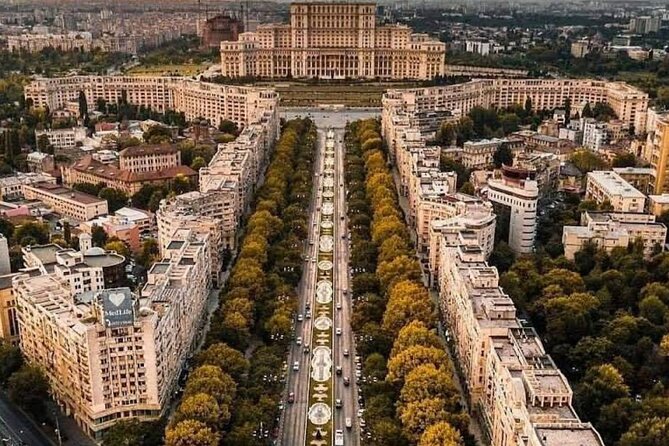
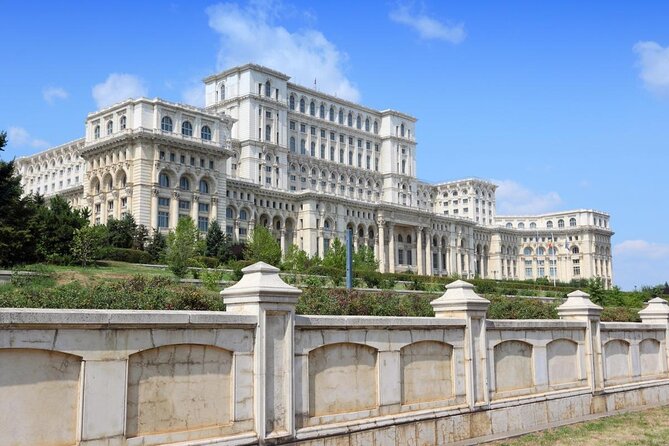
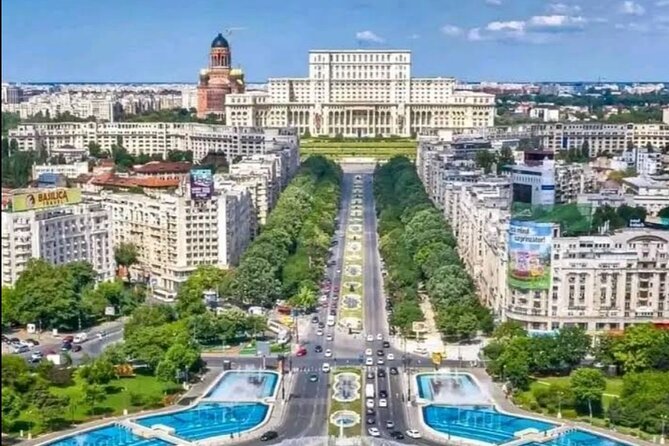
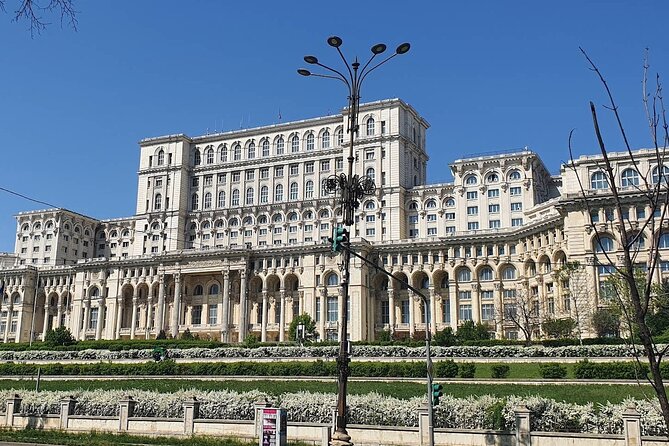
You start at the Palace of Parliament, the famously enormous building with a weight estimate around 4,098,500,000 kilograms. Even if you have seen photos, the scale hits differently in person. It is the kind of place that makes you immediately ask, who built it, who could afford it, and why it was made this way?
Plan for this stop to be mostly about the exterior feel and the guide’s framing. You get around 15 minutes, which is enough to:
- take the key viewpoints for photos
- understand the building’s symbolism and the political climate it represents
- connect it to what you will see next nearby
If you love architecture, this stop sets the tone for the entire day. If you just want “the main sight,” it also delivers quickly.
More Bucharest options to weigh up
- Bucharest: Dracula’s Castle, Peles Castle, & Brasov Old Town
★ 4.5 · 17,858 reviews - Bucharest: Dracula Castle, Peles Castle & Brasov Old Town
★ 4.6 · 10,891 reviews - Bucharest: Dracula’s Castle, Peleș Castle & Brașov Day Trip
★ 4.4 · 6,100 reviews - Bucharest: Palace of Parliament Tickets and Guide
★ 4.3 · 3,182 reviews
People’s Salvation Cathedral: religion, identity, and a construction timeline

Next up is the People’s Salvation Cathedral (Catedrala Mântuirii Neamului). The standout detail here is that it is both monumental and still evolving in the way real projects do. Construction began in 2010, and it was consecrated in 2018, so the story is still unfolding.
The guide’s explanations around this cathedral usually help you see it as more than a big building. You will likely hear how its design is inspired by Byzantine architecture, and how it stands close to the Parliament zone, creating a strong visual and ideological contrast.
Time is tight at about 15 minutes, so think of it as a powerful orientation stop. You will leave with a better sense of Romania’s Orthodox identity and how it shows up in modern monumental construction.
Ferentari and Carol Park: Bucharest’s harder edges and quiet memorial space
From there, you head to Ferentari, a neighborhood in the southern part of Bucharest known for poverty and social challenges, including unemployment and limited public services. The key here is tone. This is not a “tourist wallpaper” stop, and the guide’s framing matters. You get a window into a community that is resilient, with ongoing efforts to improve living conditions and support social inclusion.
In about 15 minutes, you are not there to judge or to “solve” anything. You are there to understand the city as it actually is, not only the postcard version.
Then you shift to Carol Park (Parcul Carol) and the Monument / Tomb of the Unknown Soldier. The monument began in 1963 as a mausoleum for Communist leaders, then changed after 1989. Since 2006, it has served as the tomb honoring Romanian soldiers who died in battle. The tall red granite structure on a stone pedestal makes it hard to miss, and the surrounding park gives you a breather between heavier topics.
This combo is smart: Ferentari confronts present-day social reality, and Carol Park gives you a more reflective pause.
Văcărești Natural Park: the Delta of Bucharest break you will appreciate
Bucharest tours often keep you in streets and squares all day. This one adds a genuine nature pause at Văcărești Natural Park (often called the Delta of Bucharest). It is an urban nature reserve of around 190 hectares, created on the site of an unfinished communist-era reservoir.
The best part of this stop for many people is that it changes your pace. You get another kind of “wow”: birds, amphibians, and rare plants are part of the story, and the park is a symbol of urban biodiversity and environmental resilience.
You will have about 15 minutes, so it is more of a “spotlight and orientation” stop than a full hike. Still, even short visits can help. I find it makes the day feel less like a museum of concrete and more like a real city with breathing room.
Bucur the Shepherd’s Church: a legend you can stand next to
Then you get to a smaller, older layer of Bucharest at Biserica lui Bucur Ciobanul (Bucur the Shepherd’s Church). This is a historic Orthodox church near the Radu Vodă Monastery area. The tour context usually centers on the legend that Bucur the shepherd is connected to the city name.
Even if you treat the origin stories as legend, the church itself matters. It dates back to the 18th century, and it is described as one of the oldest surviving religious buildings in Bucharest. In other words, it is a rare chance to touch the city’s age in a way that feels human-scale.
At roughly 15 minutes, you are going to take it in quickly, but it is the kind of quick stop that sticks because it is quiet and intimate compared to the Parliament-size monuments.
Unirii Square and University Square: central Bucharest with revolution gravity
Next come two central squares that help you understand how public life works in Bucharest.
Unirii Square (Piața Unirii) is one of the city’s largest and most important public spaces, with transportation and commerce nearby. It is also known for large fountains and open space, and it functions like a connector between areas of the city. You can think of this stop as “this is where people move through the city.”
Then comes University Square (Piața Universității), in front of the University of Bucharest and tied strongly to the 1989 Revolution. The square has statues and major surrounding buildings, including the National Theatre. It is a popular meeting place, and the guide’s explanation helps you see it as a living civic stage, not just a photo spot.
Both stops are about 15 minutes, so you are mainly absorbing atmosphere and context. If you want to linger, these are excellent places to come back to after the tour, using your guide’s map in your head.
Ceaușescu’s Mansion (Spring Palace): luxury, secrecy, and what it meant
Now the tour turns to communist-era excess at Ceaușescu’s Mansion, also called the Spring Palace (Palatul Primăverii). It is located in an upscale neighborhood, and a key detail is that it was kept secret during his rule. It opened to the public only in 2016.
You will likely spend around 15 minutes here, but it is a stop that changes how you think about the big government buildings earlier in the day. The mansion story includes opulent interiors, grand halls, and even a private cinema and lavish indoor pool. That contrast is part of the emotional punch.
This is the kind of stop where a short guided explanation helps more than reading alone, because the guide connects the architecture to the political and personal reality behind it.
Village Museum and Romanian Athenaeum: when Romania gets personal
You get a full block of time for culture at Muzeul Național al Satului Dimitrie Gusti, the Village Museum. This is a major contrast to palace-sized monuments. It is an open-air ethnographic museum with over 200 authentic houses, farms, and churches brought from different regions of Romania, set along Herăstrău Lake.
Here, the tour gives you about 1 hour. That time is genuinely useful. You will not see every building in depth, but you can get a strong sense of how traditional village life was organized, and how Romanian architecture differs by region.
The catch is money: the 40 RON per person entrance fee is not included. If you plan to buy the ticket, bring local cash for it. I also suggest you consider wearing comfortable shoes, because open-air museums tend to involve uneven ground and more walking than you expect.
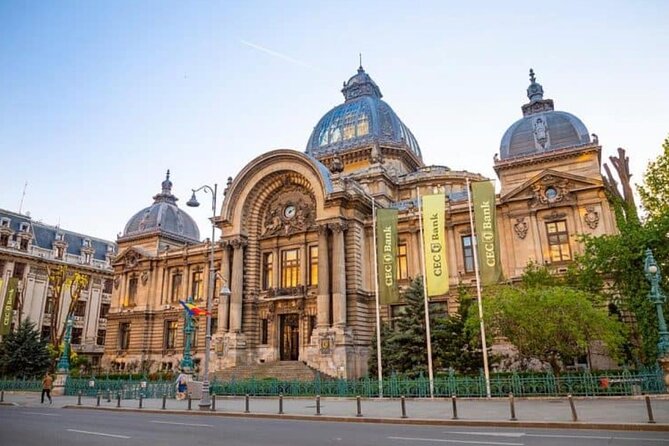
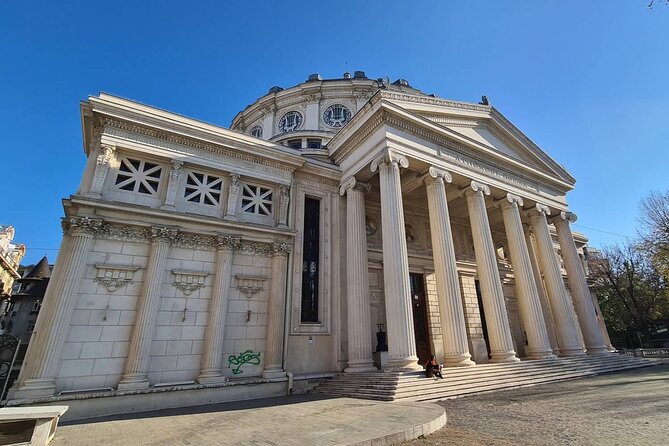
Then, near the end, you visit Ateneul Român, the Romanian Athenaeum. It is a famous concert hall built in 1888 with neoclassical architecture and a domed roof. The day’s context often includes that it hosts the George Enescu Philharmonic Orchestra and is tied to Romania’s major classical music scene.
This stop is about 30 minutes, and the entrance fee is 15 RON, not included, and cash only. If you do not want to pay, you can still get a good feel for the building from outside, but you would miss the full experience.
Triumph Arch, Revolution Square, and Calea Victoriei: the street-level story
To close out the day, the tour shifts back to big public symbols and the urban core.
At the Triumph Arch (Arcul de Triumf), built in 1922 to honor World War I soldiers and rebuilt in granite in 1936, you will notice it is inspired by the Arc de Triomphe in Paris. It is around 27 meters tall and features sculptural decorations by Romanian artists. This one is about national pride and unity, and it is also a key parade site for celebrations.
Then it is Revolution Square (Piața Revoluției), known as the main site of the 1989 Romanian Revolution that ended communist rule. The square has memorials and statues, with major buildings nearby including the former Royal Palace and the Athenaeum. This stop can feel heavy, but it also helps the day make sense because you have seen communism’s physical symbols already. Now you see where the change happened.
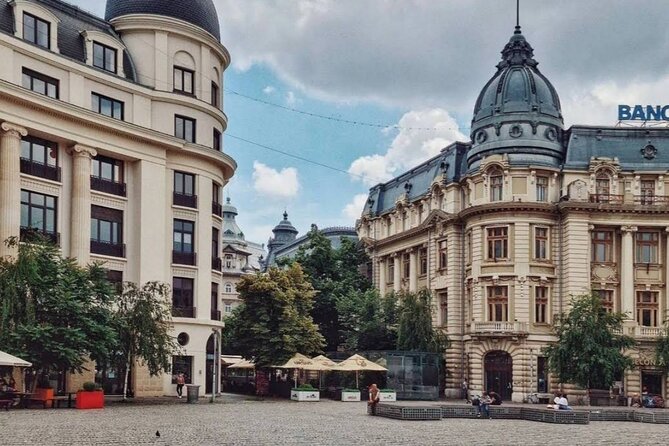
Finally, you walk through a taste of Bucharest’s classy street life on Calea Victoriei, one of the city’s best-known historic streets. It dates back to the 17th century, and it is lined with landmarks, museums, shops, and cafes. In a short 15-minute moment, you get the rhythm of central Bucharest and a few photo angles that remind you where to return later for a longer wander.
Who this tour fits best, and who should skip it
I think this tour is best for you if:
- you want a first-time orientation to Bucharest in about 5 hours
- you prefer hotel pickup and smooth driving over public transport navigation
- you like your history explained with real-life context, not just dates
It might not be ideal if you:
- want deep time at each place. Most stops are around 15 minutes
- are planning to spend lots of time inside museums. The tour gives you one longer culture stop at the Village Museum and a shorter one at the Athenaeum
Should you book this 5-hour small-group tour?
If your priority is to understand Bucharest fast and intelligently, yes, book it. The value works because the tour combines small-group attention, hotel pickup, and a route that links major monuments with the religion, revolution, and nature threads of the city. With many stops marked as free admission, your money mostly goes to interpretation and convenience, not ticket stacking.
I would make one decision point before booking: do you want to add the Village Museum and Romanian Athenaeum entrances? If you do, budget for the 40 RON and 15 RON cash-only fees. If you are fine treating those as optional, the rest of the tour still gives you a strong overview and photo set.
FAQ
What is the meeting time for the tour?
The tour starts at 9:30 am.
How many people are in the group?
This is a small group tour with a maximum of 7 travelers.
Is hotel pickup included?
Yes. Hotel pickup is included.
What language is the tour guide?
The tour includes a professional tour guide in English.
Are entrance tickets included?
Most stops are listed as admission ticket free. The Village Museum entrance fee (40 RON) and the Romanian Athenaeum entrance fee (15 RON, cash only) are not included.
Is lunch included?
No. Lunch is not included.
How long is the tour, and how much time is spent at each stop?
The tour is about 5 hours. Most stops are around 15 minutes, the Village Museum stop is about 1 hour, and the Athenaeum stop is about 30 minutes.
Can I cancel for a full refund?
Yes. Free cancellation is offered, and you can cancel up to 24 hours in advance for a full refund.
Latest reviews from around Bucharest
- LiBEARty Brown Bear Sanctuary and the most important castles from Romania★ 5.0 · 4 reviews
- Hike Bulgaria Love Swing, Veliko Tarnovo and Tarevet Fortress★ 5.0 · 4 reviews
- Bucharest Private Tour with Dracula’s Grave and Ceaușescu Mansion★ 5.0 · 4 reviews
- Hiking in Bucegi Mountains in the Carpathians, Private tour★ 5.0 · 4 reviews
- Dracula Experience In Transylvania★ 5.0 · 4 reviews
- Bucharest Sightseeing – Half-Day Private Tour★ 5.0 · 4 reviews
- Bison Sanctuary, Vlad the Impaler Princely Court & Dracula Grave★ 5.0 · 4 reviews
- Private 6-Day Dracula Tour in Transylvania from Bucharest★ 5.0 · 4 reviews
City Tours, compared.
Bucharest: City Highlights Guided Walking Tour
Read our review →
Bucharest: Communism and History Guided City Walking Tour
Read our review →

Bucharest Panoramic Sightseeing – Private City Tour
Read our review →
SB01 – City Tour Sibiu: Exploring the Heart of Transylvania
Read our review →Browse the lists this tour appears in