
Bucharest can feel like a set of time capsules stacked on top of each other. This Past and Present walking tour is a smart way to see the city’s major landmarks while someone explains what each era tried to build, and what it left behind.
I like that the route is short enough to keep moving, but packed with recognizable places like Piața Revoluției and Stavropoleos Monastery. I also love the human factor, especially the way guides like Marius stay flexible with pacing and questions, so it doesn’t turn into a lecture you nod through.
One thing to consider: the tour is offered in English, and the guide can speak English, French, and Italian, but language comfort can vary. If you want Italian specifically, it’s worth confirming that ahead of time so you get what you came for.
Key things you should know before you go
- Private, group-only format so you can ask questions and set your pace
- Step-by-step landmarks that connect Revolution Square to the older streets of Lipscani
- Mostly free stops for sightseeing, with only some optional interiors
- Marius-style guidance that mixes big history with people stories and street-level detail
- A practical end point in Old Town, handy for continuing on your own
Entering Bucharest through the Revolution Square storyline
The best part of this tour is the way it helps you read Bucharest. You start in the city center, then the story keeps flipping between royal power, communist power, and the local religious and civic life that survived all of it.
You’ll cover key places without doing the usual sightseeing sprint where you barely know what you’re looking at. Instead, you pause at spots that show how the same city block can reflect different regimes and different values. It’s an easy way to get your bearings fast, even if Bucharest is new to you.
And because this is a private walking tour, your group gets the guide’s attention. That matters in a city where the monuments can look impressive but still feel confusing if no one ties them to real events.
More Walking Tours in Bucharest
- Bucharest: City Highlights Guided Walking Tour
★ 4.9 · 1,482 reviews - Bucharest: Communism and History Guided City Walking Tour
★ 4.9 · 918 reviews - Bucharest Highlights Walking Tour
★ 5.0 · 469 reviews
Meeting at Ion Luca Caragiale National Theatre, then into University Square
The tour begins at the Ion Luca Caragiale National Theatre area, on Bulevardul Nicolae Bălcescu. This is a good starting point because it sits near the heart of the city, so you’re not spending the first hour commuting across Bucharest.
Stop one focuses on University Square and nearby monuments, including the Revolution Martyrs Memorial and the National Theatre area. Even if you’re not a museum person, these are the kinds of places where names and architecture point to real moments. They make the city’s political shifts feel less abstract.
This is also where I like the tour’s basic rhythm: short walk, quick context, then another short walk. You stay oriented, and you don’t lose the thread.
Piața Revoluției: where the big buildings explain the era
Next comes Piața Revoluției, Bucharest’s central stage for political change. Here you’ll see the Royal Palace surroundings, the Romanian Atheneum area, the former Communist Party headquarters, and the Rebirth Memorial.
This is the core “past and present” section. You’re surrounded by grand facades, but the guide helps you notice the human side of the story, including how public spaces are used to signal authority. You also get a sense of why Bucharest feels like it’s constantly rewriting itself.
Timing is short here, so don’t expect long stops for photo ops at every corner. The value is in the sequencing. By the time you leave Piața Revoluției, the rest of the walk makes more sense.
A quick pass by the Royal Palace museum front
Right after the Revolution Square area, you get a brief pass by the front of the museum connected to the Royal Palace in the same square zone.
This kind of stop is useful if you’re trying to plan your own day after the tour. You’ll see enough to recognize it later, and you can decide if you want to come back for a longer visit. It’s also a reminder that the city’s history isn’t locked inside one building. It’s part of the street scene.
Because it’s a quick stop, you won’t get a full museum explanation. The tour’s strength stays focused on the city streets and key landmarks.
Same base, a completely different day:
- Bucharest: Dracula’s Castle, Peles Castle, & Brasov Old Town
★ 4.5 · 17,858 reviews - Bucharest: Dracula Castle, Peles Castle & Brasov Old Town
★ 4.6 · 10,891 reviews - Bucharest: Dracula’s Castle, Peleș Castle & Brașov Day Trip
★ 4.4 · 6,100 reviews - Bucharest: Palace of Parliament Tickets and Guide
★ 4.3 · 3,182 reviews
The Palace of Parliament exterior: the People’s House on the outside
You then head to the Palace of Parliament, known for being built at the dictator’s orders. Even if you already know the general outline of communist-era politics, seeing the building’s scale in person changes your understanding fast.
In this tour format, you’re there briefly for viewing rather than a long interior visit. The itinerary is designed for walking and context, not for turning the day into a full architectural program.
Practical note: the Palace of Parliament area can feel like you’re standing at the edge of history with no way to shrink it. Your guide helps you connect why that matters, and why buildings like this become political symbols long after the original regime is gone.
Stavropoleos Monastery: religion and survival in 18th-century form
After the heavy monumental scale, you switch gears to Stavropoleos Monastery, an 18th-century Orthodox monastery from 1724.
This stop is short, but it’s a powerful contrast. Here, you see a different type of endurance. Empires and governments come and go, but religious communities and local traditions tend to keep leaving traces.
If you like places where the past feels human, this is one of the best moments of the walk. It’s calmer, smaller in feel, and easier to appreciate without needing a ticket or a long detour.
Palatul CEC and eclectic architecture at street level
Next you pass by Palatul CEC, noted for its eclectic architecture. This is the tour’s “look up for two seconds” moment.
Sometimes historic cities lose you because everything is either grand and far away, or tiny and hard to understand. This stop helps you practice a different kind of sightseeing: noticing materials, shapes, and style choices that reveal how Bucharest wanted to present itself at various points.
You don’t need to be an architecture expert. The guide’s job here is to translate what you’re seeing into clear meaning.
Lipscani: the old merchants street feel
Then you reach Lipscani, the famous merchants street from older times. This area is where the walking tour becomes more about atmosphere.
Lipscani helps you connect the historical storyline to daily city life. Even with all the dramatic monuments, it’s the street culture that makes Bucharest feel like a living city rather than a history display.
The tour keeps this portion to a manageable length. That’s a plus, because it gives you a launch point for continuing into Old Town afterward without feeling rushed out of your own curiosity.
Victoriei Street passes and Ateneul Roman exterior
On the way back toward the Parliament Palace area and beyond, you pass by the National Museum of Romanian History on Victoriei street.
It’s a brief pass, but it helps you connect the big museum institutions to the surrounding street grid. You’ll recognize the building later if you choose to add a museum day. And it keeps your mental map working.
The tour also includes Ateneul Roman with an exterior visit. There’s an optional inside chance for the entrance lobby and concert hall if availability allows, and that visit is not included.
This is one of those smart add-ons. If you get lucky and it’s open, great. If not, you still leave with an excellent exterior reference point and a clear sense of why this building matters.
Guide factor: why Marius-style storytelling makes it work
A walking tour lives or dies by the guide’s voice, not the list of stops. This one stands out because the guide keeps things engaging and adapts to the group.
I especially like how guides such as Marius combine big events with people stories. In practice, that means you get a better grasp of who lived through these changes, not just what governments did.
You also get flexibility. One of the best signs is when a guide can shift the pace to match questions and walking speed. That matters for families and mixed ages, including teens and younger kids, because it keeps attention from turning into a constant “are we done yet?”
Also, a practical bonus: a guide can help you navigate back using public transport if you need it. That turns the tour into something useful, not just a set of photos.
Price and value: what about $54 gets you
At $54.07 per person, you’re paying for a short, focused introduction to Bucharest’s major landmarks, led by a private guide in English (with the guide also able to speak French or Italian).
The biggest value lever here is that a lot of the sightseeing moments are free admissions based on the stop types and viewing style. So your money goes toward human context, not entrance fees stacking up.
You also avoid the common frustration of DIYing a route and still ending up with unanswered questions. This tour doesn’t just point at sights. It tries to explain why those sights exist in the first place.
If you’re only in Bucharest for a few days, this kind of walking tour can save you time. It helps you prioritize follow-up visits without wasting hours guessing.
Timing, pacing, and what to wear for a smooth walk
The walk is about 2 to 3 hours, depending on pacing and questions. The itinerary keeps each stop relatively short, which is good because Bucharest is easiest to enjoy when you keep moving.
Wear comfortable shoes. You’ll be on sidewalks and crossing between central neighborhoods and landmarks. Bring a light layer too, because weather can turn on you in a hurry, and the experience depends on good weather.
Bring water if it’s warm. Meals and drinks are not included, so plan to grab something after. Also think about sun or rain cover, since you’ll spend much of the time outdoors.
Who this tour is for, and who might skip it
This is a strong choice if you:
- Want a first-pass orientation to central Bucharest
- Prefer walking with explanations over reading plaques alone
- Like history connected to real places, not just dates
- Travel with family members who need a lively pace
You might skip it if you:
- Want a long, fully ticketed museum day, because this tour focuses on viewing and short context stops
- Only want interiors, since the tour mostly centers on exteriors and brief viewing, with only an optional Ateneul inside chance
Should you book this Bucharest Past and Present tour?
I think you should book if you want the easiest path to understanding why Bucharest looks the way it does today. The route is packed with recognizable landmarks, but it stays practical and walkable.
Book it early in your trip if you like a strong orientation first. That way, you’ll know where to go next, and you won’t feel like you’re wandering with no map in your head.
Just do one smart check before you arrive: confirm the language you want, especially if you plan to tour in Italian. Otherwise, this tour is a very good way to connect Revolution-era landmarks, religious heritage, and Old Town streets into one coherent walk.
FAQ
What is included in the Bucharest Past and Present walking tour?
The tour includes a private tour with an experienced English/French/Italian speaking guide.
How long does the walk take?
It runs about 2 to 3 hours.
What languages is the tour available in?
The tour is offered in English. The guide speaks English, French, and Italian.
Are any entrances or tickets included for stops?
Many stops are listed as free for admission. The Ateneul Roman inside visit, if available, is optional and not included.
Where does the tour start and where does it end?
It starts at Ion Luca Caragiale National Theatre, Bulevardul Nicolae Bălcescu 2, Bucharest. It ends in Old Town, Bucharest.
Is this a private tour or shared group?
It is a private tour, and only your group will participate.
Can I cancel for a full refund?
Yes. You can cancel up to 24 hours in advance for a full refund, based on local time.
Latest reviews from around Bucharest
- LiBEARty Brown Bear Sanctuary and the most important castles from Romania★ 5.0 · 4 reviews
- Bucharest Private Tour with Dracula’s Grave and Ceaușescu Mansion★ 5.0 · 4 reviews
- Hike Bulgaria Love Swing, Veliko Tarnovo and Tarevet Fortress★ 5.0 · 4 reviews
- Hiking in Bucegi Mountains in the Carpathians, Private tour★ 5.0 · 4 reviews
- Dracula Experience In Transylvania★ 5.0 · 4 reviews
- Bucharest Sightseeing – Half-Day Private Tour★ 5.0 · 4 reviews
- Bison Sanctuary, Vlad the Impaler Princely Court & Dracula Grave★ 5.0 · 4 reviews
- Private 6-Day Dracula Tour in Transylvania from Bucharest★ 5.0 · 4 reviews
Walking Tours, compared.
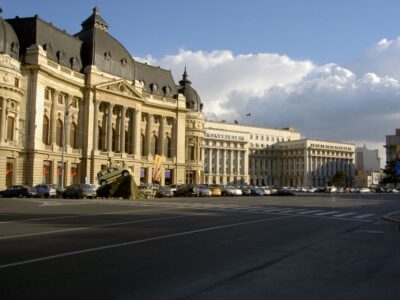
Bucharest: City Highlights Guided Walking Tour
Read our review →
Bucharest: Communism and History Guided City Walking Tour
Read our review →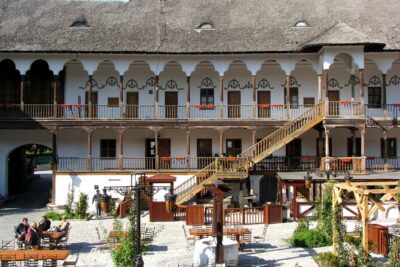

Bucharest: Hidden Markets Walking Tour with Tastings
Read our review →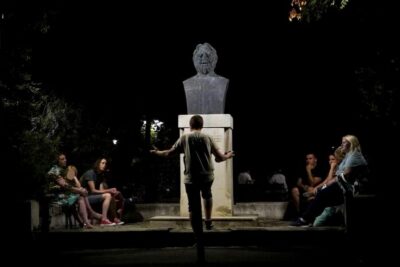
Bucharest: Ghost Stories & Romanian Mythology Walking Tour
Read our review →
Bucharest: Guided Walking Tour with Romanian Snack
Read our review →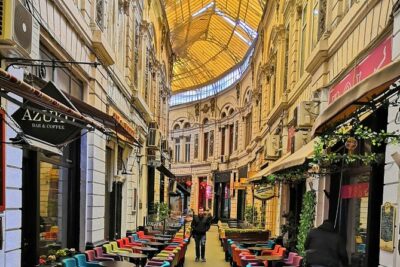
Walking Tour- Delightful Bucharest (Highlights, Stories, Sights)
Read our review →Browse the lists this tour appears in