
Reviewed · WALKING TOURS
Bucharest: private and exclusive Italian walking tour
This tour is interesting because it treats Bucharest like a living storybook, where grand boulevards and tucked-away corners explain what happened, and why it matters. I like two things a lot: the private Italian guide who can tailor the pace, and the flexible routing that helps you actually keep up and ask questions instead of racing from stop to stop.
One consideration: it’s an Italian-only experience and it’s not suitable for hearing-impaired people. Also, even though it’s marked wheelchair accessible, the tour notes it is not suitable for people with mobility impairments, so double-check your own needs before you book.
Key highlights that make this tour worth your time
- Private, exclusive format with a guide who adapts to your pace
- Italian language and a certified guide for clear, detailed explanations
- Old Town + Lipscani energy, with both famous and less-obvious stops
- Calea Victoriei architecture, the elegant boulevard with historic buildings
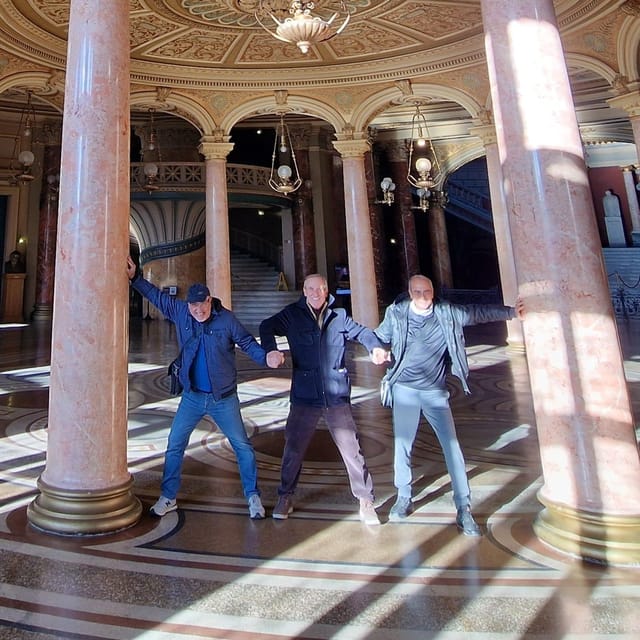
- Revolution Square and the Romanian Athenaeum, a strong political and cultural anchor
- Practical photo stops, like Umbrellas Street, without turning the walk into a photo marathon
Bucharest with an Italian guide, not a hurried group shuffle
Bucharest can feel like two cities at once. You get the past in stone and ornament, then you get the push toward the future in the way streets are used, rebuilt, and reinterpreted. This walking tour works well because it keeps the focus on what you can see right in front of you, then connects it to the stories behind each place.
The big win for you is that it’s private and exclusive. That means you’re not stuck with a standard script where one pace fits everyone. If you want to linger at a facade or slow down because your shoes are complaining, your guide can adjust. You also get a guide who is there for your questions, not for the next bus of people.
The tour is designed to be doable at a 2.5-hour length. That’s long enough to feel like you covered something real, but short enough that you’re not stuck out in the city until your brain turns to soup. Bring comfortable shoes, and plan on lots of looking up, since Bucharest loves building details.
More Walking Tours in Bucharest
- Bucharest: City Highlights Guided Walking Tour
★ 4.9 · 1,482 reviews - Bucharest: Communism and History Guided City Walking Tour
★ 4.9 · 918 reviews - Bucharest Highlights Walking Tour
★ 5.0 · 469 reviews
Starting at Caru cu bere on Strada Stavropoleos 5
You meet at Strada Stavropoleos 5, right in front of Caru cu bere. The guide waits there, recognizable with a professional identification card. It’s a smart meeting spot because it puts you at the edge of the Old Town area where a lot of Bucharest’s energy comes from.
The first stop is a quick guided introduction at Caru cu bere (about 10 minutes). You’re not expected to do a long sit-down meal. Instead, you get context for why this area became such a magnet for nightlife and gatherings, even while the city’s political and social story kept shifting around it.
If you’ve never visited Bucharest before, this opening helps you get your bearings fast. You’ll start noticing patterns right away: different architectural styles rubbing shoulders, street-level life that feels informal, and landmark buildings that suddenly make sense once you understand the timeline.
Lipscani’s meaning: nightlife streets with hidden layers
A lot of people associate the Old Town with Lipscani Street, and yes, it’s known for nightlife. But this tour uses that famous name as a doorway, not the whole story. You spend time in the area where entertainment, religion, commerce, and politics all left marks.
That matters because Bucharest’s character isn’t only about big monuments. It’s also about how everyday spaces evolved. When your guide points out details at the street level, you start seeing the city’s transitions more clearly, even if you can’t name every era yet.
You’ll also learn how certain places in the center gained their identity over time. That turns a stroll into something more useful: you’ll understand what you’re looking at, not just where you are.
Stavropoleos Monastery and the feeling of walking into another tempo
Next up is Stavropoleos Monastery (about 15 minutes). Monasteries can sometimes feel like they’re there to be photographed and moved past quickly. Here, the timing suggests you’ll get a guided visit with enough explanation to make the place more than a pretty stop.
This is the kind of place where your guide’s job is to translate the visual language: the relationship between the religious space and the street life around it, and how Bucharest’s center grew while older institutions stayed anchored.
If you like architecture, you’ll probably enjoy this stop because monasteries offer visual clues that are easier to read than some larger civic buildings. Even if you don’t catch every detail, the atmosphere helps you slow down and pay attention.
Same base, a completely different day:
- Bucharest: Dracula’s Castle, Peles Castle, & Brasov Old Town
★ 4.5 · 17,858 reviews - Bucharest: Dracula Castle, Peles Castle & Brasov Old Town
★ 4.6 · 10,891 reviews - Bucharest: Dracula’s Castle, Peleș Castle & Brașov Day Trip
★ 4.4 · 6,100 reviews - Bucharest: Palace of Parliament Tickets and Guide
★ 4.3 · 3,182 reviews
Manuc’s Inn: commerce, travelers, and the Old Town hustle
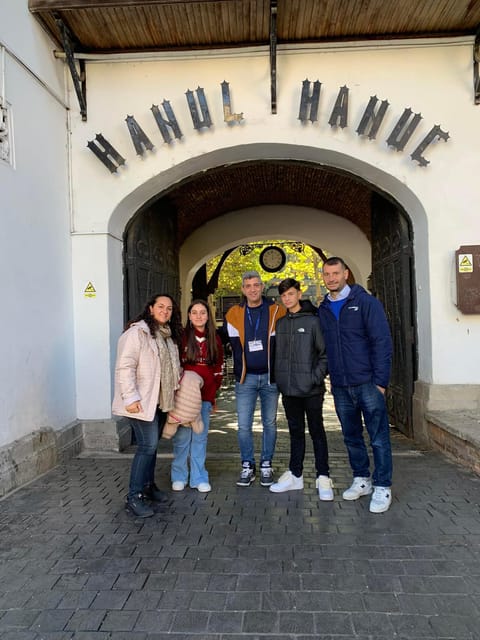
You then visit Manuc’s Inn (about 15 minutes). Inns are where stories meet reality. They’re built for movement, for guests, for money changing hands, and for the way cities connect to trade and travelers.
This stop is useful because it balances the monastery’s spiritual tone. You get a different flavor of the same city. It also helps you understand why Old Town Bucharest became the kind of area where people want to go out, not just live. Your guide’s explanations connect the building to the wider life of the neighborhood.
There’s a short guided segment after this (about 5 minutes). Since the specific site isn’t named in the tour outline you’re following, treat it as a brief orientation or commentary point during the walk. These little interludes can be surprisingly helpful, because they let your guide connect what you just saw to what you’re about to see next.
The New Saint George Church and the shift from old to modern
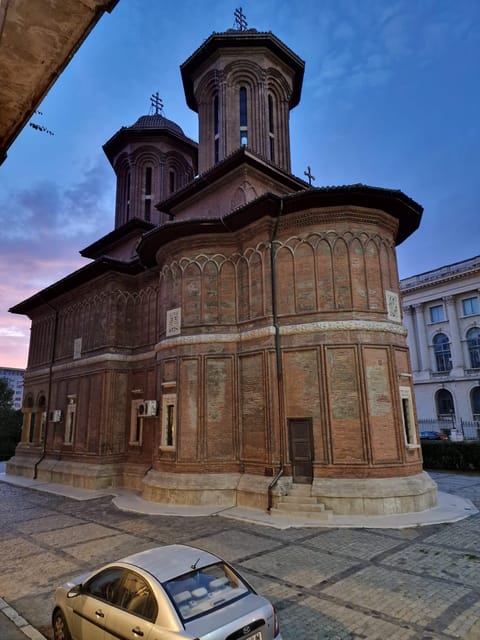
After the inn, you’ll visit the New Saint George Church (about 15 minutes). Churches can be tricky for tours if you end up with too many stops that feel similar. Here, the title itself gives you a clue: this is meant to represent a different chapter, not just another religious building.
You’ll likely appreciate this stop most if you enjoy noticing transitions in architecture and meaning. The tour timing also suggests you won’t be stuck waiting around. You get a real visit, then you move on while the theme is still fresh in your head.
Even if you’re not religious, churches still act like historical landmarks. They tell you what communities wanted to build, display, and preserve, and they help you map the city’s evolution in a human way.
Cărturești Carusel and the fun, practical photo moment
Then comes Cărturești Carusel for a photo stop (about 10 minutes). This is a lighter moment in the itinerary, which is great because it breaks up the heavier historical stops. It’s also a chance to capture the kind of visual you’ll want later, especially if you’re the type who likes remembering places beyond what you wrote in your notes.
Think of it as a reset button. You can grab your photos, check your phone, and refocus your attention for the next stretch.
Old Town walking time: connect the dots on Lipscani-adjacent streets
You also get guided time in Old Town Bucharest itself (about 10 minutes). This portion is where your guide helps stitch together all the earlier stops into a coherent picture.
This is the section you’ll value if you like structure. Instead of random wandering, you’ll be guided to notice how the area functions as a whole, and how the buildings and streets reinforce the neighborhood’s identity.
If it’s raining, this is also a moment where a good guide can keep you engaged without rushing. I’ve seen Italian guides turn weather into a reason to keep paying attention to textures and storefront patterns rather than just sprinting.
National Bank of Romania: civic power in stone
Next, you visit the National Bank of Romania (guided tour about 10 minutes). A bank sounds like a straightforward stop, but it’s actually a key piece of how cities project authority.
This is where you’ll start seeing the “past meeting the future” angle more literally. A national financial institution reflects state priorities and public confidence. The architecture often signals stability and permanence, even when the city’s political reality was anything but stable.
If you like understanding how systems shape cities, this is a smart inclusion. It adds economic and political context to all the cultural stops around it.
Pasajul Villacrosse: the kind of passage you want to walk slowly
Then you’ll head to Pasajul Villacrosse (guided tour about 10 minutes). Passages are often underestimated by visitors who only focus on main streets. But they show you how a city used indoor, semi-hidden spaces to support shopping, social life, and movement.
This kind of stop also gives your eyes a break. You shift from big boulevards and squares to something with a more intimate scale. If your guide points out design details, you’ll start imagining what a 19th or early 20th century visitor would have felt when moving through a space like this.
In a walking tour, these mid-sized surprises are valuable because they keep you from feeling like you’re only seeing the loudest landmarks.
Calea Victoriei: Bucharest’s elegant boulevard moment
Now for Calea Victoriei, about 15 minutes of guided walking plus observations. This is described as Bucharest’s most beautiful and elegant boulevard, and it’s easy to see why once you’re there: historic buildings, refined storefronts, and that sense of a city showing off its best outfit.
This part of the tour is a great change of pace from the denser Old Town streets. It’s more open, more linear, and it encourages you to look farther down the road rather than only at what’s directly in front of you.
Practical tip for you: if you want photos, this is the stretch where you’ll get the best ones by timing your stops so you’re not blocking pedestrians. Take a quick snapshot, then keep walking. Your guide’s commentary will probably make more sense as you progress down the boulevard.
Umbrellas Street: a playful pause that still fits the story
Then you’ll visit the Umbrellas Street for a photo stop (about 10 minutes). This is the kind of place that works because it gives you an outlet for spontaneity. It’s bright, it’s visual, and you’ll probably find your camera coming out even if you thought you wouldn’t.
It also prevents the itinerary from getting too heavy by the time you reach the political climax later. This tour keeps its rhythm: serious stops, short walking links, and then a lighter visual break.
Revolution Square and the Romanian Athenaeum: where the city’s turning point shows up
You finish in a stronger emotional and civic zone at Revolution Square (about 20 minutes) and then the Romanian Athenaeum (guided tour about 15 minutes).
Revolution Square is tied to the end of Nicolae Ceaușescu’s regime in December 1989, and the surrounding architecture is described as a mix of Romania’s historical periods. That’s the key idea you should hold onto: this square isn’t just a marker of one event. It’s a display of layered time, visible in nearby landmarks like the Romanian Athenaeum, the Royal Palace, and the National Library.
The Romanian Athenaeum stop is the kind of capstone that helps you feel what the tour is aiming for. You’re no longer only seeing buildings as backgrounds for street life. You’re seeing them as part of cultural identity, where art and public life sit together.
When your guide does this well, you’ll leave with a much clearer sense of how Bucharest moved from one political reality to another, and how architecture helped tell that story.
How the 2.5-hour private format actually feels for you
A 2.5-hour walk is usually the sweet spot for someone who wants meaning without spending your entire day in transit. Here’s what makes the timing workable:
You have enough time to get guided explanations at multiple stops, not just a few. You also have short guided segments that keep the flow moving. That matters in a city where a “quick photo” can turn into 25 minutes if you do it unplanned.
Because it’s private, you also get freedom to match your energy level. If you’re traveling with someone who wants to talk, you can go slower. If you’re the type who likes fast, clear info, your guide can keep it moving.
Bring comfortable shoes and expect a city that rewards looking up. A walking tour is basically an invitation to stop treating your trip like a checklist.
Price and value: why $53 can make sense for a private Italian guide
At $53 per person for a 2.5-hour private and exclusive walking tour in Italian, you’re not paying for a huge group bus experience. You’re paying for dedicated guide time and a focused route that hits major Old Town and central Bucharest anchors.
Is it the cheapest way to see the city? No. But value isn’t only about lowest cost. Here you’re buying:
- guided interpretation in a language you can actually follow
- a format that can be adjusted to your pace
- a plan that hits both iconic and less-seen stops like monasteries, passages, and civic buildings
If you care about understanding what you’re looking at, the price becomes easier to justify. If you only want broad scenery with minimal explanations, you might find other free walking options more your style. But if you want the stories behind the corners, this is a solid deal for the time you’ll spend.
Who this tour suits best, and who should skip it
This tour is best for you if:
- you want a private Italian guide and you’re comfortable moving around for about 2.5 hours
- you enjoy architecture and want the stories connected to it
- you like a route that includes both well-known places and quieter, more specific stops
It may not be the best fit if:
- you need accessibility accommodations beyond what’s listed
- you are hearing-impaired, since it’s marked as not suitable for hearing-impaired people
- you want an English-language tour, since the tour is in Italian
Should you book the Bucharest Italian walking tour?
If you’re going to Bucharest for the first time and you want a guided path through the city’s most meaningful mix of Old Town, elegant boulevard life, and Revolution-era landmarks, I’d book this. It’s short enough to fit a busy schedule, but structured enough to prevent you from feeling lost.
The deciding factor for me is language plus format. If you want Italian explanations from a certified guide and you like the idea of private, flexible pacing, this is a smart use of your time in Bucharest. If Italian is a problem or if hearing is a major concern, then you’ll probably feel better choosing a different tour designed for your needs.
FAQ
What language is the private walking tour in?
The tour is conducted in Italian, with a certified tour guide in Italian.
How long is the Bucharest private and exclusive Italian walking tour?
The duration is 2.5 hours.
Where do I meet the guide?
You meet the guide in front of Caru cu bere at Stavropoleos Street 5 (Stavropoleos 5, 030081, Bucharest). The guide will be recognizable by a professional identification card.
Is this a private tour?
Yes, it is a private group tour and it is described as private and exclusive.
Is the tour wheelchair accessible, and is it suitable for mobility impairments?
The activity is marked as wheelchair accessible, but it also says it is not suitable for people with mobility impairments. If that applies to you, it’s worth double-checking before booking.
What should I wear or bring?
Wear comfortable shoes, since walking is part of the tour.
Can I cancel, and is pay later available?
Yes. You can cancel up to 24 hours in advance for a full refund, and you can reserve now and pay later.
Latest reviews from around Bucharest
- ATV Adrenaline Race in Carpathian – Private Tour★ 5.0 · 4 reviews
- Private Tour of Jewish Bucharest★ 5.0 · 4 reviews
- In Search of Dracula and the Teutons in Transylvania Full-Day Private Tour★ 5.0 · 4 reviews
- Bulgaria One Day Private Tour from Bucharest★ 5.0 · 4 reviews
- Discover Medieval Transylvania Small Group Tour – 7 days★ 5.0 · 4 reviews
- Bulgaria Day Trip – Private Tour from Bucharest – Veliko Tarnavo & Arbanasi★ 5.0 · 4 reviews
- Private tour: Medieval cities of Transylvania, 2 Days from Bucharest★ 5.0 · 4 reviews
- Black See, Constanta and Mamaia Beach – Day Trip from Bucharest★ 5.0 · 4 reviews
Walking Tours, compared.
Bucharest: City Highlights Guided Walking Tour
Read our review →
Bucharest: Communism and History Guided City Walking Tour
Read our review →

Bucharest: Hidden Markets Walking Tour with Tastings
Read our review →
Bucharest: Ghost Stories & Romanian Mythology Walking Tour
Read our review →
Bucharest: Guided Walking Tour with Romanian Snack
Read our review →
Walking Tour- Delightful Bucharest (Highlights, Stories, Sights)
Read our review →Browse the lists this tour appears in