
Reviewed · CLUJ-NAPOCA TOURS
Clasic Tour of Cluj Napoca
A classic Cluj-Napoca tour works because it is a tight 2.5-hour walking loop with major landmarks you can actually absorb without rushing. You start at Piața Unirii and move through churches, medieval remnants, and city architecture that tells you why this Transylvanian city looks the way it does.
I like that you get inside-the-church visits (not just photo stops), and you also get the practical extras like included bottled water. I also enjoy the variety: you go from Gothic and Baroque sacred art to the odd science of Trovanți stone formations.
One thing to watch: the Wolf Street cutoff. Starting November 1, Mon to Fri the visiting time for the Reformed Church on Wolf Street ends at 2 PM, and tours booked later than 1 PM will have to skip that entrance.
Key highlights you will feel in real time
- Licensed guide in English, so you can ask questions instead of reading plaques
- Free admission at the stops listed on the route, plus bottled water included
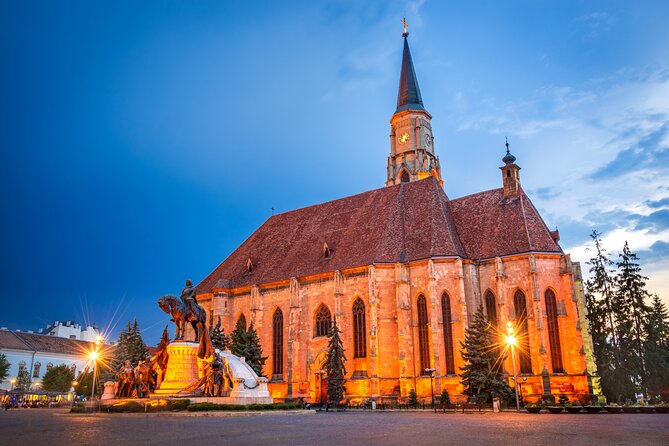
- Catedrala Sfantul Mihail interior visit, a standout Gothic church in the main square
- Reformed Church on Wolf Street’s coats of arms collection, with a seasonal time limit
- Muzeul Trovanților, the “living” stone formations that look like they can grow with water
- Bánffy Palace and Strada Oglindă, a Baroque museum stop plus a 19th-century mirror-street design
Price and what you actually get in 2.5 hours
The price is $48.16 per person for about 2 hours 30 minutes, and the value comes from what is included up front. You are paying for a licensed guide (in English) and bottled water, then the itinerary is packed with stops where the admission is listed as free.
That is how you get good value in a city like Cluj-Napoca. Museums and churches can add up fast when you go solo, so this format lets you see a lot of variety without constantly budgeting each building. Also, the tour is private, meaning only your group participates, so you are not fighting for space around the same doorway.
You will also notice the “smart planning” touch in the route length. Two and a half hours is long enough for a real sense of place, but short enough that you will not end your day feeling like you ran a small marathon.
More Cluj-Napoca options to weigh up
- Curly Tour – Day trip from Cluj 🙂
★ 5.0 · 330 reviews - Cluj: Turda Salt Mine, Corvin Castle, Alba Carolina Tour
★ 4.8 · 184 reviews - Cluj-Napoca: 2.5-Hour Guided Walking Tour
★ 4.8 · 104 reviews
Where the tour starts, how the pacing works, and when to plan around it
You meet at Piața Unirii, Cluj-Napoca, and the tour ends back at the same point. That matters because it saves you from figuring out a late return.
The timing is flexible in the day-to-day sense, but one schedule detail is not. Starting November 1, visits to the Reformed Church on Wolf Street end at 2 PM from Monday to Friday. If your tour is booked later than 1 PM, plan for that stop to be skipped. If you care a lot about coats of arms and medieval church interiors, aim for an earlier departure window.
The tour also requires good weather. That usually means it is run on foot through key sights, and rain can spoil the rhythm. If the operator cancels due to weather, you get offered a different date or a full refund.
Finally, this tour is designed for most people. Service animals are allowed, and it is near public transportation, which is helpful when you are trying to keep the day simple.
Catedrala Sfantul Mihail: Gothic cathedral energy in the main square
This is the start that sets the tone. Catedrala Sfantul Mihail is described as a Gothic jewel, and the story matters because it ties the church to the city’s earlier footprint. You will hear how it grew from a small chapel outside the city walls into a magnificent edifice in the main square.
Even if you are not a church architecture super-nerd, Gothic cathedrals have a specific feel. High vertical space, strong shapes, and a sense of dramatic intention. The best part here is not just seeing the outside. You get to visit the interior, so you can actually experience that scale.
The tour also notes that it is the second largest church in the geographical region of Transylvania. I like when a tour gives you a comparison point like that, because it helps you calibrate what you are looking at on the spot.
One practical consideration: the tower visit is not mandatory and is not included. If you want that extra climb, you may have to check availability separately.
Piarist Church: Holy Trinity dedication and a famous Marian icon
Next up is the Piarist Church, an imposing Baroque-style monument in Transylvania. Baroque churches tend to use emotion, movement, and heavy visual storytelling, and this one leans on religious art as the main language.
The church is dedicated to the Holy Trinity, and the main religious artifact highlighted on the tour is an icon of the Virgin Mary with the Infant. That is exactly the kind of detail that turns a building into a stop with meaning, not just a pretty exterior.
If the church is open, you will also visit the interior. That openness factor is normal for historic sites, so do not assume every door will be guaranteed. Still, when it is accessible, the interior visit is the difference between a quick look and a real experience of the artwork and space.
Same base, a completely different day:
- From Cluj: Turda Salt Mine, Gorge, and Remetea Full-Day Trip
★ 5.0 · 84 reviews - Turda salt mine 4h tour from Cluj
★ 5.0 · 73 reviews - Turda Salt Mine, Corvin Castle and Alba Fortress from Cluj
★ 5.0 · 65 reviews - Cluj: Turda Salt Mines, Rimetea, and Coltesti Fortress Tour
★ 5.0 · 53 reviews
Universitatea Babeș-Bolyai: the academic center you can feel on the walk
This stop shifts the vibe slightly from religious architecture to civic life. You will discover Babeș-Bolyai University, described as the prestigious heart of Cluj-Napoca’s academic life.
I like this kind of placement in a walking tour because it reminds you that the city is not only “old stone.” It is a working place with institutions that shape daily rhythms. Even if you spend only about 15 minutes here, your guide can frame what the campus represents in Cluj today and how the city’s identity connects to education.
If you enjoy architecture through a wider lens, this stop helps. The university area gives context for why streets, squares, and buildings feel designed for public flow, not only for worship.
The Reformed Church on Wolf Street: coats of arms, medieval scale, and a cutoff date
Now for one of the most specific, standout features on the route: the Reformed Church on Wolf Street. This is a medieval church built in the late 15th century, and it is where you learn why this building attracts attention from history-minded visitors.
The big draw is the largest collection of coats of arms from this part of Europe. That is not a vague “there are interesting details” situation. It is a clearly stated highlight, which means your guide will likely point you toward what to look for instead of leaving you to play coat-of-arms bingo.
You will enter the church and admire the collection, and the visit is about 20 minutes. That is enough time to read the room, then focus on the coats of arms without feeling rushed.
Here is the consideration you need to plan around: starting November 1, visiting time ends at 2 PM, Monday to Friday. Any tour booked later than 1 PM will have to skip the entrance. If this stop is high on your wish list, book earlier.
Also, a practical note: churches like this can mean cool interiors and uneven floors. Wear comfortable shoes, and if you have mobility concerns, you can ask your guide for the easiest viewing path when you arrive.
Turnul Croitorilor: a preserved medieval corner tower with a story attached
You will then walk to Turnul Croitorilor, described as the best preserved corner tower of the medieval city. That phrase is helpful, because it signals that this is not just a decorative leftover. It is a piece that survived in a way that lets you understand how the medieval city defended and organized itself.
You will spend about 10 minutes here. In that time, the guide’s job is to make the tower understandable fast, meaning the story should link the tower’s position to the way the city used to work.
For photo lovers, corner towers are convenient because they give you angles. For architecture fans, they are useful because you can see construction logic without needing specialized knowledge.
Muzeul Trovanților: water, stone, and the illusion of growth
Next comes the odd one, and it is one of the most fun stops on the route. Muzeul Trovanților features trovanti, which are geological formations described as “living and moving” stones.
Trovanti are sedimentary rock formations with hard stone cores and sand exteriors. The idea is that they can seem to “grow” when exposed to water. That description is strange in the best way, and it is exactly why this stop works on a group tour. You get an explanation, then you get to look at the shapes and decide what you think.
This is also a nice change of pace after churches and palaces. You switch from human-made storytelling to nature’s strange behavior. Even in 10 minutes, you will leave with a mental image that is distinct from the rest of the day.
If you are the type who likes science stops when they are explained simply, this is a good fit. If you only want “big ticket” landmarks, you might see it as a quick quirky add-on, but it is still one of the tour’s best differentiators.
Teatrul National Lucian Blaga: the opera house built by Ferdinand Fellner
Then you move into performance-space architecture. Teatrul National Lucian Blaga is an opera house built between 1904 and 1906 by the Austrian architects Ferdinand Fellner.
There is also a practical architectural detail you will get here: the opera shares the same building with the National Theatre in Cluj-Napoca. That means you get the feeling of a combined cultural complex rather than a single-purpose structure.
The tour time at this stop is about 10 minutes, so do not expect a long interior exploration. Instead, think of it as an orientation stop. Your guide can frame how the building fits into early 20th-century cultural ambition in the region.
Even a quick look can be satisfying if you pay attention to the facade and proportions. In cities with a lot of church architecture, theatre buildings can feel like a different personality, still “grand,” but for art rather than worship.
Catedrala Mitropolitană Adormirea Maicii Domnului: Byzantine style plus a construction story
Next you visit Catedrala Mitropolitana Adormirea Maicii Domnului, described as a marvelous piece of Byzantine architecture.
Byzantine architecture has a visual language you can recognize quickly: it tends to feel more layered, more ornate, and more focused on sacred presence. The tour also includes a funny story during its construction. That kind of anecdote is valuable because it makes a historic building human. You remember it as something that was built by people with real problems, not just as a static monument.
Your time here is about 15 minutes. That is enough to see the church as architecture and hear the construction story without turning it into an info dump.
Iuliu Maniu Street: Strada Oglindă and the Haussmann-style mirror effect
Now you get a street-design moment. Iuliu Maniu Street was built during the 19th century with symmetrical design and eclectic architectural style, tied to the Haussmann urbanistic trend. It is commonly called Strada Oglindă, which translates as mirror street.
This stop is 20 minutes, and it is one of those times where you should slow down a little. Street symmetry is best understood by walking and looking along the line, not by standing still and staring at one building.
If you like city planning, this is a great moment to connect architecture to intention. You can see how the city looks designed for visual order and how that order creates a particular kind of street experience.
Even if you do not care about the theory, it is also simply pleasant. Streets like this are usually good for photos that look clean and balanced.
Bánffy Palace: Baroque elegance now housing the National Museum of Art
You close with Bánffy Palace, a splendid Baroque architecture built in the 18th century. It was once the residence of the noble Bánffy family, and today it houses the National Museum of Art.
This stop is only about 10 minutes on the tour, so think of it as a highlighted preview rather than a full museum visit. You will see enough to appreciate the scale and Baroque style, then your guide can point out why the building matters historically and culturally.
If you want to turn this into a bigger museum day, you can. The palace is now a museum, which means you can build a follow-up based on your interests once you see the facade.
The tour ends back where you started, back at Piața Unirii, so you can continue your day without logistical stress.
Who should book this tour, and how to get the best experience
I think this tour is perfect if you want a fast, structured “taste” of Cluj-Napoca. You get churches you can enter, a medieval tower stop, a quirky science-style museum stop, and a closing with a palace that anchors the city’s art story.
It also suits you if you like your guiding style practical. The tour includes bottled water, uses a licensed English-speaking guide, and gives you clear stop targets. That helps when you are short on time or want your day to feel planned.
One small strategy can make the difference: wear comfortable walking shoes and plan your schedule with the Wolf Street cutoff in mind if you are traveling after November 1. Also, because the tour depends on good weather, keep an indoor activity option for the same day in case you need a weather reschedule.
If you care most about interiors, aim for an itinerary time that protects your chance to enter the Reformed Church. If you care most about visual variety, you are in good shape because the route mixes architecture styles in a way that keeps your attention.
And if you get a guide like Manuela, based on a reported experience, you can expect strong local knowledge of the city and history, plus very good French. That is a nice bonus if you speak French or just appreciate guides who can explain in more than one way.
Should you book the Clasic Tour of Cluj-Napoca?
Book it if you want a well-paced, 2.5-hour introduction to Cluj-Napoca that includes guided interior access at several major religious landmarks, plus a museum-style geology stop and a Baroque palace finale. The price feels reasonable because the guide and practical extras are included and the listed admissions are free at the stops.
Skip it or adjust your timing if your schedule lands you after 1 PM on Mon to Fri starting November 1, since the Reformed Church on Wolf Street entrance will be skipped. If that stop is a must-have for you, choose an earlier departure.
FAQ
Where does the tour start and end?
The tour starts at Piața Unirii, Cluj-Napoca, Romania, and it ends back at the meeting point.
How long is the Clasic Tour of Cluj-Napoca?
It is approximately 2 hours 30 minutes.
How much does the tour cost?
The price is $48.16 per person.
Is the tour offered in English?
Yes, it is offered in English.
What is included in the tour price?
A guide with National License and bottled water are included.
Are there admission fees for the stops?
The itinerary specifies admission tickets free at the listed stops.
Is access to St. Michael’s Church Tower included?
Access to St. Michael’s Church Tower is not mandatory and is not included.
Is this a group tour or private?
It is private, meaning only your group will participate.
What is the special time rule for the Reformed Church on Wolf Street?
Starting November 1, the visiting time ends at 2 PM from Monday to Friday. Any tour booked later than 1 PM will have to skip that entrance.
What is the cancellation and weather rule?
You can cancel for a full refund up to 24 hours in advance. The tour requires good weather, and if it is canceled due to poor weather, you will be offered a different date or a full refund.
Latest reviews from around Cluj-Napoca
- Sighisoara, UNESCO & wine tasting (1 day, from Cluj)★ 5.0 · 4 reviews
- 3 Day Tour of Maramures★ 5.0 · 4 reviews
- CJ01 – Explore Cluj-Napoca: A lively City Tour in English★ 5.0 · 4 reviews
- Turda Salt Mine, Gorge & Rimetea Village (private from Cluj)★ 5.0 · 5 reviews
- Private tour to Turda Salt Mine, Rimetea and Alba Iulia★ 4.8 · 5 reviews
- Golden Circle of Transylvania★ 5.0 · 5 reviews
- 650cc Motorbike Rental from Turda★ 5.0 · 5 reviews
- CJ04 -Maramureș Adventure:Tradition, Folk Art &Scenic Beauty★ 5.0 · 5 reviews
Cluj-Napoca Tours, compared.
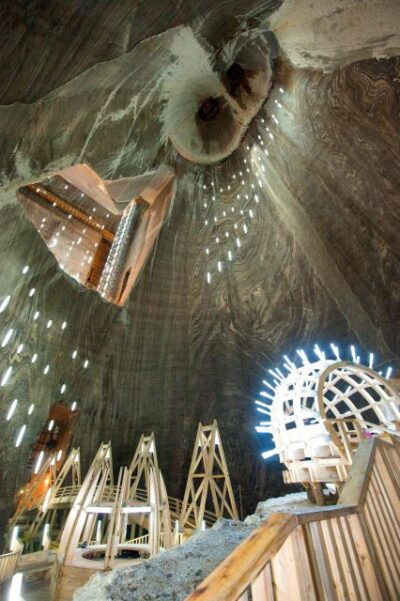
Cluj: Turda Salt Mine, Corvin Castle, Alba Carolina Tour
Read our review →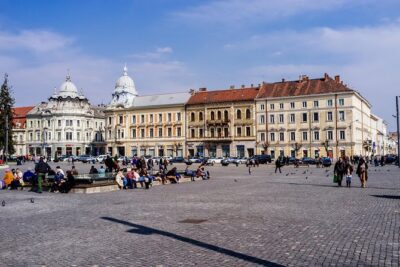
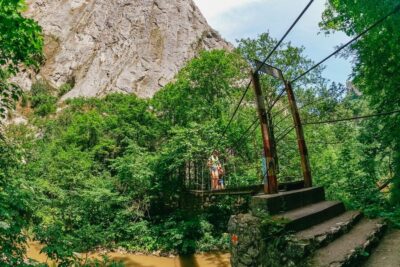
From Cluj: Turda Salt Mine, Gorge, and Remetea Full-Day Trip
Read our review →
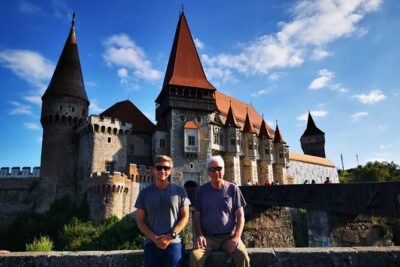
Turda Salt Mine, Corvin Castle and Alba Fortress from Cluj
Read our review →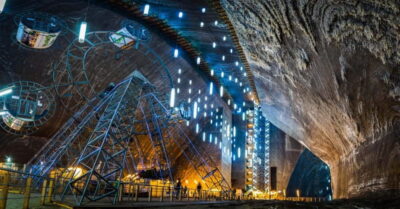
Cluj: Turda Salt Mines, Rimetea, and Coltesti Fortress Tour
Read our review →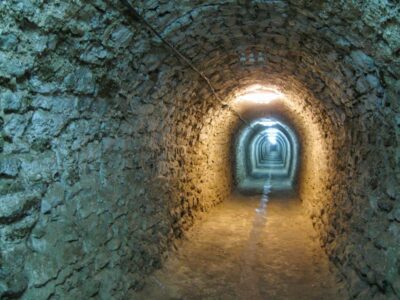
Browse the lists this tour appears in