
Reviewed · 7-DAY EXPERIENCES
7 Days Private Guided Tour in Romania from Bucharest
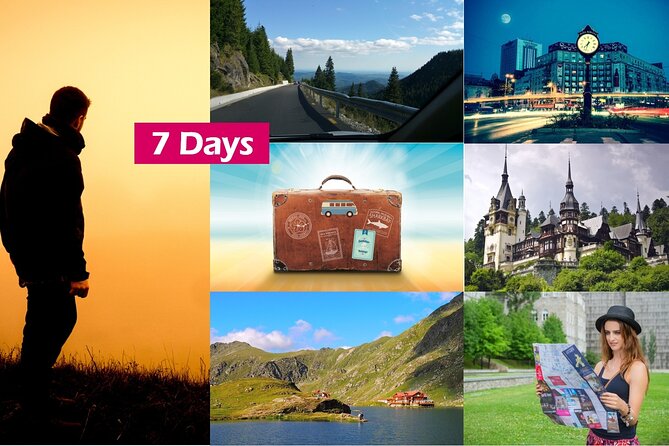
Romania works best when you see it in chapters, not in one blur. This 7-day private route strings together royal-era grandeur, fortified Transylvania towns, and big nature stops like the Danube Gorge and Carpathian caves, with a guide who can steer you on the fly.
I especially like two things. First, the private car door-to-door means you waste less time at the curb and more time actually looking. Second, the licensed English-speaking guide is there all day, so the stories you hear feel connected, not like a series of random facts.
One drawback to consider: it is a packed week. You will cover a lot of ground, and a couple of sights involve real walking and even serious stairs, so plan for comfort and pacing.
Key highlights you will feel on day one
- Private car, private pace: your schedule can adjust even after the tour starts, which helps when weather, crowds, or energy levels change.
- Castles plus the stuff outside the castle walls: Bran is famous, but you also get the chance to try local foods nearby.
- Transylvania’s Saxon architecture, not just photos: fortified churches and church towers get real context, including UNESCO-linked stops.
- Danube Gorge engineering and Roman ruins: Iron Gates and Roman Drobeta keep the week from becoming only medieval sightseeing.
- Brancusi in Targu Jiu: sculpture stops are brief, but they give you a strong sense of Romanian identity beyond castles.
A 7-day Romania sampler from Bucharest that actually feels planned

This tour is built for people who want variety without losing the thread. You start near Bucharest and work outward toward Transylvania, then you swing down to the Danube region, and finish back in southern Romania. The best part is that it does not treat every stop as a checkbox. The guide connects places by time periods, by architecture style, and by the people who shaped them.
The pace is busy, but it is not chaotic. You get time blocks at each highlight, usually around 30 to 120 minutes, so you can see the main features and still have a moment to wander. And because this is private, your guide can shift how long you linger, what you skip, and how fast you move through a site.
More Bucharest options to weigh up
- Bucharest: Dracula’s Castle, Peles Castle, & Brasov Old Town
★ 4.5 · 17,858 reviews - Bucharest: Dracula Castle, Peles Castle & Brasov Old Town
★ 4.6 · 10,891 reviews - Bucharest: Dracula’s Castle, Peleș Castle & Brașov Day Trip
★ 4.4 · 6,100 reviews
Private car and licensed guide: the real value is less friction
You are traveling in a private vehicle just for your group, with all the usual driving costs handled, including gasoline, parking, and road tolls. That matters in Romania. Distances between sights can be longer than they look on a map, and a shared shuttle can turn into a game of stop-and-wait.
Your guide is also the driver, and that is a big advantage when you care about context. It is one thing to stand in front of a church and take photos, it is another to understand why it was built there, how communities changed over time, and what you are looking at when styles blend.
Also, the car includes complimentary wireless internet, which is practical. You can check opening hours, map routes, and translate signs in the moment.
One more quiet win: your guide’s accommodation, meals, and entrance fees are included. That keeps the logistics simple for you, and it reduces the chances the guide has to rush to solve travel issues.
Day 1: Peles Castle, Sinaia Monastery, and Brasov’s old center
Day one leans into royal Romania first. Peles Castle is the kind of place where you understand why people treat it like a star attraction. You get around two hours there, which is enough to see the main interiors without turning it into a sprint. Admission is not included, so you will want to plan on paying that separately.
Right after the castle, the route heads to Manastirea Sinaia, a monastery visit that shifts the tone from royal to spiritual. You get about 30 minutes. If you like Orthodox art and interior decoration, this stop gives you a calm rhythm after the castle’s spectacle.
Then you end in Brasov Historical Center for a couple hours. This is where you start feeling the medieval layout in your legs and your eyes. Brasov is also well-positioned because you are right by the Black Church area, and even if you only skim the neighborhood, you get the vibe of a Transylvanian market town.
Practical note: day one is a good time to bring comfortable walking shoes. The castle and old centers reward slow strolling.
Day 2: Bran Castle, Sighisoara citadel, and Viscri village’s fortified church culture
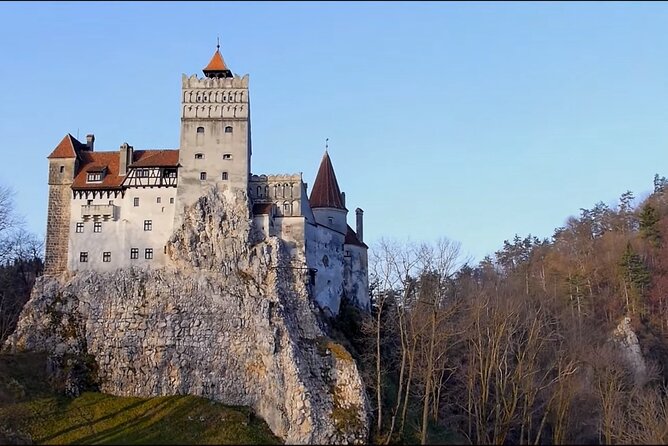
Day two is Transylvania’s mythology loaded with real-world context. Bran Castle is about two hours. It is commonly called Dracula’s castle, but the story you hear from your guide should separate fiction from history. The castle itself is the main stage, but the best part can be what happens outside it. There is time to try traditional foods nearby, including handmade cheeses, pálinka (plum and pear brandy), and locally produced ham and sausages.
Then you shift to Sighisoara, starting with the Historic Center (about two hours). This citadel is one of those places that still feels inhabited, because it has remained a living fortress for centuries. It is not a theme park; it is a town that grew over time while keeping its defensive shape.
Next comes the Sighisoara Clock Tower for about 30 minutes. It has a colorful tiled roof and a panoramic payoff from the top. The museum inside is there for history nerds, but the views are what most people remember.
You finish with Viscri, a village with deep roots and a fortified church that locals and visiting cultural groups helped bring back into the spotlight. You get about 1 hour 30 minutes, and that length is perfect for walking the church area and taking in how people live around the landmark. If you like seeing the quieter side of Transylvania, this is one of the more rewarding stops.
Same base, a completely different day:
- Bucharest: Palace of Parliament Tickets and Guide
★ 4.3 · 3,182 reviews - Bucharest: Day Trip to Dracula Castle, Peles Castle & Brașov
★ 4.4 · 3,049 reviews - Bucharest to Dracula Castle, Peles Castle and Brasov Guided Tour
★ 4.5 · 2,933 reviews - Bucharest: Palace of Parliament Tickets and Guided Tour
★ 4.4 · 1,877 reviews
Day 3: Sibiu’s Piata Mare, orthodox and Lutheran cathedrals, plus Biertan’s UNESCO-linked church

Sibiu is where you start seeing Transylvania as a cultural crossroads. You begin in Piata Mare (Large Square) for about an hour. It is a big open space, and the best way to understand it is to feel how the square shaped daily trade and civic life. Your guide can point out how the square ties to the city’s fortifications and Renaissance-era layout.
Then you visit Catedrala Ortodoxa Sfanta Treime, with about 30 minutes. This is not just a stop for photos. You are looking at a smaller-scale Orthodox cathedral with a Byzantine flavor, and the timing is short enough to keep it focused.
Next is the Lutheran Evangelical Cathedral and Tower, around 45 minutes. If you have been watching the religious architectural mix across the week, this feels like a key chapter, not a random church.
Finally, you visit Biertan Fortified Church for about an hour. This is one of the better stops for people who enjoy architecture with a survival story behind it. It is a Lutheran fortified church tied to the Saxon community, and it also fits into the broader UNESCO-linked chain of fortified churches in the Transylvania region. Admission is not included here, so factor that into your planning.
Practical tip: bring a small layer. Churches can feel cooler than the street, and your comfort matters when you are inside multiple religious buildings in one day.
Day 4: Densus Church’s ancient layers, Corvin Castle’s gothic drama, and Bigar Waterfall
Day four is architecture mixed with nature, and the transitions are smart. You start at Densus Church, around 30 minutes. What makes this stop interesting is the layering. The church was built on older ruins, with changes across centuries, and the style blend is part of the point. There are also mural paintings dating to the mid-1400s that you can look for while you are there.
After that, you go to Castelul Corvinilor (Corvin Castle) for about two hours. This is a heavyweight medieval sight. It is often described as gothic, and it has a defense-and-residence feel. Your guide can help you look at it as a system, not just walls and towers. You can also get a great selfie spot near the defense towers, which sounds silly until you are actually standing in front of them and the angle works.
Then you close with Bigar Cascade Falls for about 30 minutes. This is a nature break that feels different from the other sites. You are there for the mossy, water-on-rock atmosphere. Even if you have seen waterfalls elsewhere, the setting here tends to grab people because it feels untouched and slow.
One caution: nature stops can be weather-sensitive. If rain has been heavy, paths might get slippery, and you may want to wear grippy shoes.
Day 5: Iron Gates, Decebalus above the Danube, and Roman Drobeta ruins
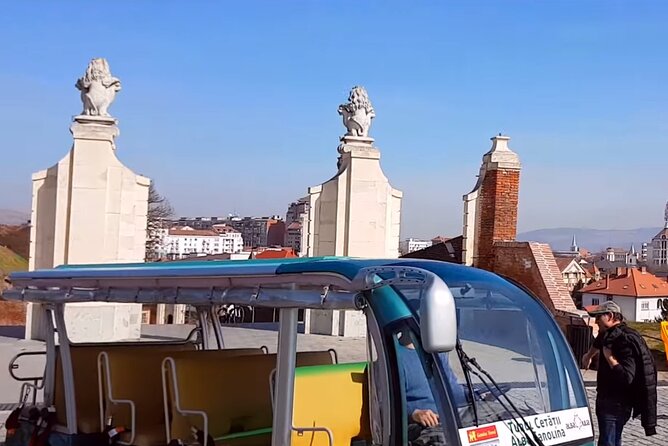
This day is about scale. You start at Iron Gates, around an hour, in the Danube Gorge region where the river creates dramatic currents. The big story is engineering, connected to how the area was developed and reshaped under communist-era planning. It is not just scenery, it is humans negotiating with a huge natural force.
Next is the Statue of King Decebalus, about 45 minutes. This is the carved cliff monument above the Danube, near Orsova, with the Kazan Gorge nearby. The views are part of the experience because the statue is literally placed to command the river. Your guide can also connect it to the longer sweep of human presence in the area, including early traces of human life that have been uncovered nearby.
You end at Castrul Roman Drobeta, around an hour, for Roman ruins at the mouth of the Danube and a look at an ancient bridge area. If you have been keeping count, you now have medieval castles, fortified churches, and then Roman layers again. That mix is what keeps the week from feeling repetitive.
Bring: a wind layer if you get out by the river. Gorge air can shift quickly.
Day 6: Brancusi’s sculpture axis in Targu Jiu, then Horezu Monastery and Polovragi Cave
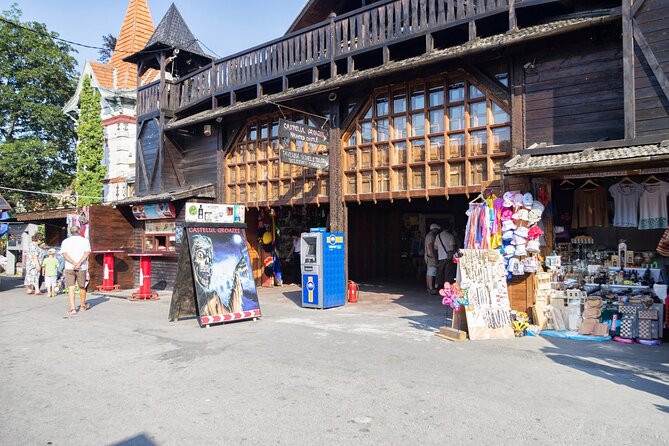
Day six moves into Romanian culture and then back into stone, water, and caves.
You start at the Brancusi Sculptural Ensemble in Targu Jiu, including the Table of Silence, Gate of the Kiss, and Infinity Column. These stops are shorter, roughly 20 to 30 minutes each, but they add up fast because you are looking at symbolic design rather than a single building. If you have ever wondered why Romania shows up in European art circles, this is a good place to ask that question. The guide can also explain how the pieces are laid out along a long axis.
Then you go to Horezu Monastery (Hurezi Monastery) for about 30 minutes. This is a UNESCO site and a major Orthodox stop known for authentic Romanian architecture. You can also look for the connection to Horezu ceramics, which are tied to the area’s identity.
Finally, you visit Polovragi Cave for around one hour. Cave time is not guaranteed to fit every body perfectly, and admission is not included. Still, it is a nice capstone after church architecture, because it takes you into another kind of Romanian craft, human navigation through natural tunnels.
Practical note: caves are cooler and damp compared to outside, so a light jacket can help.
Day 7: Poenari Castle’s 1480 stairs, Vidraru Dam views, and Curtea de Arges Cathedral
Your final day turns into a mix of effort and payoff. Poienari Castle is famous for the climb. You are looking at a ruined fortress at about 860 meters, and reaching it involves climbing 1480 stairs. You get around two hours, but the real time is in the walk up and down. If stairs are not your thing, this is the one day where you should think carefully.
Next is Vidraru Dam, a quick 15-minute stop that focuses on the dam’s scale and the reservoir it forms. It is short, but it gives you a wide-open view and a sense of how Romania’s modern engineering sits in the mountain environment.
You finish at Curtea de Arges Monastery, including the cathedral dedicated to the Dormition of the Mother of God. You get about 45 minutes. The building’s pale grey limestone and interior brickwork with fresco decoration are the main things to notice. The surrounding grounds also include a large neo-Romanian style royal palace nearby, and even if you do not go deep into it, it helps explain how this region connects monarchy to religion.
Price and value: what you get for $2,480.58 per person
At $2,480.58 per person for a private seven-day tour, this is not a cheap add-on. But it is also not priced like a fancy luxury resort experience. You are paying for three concrete things:
1) Private transportation with a driver-guide
No waiting on strangers, no timed transfers with random drop-offs. That saves time and reduces stress, especially on days with multiple stops.
2) A licensed English-speaking guide available the whole time
This is the difference between seeing the outside of places and understanding what you are seeing. The guide is also built into the tour design, so you are not constantly switching people or matching schedules.
3) Flexibility after the tour starts
The ability to adjust the day even after it begins is practical value. If a site is crowded or you need more time for a view, your plan can bend.
What is not included is equally important: accommodation, food and drinks, and entrance fees. Entrance fees are listed per stop as sometimes free, sometimes not. So your final total will depend on which paid admissions you choose to take and how your group snacks and drinks along the way.
If you are traveling as a small group and want a guided story through the highlights without the friction of public transport, this price can feel fair. If you are a solo traveler on a tight budget, the cost will feel steep fast.
Who this tour suits best
This is a great fit if you want a guided “best of Romania” week that still includes real architecture and real places, not just landmarks. It suits:
- Small groups who value privacy and pacing
- First-timers who want Dracula-related sites, but also want the medieval and religious context behind them
- People who enjoy mixing castle stops with UNESCO-linked church architecture and nature breaks
It may be a tougher fit if you hate stairs. Poienari Castle alone is a serious climb, and Big nature stops mean you will likely walk more than you expect.
Should you book this 7-day private Romania tour?
I would book it if you want a guided route that balances big-name castles with the less-obvious pieces of Romania, like fortified churches, sculpture symbolism in Targu Jiu, and Roman ruins at Drobeta. The private car and all-day guide are the kind of “boring logistics” upgrades that make the trip feel smoother.
I would think twice if you have mobility limits or if you do not want to pay extra entrance fees along the way. Also, treat the schedule as active. Bring walking shoes, a light layer for churches and caves, and a snack plan for days when admissions are not included.
If that sounds like your kind of week, this tour has the right mix of time, variety, and local storytelling to make it memorable.
FAQ
Is this tour a private experience?
Yes. It is a private tour/activity, and only your group will participate.
Does the price include a guide and transportation?
The tour includes a private car for you and your friends or family, plus a private, licensed English-speaking guide/driver available throughout the tour. Car expenses like gasoline, parking, and road tolls are included.
Are entrance fees and tickets included?
No. Entrance fees as per the itinerary are not included. Some stops note admission tickets as free, but others are not included.
Is accommodation included?
No. Accommodation is not included.
Is pickup available from Bucharest?
Pickup is offered.
What is the approximate duration of the tour?
The tour duration is 7 days, approximately.
Can I change the itinerary once the tour starts?
Yes. There is great flexibility regarding changes to the daily itinerary even after the start of the tour.
What is the cancellation policy?
Free cancellation is available. You can cancel up to 24 hours in advance for a full refund. If you cancel less than 24 hours before the experience start time, the amount paid will not be refunded. Service animals are allowed, and confirmation is received at booking time.
Latest reviews from around Bucharest
- ATV Adrenaline Race in Carpathian – Private Tour★ 5.0 · 4 reviews
- Private Tour of Jewish Bucharest★ 5.0 · 4 reviews
- In Search of Dracula and the Teutons in Transylvania Full-Day Private Tour★ 5.0 · 4 reviews
- Bulgaria One Day Private Tour from Bucharest★ 5.0 · 4 reviews
- Discover Medieval Transylvania Small Group Tour – 7 days★ 5.0 · 4 reviews
- Bulgaria Day Trip – Private Tour from Bucharest – Veliko Tarnavo & Arbanasi★ 5.0 · 4 reviews
- Private tour: Medieval cities of Transylvania, 2 Days from Bucharest★ 5.0 · 4 reviews
- Black See, Constanta and Mamaia Beach – Day Trip from Bucharest★ 5.0 · 4 reviews
7-Day Experiences, compared.
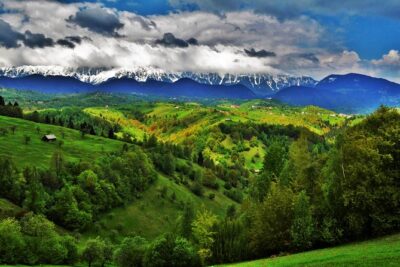
7-Day Private Tour of Transylvania from Bucharest
Read our review →
4×4 Driving Experience at Flying Altitudes – 7 Days
Read our review →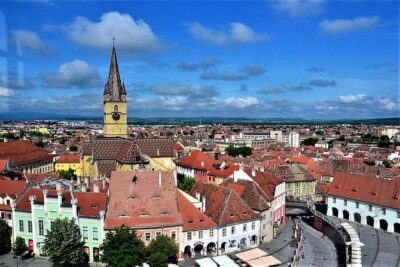
Amazing Romania – Seven day private tour from Bucharest
Read our review →
7 days Private Romania Grand Tour from Bucharest
Read our review →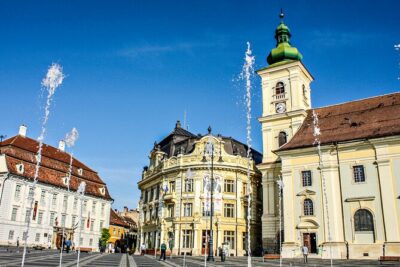
Discover Medieval Transylvania Small Group Tour – 7 days
Read our review →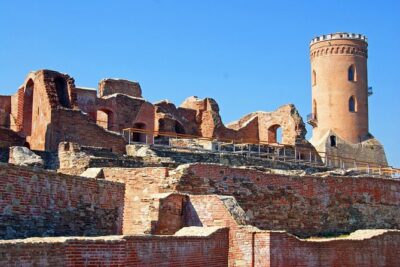
7-Day Dracula Tour in Romania from Bucharest including ‘The Ritual of Killing of a Living Dead’
Read our review →Browse the lists this tour appears in