
Reviewed · 7-DAY EXPERIENCES
Transylvanian week
Transylvania is the kind of trip that gets better when someone else handles the route. In this 6-day loop from Bucharest, you get a licensed guide and private transport so you can focus on the places, not the logistics.
I especially like the mix of UNESCO fortified churches and real medieval cities, not just a quick photo stop. And I also like that you get a built-in rhythm with 6 nights in simple, well-located 3-star hotels or guesthouses, plus breakfast.
One consideration: this is a fast-moving highlights tour, so you will spend real time in the car and you may face stairs at viewpoints like old-tower climbs and fortress areas.
Key highlights at a glance
- Private, air-conditioned vehicle for the whole route, with pickup from your Bucharest hotel or the airport
- 6 nights in 3-star superior hotels or guesthouses, double room, with breakfast included
- Fortified churches and UNESCO sites across Sibiu, Sighisoara area villages, and the Brasov region
- Castle-and-monastery days built around the Vlad the Impaler story, plus key medieval players like John Hunyadi
- Cable car option at Poiana Brasov for Carpathian views, if the weather cooperates
Transylvania, packaged into one guided loop from Bucharest
If you have ever looked at a Transylvania map and thought, so where do I start, this kind of tour answers that fast. The idea is simple: you start in Bucharest, then you work your way through historic towns, UNESCO fortified churches, and major castles, with one licensed guide keeping the story straight.
The best part is that you are not doing the usual three-way scramble. You are not juggling accommodation in multiple towns, you are not renting cars on unfamiliar roads, and you are not trying to connect bus times across valley to valley. Instead, you wake up in a known base, get breakfast, and let your day unfold.
I also like that the tour leans into the broader medieval world, not only Dracula. You meet the people behind the legend: Mircea the Elder, John Hunyadi, and the fortified cities and churches that shaped power in this region. Expect lots of stone, lots of walls, and plenty of strong contrasts between styles, like Orthodox and Gothic, Saxon and Teutonic.
That said, this is still a highlights itinerary. You will see a lot, but you will not linger for days in one place. If you want a slow pace with long meals and zero schedule pressure, you might feel slightly rushed.
More Bucharest options to weigh up
- Bucharest: Dracula’s Castle, Peles Castle, & Brasov Old Town
★ 4.5 · 17,858 reviews - Bucharest: Dracula Castle, Peles Castle & Brasov Old Town
★ 4.6 · 10,891 reviews - Bucharest: Dracula’s Castle, Peleș Castle & Brașov Day Trip
★ 4.4 · 6,100 reviews
Price and Logistics: what $2,166.68 covers (and why it can be good value)
The published price is $2,166.68 per person for about 6 days. On paper, that can sound steep, until you break down what you are actually buying.
You get private transportation in an air-conditioned vehicle, which is a huge part of what makes a Transylvania route practical. You also get 6 nights of lodging in 3-star superior hotels or guesthouses, double occupancy, with breakfast included. Add lunch to that, and you stop having to plan meals in every single town.
On top of that, the tour includes all fees and taxes, and it uses a mobile ticket setup. You are not paying a dozen separate booking charges while traveling. And several major sights list admission as free or included, which helps keep the day-to-day spending predictable.
Where you should watch your budget is in what is not included. Meals beyond lunch are not included, and photo fees are listed as not included. Flights also are not included. So if you are the type who likes to snack constantly, buy wine at every meal, or treat every viewpoint as a paid upgrade, you will want to carry some extra cash.
My take: for a region with multiple towns and UNESCO sites spread out over valleys, paying for private logistics is often the difference between a trip that feels smooth and a trip that feels like homework. If your priority is seeing the highlights with minimal effort, this price starts to look like value rather than just a fee.
Private A/C transport: the real reason this route feels easy
A private vehicle changes how this trip feels day to day. On this route, you are bouncing between historic centers, fortified churches in smaller communities, and castles that sit in strategic spots. When you do this independently, transit time becomes part of your day and your energy disappears fast.
Here, you start with pickup in Bucharest, either at your hotel or at the airport. Then you move through scenic stretches, including the drive through the Olt River Valley on the way to Cozia Monastery.
This matters because several stops are best approached with time and context. A fortified church is not just a building. It is a story about defense, religion, and community cooperation. Same with castles. If you arrive exhausted, you miss the small details your guide points out.
One more practical note: the tour is listed as a private tour/activity, meaning only your group participates. That usually helps with pace, questions, and timing around churches and towers. If your group includes someone who moves slowly, you can ask for adjustments on stairs and viewpoints.
Day 1: Cozia Monastery and Sibiu’s Saxon squares and tower views
Day 1 starts with a classic Romanian setting, Cozia Monastery, founded in 1388 by Mircea the Elder. This is one of those places where the stone feels older than the road around it. You also get a key link into the Vlad story, because Mircea the Elder is described as the grandfather of Vlad the Impaler. Even if Dracula is your hook, this is how the trip gives you the historical spine.
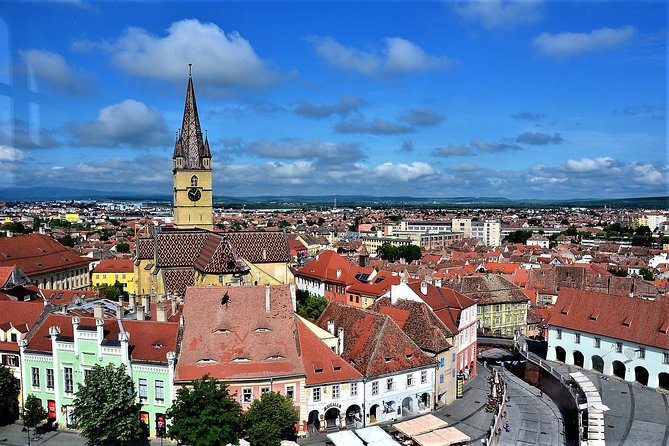
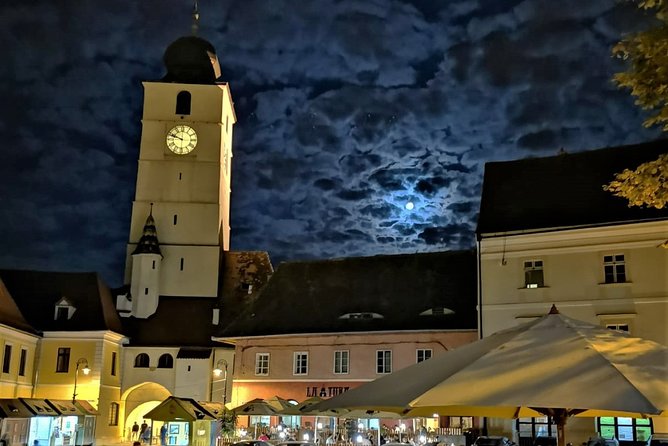
From here, you head to Sibiu, where the day shifts from holy quiet to city wandering. Your guided walk covers the old town’s most important squares, including Grand Square, Small Square, and Albert Huet Square, which dates to the 12th century. You also visit major churches, including the Orthodox Cathedral and the Evangelical Church.
One detail I like in Sibiu is the effort-reward formula. You climb the medieval stairs of the Council Tower to get a great view over the city. If you are traveling with anyone who hates steep steps, it is worth planning how you handle viewpoints like this, because towers and fortress walls often mean uneven stone stairs.
Expect Sibiu to be a “get your bearings fast” kind of day. You will get a sense of why Saxon urban planning and Central European architecture shaped the region.
Same base, a completely different day:
- Bucharest: Palace of Parliament Tickets and Guide
★ 4.3 · 3,182 reviews - Bucharest: Day Trip to Dracula Castle, Peles Castle & Brașov
★ 4.4 · 3,049 reviews - Bucharest to Dracula Castle, Peles Castle and Brasov Guided Tour
★ 4.5 · 2,933 reviews - Bucharest: Palace of Parliament Tickets and Guided Tour
★ 4.4 · 1,877 reviews
Day 2: Corvin Castle and Alba Iulia’s fortress empires
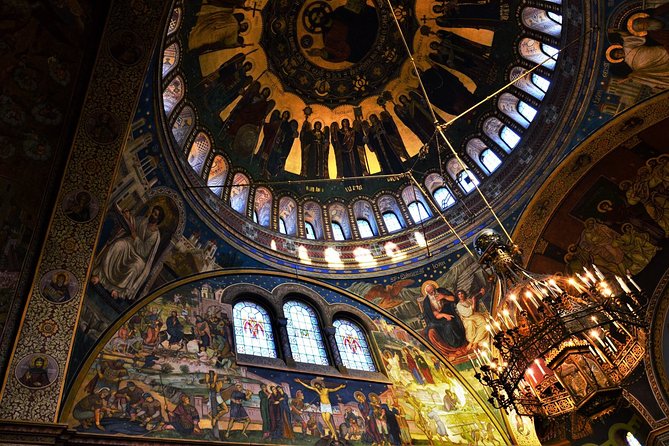
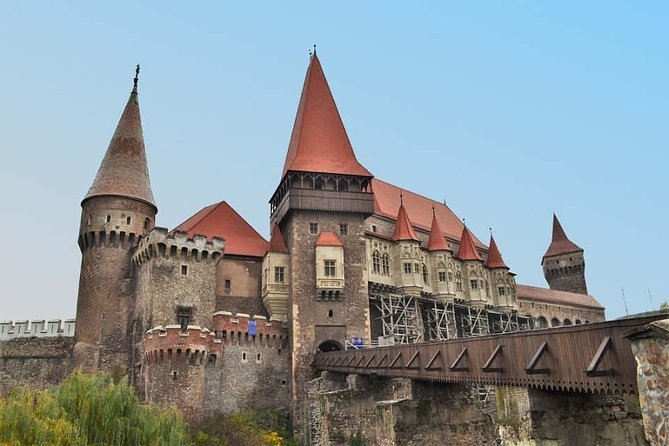
On Day 2, you enter the story of John Hunyadi through Castelul Corvinilor (Hunyadi Castle). The tour frames it around medieval power and military leadership, starting with 1409, when a Hungarian king ennobles a faithful knight and grants him the castle at Hunedoara. From there, you move toward John Hunyadi’s impact, including his role as regent of Hungary during turbulent times and his defeat of the Ottoman sultan Mehmed II at Belgrade.
This stop is good because it is not only architecture. It is context. When your guide connects a castle to a political outcome, the walls stop being decorative and start being meaningful.
Then you shift to Cetatea Alba Iulia, the Alba Iulia fortress, also known as Alba Carolina. You visit Saint Michael Cathedral, with construction starting in 1004, and the Orthodox Coronation Cathedral. You also see Roman layers, including ruins of the Roman castrum of the elite 13th Gemina Roman Legion.
The real value here is seeing how one location can gather history from multiple eras: Roman military presence, medieval religious power, and later imperial and regional symbolism. If you like layered sites, Alba Iulia is a strong day.
Possible drawback: this is a long day of heavy historical stops. Plan for museum-brain fatigue. Take water breaks when you can, especially in warmer months.
Day 3: Biertan, Malancrav frescoes, and Sighisoara at UNESCO hour
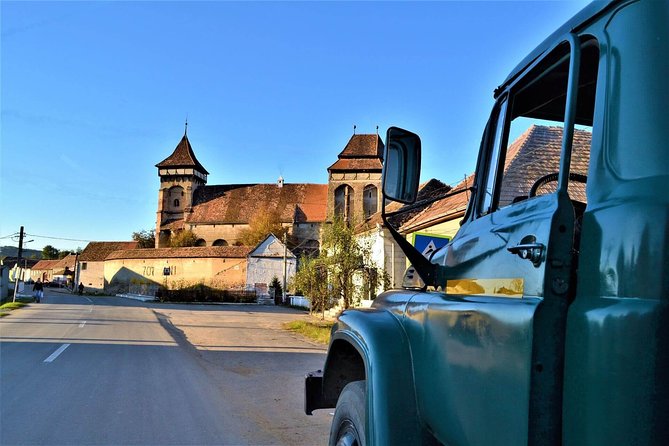
Day 3 is about fortified churches and a UNESCO citadel city. It starts with Biertan Fortified Church, a key example of the Saxon fortified-church tradition. These communities used church buildings not only for worship, but for defense and refuge, which is why you see walls and a strategic feel rather than a simple village chapel.
Next is Malancrav, home to the Fortified Lutheran Church of Malancrav. What makes this stop special is the fresco story. The tour highlights that the largest Gothic church fresco in Transylvania was discovered during restoration in 1914, underneath later paint layers after the Lutheran reform. That means you see medieval artistry that survived political and religious change.
If you like the moment where history literally reappears under plaster, this is one of those places.
Finally, you end in Sighisoara, UNESCO-listed and famous for its Clock Tower. The late afternoon and evening timing matters here. You are there when the citadel feels most atmospheric, and you get the tour’s link back to Vlad the Impaler, described as born here.
One practical consideration: citadel areas can be hilly and full of steps. If your group includes older travelers or anyone who struggles with walking uneven stone, ask the guide about gentler routes around the citadel.
Day 4: Saschiz and Viscri UNESCO churches, plus Prejmer’s Teutonic walls
Day 4 starts with a UNESCO stop you might miss if you were self-planning: Saschiz fortified church. It is described as a UNESCO World Heritage monument, built at the end of the 15th century, and it has a tower that reminds people of the Clock Tower in Sighisoara. That visual comparison helps you connect the fortified-church style across communities.
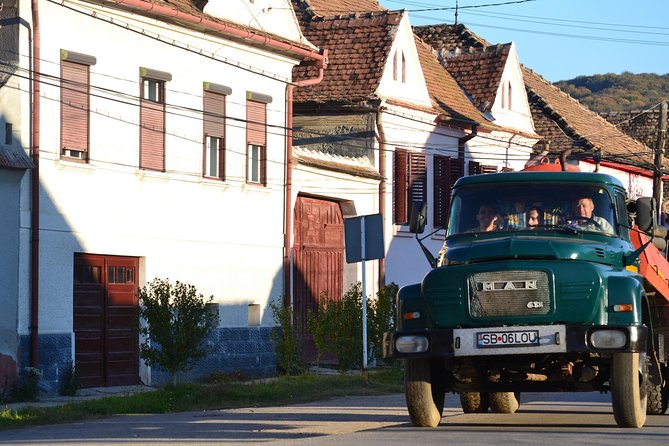
Then you head to Viscri, where Prince Charles is linked to the region. The tour explains that he bought an old Saxon household in Viscri, a blue house built in 1753, and returned periodically. Even if you do not care about royal trivia, this is a useful stop because Viscri represents the Saxon rural layer behind the better-known cities.
After Viscri, you catch sight of Rupea fortress, described as one of Romania’s oldest fortifications, built over preexisting Roman and Dacian fortresses. That means the stone is doing time travel again.
Your big church-and-fortress finish is Prejmer fortified church. The tour frames it through the Teutonic Knights, who were asked by a Hungarian king to defend the region against Tatars from the east. The story then continues with later Saxon settlers completing constructions after the knights’ quarrel with the king.
Prejmer is one of those “how did they live like this and still build art” places. You see the practical design behind defense, and then you see religious space shaped by that defense.
Day 4 can be physically easier than some days because parts of it are viewpoint and village connections. But you still want comfortable shoes. This is Transylvania, and stone has opinions about ankle flexibility.
Day 5: Poiana Brasov cable car views, Bran Castle Dracula framing, and Brasov’s Black Church
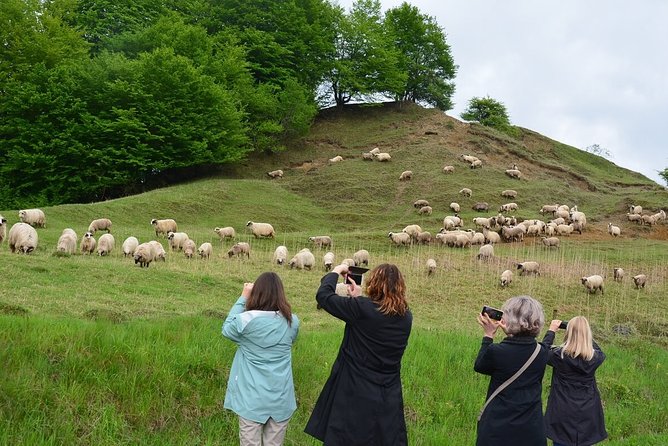
Day 5 starts with Poiana Brasov, reached by a high road and a cable-car ride to about 1,722 meters near the Postavaru Peak. If the weather is fine, you get wide views over the Carpathians and the Transylvanian plateau. This is the day where the trip gives you air and perspective, not only walls and churches.
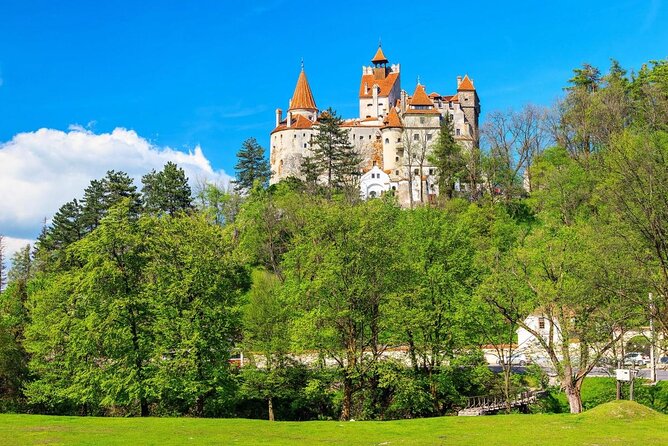
The cable car timing also sets you up for the next story beat at Bran Castle. Bran is framed as guarding the strategic commercial route between Walachia and Transylvania, and your guide connects it to Dracula legends. The tour description leans into the dramatic rock setting and the idea of impregnable sides and a steep precipice.
If you are a Dracula purist, you might find that this theme is tourist-facing. If you are a story-minded traveler, you will appreciate how the legend gets layered onto a real strategic fortress location.
Back toward Brasov, you can admire from afar the Rasnov fortress, described as from the 13th century and possibly linked to the Teutonic Knights timeframe.
Then you finish with Black Church (Biserica Neagra) in Brasov. This is a Gothic church and it is one of the standout interiors in the city center. If you like architecture, plan to slow down here and take in the scale.
One drawback to plan for: this day mixes scenic transit, castle time, and a city church. It can feel like a lot packed together. If your group wants more rest, you may want to ask the guide where you can take short breaks without losing the key sites.
Day 6: Peles Castle on the way home, then Bucharest’s Stavropoleos church
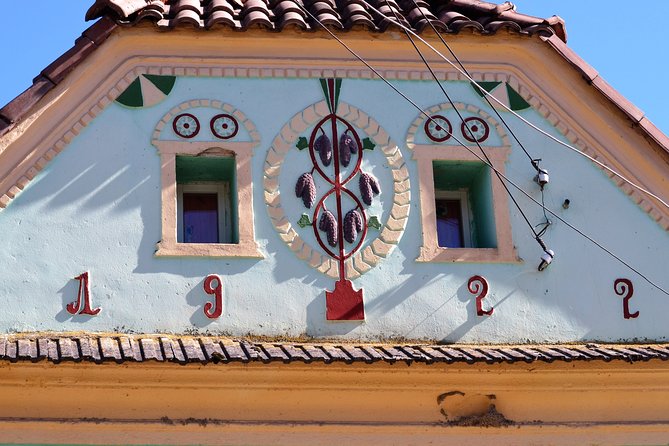
Day 6 moves you back toward Bucharest, with a major detour win. First stop is Peles Castle in Sinaia, described as built at the end of the 19th century. It is presented as flamboyant, and the tour intentionally contrasts it with the founder’s personality, King Carol I, described as sober and focused on modernization, ruling for 48 years.
Peles is a smart final castle because it feels like a different world from medieval fortresses. Your earlier days taught you defense and medieval power structures. This stop shows a royal taste for design and modernization, which helps the trip feel complete rather than repeating the same theme.
After Peles, you head to Bucharest and end with a guided look at the city. You also visit Stavropoleos Monastery, an elegant church built in 1724, located right in the city center.
This ending works well because your brain has time to absorb Transylvania rather than rushing straight into flight schedules. You get a chance to let the impressions settle.
What a great guide adds, and why Gelu and the team matter
The tour is built around a licensed tour guide, and that is not just a credential. It is how the days connect.
The names you may hear in this company include Gelu Trandafir, and the tour is described as run with his brother George helping manage details. The common thread is adaptability. When you have a route full of castles, churches, and timed visits, you want someone who can adjust to real-world changes, like pacing, weather, or the simple fact that old cities do not run on your schedule.
The guide’s job in this kind of itinerary is also storytelling with accuracy. You want the Dracula link, but you also want the real medieval figures behind the legend, like Mircea the Elder and John Hunyadi. You want to understand why fortified churches look the way they do, and why Roman ruins matter near a cathedral.
If you book this tour and you care about explanations, ask questions. The best part of a guided route is not the checklist, it is the way the guide turns stone into meaning.
Who should book this Transylvanian week (and who should not)
This tour fits you if:
- You want a guided highlights route that covers Sibiu, Sighisoara, Brasov, and the UNESCO fortified-church belt
- You prefer private A/C transport instead of mixing public transit schedules
- You like medieval settings with strong story lines, from Vlad the Impaler framing to John Hunyadi
- You want a straightforward travel package with breakfast included and one key meal handled (lunch)
This tour may not fit you if:
- You want a slow pace with lots of free time in one town
- You hate stair climbs and fortress uneven stone (some stops reward effort, like tower views)
- You are trying to travel ultra-budget. This includes a lot, but meals beyond lunch still add up.
A good compromise mindset: book this if your goal is to see the defining Transylvania highlights without turning your vacation into project management.
Should you book Transylvanian Week?
Yes, if you want the most efficient, low-stress way to experience Transylvania’s big hits. The value comes from the combination of private transport, 6 nights with breakfast, and an itinerary that hits UNESCO fortified churches plus major castles. It is a “see a lot, understand more” route.
I would book it with two expectations set up front. First, you will move quickly between sites, so bring comfy shoes and a flexible attitude. Second, Dracula is part of the story, but the strongest payoff is when your guide connects legend to the medieval politics, churches, and fortress logic that made the region what it was.
If that sounds like your style, this is a good choice.
FAQ
Where do we meet for the tour in Bucharest?
You meet at your hotel in Bucharest or at the airport.
How long is the tour and how many nights are included?
The experience is about 6 days and includes 6 nights of accommodation.
What kind of lodging do I get?
You stay in 3-star superior hotels or guesthouses, in a double room setup, with breakfast included.
What transport is included?
You travel in a private air-conditioned vehicle.
Are meals included during the week?
Breakfast is included every day in your accommodation. Lunch is included, but meals other than lunch are not included.
Which major sights are included besides the castles?
You also visit fortified churches and churches such as Cozia Monastery, fortified churches including Biertan, Malancrav, and Prejmer, plus Brasov’s Black Church and Bucharest’s Stavropoleos Monastery.
Is the price refundable if I cancel?
No. The experience is non-refundable and cannot be changed for any reason. If you cancel or request an amendment, the amount you paid will not be refunded.
Latest reviews from around Bucharest
- ATV Adrenaline Race in Carpathian – Private Tour★ 5.0 · 4 reviews
- Private Tour of Jewish Bucharest★ 5.0 · 4 reviews
- In Search of Dracula and the Teutons in Transylvania Full-Day Private Tour★ 5.0 · 4 reviews
- Bulgaria One Day Private Tour from Bucharest★ 5.0 · 4 reviews
- Discover Medieval Transylvania Small Group Tour – 7 days★ 5.0 · 4 reviews
- Bulgaria Day Trip – Private Tour from Bucharest – Veliko Tarnavo & Arbanasi★ 5.0 · 4 reviews
- Private tour: Medieval cities of Transylvania, 2 Days from Bucharest★ 5.0 · 4 reviews
- Black See, Constanta and Mamaia Beach – Day Trip from Bucharest★ 5.0 · 4 reviews
7-Day Experiences, compared.
7-Day Private Tour of Transylvania from Bucharest
Read our review →
4×4 Driving Experience at Flying Altitudes – 7 Days
Read our review →
Amazing Romania – Seven day private tour from Bucharest
Read our review →
7 days Private Romania Grand Tour from Bucharest
Read our review →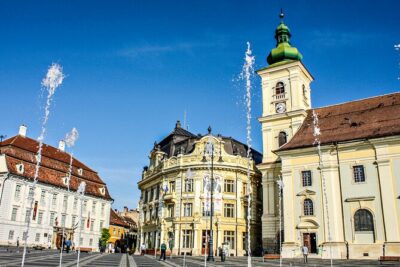
Discover Medieval Transylvania Small Group Tour – 7 days
Read our review →
7 Days Private Guided Tour in Romania from Bucharest
Read our review →
7-Day Dracula Tour in Romania from Bucharest including ‘The Ritual of Killing of a Living Dead’
Read our review →Browse the lists this tour appears in