
Reviewed · MARAMUREș
A Journey Back in Time: Countryside from Transylvania and Maramures – 15 Days
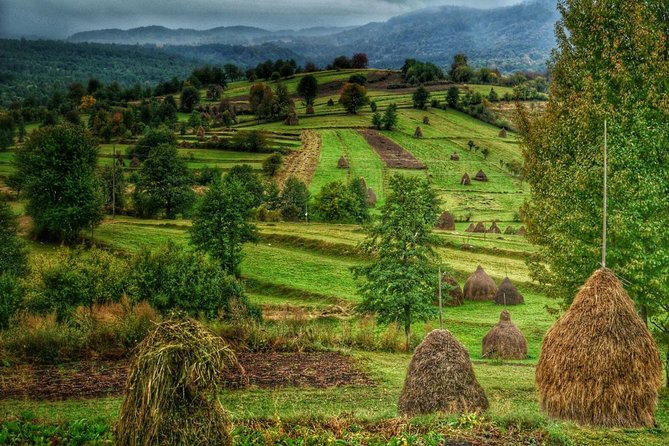
A journey like this is interesting because Romania moves fast, from royal showpieces to remote villages where daily life still feels old-fashioned. I like the private format (you can shift pace to your group), and I like the bread-and-butter coverage of big sights plus the lesser-seen stops that would be hard to stitch together yourself. One consideration: it is a lot of driving days and long excursions, so you’ll want comfortable shoes and a tolerance for early starts.
What makes it work is the way the trip strings together regions that feel totally different. You get complimentary breakfast throughout, plus dinners on set days, and the logistics are handled by an experienced guide and driver team. The trip is also seasonal at a key moment (Transfagarasan), so timing matters if you want the road experience.
Key things you’ll love about this Romania journey
- Private tour feel with a guide who can explain history and tailor the day
- All-inclusive comfort with air-conditioned transport and round-trip private transfers
- Saxon fortified churches and citadels across UNESCO-listed sites and remote villages
- Maramures wooden church circuit plus local stops like Sapanta’s Merry Cemetery
- Big nature moments, including a bear sanctuary visit and the Mocănița steam train ride
- Season-aware mountain touring, with a Transfagarasan road option when open
Bucharest walking start at the 9:00 am gate
Your trip begins in Bucharest with a guided walking tour focused on the city’s key sites. It is the kind of start that helps you get your bearings fast, because Romania’s history is everywhere, but Bucharest is where you learn the “why” before the “where.”
This first day also sets expectations for the whole trip. You’re not just seeing things from a car window. You’re learning how the city was shaped, and that makes later stops like fortresses and monasteries easier to read.
More of Maramureș:
Royal glamour at Sinaia, with Peles Palace as the tone-setter
From Bucharest you head to Sinaia to visit Peles Palace, the former summer residence of Romania’s royal family. Peles is the kind of palace stop that can feel a little unreal, but it also gives you a clean contrast to the medieval forts you’ll see later.
Plan on about two hours there. That is enough time to take in the main highlights without turning it into a museum marathon. If you’re the type who likes details, this is where you’ll notice craftsmanship and design choices that are hard to appreciate in a quick drive-by.
Bran and Rasnov, Dracula legend paired with the real story
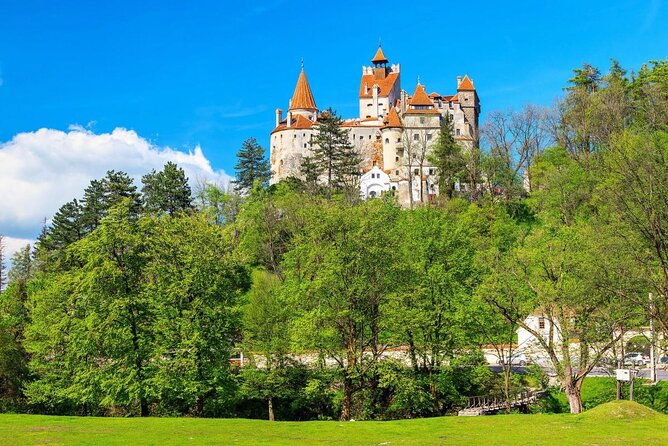
No Romania trip to this region is complete without Bran Castle, and this stop is built around the question everyone has in mind: what’s real and what’s legend. You’ll visit Bran, then move to Rasnov Citadel for that classic hilltop fortress feeling and panoramic views.
Bran Castle is short on time but heavy on symbolism. A good guide matters here because otherwise you can end up treating it like a themed photo stop. With context, it turns into a story about how myths grow around places that mattered long before popular culture got involved.
Rasnov gives you a different vibe. It’s older, more fortress-like, and it rewards you for slowing down. If you like views, bring an extra layer, because hills can make temperatures feel different than the town.
Zărnești bear sanctuary: nature time between castles
After the castles, the itinerary adds a break in pace with a visit to Libearty Bear Sanctuary Zărnești, where 80 bears live in a forest setting. This is one of those stops that feels ethically and emotionally different from buildings, because it’s about observing animals in a natural environment.
You’ll have around two hours here. It’s enough time to enjoy the visit without exhausting you before the next travel stretch. If you care about wildlife and want Romania to include something besides stone, this is a strong emotional anchor for the trip.
More Bucharest options to weigh up
- Bucharest: Dracula’s Castle, Peles Castle, & Brasov Old Town
★ 4.5 · 17,858 reviews - Bucharest: Dracula Castle, Peles Castle & Brasov Old Town
★ 4.6 · 10,891 reviews - Bucharest: Dracula’s Castle, Peleș Castle & Brașov Day Trip
★ 4.4 · 6,100 reviews - Bucharest: Palace of Parliament Tickets and Guide
★ 4.3 · 3,182 reviews
Saxon villages in Viscri: fortified church walks and traditional food
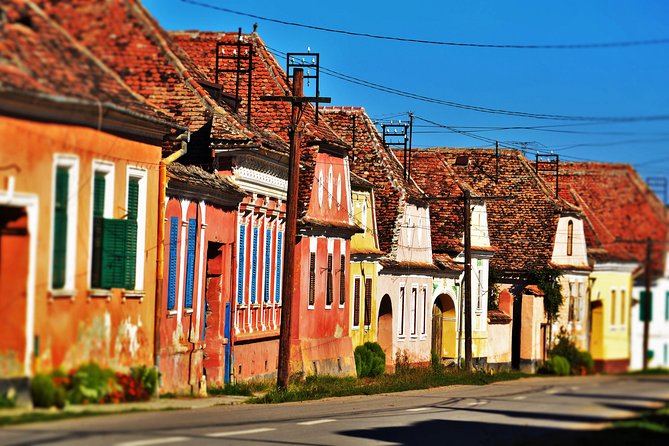
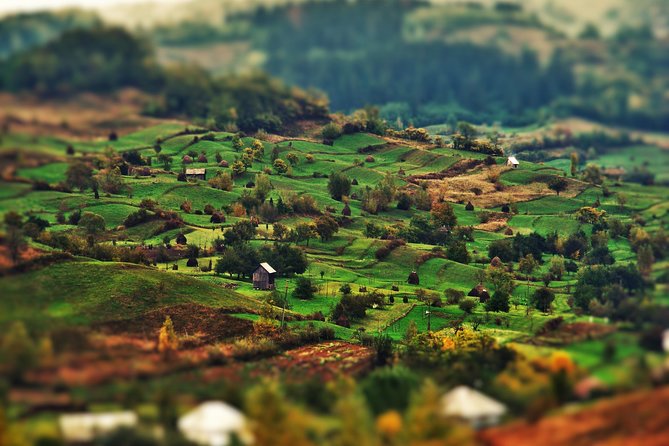
Viscri is where the trip becomes slower and more textured. You’ll spend a night in this Saxon village and walk the streets, visit the fortified church, and eat traditional food. There’s also a special connection to the British royal family here, because Viscri is the favorite village of Charles, Prince of Wales.
This matters because it signals why Viscri draws attention. It’s not just picturesque. It has lived-in character, and the fortified church ties the community’s past to what still stands today.
One small caution: village days can be weather-dependent. If conditions are windy or rainy, you’ll still get the sights, but the walking experience can feel shorter and more focused on the church interior.
Sighișoara citadel: old streets that actually feel old
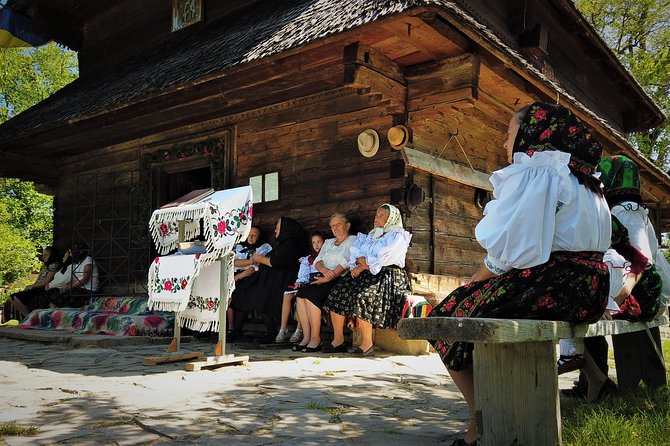
Next comes Sighișoara, described as one of Europe’s last inhabited citadels and a UNESCO World Heritage site. You’ll spend about three hours exploring the medieval core, which is an ideal time window for first-time city walking without rushing.
Sighișoara is a place where the streets do most of the work. You don’t need a checklist to appreciate the feel of the old walls and lookout points. A guide helps you understand why the city is arranged the way it is and what life looked like inside the fortifications.
Malancrav’s remote Saxon stay: fortified church time and local meals
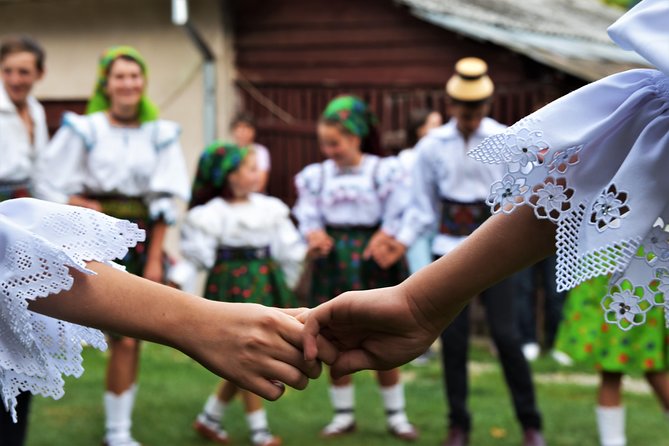
Then you shift into a more remote rhythm with two nights near the Fortified Lutheran Church of Malancrav. The stay includes time to visit the 700-years-old fortified church and enjoy local cuisine.
Remote stops like this are where the trip earns its name as a countryside-focused experience. You’re not bouncing between postcards. You’re spending real time in places that are quieter and less driven by mass tourism.
The main drawback is simple: you’ll trade crowds for fewer services and more reliance on the tour schedule. If you like spontaneity, you’ll still get room for walking, but your day structure is set.
UNESCO Saxon circuit day: Biertan, Valea Viilor, and Alma Vii
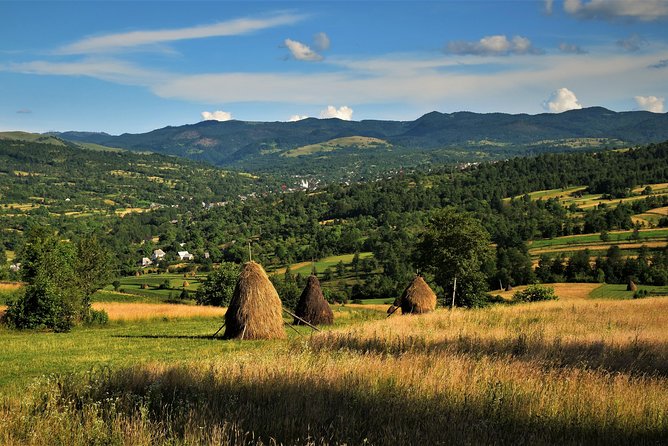
After the medieval citadel and the remote church, you get a set of Saxon sites that connect through a shared architectural story. You visit Biertan Fortified Church and Valea Viilor Fortified Church, both UNESCO-listed, then stop at Alma Vii for a more off-the-beaten-path village feel and a traditional lunch.
This is a strong day for anyone who enjoys “how it works” travel. Fortified churches weren’t just decorative. They were community protection systems, and that makes the places more than just beautiful buildings.
The schedule includes shorter and longer segments, so you’ll get a mix of quick visits and time to eat well. If you’re sensitive to packed days, do not assume everything will feel slow. The value is in the variety across the circuit.
Cluj-Napoca stop: a bigger city breather en route to Maramureș
Before Maramureș, you pause in Cluj-Napoca for a walking tour. This is useful because Maramureș can feel like a jump back into older rural rhythms. Cluj helps you reset your perspective, then you transition without feeling like you’re trapped in one kind of scenery all week.
If you’re a museum-and-history person, Cluj’s role is more about orientation than about one blockbuster attraction. It gives you context for what you’ll be seeing next.
Maramureș wooden church stars: Surdesti and the wooden-first experience
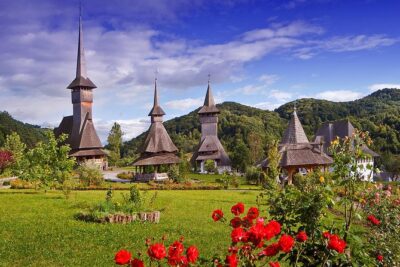
Once you reach Maramureș, the itinerary leans hard into wooden architecture. You’ll stop at Surdesti Wooden Church, described as the first wooden church from Maramureș and one of the tallest wooden churches in the world.
This is where the trip turns distinctive. Romania’s tourism often centers on castles, but Maramureș argues a different point: power and identity can be expressed in timber too. A guided stop helps you look beyond the “wow, it’s wood” reaction and appreciate the craftsmanship and structure.
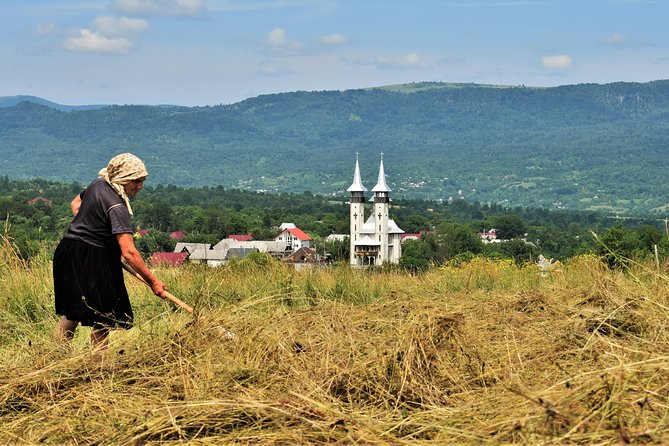
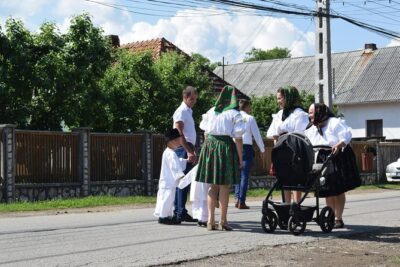
Then you arrive in Breb Village, where you’ll spend four nights. This is your base for village life, walking, meeting people, and enjoying local food. It’s not a show you watch. It’s a place you stay in.
Sapanta’s Merry Cemetery: a rare, human take on death
The next stop is Merry Cemetery in Sapanta, famous for presenting death in a very different way. The visit gives you a perspective that feels more personal than grim, and it’s paired with about half an hour of time on site.
This is one of those stops you either love immediately or need a little time to digest. Either way, it adds emotional texture to the trip, which otherwise is heavy on architecture and legends.
Desesti wooden church and Barsana monastery, two very different spiritual vibes
Then you go to Desesti Wooden Church, described as the best preserved in Maramureș, and located with a cemetery setting. After that, you visit Barsana Monastery, one of the most famous Orthodox monasteries in Romania.
This pairing works well because you get two different ways of understanding sacred space. One is wooden and community-centered. The other is monastery life, focused on religious traditions and the way faith shapes the landscape.
Time here is short, around 45 minutes each for the churches, which keeps the day from turning into a blur. You still get enough to understand the role each place plays, without exhausting your energy before the transport days.
The Mocănița steam train ride: slow travel with a strong sense of place
One day is built around the Mocănița Maramureș train ride, using old steam locomotives. This is not just a ride for the camera. It’s a way to experience the region’s pace, because the route and the rhythm are part of the charm.
You’ll have about six hours here, which sounds like a long block. In practice, it means you’ll settle in and experience it as a journey rather than a quick activity stop.
If you like trains, this is one of the most memorable inclusions. If you don’t, the scenery and the novelty of steam power still tend to win people over, as long as you’re willing to slow down.
Breb at your pace, plus a second Maramureș chance
After the steam train day, you get a relaxed option to walk Breb Village at your own pace. That eight-hour block is a gift because the earlier days include several guided segments and scheduled visits.
This is also when you notice the real advantage of a countryside stay. You’re not only touring sights. You’re learning what it feels like to live near them.
If you’re the type who likes stepping into daily life, ask your guide about what to look for while walking. Even without a formal “activity,” you’ll get more from the village because you have context.
Rimetea stop and an ethnographic museum night
Then you drive to Rimetea Village, a place known for its beauty, and spend one night there. You also visit an ethnographic museum, with about 45 minutes allotted.
Rimetea works as a bridge day. After Maramureș, it gives you a change of tone without breaking the rural, tradition-heavy theme. The museum short time is enough to plant ideas in your head, so when you walk afterward, you’ll have better questions in mind.
Alba Iulia citadel: the big national story in a readable setting
On the way toward Sibiu, you visit Cetatea Alba Iulia. This is described as the most important historical site of Romania, and you’ll spend about two hours learning the main story tied to the citadel.
This stop matters because it anchors all the smaller local history you saw earlier. Once you get a national timeline, the regional forts and churches feel less random. They start to connect.
Corvin Castle and Sibiu medieval walking tour
Next is Castelul Corvinilor, described as Romania’s biggest Gothic castle, built in the 14 hundreds, followed by a walking tour of Sibiu’s medieval city center.
Sibiu is a smart finish for this portion of the trip. It’s walkable, visually rewarding, and easy to explore without needing extra transportation. The guided time is about an hour, which keeps things moving while still helping you hit major highlights.
Corvin Castle is one of those places where your brain goes, How is this real? In the right lighting and with the right guide, it becomes fun history, not just a photo stop.
Transfagarasan Highway views, road or cable car based on season
A major highlight day is the Transfăgărășan Highway. If you travel from July 1 to Nov 1, the plan is to drive the road by car. If you travel outside that window, you take a cable car for mountain views.
This is exactly the kind of seasonal flexibility that saves your trip from disappointment. You still get the big mountain moment even when road access changes.
Plan for a long day, about six hours on the experience block. Bring layers and be ready for shifting weather, because mountain conditions can change quickly.
Curtea de Argeș Monastery on the way back to Bucharest
Before you return, you stop at Curtea de Argeș Monastery, which is described as about 500 years old and likely one of the most beautiful Orthodox churches in Romania. The visit is around 45 minutes.
This stop is a nice “final prayer” before finishing in Bucharest. It’s also a reminder that Romania’s story includes faith architecture as much as it includes military forts and castles.
What the private, all-inclusive format really buys you
This trip is expensive on paper, at $4,585.57 per person, but much of that cost is about reducing friction. You’re paying for the driving plan, the guiding expertise, and the included meals and major admissions.
You get private tour service, hotel pick-up and drop-off, round-trip private transfer, and transport in an air-conditioned vehicle. For a route this long and varied, that’s not a luxury feel. It’s how you avoid wasting days on logistics.
Meals are also part of the value story. You receive breakfast (15) throughout, plus dinner (12). That matters because countryside travel often means unreliable food timing when you travel independently. Here, meals are built into the rhythm.
Price and logistics that matter for real life
The biggest “fine print” you should think about is not cancellation language, it’s timing. Some sights can be closed on Mondays and on public holidays. Also, Transfagarasan access shifts by season, changing whether you drive the highway or use the cable car.
What you should do with that information is simple: pick your month based on what you want most. If the road is your must-see, travel in the open window. If you just want mountain views, the cable car still keeps the day on track.
Should you book this Romania time machine?
Book it if you want Romania to feel like a guided story, with wooden churches, Saxon fortified churches, monasteries, castles, and mountain scenery all in one coherent sweep. This is especially a good match if you like authentic village time, not just big-ticket stops.
Skip it if you hate long days in the car or you want a high level of free-form wandering with no schedule. This trip is structured for momentum, and you’ll feel that.
If you do book, my best advice is to tell your guide what you care about most. People who get the most out of this type of private trip tend to show up with a couple priorities in mind, like churches and crafts, or nature and trains, and then let the guide steer the details.
FAQ
How long is the tour?
The duration is listed as 14 days approximately, with the overall experience described as a 15-day journey.
Where does the tour start and what time?
It starts in Bucharest, with the start time listed as 9:00 am.
Is pickup and drop-off included?
Yes. Hotel pick-up and drop-off are included.
What transport will I use?
You’ll travel in an air-conditioned vehicle, including transport by air-conditioned minivan and private vehicle, with round-trip private transfer.
Is this a private tour?
Yes. It is a private tour, and only your group will participate.
Are breakfasts included?
Yes. Breakfast is included for 15 days.
Are dinners included?
Yes. Dinner is included for 12 days.
Are entrance tickets included?
Some admissions are included and others are marked as free in the experience plan, so you should expect a mix. Photo fees are not included.
What about Transfăgărășan Highway, do I always drive it?
No. If you travel between July 1 and Nov 1, you drive the road by car. If you travel outside that period, you take the cable car for mountain views.
Is the tour refundable?
The experience is non-refundable and cannot be changed for any reason.
Latest reviews from around Bucharest
- LiBEARty Brown Bear Sanctuary and the most important castles from Romania★ 5.0 · 4 reviews
- Bucharest Private Tour with Dracula’s Grave and Ceaușescu Mansion★ 5.0 · 4 reviews
- Hike Bulgaria Love Swing, Veliko Tarnovo and Tarevet Fortress★ 5.0 · 4 reviews
- Hiking in Bucegi Mountains in the Carpathians, Private tour★ 5.0 · 4 reviews
- Dracula Experience In Transylvania★ 5.0 · 4 reviews
- Bucharest Sightseeing – Half-Day Private Tour★ 5.0 · 4 reviews
- Bison Sanctuary, Vlad the Impaler Princely Court & Dracula Grave★ 5.0 · 4 reviews
- Private 6-Day Dracula Tour in Transylvania from Bucharest★ 5.0 · 4 reviews
Maramureș, compared.
Classic Romania Tour – small group in 8 days: Transylvania and Maramures
Read our review →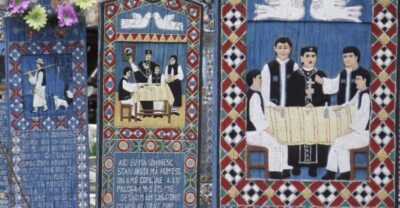

Two days tour to Maramures: local experiences and culture
Read our review →
Your rendez-vous with Europe’s past: time-travel to Maramures, Transylvania
Read our review →Browse the lists this tour appears in