
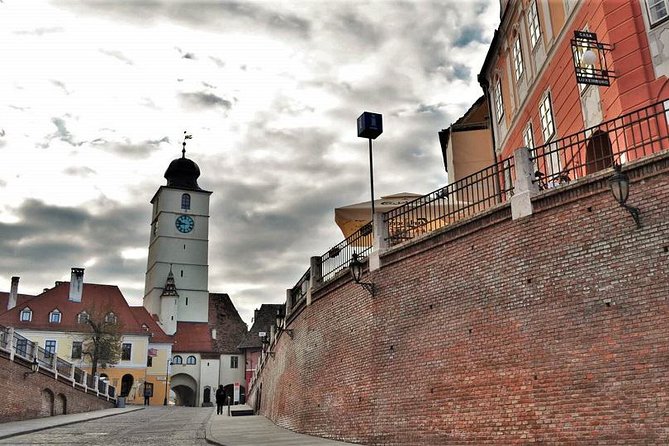
Reviewed · MARAMUREș
Your rendez-vous with Europe’s past: time-travel to Maramures, Transylvania
This week-long route is interesting because it lets you feel multiple Romanians worlds in one trip. One day you are in medieval Wallachia, the next you are among UNESCO wooden churches and rural villages in Maramures, then you land in classic Transylvania sights like Sighișoara, Bran, and Peles.
I like two things a lot. First, the storytelling is handled by your guide Gelu, so the legends connect to the real places. Second, admissions and timing are managed, so you spend less time hunting tickets and more time looking at stone, wood, and views.
The main drawback to consider is that you will do long car days. This is a road trip, so pack for comfort, wear good shoes for stair-heavy stops, and accept that you will be on the move more than on a slow walking itinerary.
Key things to know before you go
- Private guide Gelu plus driver Vlad means fewer “what now” moments and more time for questions and photos
- UNESCO wooden churches in Maramures plus fortified churches in Transylvania, all with planned visits
- Iconic castles with context (Bran Pass, Peles Castle, and the Carol I contrast)
- Sighet prison memorial stop adds a serious historical layer beyond legends
- Hotel and guesthouse rhythm: 7 nights with breakfast, and you are rarely hauling luggage between stops
- Optional itinerary adjustment lets you fine-tune timing based on your pace
The vibe: a guided time machine through Wallachia, Maramures, and Transylvania
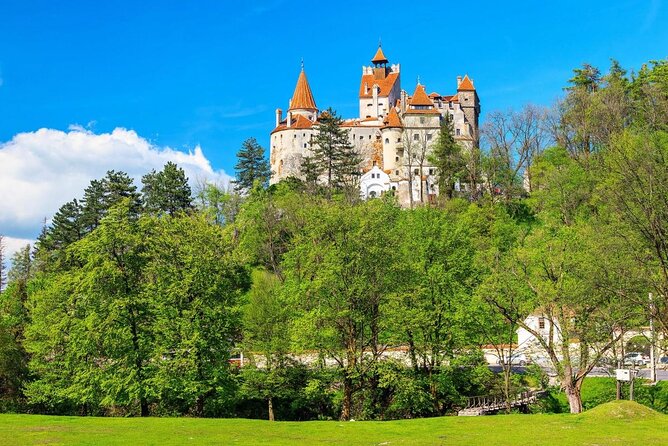
This tour works because it does not treat Romania like a checklist. It moves along a clear dramatic arc. You start with medieval power and religious monuments, then shift into the north, where tradition is still built into everyday life. After that, Transylvania turns the volume up again with citadels, fortified churches, and the tourist-famous castles that people talk about for decades.
The private format matters. Your driver handles the roads, and Gelu handles the meaning. That combination is what turns a long day of driving into an experience that feels guided, not just transported. In the best moments, you are standing in front of a wooden church or a fortress wall and suddenly it clicks why that place exists and why people fought to keep it.
More of Maramureș:
Bucharest arrival and the first big stop: Cozia Monastery and the Olt Valley drive
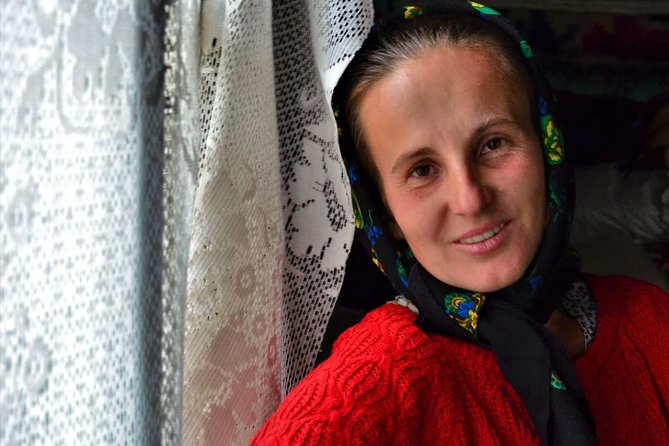
You meet in Bucharest at your hotel or at the airport, then you start by car into the scenery of the Olt River valley. It is a good opening because it immediately sets the tone. Romania here is not flat and anonymous, it is green valleys and road views, the kind that make the drive feel like part of the sightseeing.
Your first major stop is Cozia Monastery, founded in 1388 by Mircea the Elder, a Wallachian prince. Gelu can connect the dots to Mircea’s family and the broader political world that eventually produced the legends people associate with Vlad the Impaler. If you care about how legends grow from actual history, this first stop does that work early.
Time on site is short, about 30 minutes, and the admission ticket is listed as free. That makes it a smart first stop: you get an important monument without exhausting the day.
Sibiu’s old squares and church contrasts: Council Tower stairs and two faith traditions
After a lunch and rest, you shift to Sibiu, one of Transylvania’s best preserved old cities. The highlight is a guided stroll that includes the Grand Square, Small Square, and Albert Huet Square, the last dating from the 12th century. This is the kind of place where getting your bearings pays off fast, and a guide helps you read the street plan.
You also climb the Council Tower’s medieval stairs for a view over Sibiu. Even if you have seen viewpoints before, this one feels rewarding because the historic center below is compact and orderly.
The stop also includes two important church styles. You visit the Orthodox Cathedral, and you get a comparison point to Saint Sofia’s Basilica in Constantinople. Then you see the Evangelical Church. That contrast gives you an early feel for Romania as a crossroads of beliefs and influences, not a single uniform story.
Alba Iulia fortress day: John Hunyadi’s footprint and Roman ruins
Day two is built around Alba Iulia, and it is one of those days where the layers stack neatly. You start with the footsteps of John Hunyadi, also known from the Hungarian story as Corvin, and tied to King Matthias Corvinus. The tour frames him as a military figure of the region, including the Ottoman pressures that shaped Central Europe.
You visit the Alba Carolina fortress and the tomb setting of John Hunyadi at Saint Michael Cathedral, with construction starting in 1004. This is where the day turns from architecture into human history, because you are not just looking at walls, you are seeing how power got memorialized.
You also see the Orthodox Coronation Cathedral and the ruins of a Roman castrum tied to the 13th Gemina Roman Legion. If you like history that repeats in different forms across centuries, you will like this mix. It is also a reminder that the region has been contested for a very long time.
More Bucharest options to weigh up
- Bucharest: Dracula’s Castle, Peles Castle, & Brasov Old Town
★ 4.5 · 17,858 reviews - Bucharest: Dracula Castle, Peles Castle & Brasov Old Town
★ 4.6 · 10,891 reviews - Bucharest: Dracula’s Castle, Peleș Castle & Brașov Day Trip
★ 4.4 · 6,100 reviews - Bucharest: Palace of Parliament Tickets and Guide
★ 4.3 · 3,182 reviews
Cluj-Napoca stop: a quick city pulse and Matthias Rex connection
Then the tour moves to Cluj-Napoca. This is a shorter city visit, about two hours, with a guided walk that ends near places to eat or drink. The key connection here is to Matthias Rex, the son of John Hunyadi, who is described as having been born in this area.
Even with the shorter timing, a guided approach helps you notice what matters in a working city. You are not trying to memorize everything. You are getting the feel for how Transylvania lives today, while still keeping one foot in the medieval storyline.
Into Maramures: Surdesti’s UNESCO wooden church and the slow village rhythm in Breb
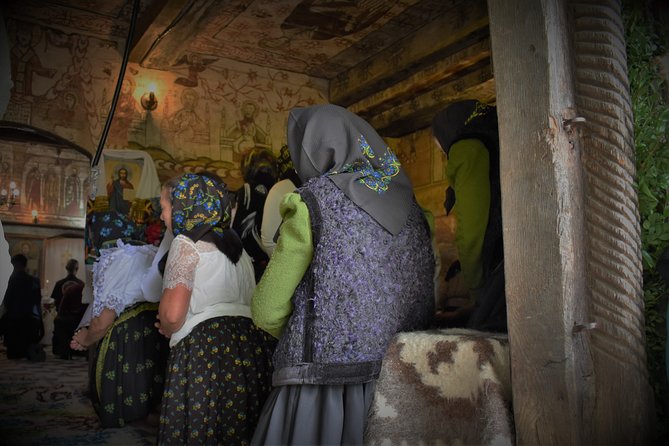
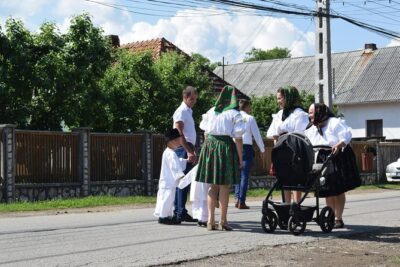
Day three is where the tour turns quieter, and honestly, more interesting if you want a Romania that still feels rural. You head north from Cluj-Napoca toward Maramures, described as one of the last bastions of traditional peasant culture in Europe.
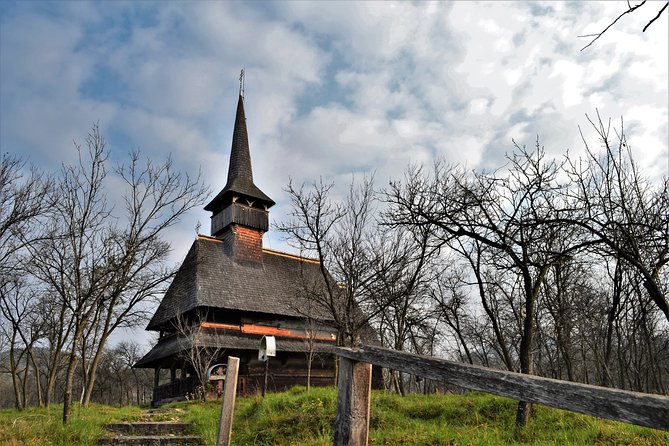
Your first major stop is Surdesti Wooden Church, a UNESCO World Heritage monument built in 1766. This is a Greek-Catholic church and it is noted as the tallest wooden church in the world for a time. That detail is not just trivia. It tells you how much skill and ambition went into wooden architecture, which is easy to underestimate if you only think of churches as stone.
Then you check in at a traditional cottage in Breb for the next stretch. The timing here is long enough to matter. You get about 18 hours to settle in, eat what your hosts serve, and simply enjoy the village pace. This is the day you start to feel the difference between visiting a place and actually being based there for a bit.
Barsana and Sapânta: faith, folk art, and the Merry Cemetery
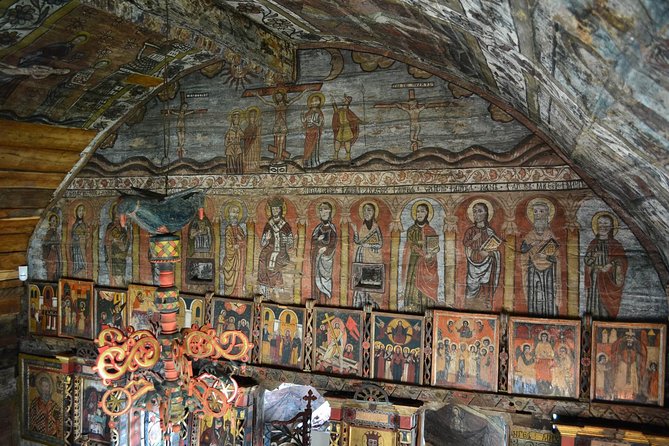
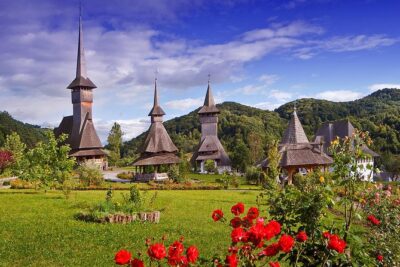
Day four is a mix of uplifting and heavy. First you visit Barsana Monastery, described as an Orthodox monastic complex built in the early 1990s. What makes it stand out is that it is modern in construction, but rooted in local tradition. That means you see how faith and culture keep evolving, not only how they survive in museums.
After that, you go to the Merry Cemetery of Sapânta. In 1935, an artist began carving and painting wooden crosses with vivid colors, then adding epitaphs that describe death with humor and irony. It is one of those stops that can feel surprising until you see it as a cultural coping style, where people talk about mortality in a way that keeps community spirit intact.
The tour also includes the Memorial of the Victims of Communism and of the Resistance at the former Communist prison in Sighet. This is a serious stop, and it changes the mood of the entire day. The memorial explains that the prison held political, religious, academic, and cultural elites, including clergy, academics, and political leaders, many imprisoned from 1950 to 1955 under dreadful conditions.
Then the day ends with another wooden church stop: Desesti, with a UNESCO listing and fame for a naive, well-preserved old picture. If you want one takeaway from Maramures, it is that the region keeps returning to the same visual language. Wood, carving, and painted storytelling keep showing up in different forms.
Two UNESCO churches at Ieud: hill church versus valley church
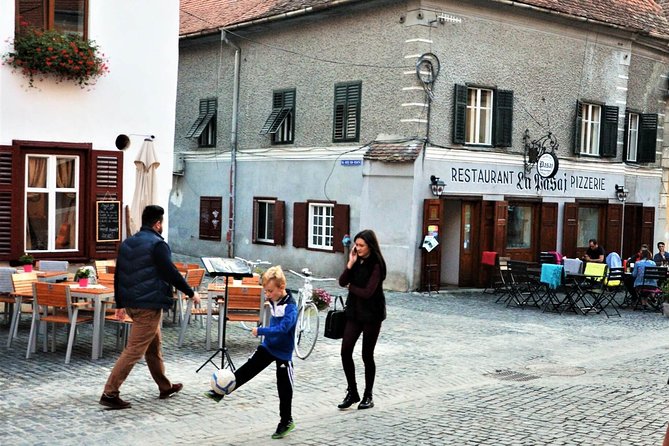
Day five starts with more Maramures wooden-church focus, but in a way that feels thoughtfully organized. You stop at Ieud village, which has two traditional wooden churches, both UNESCO.
The “church on the hill” is Orthodox and from the 17th century. Then there is the “church in the valley,” which is Greek-Catholic. The church in the valley is described as slender in proportion and known as the Wooden Cathedral, built in 1718 after the last Tartars invasion, when peasants reportedly defeated the attackers in 1717 led by a priest.
Here is a key detail that you will care about when you stand inside. The church in the valley was never painted, but it holds a rich collection of glass icons. That gives you something more than carvings to look for, and it makes the interior feel visually different even if you have seen other wooden churches.
Biertan fortified church: defense walls and bishop tombstones
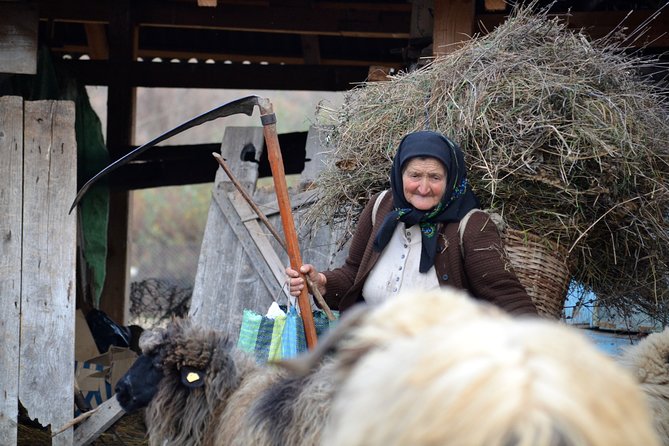
Next you move into the Saxon heartland of Transylvania and arrive at Biertan. The star is the fortified church, another UNESCO World Heritage monument. It was built from 1486 to 1524, and it is known for impressive defense walls plus an interior nave ceiling.
What I like about fortified churches is the way they solve two problems at once: spiritual life and safety. Here, you can see the defense logic in the walls, then you pivot to the church interior to see the art and tombstones of former bishops and notabilities. It gives you a clear picture of who mattered locally.
Sighișoara at late afternoon: citadel atmosphere and Vlad birthplace context
You end day five in Sighișoara, visiting its medieval citadel, a UNESCO site. This stop is scheduled for late afternoon and evening, which is smart. The light is better for walking the stone streets, and the timing helps you enjoy the citadel without feeling rushed.
The tour ties Sighișoara to the birthplace of Vlad the Impaler. Even if you do not care about Dracula myths, you will still appreciate the medieval planning. Citadels like this concentrate a city’s identity into walkable walls, so your time feels focused.
Saschiz and Viscri fortified churches: Saxon villages and Prince Charles connection
Day six is the fortified-church circuit again, with a rural beat. You pass Saschiz and visit Viscri, including another UNESCO stop: fortified churches at Saschiz and Viscri.
The tour includes lunch time in Viscri, a remote village where Prince Charles is said to have fallen in love after buying an old Saxon household there, numbered no. 163, a blue house built in 1753. You also learn that he visited every few years, riding horses and traveling. You might not need royal trivia to enjoy Viscri, but it helps explain why some international visitors later started paying attention to the area.
On the drive between stops, you also catch sight of Rupea fortress, listed as one of Romania’s oldest fortifications, built over preexisting Roman and Dacian fortresses. That matters because it keeps reminding you that Transylvania is not just medieval, it is layered even deeper.
Brasov historical center: Black Church, fortress walls, and Rope Street
Then you reach Brasov, and the mood changes again. Brasov’s historic center is described as growing around a fortress established in 1211 by the Teutonic Knights, and later strengthened by German settlers after a quarrel between the knights and the king.
Your visit includes the Black Church, a 14th century Gothic monument. You also see fortress elements like fortifications, bastions, and towers. If you like looking up at the built forms that defended people, Brasov is a good place to do it.
You also walk Rope Street, noted as one of the narrowest streets in Europe. It is a fun micro-stop, the kind that makes great photos, but it is also useful because it shows how medieval cities managed movement within walls.
Bran Castle and the mountain pass feel: Dracula’s legend with a serious scenic setting
Day seven splits into classic castle day and then the return toward Bucharest. First is Bran Castle, associated with Count Dracula legends. The tour also schedules time to enjoy scenery at Bran Pass over Piatra Craiului and Bucegi mountains.
Even if you are here for the legend, the pass is what makes the visit feel like more than a theme stop. You get that sense of why castles ended up perched where they did, with terrain shaping travel and control.
The castle visit is listed at about two hours with admission included. That is enough time to see key rooms without turning the visit into a sprint.
Peles Castle: ornate 19th century contrast after medieval stops
Next comes Peles Castle in Sinaia. You arrive early afternoon and visit in about two hours. Peles is built in the end of the 19th century and it is described as flamboyant, especially in contrast with the founder’s character, Carol I, the first King of Romania, described as sober and of German origin.
This contrast is part of why the day works. After all the medieval and fortress energy, you get a window into a different era, when Romania’s identity was also being shaped by new European tastes.
Stavropoleos in Bucharest: finishing with a city church that feels like a calm exhale
Back in Bucharest late afternoon, you check in and you can take your time to settle. Then the tour includes a visit to Stavropoleos Church, built in 1724 and located in the heart of the city. It is short at about 30 minutes, with free admission.
This is a nice final stop because it ties the trip back to Romania’s capital without ending on another huge ticketed attraction. You leave with one last architectural detail in your head, not a shopping list.
What this costs and why it can still feel fair
The price is $2,185.67 per person, for about 7 days. That is not cheap, but what you are paying for is real structure.
You get a private driver and guide, air-conditioned transportation, and 7 nights in 3-star superior hotels and guesthouses with breakfast included. You also get organized admissions and included tickets on many stops, plus planned lunch and dinner on two days each.
A DIY trip would require you to coordinate lodging across multiple regions, manage long drives, and line up tickets for UNESCO sites and castles. If you value time and want fewer logistics headaches, this price can feel more reasonable than it first appears.
Still, keep expectations honest. Not every meal is included. Photo fees are not included, and flights are not included. Also, this is a touring schedule with set stops, not a slow country roam where you linger until you feel done.
Who this tour fits best, and who should look elsewhere
This tour is best for you if you want a well-paced mix of major sights and rural authenticity. You enjoy history that has a physical setting, not just a lecture. You also like when a guide can adjust to how your group moves, because the itinerary is built to be flexible in a private format.
You might want to consider another option if you are the type who hates driving days or needs total free time every afternoon. This trip has a lot of scheduled momentum, especially moving into and out of Maramures.
If you like questions and conversation, you are in the right place. In particular, the guide approach here is built around making time for what you want to ask, not just walking you from stop to stop.
The bottom line: should you book this Maramures and Transylvania route?
Book it if you want a private guided road trip that connects UNESCO wooden churches, fortified churches, and famous castles into one coherent story. The value comes from handled logistics, 7 nights of comfortable stays, and a guide like Gelu who makes the places make sense, not just look nice on a map.
Skip or compare if you are looking for a very relaxed pace or if you want total control over every day. The trade-off for all these organized highlights is that the schedule is packed and you will be in the car often.
If your ideal Romania week includes both legends and the real history behind them, this is a strong match.
FAQ
Where does the tour start?
You meet in Bucharest at your hotel or at the airport.
How long is the tour?
It is about 7 days.
What is the price per person?
The listed price is $2,185.67 per person.
Is pickup included?
Yes, pickup is offered.
Is this a private tour?
Yes. It is private, and only your group participates.
What is included in the trip?
You get an air-conditioned vehicle, private transportation, all fees and taxes, 7 nights accommodation in 3-star superior hotels and guesthouses with breakfast included, plus 2 lunches and 2 dinners.
Are admissions included?
Admissions are organized for the listed sights, and many of the stops are marked as included or free within the schedule.
What meals are not included?
Lunch and dinner are only included on specific days, and meals are listed as not included overall beyond what is specified. Photo fees are also not included.
Are flights included?
No, flight tickets are not included.
Can the itinerary be changed?
Yes. This is described as a bespoke private tour where you can adjust the itinerary to your needs.
What are the meeting and operating hours?
The opening hours are 8:00 AM to 8:00 PM, and the service runs during 07/01/2020 to 06/16/2026.
Latest reviews from around Bucharest
- LiBEARty Brown Bear Sanctuary and the most important castles from Romania★ 5.0 · 4 reviews
- Bucharest Private Tour with Dracula’s Grave and Ceaușescu Mansion★ 5.0 · 4 reviews
- Hike Bulgaria Love Swing, Veliko Tarnovo and Tarevet Fortress★ 5.0 · 4 reviews
- Hiking in Bucegi Mountains in the Carpathians, Private tour★ 5.0 · 4 reviews
- Dracula Experience In Transylvania★ 5.0 · 4 reviews
- Bucharest Sightseeing – Half-Day Private Tour★ 5.0 · 4 reviews
- Bison Sanctuary, Vlad the Impaler Princely Court & Dracula Grave★ 5.0 · 4 reviews
- Private 6-Day Dracula Tour in Transylvania from Bucharest★ 5.0 · 4 reviews
Maramureș, compared.
Classic Romania Tour – small group in 8 days: Transylvania and Maramures
Read our review →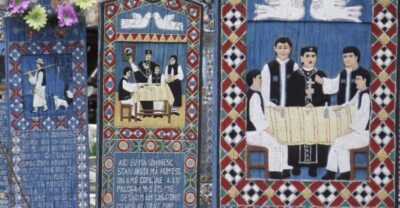
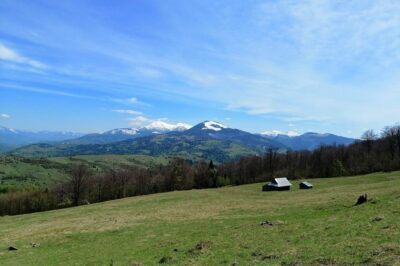

Two days tour to Maramures: local experiences and culture
Read our review →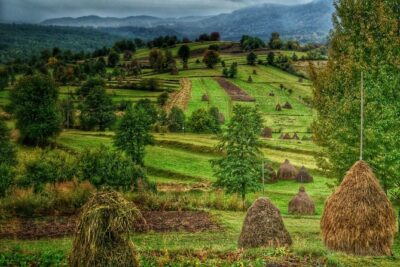
A Journey Back in Time: Countryside from Transylvania and Maramures – 15 Days
Read our review →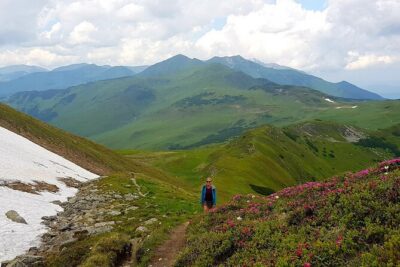
Browse the lists this tour appears in