
Reviewed · MONASTERIES
Bucovina Painted Monasteries & Transylvania Tour: 4-Day Private
This tour is interesting because it threads two of Romania’s biggest “wow” themes into one smooth private trip: the painted monasteries of Bucovina and the Saxon and royal highlights of Transylvania and nearby Wallachia. I really like the one-on-one attention from a guide, and I also like that entrance fees are included for many of the key church and city stops.
The main thing to consider is that a few big sights are not included in the entrance fees, so you’ll want to budget extra. Also, you’ll be doing a full day of touring with solid walking at churches and old towns, and the schedule is weather dependent.
Key highlights at a glance
- Private transport that keeps the long drives comfortable between Moldavia, Transylvania, and the mountains
- One-on-one guided interpretation of frescoes, architecture, and the stories behind each church
- Painted monastery focus across multiple styles and centuries, including the famous Voroneț blue fresco tradition
- UNESCO stops at Sighișoara historic center and Viscri fortified church
- Most major entrances included, with a short list of sites where you pay on the spot
- 3 nights in a 3-star hotel plus breakfast each morning
Private Transport and 3-Star Comfort, With One Guide for Your Group
This is built for people who want Romania to feel organized, not rushed. You start with pickup in Bucharest (anywhere in the city), and you return to Bucharest at the end. The transport is private, and the point is simple: you spend less time figuring things out and more time looking closely at what matters.
I like that you get one guide for your group, not a loud shuffle of strangers. In the best versions of this kind of tour, the guide can pace the day based on how your group is doing, and that matters when you’re visiting churches that are both spiritual spaces and art galleries.
The hotel side is straightforward: 3 nights in 3-star accommodation with breakfast included for those mornings. That’s a good baseline for this kind of road trip, where you want clean, comfortable rooms and a good start without paying for luxury you won’t use much.
One practical note: the tour calls for moderate physical fitness. That usually means you should be comfortable with uneven church grounds, stairs in historic sites, and walking through old-town streets.
Bucovina’s Painted Monasteries: What You’re Really Paying For
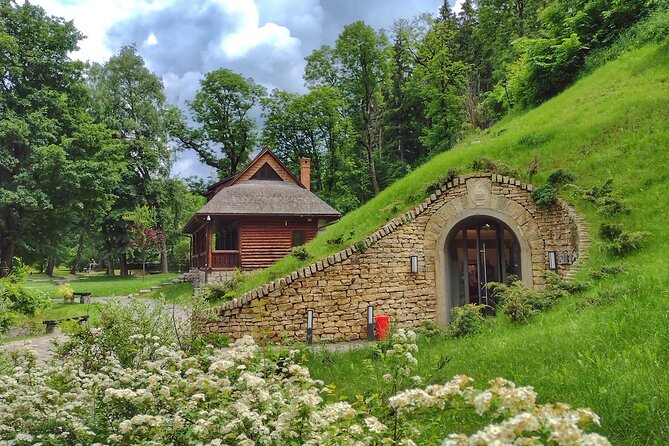
This tour’s core is the painted churches of northern Moldavia, often grouped under the phrase painted monasteries. They’re famous for one reason: their frescoes cover both the inside and exterior surfaces, and the result is art that you can read like a visual storybook.
What makes this better with a guide is that you’re not just looking at pretty walls. You’re learning how the styles and the painting programs shift over time. One guide experience shared in recent feedback highlighted how the route helps you notice differences between older 15th century monastery programs and later repainting or fresh restoration work. That changes how you look at each church, because you start seeing technique, planning, and religious storytelling as much as decoration.
Also, this kind of route can be more moving when you treat the visits as stops of quiet attention. One piece of feedback emphasized how peaceful the monastery areas feel, and how seeing Orthodox religious art up close turns it into more than sightseeing.
More Monastery Visits in Bucharest
- Princely Court of Târgoviște and Curtea de Argeș Monastery
★ 4.5 · 50 reviews - Small Group Tour to Mogosoaia Palace & Snagov Monastery
★ 4.4 · 48 reviews - Sacred Monasteries Private Tour: Snagov, Țigănești & Căldărușani
★ 5.0 · 32 reviews
Day 1 in Agapia and Văratec: Nuns, Frescoes, and Two Big Stops
Day 1 keeps things focused on two major monastery stops in the same broader area of northeastern Romania. It’s an efficient way to start, because you begin with monasteries that feel distinct right away.
Agapia Monastery: built in the 1600s, painted in the 1800s
Agapia Monastery is a Romanian Orthodox nunnery near Târgu Neamț. It was built between 1641 and 1643 by hetman Gavriil Coci, and it’s one of the larger nunneries in the country, with 300 to 400 nuns. What you’ll notice is the layering of time: the church has been restored and modified several times, but it also carries paintings by Nicolae Grigorescu from 1858 to 1861.
Why this matters: starting with Agapia gives you an immediate look at how monastery art can reflect different eras and changing artistic hands. You’re not just seeing one moment in time.
Practical tip: this is a functioning nunnery. Plan to move respectfully, keep your voice down, and treat the visit like you’re entering a live religious home, not a museum-only display.
Văratec Monastery: Romania’s largest nunnery
Văratec Monastery is another Romanian Orthodox nunnery in the same Agapia Commune area. It’s described as the largest nun monastery in Romania, with more than 400 nuns.
I like pairing Agapia and Văratec because the contrast is natural. Even if the fresco styles vary, the scale and the atmosphere help you understand how these communities operate.
Both stops include admission tickets in the tour design, so Day 1 is straightforward on the money side.
More painted monastery trips:
- 11-Day Romania Tour from Bucharest with Transylvania & Bucovina
★ 5.0 · 6 reviews - Transylvania & Bucovina Private Tour – 6 days
★ 5.0 · 3 reviews - Day trip from Iasi to the UNESCO Painted Monasteries in Bucovina
★ 5.0 · 26 reviews
Day 2 Sucevita, Moldovița, and Voroneț: Byzantine Meets Gothic, With Voroneț Blue
Day 2 is where the phrase painted monasteries becomes real fast. This is the day you see the big names side by side, and the guide’s job is to help you notice what’s different, not just that they’re painted.
Sucevita Monastery: Byzantine and Gothic mixing on the same walls
Sucevița Monastery’s church architecture includes Byzantine and Gothic elements, plus traits associated with painted churches of northern Moldavia. The key feature is that interior and exterior walls are covered with mural paintings, depicting biblical episodes from both the Old and New Testament.
If you’re the type who likes to understand why art looks the way it does, Sucevita is a strong stop because you can connect design choices to storytelling. You’re also likely to see evidence of ongoing care, since restoration work is part of how these places survive and stay legible.
Moldovița Monastery: built as a protective barrier
Moldovița Monastery was built in 1532 by Petru Rareș, who is described as the illegitimate son of Stephen III of Moldavia. It was founded as a protective barrier against Ottoman conquerors from the East.
This is one of those stops where the art is inseparable from the politics of the time. You start seeing the frescoes and architecture not just as religious devotion, but as identity and endurance.
Voroneț Monastery: the Sistine Chapel of the East and Voroneț blue
Voroneț is the headline for many people. It was constructed by Stephen the Great in 1488 over a period of 3 months and 3 weeks, commemorating the victory at the Battle of Vaslui. It’s often called the Sistine Chapel of the East. The frescoes are known for an intense shade of blue called Voroneț blue.
Here’s the value of a good guide: Voroneț is famous, but a guide can help you look at the details without getting lost in the scale. You learn how the church program is organized and what themes show up where.
Day 2 also benefits from included admission tickets for these stops, which keeps the day smooth.
A practical photo note: rules can be strict at religious sites. One shared experience mentioned paying a small fee (example given: 10 Lei) for outside photos at a painted monastery, while indoor photography was not allowed. I’d plan on no inside photos and keep a little cash ready in case the outside photo policy requires it.
Day 3 Sighișoara, Viscri Fortified Church, and Brașov: UNESCO Walls to Saxon Stonework
Day 3 shifts from monastery art into towns and churches tied to Saxon heritage, plus a UNESCO historic core.
Sighișoara historic center: a walled medieval citadel
Sighișoara’s historic center is a medieval citadel with a well-preserved walled old town. It’s listed by UNESCO as a World Heritage Site.
This is a change of pace in a good way. After days of frescoes, you get streets, towers, and city structure. The guide helps you connect what you see to why the town was built and defended the way it was.
Viscri Fortified Church: Saxon medieval architecture in a UNESCO frame
Viscri Fortified Church is also UNESCO-listed. It’s a well-preserved fortified church associated with Saxon medieval architecture. The experience here is the feel of medieval stonework plus the sense of community defense.
Admission for Viscri is listed as not included, so you should expect to pay on the spot or handle it day-of. Plan for it, and you won’t feel surprised.
Brașov historic center: Saxons, trade roads, and the Romanian anthem connection
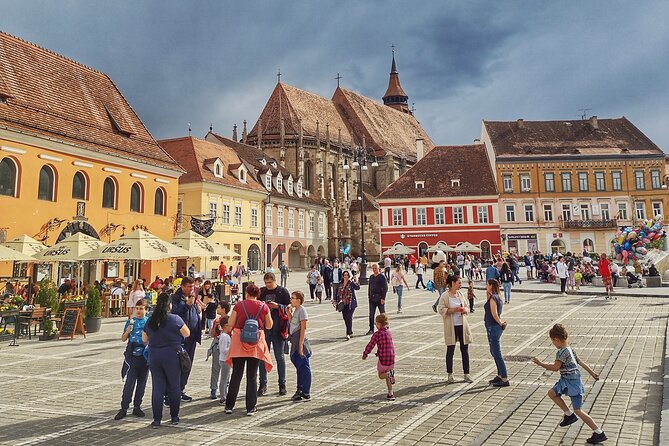
Brașov’s historic center is described as having been a regional capital for Transylvanian Saxons of the Burzenland, and it was also a large commercial hub on trade routes between East and West. The stop also notes that Brașov is linked to the birthplace of Romania’s national anthem.
This stop is where the route ties everything together: medieval defense, trade connections, and national identity. It’s an ideal place to slow down, look at street-level details, and understand why Brașov mattered beyond just being pretty.
Admission tickets are included for the Brașov historic center stop in the tour plan.
Day 4 Black Church and Peliș Castle: Gothic Worship and Royal Summer Grandeur
Day 4 brings the story to the city scale and then up into the mountains.
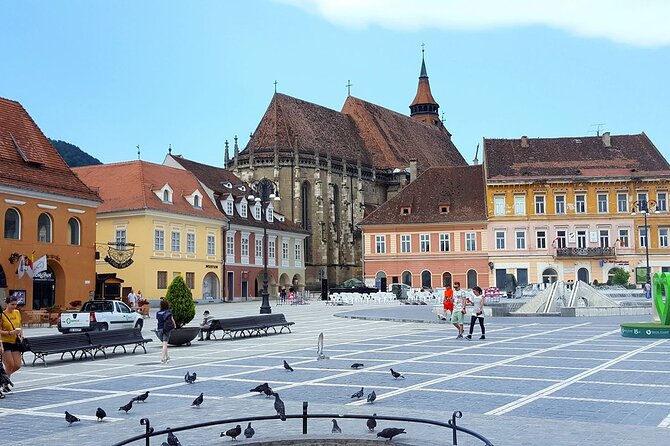
Black Church (Biserica Neagră): Gothic landmark and major Lutheran site
The Black Church was built by the German community of the city. It’s the main Gothic style monument in Romania and described as the largest and one of the most important Lutheran places of worship in the region.
This stop is a good reminder that Transylvania’s religious history is layered. You’re not only dealing with Orthodox monasteries anymore. You’re seeing how different communities shaped the same region over centuries.
Admission for the Black Church is listed as not included. So again, think on-the-spot payment.
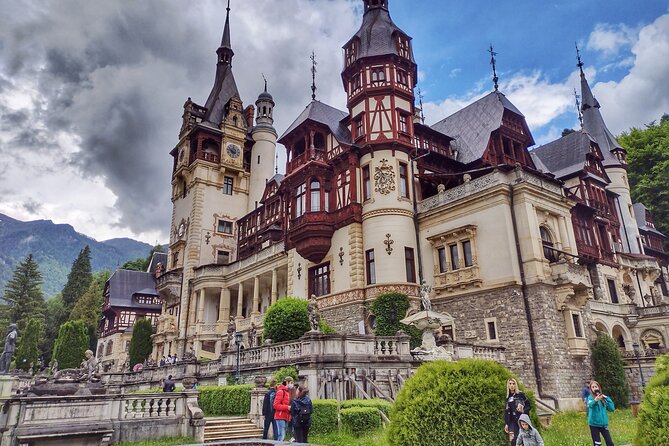
Peliș Castle: a royal residence in the Carpathians
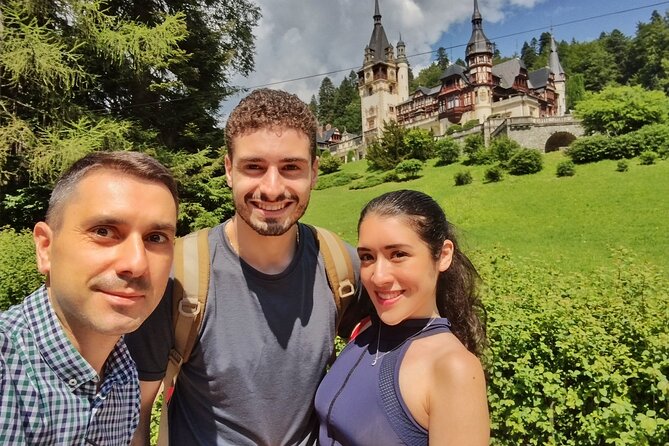
Peliș Castle is the summer royal residence near Sinaia, close to the Carpathian Mountains. It’s a Neo-Renaissance castle built between 1873 and 1914, with the inauguration held in 1883. It was constructed for King Carol I.
This is the “big finish” stop. It’s not trying to teach fresco art. It’s showing you how wealth, style, and power looked in the late 19th and early 20th centuries.
Admission for Peliș Castle is listed as not included. If you care about castles, you’ll want to budget for it ahead.
Price and Value: What $1,356.43 Covers and What Costs Extra
The price is $1,356.43 per person for a 4-day private tour from Bucharest. That’s not cheap, so you should ask what you’re buying.
Here’s the value angle that makes sense:
- Private transport for several days of driving and city-to-city transfers
- Private guide attention, which helps you get more from each fresco program and each historic city block
- 3 nights in 3-star hotels with breakfast included for three mornings
- Included entrance fees for many key stops, including multiple painted monasteries and UNESCO sites
What you need to budget for:
- Some important stops list admission ticket not included, specifically Viscri Fortified Church, the Black Church, and Peliș Castle.
- The tour info suggests entrance tickets can be bought on the spot, and it provides a rough budget range of about EUR 25 to EUR 30 per person.
So is it worth it? If you want a guided route that strings together Moldavia’s painted churches and Transylvania’s UNESCO sites with minimal hassle, the private format and included admissions do carry real value. If you’re trying to minimize spending and you’re comfortable self-driving and buying tickets daily, you could potentially do it cheaper on your own. But you’d give up the planning, pacing, and explanation that makes the frescoes click.
Practical Tips for Orthodox Grounds, Photo Rules, and a Smooth Day
A few practical things can make your days easier, especially at monasteries.
Dress code and covered legs
One practical shared tip said you may need appropriate clothing for monastery grounds, specifically trousers or a long skirt. Even if a head covering isn’t required, I’d still pack something that covers your legs and plan to dress modestly for church property.
Expect different photo rules at churches
Some painted monasteries restrict photos inside. One experience noted that outside photos may require a small fee, with an example of 10 Lei, and inside photography not allowed. Your best move is to assume indoor no photos and be ready for outside fees.
Bring cash for small fees
Since photo permissions can involve a small payment and some admissions aren’t included, I’d keep some cash on hand. Even with a mobile ticket system, these small on-the-spot rules are the kind of thing that can slow you down if you are unprepared.
Plan for long days and good weather
The tour states it requires good weather. That makes sense because you’ll be driving and moving between stops. If weather turns, you may be offered a different date or a full refund if it’s canceled due to poor conditions.
Should You Book This 4-Day Private Tour?
If you like your travel organized, and you want to understand why these churches are famous instead of just taking photos, I think this is a strong booking. The focus is clear: painted monasteries that reward close attention, then Transylvania’s fortified and UNESCO sites, finished with the Black Church and Peliș Castle.
Book it if:
- You want private transport and one-on-one guidance over multiple days
- You care about interpreting fresco art, including how restoration and style differences matter
- You prefer included admissions for many stops, so less budgeting daily
- You want a route that hits UNESCO Sighișoara and Viscri without you coordinating transit
Consider a different option if:
- You want the cheapest possible price and you’re comfortable managing tickets and driving yourself
- You dislike paying on the spot for a few key entrances
- Your mobility is limited, since monastery and old-town walking can add up
One final thought: guides matter here. Recent experiences highlighted guides such as Marius and Toni Tatar as exceptionally helpful and committed to making the history come alive, including stepping in with real support when someone in the group needed help. In a tour where the art is the main event, that human touch is part of what you are paying for.
FAQ
What is the duration of this tour?
The tour is approximately 4 days.
What time does the tour start, and where does it meet?
Start time is 9:00 am in Bucharest, Romania. Pickup can be arranged anywhere in Bucharest.
Is this a private tour?
Yes. It is a private tour, and only your group participates.
What language is the tour offered in?
The tour is offered in English.
What’s included in the price?
Included: 3 nights accommodation in 3-star hotels, hotel pickup and drop-off in Bucharest, a private tour, breakfast for 3 mornings, and a mobile ticket.
Are entrance fees included?
Entrance fees are included for some stops, but not for all sites. Tickets can be purchased on the spot if an entrance is not included.
Which stops have admission ticket not included?
Viscri Fortified Church lists admission as not included, and so do the Black Church and Peliș Castle.
What physical fitness level is required?
The tour is described as requiring moderate physical fitness.
What if weather is bad or I need to cancel?
The experience requires good weather. If it is canceled due to poor weather, you will be offered a different date or a full refund. You can cancel up to 6 days in advance for a full refund, with partial refunds available if you cancel 2 to 6 days before the start time.
Latest reviews from around Bucharest
- LiBEARty Brown Bear Sanctuary and the most important castles from Romania★ 5.0 · 4 reviews
- Bucharest Private Tour with Dracula’s Grave and Ceaușescu Mansion★ 5.0 · 4 reviews
- Hike Bulgaria Love Swing, Veliko Tarnovo and Tarevet Fortress★ 5.0 · 4 reviews
- Hiking in Bucegi Mountains in the Carpathians, Private tour★ 5.0 · 4 reviews
- Dracula Experience In Transylvania★ 5.0 · 4 reviews
- Bucharest Sightseeing – Half-Day Private Tour★ 5.0 · 4 reviews
- Bison Sanctuary, Vlad the Impaler Princely Court & Dracula Grave★ 5.0 · 4 reviews
- Private 6-Day Dracula Tour in Transylvania from Bucharest★ 5.0 · 4 reviews
Monasteries, compared.

3-Castle: Peles,Bran,Rasnov,Sinaia Monastery from Brasov w pickup
Read our review →
Peles Castle, Bran Castle, Rasnov Fortress and Sinaia Monastery Tour from Brasov
Read our review →
Princely Court of Târgoviște and Curtea de Argeș Monastery
Read our review →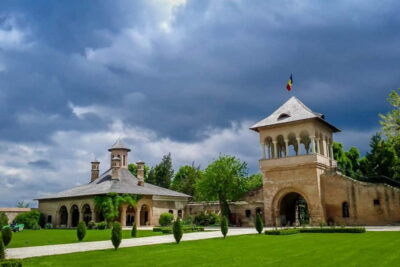
Small Group Tour to Mogosoaia Palace & Snagov Monastery
Read our review →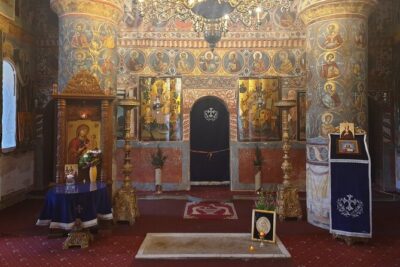
Sacred Monasteries Private Tour: Snagov, Țigănești & Căldărușani
Read our review →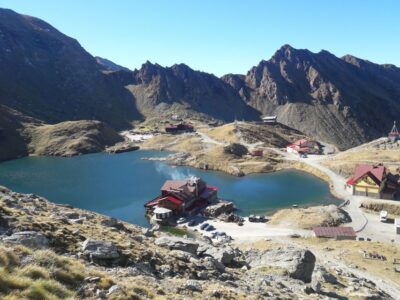
Brasov: Transfagarasan Highway, Balea Lake & Carta Monastery
Read our review →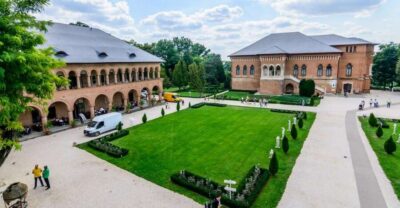
Private Half Day Trip to Snagov Monastery & Mogosoaia
Read our review →
Hike to Poenari Fortress, Vidraru Dam, Argeș Monastery – Private
Read our review →Browse the lists this tour appears in