
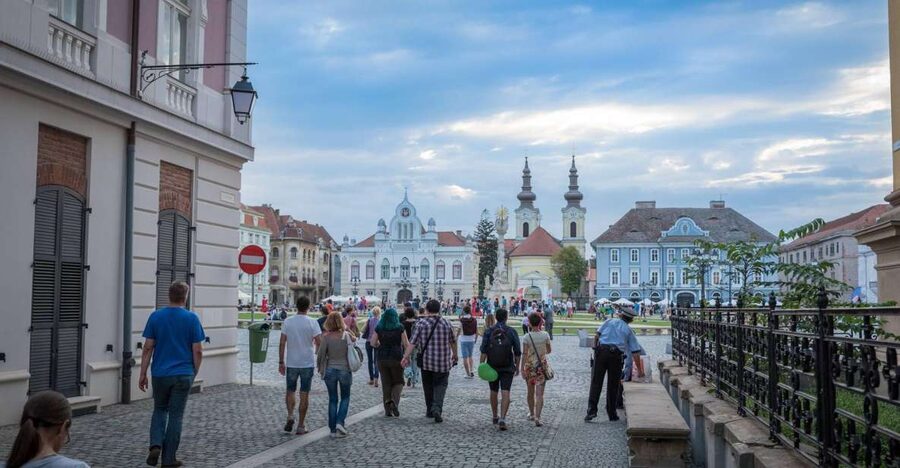
Reviewed · WALKING TOURS
Timisoara: Classic Walking Tour
Timisoara has a rare kind of “layer cake” story. In two hours on foot, you connect Mongol-era danger, Ottoman-era city life, Austrian rebuilding, and the modern Romanian push against communism, all through street-level details you can actually see.
I love how this tour starts by setting Romania today in simple, human terms before jumping into centuries-old events. I also like the focus on practical curiosities, like where everyday places in the Ottoman period used to be, and why Timisoara’s trams and electric street lights mattered beyond just the city.
One consideration: this is a walking tour, and the route is history-heavy. If you prefer big museum stops or long photo pauses, you may want to add extra time on your own after the tour.
Key things you will get from this walk
- Romania today, explained early, so the later history lands better
- Ottoman-era locations pointed out, including where the Turkish public bath, bazaar, and Central Mosque stood
- Austrian rebuild facts you can picture, from new streets to fortification plans
- Tram history and the city’s early adoption of electric street lighting
- Private group feel with live storytelling in English or Romanian
- Guide quality that stands out, with strong praise for friendliness and lively anecdotes (Armand, Alex Muntean)
Timisoara’s story is written on the street
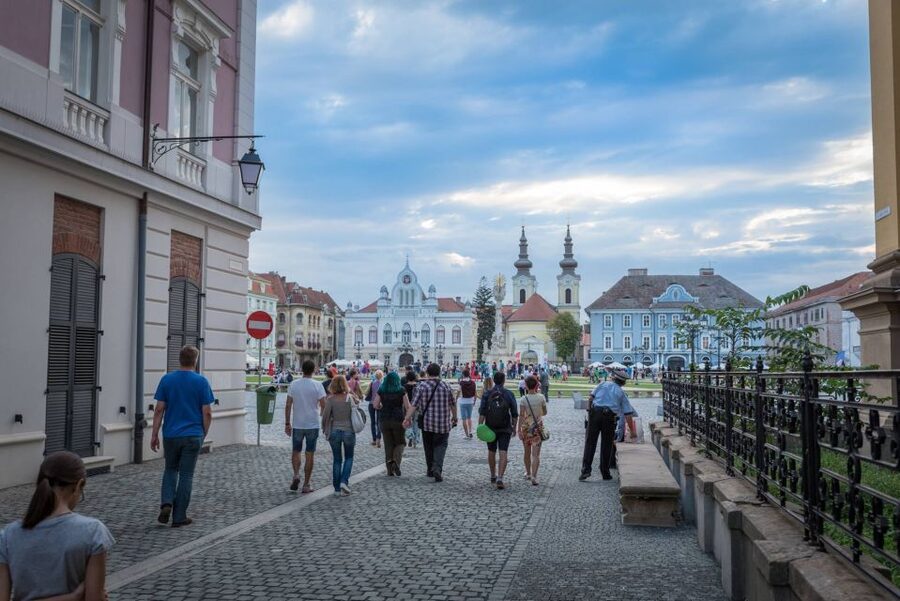
Timisoara can feel like a city that keeps changing uniforms, without ever losing its personality. That is why a walking tour works so well here. You are not just hearing names of rulers and dates. You are learning why the city’s layout, buildings, and public spaces turned out the way they did.
The tour’s biggest win is how it makes history feel connected to everyday life. You hear about past occupations and empires, then you shift to what it feels like to live in Romania now, and how society has changed over recent decades. That contrast is what turns a “classic walking tour” into something you can actually carry with you the rest of your trip.
More Walking Tours in Timișoara
- Timisoara All in One – Walking and Tram Tour
★ 5.0 · 72 reviews - Weekly Guided Walking Tour – Tuesday, Thursday & Saturday
★ 5.0 · 49 reviews - Timișoara Highlights – Walking Tour
★ 5.0 · 28 reviews
A 2-hour format that keeps you moving
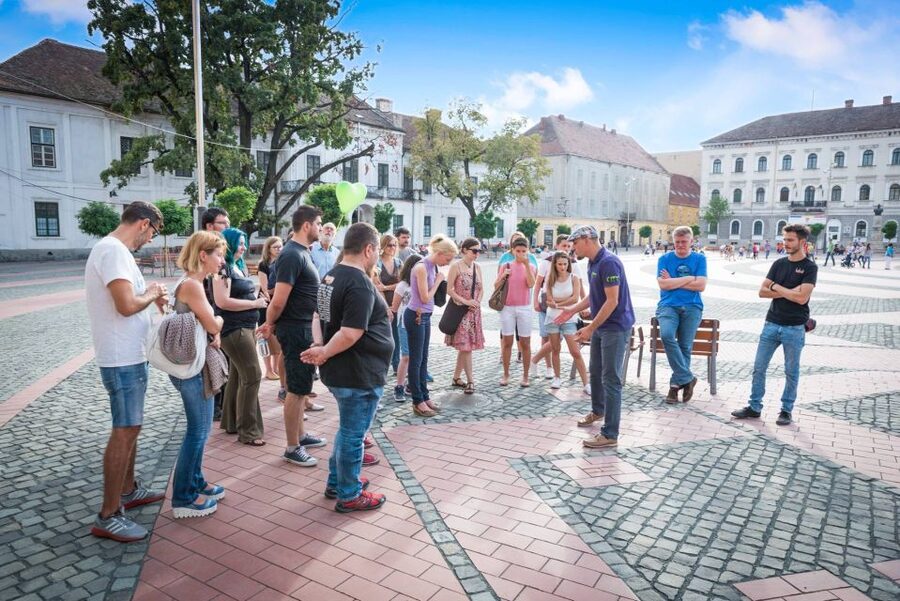
This is a 2-hour walk, private group style. The tempo is designed to keep the story flowing, not to linger for too long in one spot. You should plan for steady walking, plus the guide stopping at key points to explain what you are looking at and why it matters.
If you like tours that feel like a conversation with a local expert, this format fits. If you want lots of solo time to roam and wander, you might do better using the tour for direction and context, then breaking off afterward for slower exploring.
Starting at the tourist information center, and why the first minutes matter
You meet in front of the tourist information center. That matters because it sets a grounded tone. Instead of launching straight into old battles, the guide begins with a brief introduction to Romania’s situation today.
That opening is more than a warm-up. It helps you understand why the later story is not only historical trivia. The tour covers the contemporary revolution against the communist regime in Romania, so those opening context notes make the political shifts easier to track.
What you should listen for at the start
Pay attention to how the guide frames Romania’s modern society. You are not just collecting facts. You are calibrating your expectations for what you will see around Timisoara, from public life to everyday attitudes.
This is also where you get the feel for the guide’s style. Many guides can recite dates. The best ones connect those dates to the present in a way that makes you think, Oh, that explains why things feel the way they do.
More Timișoara options to weigh up
- The Classic Tour of Timisoara
★ 5.0 · 154 reviews - Weekly Guided Tour in English – Tuesday, Thursday, Saturday
★ 5.0 · 84 reviews - Day trip to Corvin Castle and Sibiu (and back) from Timisoara
★ 5.0 · 30 reviews - Danube Gorge & Banat Waterfalls
★ 5.0 · 27 reviews
Mongol invasion, Ottoman years, and the map of everyday life
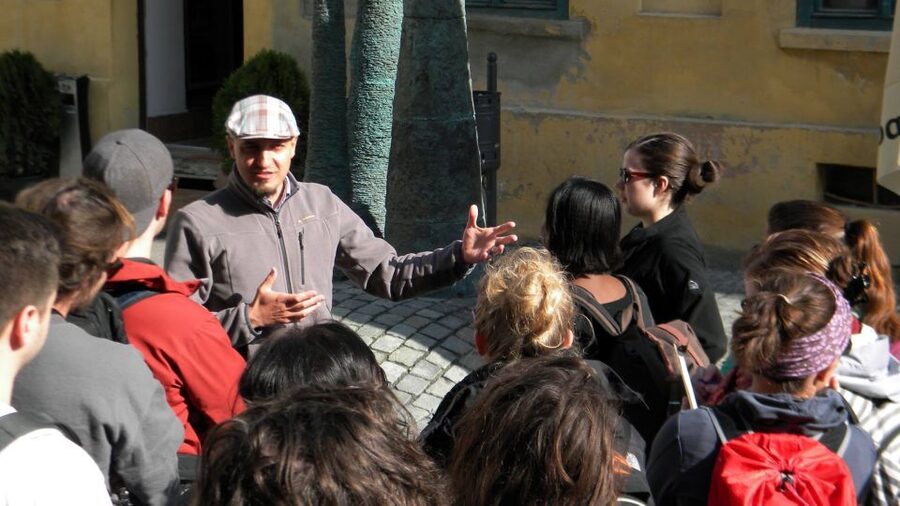
The tour walks you through a long timeline, starting with the impact of the Mongol invasion centuries ago. That early “shock” period is not just background noise. It sets the stage for why Timisoara becomes repeatedly targeted and repeatedly reshaped.
Then the story moves into the Ottoman era. This is where the walk becomes especially tangible, because you are shown where Ottoman public life happened, not just where battles happened.
Ottoman-era places you learn to recognize
During the tour, the guide points out where you can imagine the Turkish public bath, the bazaar, and the Central Mosque used to be. Even if the original structures are gone, learning their locations gives you a mental map of how the city’s daily rhythm worked at the time.
I like this approach because it trains your eyes. Later, when you are walking independently, you start to notice city blocks differently. You think in layers: where people gathered, where trade flowed, where public services sat.
A quick reality check
Since these are locations of former sites, you should not expect modern buildings that match Ottoman descriptions perfectly. The value here is the geography and context, not a full-on historical set piece.
If you like to photograph ruins or intact old architecture, you might find this part more interpretive. Still, it is one of the most memorable ways to understand how a city can change while keeping the “shape” of its past in its streets.
The Austrian conquest and why the city feels redesigned
Everything shifts when Timisoara is conquered by Austrian imperial troops in the early 18th century. The tour explains that the city was rebuilt, and the old medieval wooden buildings disappeared. New streets and houses arrived, along with a fortification system.
You will feel this idea when the guide talks about urban form. Instead of imagining a single time period, you start to see Timisoara as a city that got rebuilt with intent. Streets were not only built to move people. They were built as part of a defensive and administrative plan.
Why rebuilding details are more than trivia
You might think fortification systems are just military history. But the real payoff is how it explains street patterns and how the city grew. When you understand that kind of planning, you stop viewing the city as random.
It becomes readable.
Trams and electric street lights: modernity that arrived early
Timisoara is credited with building one of the first trams in the world, connecting the suburbs to the city center. The tour also highlights another early modern move: Timisoara was the first place in continental Europe to use electric street lights.
These facts do something useful for you as a visitor. They prevent the city from being stuck in the past. You are not only hearing about occupations and rebuilding. You are learning that Timisoara was experimenting with everyday technology that shaped how people moved and how public life functioned after dark.
How to enjoy this part of the walk
When the guide brings up the tram story and the electric lights, do not treat it like a two-minute fun fact. Ask yourself what it changes.
Better transport ties neighborhoods to opportunity. Public lighting changes streets from purely functional routes into social spaces. You start to understand why later generations might view the city as forward-looking, even after political upheavals.
Learning what Romania feels like to live in now
The tour does more than cover the old empires. You also hear insight into life in Romania, what it feels like to live here, and how society has changed over the last decades. That theme runs alongside the political timeline, especially the revolution against communism.
This matters because it helps you avoid a common travel trap. People often treat communism-era history as something locked in a museum. Here, the guide frames it as something that shaped habits, expectations, and public memory.
Guides who tell stories like they mean it
The strongest praise in recent feedback centers on the guides’ storytelling. One guide, Armand, is praised for being friendly and for making the city feel personal through anecdotes. Another, Alex Muntean, gets high marks for knowing the Banat in detail and for telling the material in a way that even works for children.
That last point is practical. If a guide can handle questions from kids, it usually means they can explain complex history in plain language for grown-ups too. You get the sense that you are not being lectured. You are being guided.
About that suggestion for adding the Cathedral of the Three Hierarchs
One piece of feedback came with a simple idea: include the Cathedral of the Three Hierarchs in the tour route. That tells me two things.
First, the tour already gives you a strong base. Second, there is room for optional tailoring if you have a specific interest in prominent churches.
If you are visiting and you care about religious architecture in Timisoara, you can ask the guide whether the cathedral can fit into your route or whether you should plan a separate stop afterward. This is an easy way to personalize your time without forcing the tour to turn into a long detour.
What you are paying for, and whether $42 makes sense
At $42 per person for 2 hours, you are paying for a live guide, a focused storyline, and local context that would be hard to assemble on your own in the same time.
Is it cheap? No, not in the “wandering free” sense. But it is good value if you want to get your bearings fast and understand why the city looks the way it does. The tour’s content is not random. It connects major eras, and it highlights specific turning points like Austrian rebuilding, tram development, and early electric lighting.
For me, the value comes from the balance: you get the big timeline, plus small, concrete details you can later recognize while walking independently.
Private group usually means a better Q and A
Because this is a private group, you are not fighting crowds for attention. That makes it easier to ask follow-up questions, especially about the social changes the guide discusses. If you like to learn by talking, private tours are often worth it even when the price is higher.
Who should book this Timisoara classic walk
I think this tour is ideal if you:
- want a structured introduction to Timisoara in a short time
- like history that explains the present, not history that stays trapped in the past
- enjoy city walking tours where the guide points out where things used to be, and why that location matters
- travel with kids who need history explained at their level, since guides have been praised for accommodating children
You might skip it or supplement it if:
- you prefer long stops at major landmarks over a moving story
- you want a more museum-style experience with extensive interiors and exhibits
- you are already deeply trained in European urban history and want a more specialized academic angle (this tour is broad, not niche)
Should you book it
If you are spending limited time in Timisoara and you want to understand why the city has so many historical layers, this is a solid booking. The best reason to go is the combination of story and practicality: Romania today at the start, then a timeline that stays tied to street-level locations and urban changes.
I would book it if you enjoy lively guides and want a guided mental map you can keep using after the walk. If you are the type who loves chatting and asking questions, you will likely appreciate the private-group setup too.
FAQ
FAQ
How long is the Timisoara Classic Walking Tour?
It lasts 2 hours.
Where do I meet for the tour?
Meet in front of the tourist information center.
What languages are available for the live guide?
The live tour guide is available in English and Romanian.
Is this tour a private group?
Yes, it is listed as a private group.
How much does the tour cost?
The price is $42 per person.
Is there free cancellation and can I pay later?
Free cancellation is available up to 24 hours in advance for a full refund. You can also reserve now and pay later.
Latest reviews from around Timișoara
- Timisoara Downtown Dream Tour★ 5.0 · 5 reviews
- The Jewish Heritage Tour of Timisoara★ 5.0 · 9 reviews
- Day Trip to Turda Salt Mine and Corvin Castle from Timisoara★ 5.0 · 10 reviews
- Bite your way through Timisoara – Timisoara’s Street Food Tour★ 5.0 · 14 reviews
- Ecumenical Tour of Timisoara★ 5.0 · 15 reviews
- One Day in Transylvania – Departure from Timisoara★ 5.0 · 16 reviews
- The Grand Tour of Communist Ages at Timisoara★ 5.0 · 17 reviews
- Danube Gorge & Banat Waterfalls★ 5.0 · 27 reviews
Walking Tours, compared.

Bucharest: City Highlights Guided Walking Tour
Read our review →
Bucharest: Communism and History Guided City Walking Tour
Read our review →

Bucharest: Hidden Markets Walking Tour with Tastings
Read our review →
Bucharest: Ghost Stories & Romanian Mythology Walking Tour
Read our review →
Bucharest: Guided Walking Tour with Romanian Snack
Read our review →
Walking Tour- Delightful Bucharest (Highlights, Stories, Sights)
Read our review →Browse the lists this tour appears in