
Reviewed · COMMUNIST-ERA BUCHAREST
The Grand Tour of Communist Ages at Timisoara
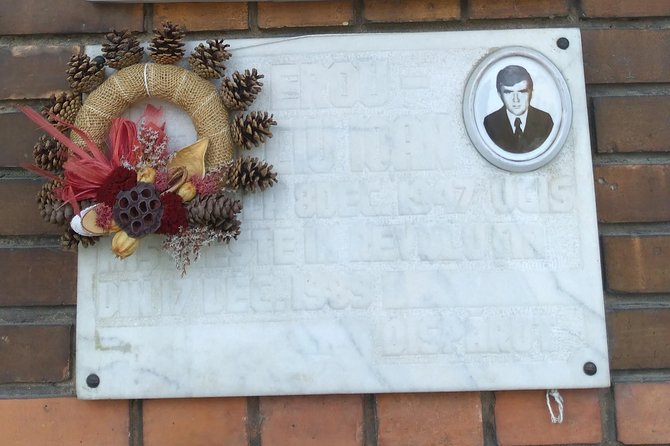
If you want Romanian history that feels personal and specific, this tour is interesting because it ties the Communist era to the streets where protests actually started and where the city turned the corner in December 1989. I like that it is off-the-beaten-track and not just a quick highlight loop, and I like that you get a guide who keeps the cause-and-effect clear as you move from one key place to the next. One thing to consider: it is a focused political history tour, so if you are looking for beaches, shopping streets, or a laid-back food crawl, this may feel heavy.
What makes it especially practical is that you cover a lot in a short window, in a comfortable vehicle, and you are not stuck bouncing around the city on your own. You also end right where the story lands, at Piața Victoriei, so the final moments stick.
Key Facts You Can Plan Around
Small group, big access: maximum of 10 travelers, so questions actually work.
English tour: offered in English, plus a mobile ticket for easier check-in.
3 to 4 hours in one block: it is built for a half-day schedule that still moves fast.
At least eight locations: you visit multiple sights tied to the Communist rise and Romania’s Revolution roots.
Comfortable transport between stops: fewer long walks, more time hearing the story.
Why Timisoara’s 1989 Story Works So Well on Foot and From the Road
Timisoara has a way of making history feel grounded. This tour leans into that by pairing short time on the sites with enough context to help you understand what you are looking at. You do not just read dates and names. You get the reasons behind the Communist Party’s grip on Romania, then how those pressures fed into the unrest that exploded in December 1989.
I also appreciate the balance of approach. Some tours push one theme too hard. This one keeps switching gears in a smart way. You go from daily life under the system, to the politics of how control was installed, to the moment when protests took a risky public step, and then to the aftershock, when the city’s defiance became a symbol.
The guide role matters here. When the person leading you can answer follow-ups and connect the dots, the whole route stops feeling like a worksheet. You end up with a mental map you can carry into the rest of your trip.
More of communist-era Bucharest:
- Timisoara: Grand Communism Tour
★ 4.9 · 13 reviews - Bucharest: Communism and History Guided City Walking Tour
★ 4.9 · 918 reviews - The Real tour of Communism
★ 5.0 · 666 reviews
Price and Value, With the Real Math
At $66.08 per person for a 3 to 4 hour group tour, the cost lands in the middle of what you would expect for a guided experience in a European city. What makes it feel fair is how the time is used. You are not paying just for a few photo stops. You are paying for an organized route that hits multiple meaningful locations, and for transportation that helps you cover more ground than you could easily do alone.
Another small value point: the listed sights along the route show admission tickets as free. That means your payment is not getting swallowed by museum fees at every stop. You are funding the guide, the structure, and the time efficiency.
Where value can vary for you is based on interest level. If you care about Communist history, protests, and how revolutions actually start, this is the kind of tour that pays off in understanding. If you are only vaguely curious, you may prefer a more general city overview instead.
Meeting Point Timing, and Why the 3:00 pm Start Helps
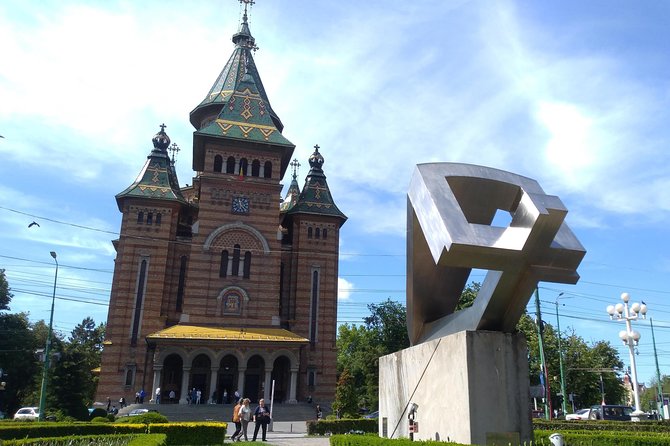
The tour starts at Three Holy Hierarchs Metropolitan Cathedral, along Bulevardul Regele Ferdinand I, in Timisoara. It begins at 3:00 pm and ends at Piața Victoriei.
I like afternoon starts for this type of program. You have part of the day to get oriented, grab coffee, and settle into the city. Then you spend the late afternoon and early evening hours where the story concentrates. Starting at 3:00 pm also helps you avoid the stress of an early morning appointment.
You will also appreciate that it ends at Victory Square. Instead of finishing somewhere out of the way, you wrap up in a central public space, which makes it easier to continue on your own afterward.
The Pace and Group Size, So You Are Not Just Waiting Around
This tour is built for small groups, with a maximum of 10 travelers. That detail matters more than it sounds. Smaller groups mean the guide can slow down when you have questions, and you are less likely to feel like you are being rushed through painful history as if it is a checklist.
Transport between sites is part of the plan too. Instead of long, exhausting city walking between distant points, you ride in a comfortable vehicle. The stop durations you are given are short at several key monuments, which tells you the emphasis is on hearing the story while you are at the location, not wandering independently for long periods.
One more practical plus: the tour is marked as near public transportation and notes that service animals are allowed. That is useful if you are trying to plan a low-friction day.
More Timișoara options to weigh up
- The Classic Tour of Timisoara
★ 5.0 · 154 reviews - Weekly Guided Tour in English – Tuesday, Thursday, Saturday
★ 5.0 · 84 reviews - Timisoara All in One – Walking and Tram Tour
★ 5.0 · 72 reviews - Weekly Guided Walking Tour – Tuesday, Thursday & Saturday
★ 5.0 · 49 reviews
Șagului Neighborhood: Where Everyday Life Helps Explain the System
The route begins in Șagului, a neighborhood setting where you get a feel for how life worked under Communism in Timisoara. This kind of starting point is smart. Before you see memorials and bullet holes, you need a basic understanding of daily pressures: what people could access, what they could not, and how the system shaped routines.
You spend about two hours here, which is longer than the other stops. That tells you the guide is not treating this neighborhood as a quick orientation stop. It is part of laying the groundwork for why the protests became possible in the first place.
A drawback to keep in mind: neighborhood time can mean you will notice more weather, more street surface, and more “city-scale” walking than at purely indoor sites. If you are sensitive to cold, wear something layered.
Muzeul Consumatorului Comunist: How Objects Tell Political Truths
Next comes Muzeul Consumatorului Comunist, the Museum of the Communist Consumer. This is one of those places where the history becomes tangible. Instead of only talking about ideology, you see a private collection of objects made in Romania during the Communist era.
The value here is how it reframes the story. Communism was not only speeches and laws. It was also shortages, design choices, everyday work, and the realities people dealt with when shopping, earning, and living.
You also get a structured explanation of the beginnings of the Communist regime in Romania, including how it was installed and how it developed. The museum visit lasts about 30 minutes, so you are not sitting in one big lecture. You are meant to look at what is there while the guide connects it back to the broader political timeline.
If you are the kind of traveler who likes seeing history through objects, this is a highlight. If you prefer only outdoor sites and memorials, you might find the museum more concentrated than you expected.
Biserica Reformata: The Protest That Sparked Something Bigger
The next key stop is the Reformed Church (Biserica Reformata), where the story points to December 15 and 16, 1989. This is described as the place where everything started, with the moment on the afternoon of December 16 when a young man stopped a tram, and his friend climbed onto it and shouted Down with Ceausescu.
Even though the time at this site is brief, it matters because the guide frames it as a tipping point. You are learning how public protest shifted from private frustration into open defiance. The tram detail is a small stage-setting fact, but it also helps you imagine how quickly events can escalate when people seize a visible platform.
You should treat this stop like a moment of concentration. Give yourself a minute to look at the setting and listen. The route moves fast, and this is one of the places where you can lose the thread if you are distracted.
Timisoara Orthodox Cathedral: Bullet Holes Turn Dates Into Gravity
At the Timisoara Orthodox Cathedral, the tour focuses on the loss of young people protesting on the cathedral stairs. The story highlights that the Army opened fire without warning, and you get to see bullet holes.
This part of the tour is not long, around 10 minutes, but it is heavy. The bullet holes are physical evidence, and they turn what could be distant textbook history into something harder to shrug off.
If you tend to get emotionally affected by memorial sites, plan your day around that. I would rather you know that this stop is the emotional weight of the route, so you can pace yourself elsewhere in Timisoara.
Also, because the stop is short, you do not want to rush your own attention. Pause and let it register.
Piața Victoriei: 150,000 Voices and the Name That Stuck
The final major stop is Piata Victoriei. Here the tour explains how, on December 20, 150,000 people shouted Victory when Timisoara was proclaimed the first city in Romania free of Communism. The square earned its name because of that moment, and it notes that before that it was called Opera Square.
This ending is one of the best parts of the experience because it gives you a clean “wrap-up” feeling. You go from control and protest to a collective public turning point, then you finish in the space where the city still carries the memory in its geography.
The tour also mentions bullet holes on surrounding buildings, which helps you understand that the violence and the fear were not isolated to one spot. You are walking into the broader environment that held the conflict.
The route ends here, so you can treat Victory Square as your launchpad. Plan something simple afterward, like a relaxed meal or an unhurried stroll, because your brain will still be processing the story.
Why the Tour Still Feels Efficient Without Feeling Rushed
The highlights say you travel between locations in a comfortable vehicle. That matters for two reasons. First, it saves your energy, especially with multiple short stops. Second, it gives the guide time to keep the timeline coherent while you are on the move.
Because the highlights also promise at least eight locations, you should expect a few quick additions beyond the big five named stops. I recommend you treat those extra stops as “connection points” for the main story beats. The route is designed to keep you looking at real places while you build a cause-and-effect understanding of the Romanian Revolution roots.
This is also where a good guide earns their fee. When they can answer questions clearly, you stop thinking about what you are missing and start thinking about what you are noticing.
What This Tour Is Best For
This experience suits you if:
- You want history tied to specific streets, not just general facts
- You like asking questions and want answers in real time
- You are comfortable with a serious subject, including violence and repression
It may not suit you if:
- You prefer light sightseeing only
- You are not interested in Communist-era Romania or the 1989 events
- You need a lot of downtime between stops
It is also a strong choice for multi-age groups, especially if you want one shared explanation that both adults and teenagers can build on. One of the best reasons to book is that it can correct misunderstandings people pick up from simplified stories they grew up with, because the guide gives the context behind the official narrative and the real reasons events escalated.
How to Make the Most of a 3 to 4 Hour Route
A few simple tips can help you get more from the time window:
- Wear shoes that handle street surfaces. Some locations involve short but meaningful walking.
- Bring a light layer. Even if the schedule is short at several stops, you can spend time outdoors.
- Before you go, decide what you want most: how Communism shaped daily life, or how protests turned into a revolution. Your answer helps you listen harder in the right spots.
- After you finish at Piața Victoriei, leave time to process. Don’t stack another dense museum right away.
If you are the type who likes to keep notes, jot down the three anchor events you hear about, December 15 and 16, and December 20. That will make the rest of your memories click into place.
Should You Book The Grand Tour of Communist Ages at Timisoara?
I think you should book this tour if you want a structured, small-group way to understand Timisoara’s role in the lead-up to Romania’s 1989 shift. At $66.08, the value makes sense because you get multiple meaningful stops, free admission at the listed sites, and transport that keeps the pace workable.
Book sooner rather than later if your dates are firm. The experience is described as being booked about 11 days in advance on average, and it caps at 10 travelers, so popular time slots can tighten.
Only skip it if you want a relaxed sightseeing day or if you dislike political history as a topic. If you are curious about how everyday life under a system can turn into public resistance, this route delivers exactly that in a few focused hours.
FAQ
What is the duration of The Grand Tour of Communist Ages at Timisoara?
The tour lasts about 3 to 4 hours.
How much does the tour cost?
The price is $66.08 per person.
Where does the tour start and end?
It starts at Three Holy Hierarchs Metropolitan Cathedral (Bulevardul Regele Ferdinand I, Timișoara) and ends at Piața Victoriei, Timișoara.
What time does the tour begin?
The start time is 3:00 pm.
Is the tour offered in English?
Yes, the tour is offered in English.
Do the tour stops require paid admission tickets?
The stops listed show admission tickets as free.
How many travelers are in the group?
The tour has a maximum of 10 travelers.
What is the cancellation policy?
You can cancel for a full refund if you cancel up to 24 hours in advance of the experience start time.
Latest reviews from around Timișoara
- Timisoara Downtown Dream Tour★ 5.0 · 5 reviews
- The Jewish Heritage Tour of Timisoara★ 5.0 · 9 reviews
- Day Trip to Turda Salt Mine and Corvin Castle from Timisoara★ 5.0 · 10 reviews
- Bite your way through Timisoara – Timisoara’s Street Food Tour★ 5.0 · 14 reviews
- Ecumenical Tour of Timisoara★ 5.0 · 15 reviews
- One Day in Transylvania – Departure from Timisoara★ 5.0 · 16 reviews
- Danube Gorge & Banat Waterfalls★ 5.0 · 27 reviews
- Day trip to Corvin Castle and Sibiu (and back) from Timisoara★ 5.0 · 30 reviews
Communist-Era Bucharest, compared.

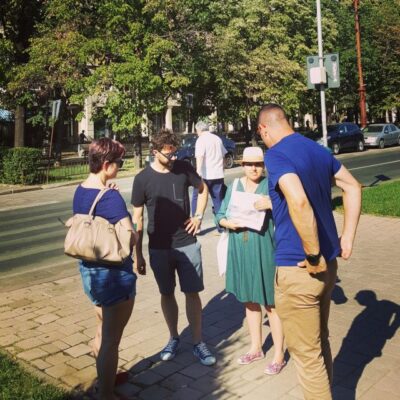
Bucharest: Communism and History Guided City Walking Tour
Read our review →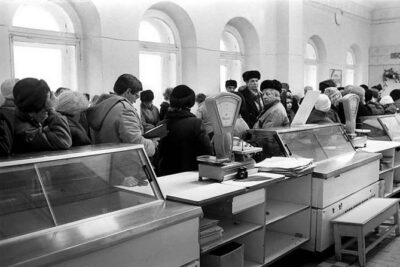

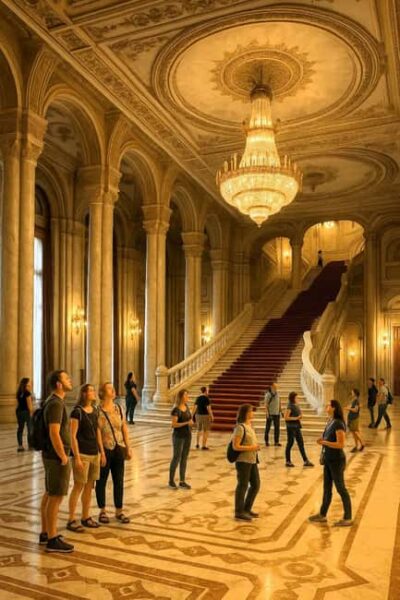
Bucharest: Parliament, Ceausescu House & Village Museum Tour
Read our review →
Bucharest Essential Tour: Old Town, Calea Victoriei & Communism
Read our review →
Communism in Bucharest – Landmarks, Museum & Communist Appetizers
Read our review →
Palace of Parliament, Ceausescu House & Village Museum
Read our review →Browse the lists this tour appears in