
Reviewed · TIMIșOARA TOURS
Timisoara Downtown Dream Tour
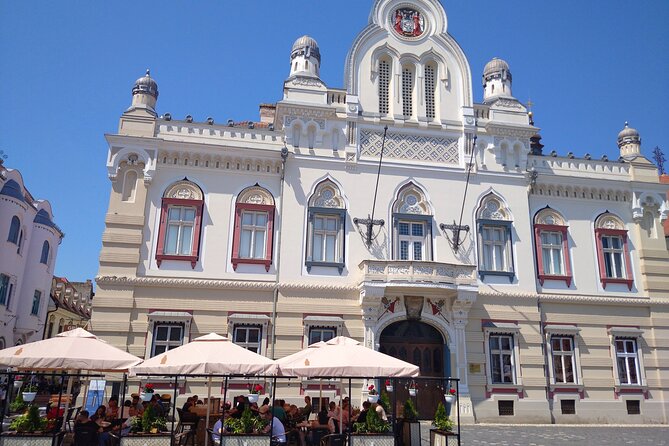
Timisoara Downtown Dream Tour is interesting because it turns Timisoara’s center into a readable timeline, where the late-1800s and early-1900s show up on the facades in front of you. You walk through the Cetate neighborhood, using the city’s squares as “chapters” and the buildings as proof.
I like the way the guide connects day-to-day life in the end of the 19th century to what you’re seeing on the street. I also like that the style labels you hear, secession (Art Nouveau, Jugendstil), get explained in a practical way, not as trivia.
One drawback to keep in mind: 2.5 hours is just enough time to cover a lot of ground, so if you like to linger, you may want to plan a longer solo stroll afterward.
Key highlights at a glance
- Cetate neighborhood story walk, built around four central squares
- Late-19th century daily-life anecdotes, not just dates and names
- Architecture “style decoding”, classicist, historicist, secession, plus some baroque influence
- Tea and coffee break at Piața Sfântul Gheorghe to recharge
- A guide who stays organized and friendly, with time for questions
- English, French, or Romanian live guide with printed flyers to take home
Cetate on foot: why these squares are the real heart of Timisoara
If you only spend time in parks or in one main street, you miss how Timișoara developed. This tour focuses on the Cetate neighborhood, where you can compare building styles side by side as the city changed over time. You’re not wandering randomly, you’re following the logic of the center.
The best part is that the walk is built like a story. The guide points out what to notice, then ties it to what was happening when those buildings were new. It helps you look up, not just walk through a pretty area.
You’ll also get your bearings fast. The route hits the city’s most central squares, so after 2.5 hours you’ll feel like you understand where things are and why they’re arranged the way they are.
More Timișoara options to weigh up
- The Classic Tour of Timisoara
★ 5.0 · 154 reviews - Weekly Guided Tour in English – Tuesday, Thursday, Saturday
★ 5.0 · 84 reviews - Timisoara All in One – Walking and Tram Tour
★ 5.0 · 72 reviews
Starting at Trei Ierarhi: your meeting point and first orientation
The tour meets in front of the Three Hierarchs Metropolitan Cathedral. That’s a useful start because it gives you one solid landmark to find, even if you’re arriving in the neighborhood for the first time.
From there, the walk begins with an orientation mindset. Expect the guide to set the theme for the day: how Timisoara grew and how architectural styles reflect different waves of taste and influence. Even before you hit the squares, you’ll start noticing details rather than just scanning the skyline.
If you’re the type who likes to ask questions, this is a good moment to do it. A lot of the value here is the back-and-forth, especially when the guide is comfortable switching between big-picture context and small details.
Piața Victoriei: 30 minutes of late-1800s clues
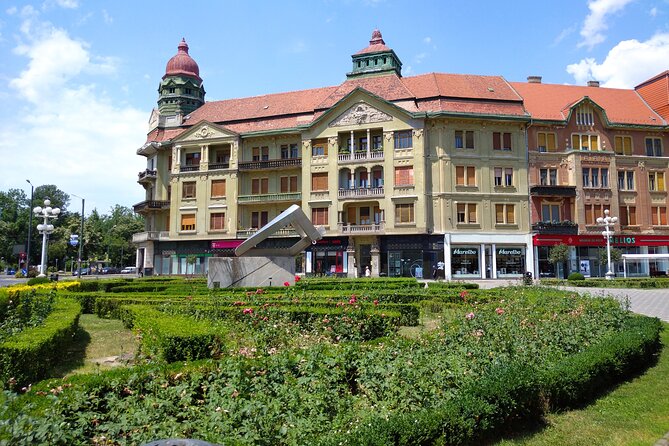
Piața Victoriei is your first guided stop, with about 30 minutes there. This is where the tour really begins to connect Timisoara’s late-19th century character with the architecture around the square.
What I like about this timing is that it’s early enough to set your eyes. The guide helps you recognize the classicist and historicist feel of late-19th-century design. Once you learn what to look for, the rest of the walk gets easier.
You’ll likely notice how the buildings present themselves to the street, not just how tall they are. That’s the practical lesson: these squares were public rooms for the city, and the architecture was part of the conversation.
A small consideration: squares can feel open and windy, especially if you’re wearing the wrong shoes. You’re covering several stops, so treat this first square like a warm-up for your walking comfort.
Piața Libertății: where secession starts to make sense
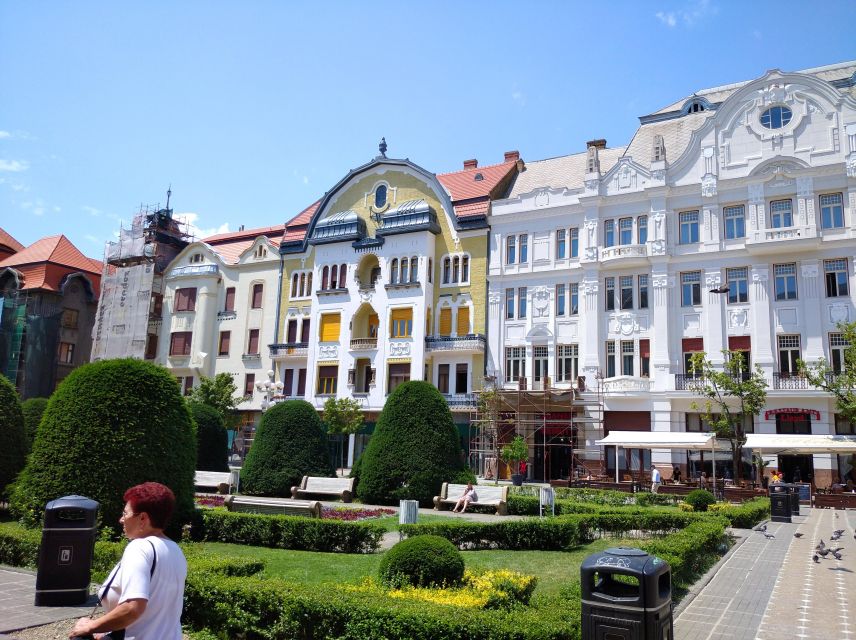
Next comes Piața Libertății for another 30 minutes. This is a key stop for anyone who wants Art Nouveau, without getting lost in the jargon.
The tour explicitly focuses on the secession movement, including how it overlaps with Art Nouveau and Jugenstil naming. The payoff is that you start to understand these styles as something you can spot quickly: ornament, shape, and the overall “attitude” of the facade.
I find it helps to keep a mental checklist. When the guide points out a feature, you should try to find it on adjacent buildings. That’s how you move from “I saw something pretty” to “I can identify the style.”
One more reason this stop matters for first-timers: it builds momentum. By the time you reach Piața Sfântul Gheorghe, you’re already looking with purpose.
Same base, a completely different day:
- Weekly Guided Walking Tour – Tuesday, Thursday & Saturday
★ 5.0 · 49 reviews - Day trip to Corvin Castle and Sibiu (and back) from Timisoara
★ 5.0 · 30 reviews - Timișoara Highlights – Walking Tour
★ 5.0 · 28 reviews - Danube Gorge & Banat Waterfalls
★ 5.0 · 27 reviews
Piața Sfântul Gheorghe: 20 minutes of focus, then a 30-minute break
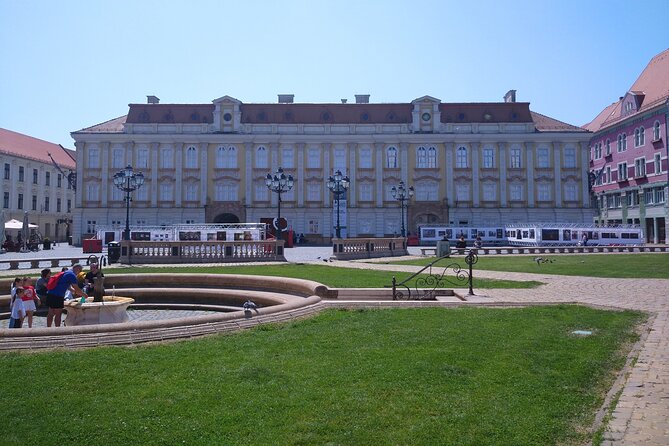
Piața Sfântul Gheorghe gets about 20 minutes of guided time, then the schedule includes a 30-minute break with tea and coffee tasting. This is a smart pacing choice because the tour covers multiple squares in a row.
During the guided time, you’re still in that “architectural treasure” mode. The guide keeps pointing out features and connecting them to the city’s development. You’re looking at structures from different eras, including late-19th century styles and early-20th-century secession work that continues to show up nearby.
Then you pause. The tea and coffee tasting is not a side quest. It’s there to reset your feet and give you a moment to talk with the guide or other participants while you rest.
Practical tip: bring layers. Even in warm seasons, open squares and cathedral-adjacent areas can feel cooler than the streets that shelter you.
Piața Unirii: baroque influence and the feeling of overlap
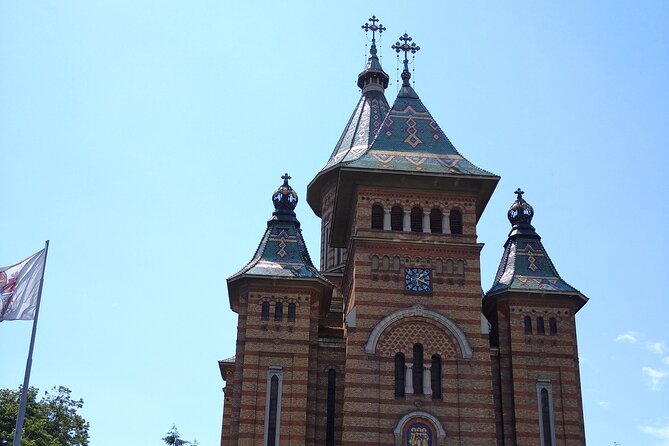
Piața Unirii takes about 30 minutes, and this is where the tour widens the lens. You’re moving from one cluster of style cues to a more mixed atmosphere.
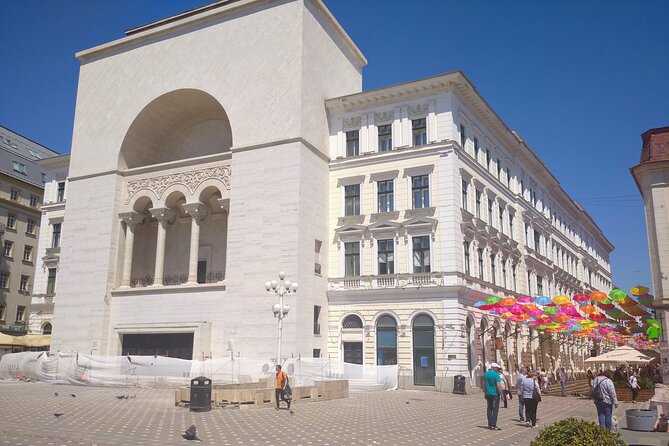
The tour highlights famous baroque style in cultural settlements in and around Piața Unirii. That matters because it shows you how Timisoara’s center wasn’t frozen in one aesthetic period. It absorbed influences, then reinterpreted them as the city kept growing.
What you’ll enjoy here is the overlap. One street can carry echoes of late-1800s classicist or historicist sensibilities, while nearby you see early-1900s secession details, plus baroque flourishes around the square. Instead of learning these styles as separate facts, you see how they coexist in real space.
If you’re a photographer, this is a good moment to slow down. With the guide’s explanation in your head, you’ll frame shots differently, focusing on the bits you were taught to notice.
Catedrala Sfântul Gheorghe and Maria Theresia Bastion: the finishing sequence
After Piața Unirii, the tour includes a visit to Catedrala Sfântul Gheorghe for about 15 minutes with guided time. This short visit still has purpose. A cathedral isn’t just another building on a list. It’s a milestone in understanding how the city’s center shaped daily life and community identity.
Then you head to Maria Theresia Bastion for about 15 minutes of guided touring. A bastion is a reminder that cities have defenses as well as dreams. Even without a long lecture, the stop helps you balance the story: not only the ornamental architecture, but also the strategic side of how towns evolved.
Finishers like this sequence because it stops the tour from feeling like “only facades.” You get a final hit of character and a change of perspective before walking back to where you began.
What you’ll actually learn from the style mix
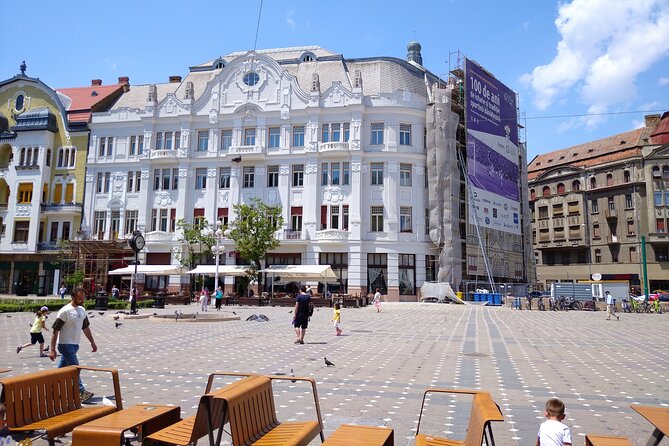
The tour’s theme is architecture, but the real learning is pattern recognition. You’ll hear about classicist and historicist styles from the late 19th century, then secession (Art Nouveau, Jugendstil) from the early 20th century, plus baroque influence in places like Unirii.
The value is that the guide helps you understand what those words mean on the street. Instead of memorizing terms, you start associating them with visual signals you can spot in seconds.
And the story component is tied to day-to-day life. That’s key, because buildings can feel empty unless you know who used the spaces and what the city looked like in everyday moments. When the guide links architecture to daily rhythms, it becomes easier to remember the tour later.
You’ll also leave with something practical: printed flyers. If you like to keep a “what I saw” record, you can use those pages to plan your next self-guided walk.
Price and value: what $34 buys you in 2.5 hours
At $34 per person for a 2.5-hour walking tour, you’re paying for guided interpretation, not just movement from stop to stop. That matters in a city where architecture is dense. If you try to read it on your own without a guide, you can miss what makes the facades meaningful.
Here’s the simple way to look at it: you’re buying a guided hour-plus of explanation across multiple squares. That saves time, and it cuts down the guesswork. The guide also speaks multiple languages, which makes it easier to get the details right.
Add in the tea and coffee tasting during the break, plus the printed flyers, and the price starts to feel like a bundle rather than a single event. You won’t leave full, but you will leave smarter and with a quick reset for your feet.
The guide experience: why the tour feels polished
This tour’s biggest strength is the guide’s delivery. Based on how the experience is described, you should expect someone who is organized and precise, with a friendly communication style.
You can also expect humor mixed into the facts. That sounds like a small thing, but it keeps attention when you’re walking past building after building. The guide is also open to questions, which is exactly what you want when you’re seeing architectural styles that you might not know how to name yet.
It’s also worth noting that the tour runs in a way that tries to accommodate real life. If you’re running late, the guide approach here is described as understanding, which is reassuring when travel days get messy.
Finally, you have live English, French, or Romanian guidance. That means you’re not stuck guessing what you’re looking at, which is often the biggest problem with self-guided architecture walks.
Who should book this tour, and who might not love it
You should book if you’re a first-time visitor and you want structure. The route hits four central squares, then adds a cathedral visit and a bastion stop. That gives you a strong overview of the Cetate neighborhood without needing to plan an itinerary from scratch.
You’ll also like it if you care about architecture but want help translating what you see. The tour is built around classicist, historicist, and secession design cues, and it uses those styles as the backbone of the explanation.
You might not love it as much if you prefer slow, long, photo-heavy wandering with no schedule. The tour is efficient, and it moves between stops on a set timeline.
And if your main goal is food, this is not a food tour. You get a tea and coffee tasting during a break, but meals are not part of the plan.
Should you book Timisoara Downtown Dream Tour?
I’d book it if you want the easiest path to understanding Timisoara’s center. The walk is short enough for a half-day window, but it’s packed enough to give you an education in how the city looks and why.
It’s also a good value bet for anyone who likes guidance. For $34, you get a real guide-led story across multiple squares, plus printed flyers to keep the details.
If you’re the type who can’t stop looking up at facades, this is a strong match. You’ll spend most of the time learning what to notice, not just staring at buildings and hoping it clicks.
FAQ
Where does the tour start?
The meeting point is in front of the Three Hierarchs Metropolitan Cathedral.
How long is the Timisoara Downtown Dream Tour?
The duration is 2.5 hours.
What languages is the live guide available in?
The live tour guide is available in English, French, and Romanian.
Is the tour wheelchair accessible?
Yes, the tour is wheelchair accessible.
Is food included?
There is a break time with tea and coffee tasting. Food and other drinks are not listed as included beyond that tasting.
Is hotel pickup and drop-off included?
No, hotel pickup and drop-off are not included. The tour meets at the cathedral and you return back to the same place.
Latest reviews from around Timișoara
- Timisoara Downtown Dream Tour★ 5.0 · 5 reviews
- The Jewish Heritage Tour of Timisoara★ 5.0 · 9 reviews
- Day Trip to Turda Salt Mine and Corvin Castle from Timisoara★ 5.0 · 10 reviews
- Bite your way through Timisoara – Timisoara’s Street Food Tour★ 5.0 · 14 reviews
- Ecumenical Tour of Timisoara★ 5.0 · 15 reviews
- One Day in Transylvania – Departure from Timisoara★ 5.0 · 16 reviews
- The Grand Tour of Communist Ages at Timisoara★ 5.0 · 17 reviews
- Danube Gorge & Banat Waterfalls★ 5.0 · 27 reviews
Timișoara Tours, compared.
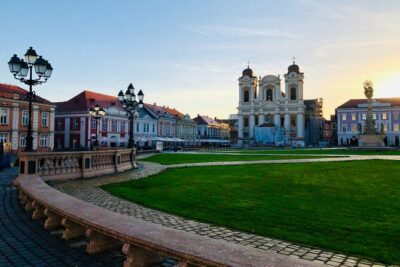
Weekly Guided Tour in English – Tuesday, Thursday, Saturday
Read our review →
Weekly Guided Walking Tour – Tuesday, Thursday & Saturday
Read our review →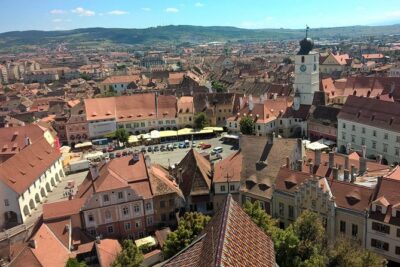
Day trip to Corvin Castle and Sibiu (and back) from Timisoara
Read our review →

Browse the lists this tour appears in