
Romania works best when you stop trying to plan every turn and just enjoy the ride. This Bucharest-based tour strings together Transylvania castles, UNESCO sites, and Bucovina’s famous painted monasteries, so you get the big sights without the headache.
I especially like how the route mixes icons of the Dracula story (Sighisoara and Bran) with real Orthodox monastery life (church murals, monasteries, and workshops). I also like the steady rhythm of 6 nights in B&B-style inns, which feels more local than chain-hotel hopping. One thing to consider is time in the car, because the distances add up day after day, so you will want to be comfortable with long drives.
Key highlights worth your attention
- Two UNESCO World Heritage stops: Sighisoara Medieval Town and Biertan Fortified Church
- Dracula connections, explained on the ground: Vlad Tepes’ birthplace house in Sighisoara and Bran Castle in Bran Village
- Painted monastery day after day: Voronet, Moldovita, and Sucevita in Bucovina
- Orthodox culture in practical form: icon painting and handmade carpet workshops at Agapia Monastery
- Saxon-era Transylvania feel: Sibiu walking sights tied to guild towers, stairway passage, and the cathedral areas
- Carpathian scenery included: Bucovina Mountain passes on the way to the monasteries, plus Bicaz Gorge views
First steps in Bucharest, with an easy start at 8:00 am
Your day begins early. The start time is 8:00 am, with pickup arranged from Bucharest-Henri Coanda Airport. If your arrival time lines up, you can add a quick orientation look at key Bucharest sights, guided rather than self-guided.
The first big stop is the Palace of Parliament. It is not a subtle monument, and that is the point. Even if you only see part of it on your arrival day, it gives you a sense of Romania’s modern scale before you switch gears to medieval towns and monastery frescoes.
Practical note: admission is not included for the Palace of Parliament in this plan. So if you want everything to feel seamless, budget for entry tickets on days marked as not included.
More Bucharest options to weigh up
- Bucharest: Dracula’s Castle, Peles Castle, & Brasov Old Town
★ 4.5 · 17,858 reviews - Bucharest: Dracula Castle, Peles Castle & Brasov Old Town
★ 4.6 · 10,891 reviews - Bucharest: Dracula’s Castle, Peleș Castle & Brașov Day Trip
★ 4.4 · 6,100 reviews
From Sinaia to Bran, you get royal elegance and Dracula theater
On your route across the Southern Carpathians, you start in Sinaia, a royal-residence town shaped by tourism and history. The focus is Peles Castle, described here as one of the best-preserved royal palaces in Eastern Europe. What I like about Peles Castle is how it is more than a photo stop. The inside and outside are packed with ornament, and the wood sculptures and paintings include scenes tied to German composer Richard Wagner’s works.
Then you move to Bran Castle, often called Dracula’s Castle. This one is all about atmosphere: a hilltop silhouette in Bran Village that inspired legends and myths long before movie tie-ins. The visit is timed to give you time to walk the grounds and take in the views.
What to watch for: both Peles Castle and Bran Castle list admissions as not included. If you are traveling with a tight budget, it helps to plan for paid entries early, not on the last day.
Brasov’s old town in daylight, Tâmpa views, and an Agapia monastery pause
You spend time in Brasov Historical Center, with the old city described as very well preserved. This is where you get classic Transylvanian streets and the sense that the town grew up around defense and commerce. A smart way to appreciate it is the cable car up to Tâmpa Mountain (995 m), with a lookout over the surrounding area.
Then you shift into monastery time with Agapia Monastery. This is not just about stepping into a church space. The tour highlights how the monastery runs as a working community, with more than 300 nuns involved in workshops. You can visit workshops where they produce painted icons and handmade carpets.
This is one of those moments that feels more real than a museum version of tradition. You see craft tied to everyday religious life, and you also learn that Romanian Orthodox culture is not only about what you see in stone buildings. It is also about what people make, day to day.
Timing note: the Agapia stop is listed with admission ticket free here, so you can use your money where it counts elsewhere.
Bucovina’s painted monasteries: Voronet, Moldovita, Sucevita
Days in Bucovina are why many people choose this tour. The schedule gives you three standout monastery stops that are tied together by style, paint, and location.
Same base, a completely different day:
- Bucharest: Palace of Parliament Tickets and Guide
★ 4.3 · 3,182 reviews - Bucharest: Day Trip to Dracula Castle, Peles Castle & Brașov
★ 4.4 · 3,049 reviews - Bucharest to Dracula Castle, Peles Castle and Brasov Guided Tour
★ 4.5 · 2,933 reviews - Bucharest: Palace of Parliament Tickets and Guided Tour
★ 4.4 · 1,877 reviews
Voronet’s Last Judgment mural
The day starts at Voronet Monastery, built in 1488. This monastery blends Byzantine, Gothic, and local elements. The centerpiece is the exterior mural program, including the famous Last Judgment scene on the western wall, described as unique in the whole world.
I like this stop because it is visual storytelling you can read from outside. You do not need to be an art scholar to understand the drama. The frescoes are part of the landscape of the church, not tucked away in a dark room.
Admission is not included for Voronet on this plan, and you should expect paid entry.
Moldovita’s fortified church and painted battle scene
Next is Moldovita Monastery, reached via roads over gentle Bucovina Mountain slopes with panoramas from Ciumarna Pass. That drive matters because it frames the monastery visit with real mountain context.
Moldovita is built in 1532 and sits inside a fortified quadrangular enclosure with towers, gates, and lawns. Inside, the central painted church has been partly restored, with impressive frescoes from 1537.
One detail I would not skip is the exterior story on the southern wall: the Siege of Constantinople in AD 626. The besiegers are depicted in Turkish dress, a choice noted as keeping parishioners concentrated on the enemy of the time. Even if you only catch parts of the mural narrative, the way it uses art to teach is the point.
Again, admission is listed as not included for Moldovita.
Sucevita and the Virtue Staircase contrast
You finish Bucovina with Sucevita Monastery and the “Virtue Staircase.” The tour specifically flags it as impressive due to scale and the contrast between angels’ order and devils’ chaos.
If you are the kind of person who likes symbolism as much as scenery, this is a good closer. You get three monasteries, each with a different visual hook, and the story line stays consistent: religious art as a language you can walk up to.
Mud volcanoes, Bicaz Gorge, and the road that feels like Dracula country
The tour explicitly pairs Bucovina with a trip to mud volcanoes. That is a very specific Romania detail, and it is exactly the kind of stop that makes a tour feel more than a checklist.
Later, you cross into Transylvania through an area linked to Bram Stoker’s Dracula. The highlight here is Red Lake, reached after traveling through Bicaz Gorge in the Eastern Carpathians. The route is described as creating a mysterious realm that Stoker fans associate with the Dracula mood.
This stretch is also where community patterns shift. The area around Red Lake is described as being mostly inhabited by the Hungarian Szekler community, so you get a sense that Transylvania is not one single culture bubble. Different groups have shaped the region over time.
The Red Lake stop is marked as admission ticket free, which helps keep the day affordable even when other attractions cost entry.
Sighisoara after arrival, then its core landmarks the next morning
You reach Sighisoara Medieval Town in the evening, which is a smart way to see the citadel feel right after the day’s driving. The citadel is described as a World Heritage Site and the only still inhabited medieval fortress in Europe. Even if you only see the first outlines at night, that description sets expectations.
In the morning, you get the real walking version of Sighisoara’s center. The cobbled streets and burgher houses set the tone. You also visit the Clock Tower, the Church on the Hill, and Dracula’s house, described here as the birthplace of Vlad Tepes in 1431.
This Dracula stop is worth treating as more than a theme park label. The value is in the details you can tie to a specific place and time. A birthplace has a different weight than a fictional castle set built for tourists.
Practical note: Sighisoara’s center exploration is marked as admission ticket free in this plan. So you mainly pay for the paid entries elsewhere in your Transylvania days.
Biertan’s fortified church, Sibiu’s Saxon streets, and the museum stops you can time well
After Sighisoara, you head to Biertan Fortified Church, another UNESCO site. This is described as one of the first German settlements in Transylvania. The fortified church sits behind three rows of fortifications built by German peasants in Transylvania. It also served for nearly 300 years as the residence of the Transylvanian Archbishop.
One detail I like here is the mention of a room used for reconciliation for couples about to divorce. That is not just a fun fact. It explains why people built these massive, defensive structures in the first place. This was community life inside walls, not just a church isolated from daily drama.
In this plan, admission for Biertan is not included.
Then you move toward Sibiu, described as the chief city of the Transylvanian Saxons. You can take a walking tour of the old town, including defense walls and remaining towers tied to guilds.
Sibiu’s landmark list is specific enough to plan around:
- Brukenthal Museum, assembled by Baron Brukenthal, governor of Transylvania at the end of the 18th century
- Evangelical Cathedral, completed in its actual shape in 1520
- An exquisite fresco of the Crucifixion on the north wall of the choir dating from 1445
- The Passage of Stairs linking Upper town to Lower town
- the Liar’s Bridge from 1859
- an Orthodox Cathedral noted as Byzantine style, described as a replica of St. Sophia in Constantinople
Here is why I think this works for you: the visit breaks up big paid monuments (like cathedral interiors or museums where applicable) with open-air city movement. It keeps the day from feeling like a rush of doors and ticket lines.
Admission is not included for the Sibiu stops listed, so again, plan for entry costs in budget.
Curtea de Arges to Bucharest, a closer look at Romanian royal tomb links
Your final full day includes Curtea de Arges Monastery. This stop is tied to political history: it is described as the first capital of Wallachia with an old Princely Court and the monastery. You also learn that three of the four Romanian kings of the Hohenzollern dynasty are buried there.
Then the drive goes back to Bucharest to finish the trip. This is a good landing point because it keeps your last day from becoming a brand-new region with new travel rules. You already know how the tour works by then: guided stops, controlled driving time, and evenings tied to your B&B-style lodging.
Admission is not included for Curtea de Arges in this plan.
Price, what you actually get for $1,708.12, and how to budget entry fees
At $1,708.12 per person, this tour is not a cheap hop. But it is also not just paying for a few photos. Your money goes toward:
- 6 nights of accommodation on a B&B basis
- a driver/guide
- air-conditioned transport by car, minivan, or minibus
- fuel and parking fees
- pickup from Bucharest-Henri Coanda Airport, plus guided time on the days you are in Bucharest, Sinaia, Transylvania, and back
The big cost you should expect on top is admissions. Many listed stops say admission tickets are not included, while several others are free. That mix makes the tour feel manageable once you budget for the paid entries rather than hoping everything is covered.
Food and drinks are not included unless specified. That is common for tours like this, but it means your total trip cost will depend on how you eat each day.
Who this tour suits best, and who might want a different pace
This plan is a strong match if you want:
- UNESCO World Heritage sights without arranging separate tours
- Dracula legend spots grounded in real places, not only movie vibes
- repeated visits to monasteries, especially painted church murals
- a guided route that handles transport so you can focus on the sights
It may be less ideal if you hate long driving days. This route clearly involves significant car time across regions, and even the positive feedback points out that distances matter. If you are sensitive to motion sickness, pack a remedy. If you need breaks, ask the driver to plan rest stops where possible.
The tour is also set up as a private activity, with only your group participating. That usually makes the pacing easier to manage, but it can also mean fewer opportunities to share expenses with strangers unless the group discount applies to your booking.
Should you book this Transylvania and Painted Churches tour?
If you want Romania’s greatest hits in one guided flow, I think this is an easy yes. You get two UNESCO sites, three major painted monasteries, Dracula-linked stops in both Sighisoara and Bran, plus Sibiu’s Saxon-era walking highlights. The inclusion of transport, fuel, and six B&B-style nights is where the value really shows.
Book it if you can handle long drives and you are ready to budget for admissions on days marked as not included. Skip it if you would rather travel at a slower, self-directed pace and already plan to hire local guides for each region.
If those tradeoffs sound fair to you, you should enjoy this one. It is structured, guided, and focused on places you can actually explain to friends afterward, from painted walls in Bucovina to fortified church walls in Transylvania.
Latest reviews from around Bucharest
- ATV Adrenaline Race in Carpathian – Private Tour★ 5.0 · 4 reviews
- Private Tour of Jewish Bucharest★ 5.0 · 4 reviews
- In Search of Dracula and the Teutons in Transylvania Full-Day Private Tour★ 5.0 · 4 reviews
- Bulgaria One Day Private Tour from Bucharest★ 5.0 · 4 reviews
- Discover Medieval Transylvania Small Group Tour – 7 days★ 5.0 · 4 reviews
- Bulgaria Day Trip – Private Tour from Bucharest – Veliko Tarnavo & Arbanasi★ 5.0 · 4 reviews
- Private tour: Medieval cities of Transylvania, 2 Days from Bucharest★ 5.0 · 4 reviews
- Black See, Constanta and Mamaia Beach – Day Trip from Bucharest★ 5.0 · 4 reviews
7-Day Experiences, compared.
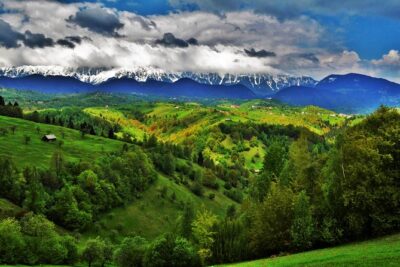
7-Day Private Tour of Transylvania from Bucharest
Read our review →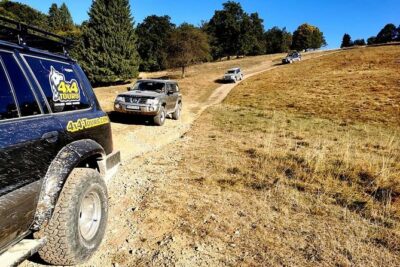
4×4 Driving Experience at Flying Altitudes – 7 Days
Read our review →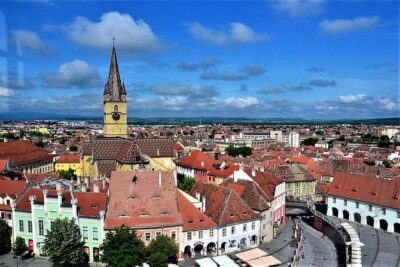
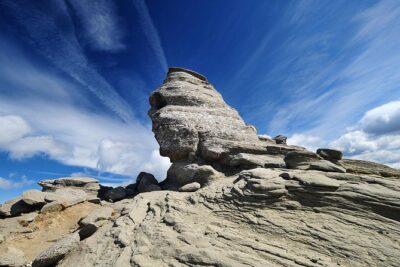
Amazing Romania – Seven day private tour from Bucharest
Read our review →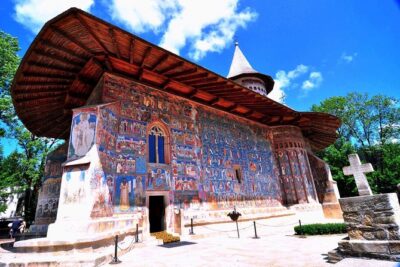
7 days Private Romania Grand Tour from Bucharest
Read our review →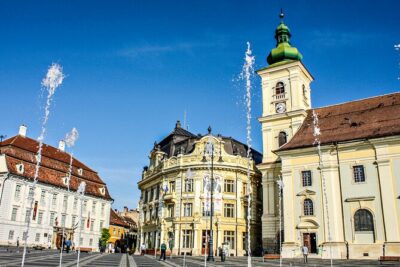
Discover Medieval Transylvania Small Group Tour – 7 days
Read our review →
7 Days Private Guided Tour in Romania from Bucharest
Read our review →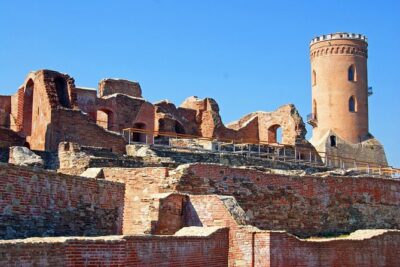
7-Day Dracula Tour in Romania from Bucharest including ‘The Ritual of Killing of a Living Dead’
Read our review →Browse the lists this tour appears in