Reviewed · PRIVATE
Transylvania & Bucovina Private Tour – 6 days
This is an interesting mix of movie-famous stops and real, working medieval places. You get a private route from Bucharest into Transylvania, then across to Bucovina, where UNESCO painted churches color the hillsides.
I especially love the way this trip makes planning feel off your back. The guide named Gabriel gets singled out for turning Romanian history and culture into clear, engaging stories, so the sights land with context, not just facts.
The one thing to consider is that you’ll still need to manage your own pacing in the daytime. This is a lot of driving plus walking on cobbles, steps, and monastery paths, and entrance fees and meals are extra.
Key highlights to look forward to
- Private pacing with hotel pickup and drop-off, so you are not herded or rushed
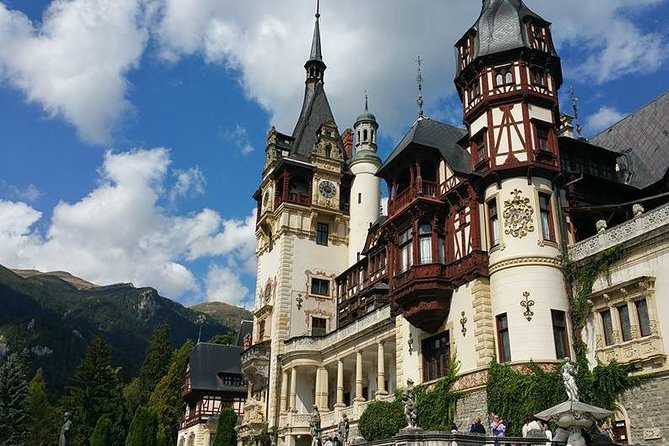
- Bran Castle, Peles Castle, Rasnov Fortress, and more than just the headline Dracula stuff
- Multiple UNESCO stops across Transylvania and Bucovina, not one token visit
- Bucovina’s painted monasteries plus the Red Lake and Bicaz Gorges scenery en route
- Five nights in 3- or 4-star hotels with breakfast included
Why this Transylvania and Bucovina loop feels easier than DIY
A big reason I like this kind of private tour is that it handles the boring parts that quietly eat your time. You get round-trip transportation, you get picked up and dropped back to your hotel, and you sleep in organized 3- or 4-star lodging for five nights with breakfast included. That means you can spend your energy on the places themselves.
This route also avoids the common mistake of only chasing castles. You still see Bran Castle and Peles Castle, but you also move through fortifications, German Saxon towns, and the UNESCO painted churches of Bucovina. It is a stronger picture of Romania because it connects the themes, Transylvania’s medieval communities and Bucovina’s religious art, to where you actually are.
Now the trade-off. You will pay more than DIY, and you will have fewer choices on the fly. Entrance fees and lunch and dinner are not included, so you should budget for those during the trip. Also, the itinerary starts early (meeting time is 7:30 am), and you need moderate physical fitness for regular walking breaks.
More painted monastery trips:
- Bucovina Painted Monasteries & Transylvania Tour: 4-Day Private
★ 5.0 · 6 reviews - 11-Day Romania Tour from Bucharest with Transylvania & Bucovina
★ 5.0 · 6 reviews - Day trip from Iasi to the UNESCO Painted Monasteries in Bucovina
★ 5.0 · 26 reviews
Bucharest to Sinaia and Peles, then straight into Brasov’s old walls
Day 1 is a good starter day because it shows you Romania’s mix of religious heritage and royal splendor before you even reach the city. You begin with a transfer out of Bucharest to the Sinaia Orthodox Monastery, then keep going to Peles Castle. From there you head to Brasov, where the tour fills in the medieval city details.
Brasov is where you get that “I get it now” feeling. The walk includes major stops like the Black Church, plus city defenses and skyline points such as Ecaterina’s Gate, the White Tower and Black Tower, and the fortified bastions. Seeing those names matters, because they explain how the city protected itself and why this place grew into a major regional hub.
A practical tip: Peles and the monastery areas often involve more indoor time and museum-like pacing than open-air castles. Wear shoes you can walk in confidently, and plan to move with your guide’s timing for less waiting. Also, since entrance fees and photo fees are not included, check whether you want to prioritize photography or spend more time inside each stop.
By the end of Day 1, you are not just “in Transylvania.” You understand the geography and the defensive logic of the towns you will keep revisiting in different forms.
Brasov to Bran Castle and Rasnov Fortress, Dracula vibes done right
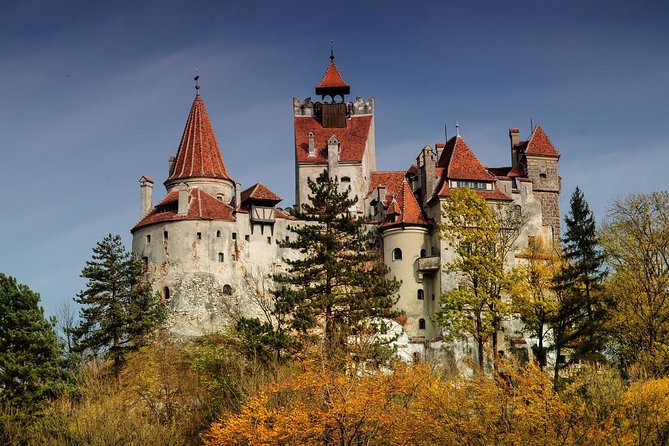
Day 2 leans into the famous name without letting it flatten the story. You start in Brasov, then head to Bran Castle, often linked with Dracula. It is smart to pair it with a real defensive site too, and that is exactly what happens next at Rasnov Fortress.
Bran is the headline stop, but it is the surrounding context that makes it worthwhile. With a guide in your car and someone explaining the region’s history and culture, you spend less time guessing what you are looking at. You are also more likely to connect the castle to how Transylvania cities and towns shaped power.
Rasnov Fortress adds a different texture. Instead of relying on legend, you are watching how a fortress works in a landscape. Even if you only see parts of the site, the elevated views and fortified layout do the job, and you get a feel for why this region defended itself so fiercely.
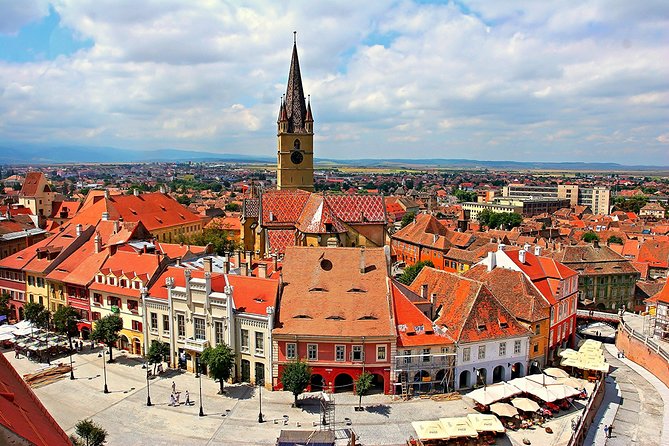
Then the day turns into a transition, ending in Sibiu. Sibiu’s tour includes key church architecture like the Evangelical Church and the Holy Trinity Orthodox Cathedral, along with the quirky and iconic Bridge of Lies. You also visit the Historical Center, Stairs Passage, and the Brukenthal Museum area, plus towers and bastions. That combination is fun because it mixes grand buildings with street-level details you can actually imagine living with.
UNESCO towns: Biertan and Sighisoara, where German Saxon culture shows on the ground
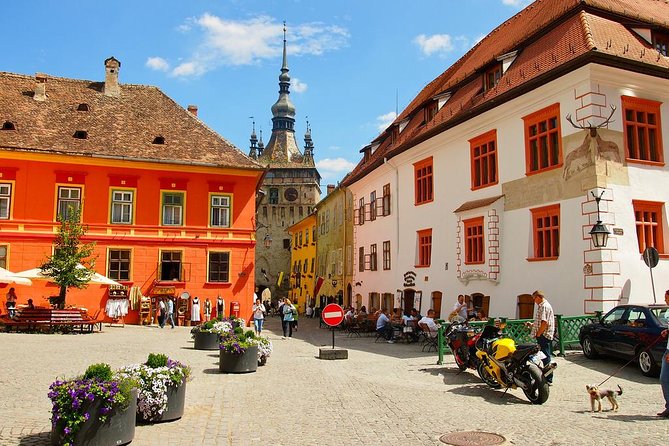
Day 3 is one of the most rewarding days for many people, because UNESCO visits here are not just stamps. You go to Biertan Fortified Church and walk in the village connected to it, then move on to Sighisoara, which is also UNESCO.
Biertan is special because it pairs faith with defense. Fortified churches are a clear reminder that communities built religious places to survive. If you like seeing how daily life worked in older times, this stop gives you a practical lens.
Then Sighisoara takes over. The tour highlights include the Clock Tower and History Museum, the Church on the Hill, and a stop at the House of Dracula. You also get to walk the pupils roofed stairways and see the German cemetery. Even if you know the Dracula story in broad strokes, this is where it feels grounded, because you are in a real medieval town layout.
A small practical note: Sighisoara can involve steps and uneven stone. If you have any issues with long stair walks, tell your guide early, and you can adjust the pace on the spot.
By nightfall you are in Sighisoara area accommodation, and the next day changes scenery dramatically. That makes Day 3 feel like a bridge, from Transylvania’s strongholds and Saxon-built towns toward the painted churches of Bucovina.
More Bucharest options to weigh up
- Bucharest: Dracula’s Castle, Peles Castle, & Brasov Old Town
★ 4.5 · 17,858 reviews - Bucharest: Dracula Castle, Peles Castle & Brasov Old Town
★ 4.6 · 10,891 reviews - Bucharest: Dracula’s Castle, Peleș Castle & Brașov Day Trip
★ 4.4 · 6,100 reviews - Bucharest: Palace of Parliament Tickets and Guide
★ 4.3 · 3,182 reviews
Red Lake and Bicaz Gorges on the way to Bucovina’s painted monasteries
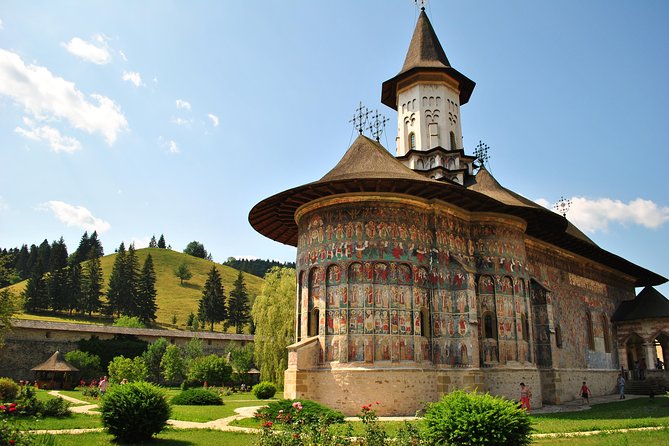
Day 4 is a travel day that still earns its keep. In the morning you transfer toward Bucovina, and along the route you stop for two scenic anchors: the Red Lake and the drive through Bicaz Gorges.
The Red Lake is described as a natural storage dam lake and is the largest natural mountain lake in Romania. That matters because it helps you think of the water as part of a high-country system, not just a pretty photo spot. Then comes Bicaz Gorges, where the road slices through steep limestone cliffs as it winds through the mountains. The gorge road experience is one of those “yes, this is the point of the drive” moments.
If you get motion sick, this is the day to be proactive. Mountains plus twisty roads are not always friendly to everyone, even in a private vehicle. Bring what works for you and keep water handy.
You arrive in Voronet for accommodation, which sets you up perfectly for Day 5. Voronet is convenient because you can base out of the area and hit several UNESCO sites without losing half your day to backtracking.
Voronet, Humor, Sucevita, Moldovita, plus Marginea pottery stops
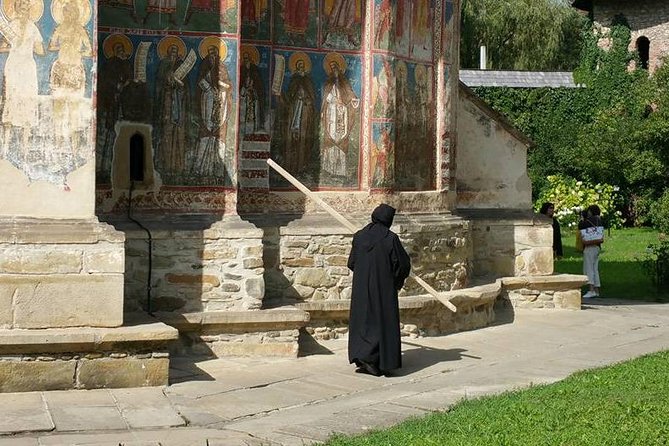
Day 5 is where Bucovina earns its reputation. You start with Voronet Monastery (UNESCO), then you move through a chain of major UNESCO painted monasteries: Humor Monastery, Sucevita Monastery, and Moldovita Monastery. Along the way you also stop at the Painted Eggs Museum and visit Marginea village for black pottery workshops.
The painted monastery circuit is the heart of the region. You’re not just looking at old buildings, you’re seeing religious art painted onto the architecture, with colors that make the experience feel almost like a visual language. A guide helps here because it is easy to walk around and only catch the most obvious details. With coaching, you start noticing patterns and why certain visuals show up where they do.
The Marginea pottery stop adds a different kind of cultural proof. It is a reminder that this region’s identity is not only stone and paint. It is also crafts, skills, and the kind of working tradition you can watch in real time.
One practical reality: the itinerary mentions a lunch stop, but lunch and dinner are not included in the price. So plan to pay for at least lunch on this day, and budget extra snacks if you want steady energy while moving between sites.
Also, photo fees are not included, so if you care about photography inside, bring time and money for that. And keep your schedule flexible in the moment, especially if weather changes lighting at the monasteries.
Neamt Monastery and Neamt Fortress before the Bucharest drop-off
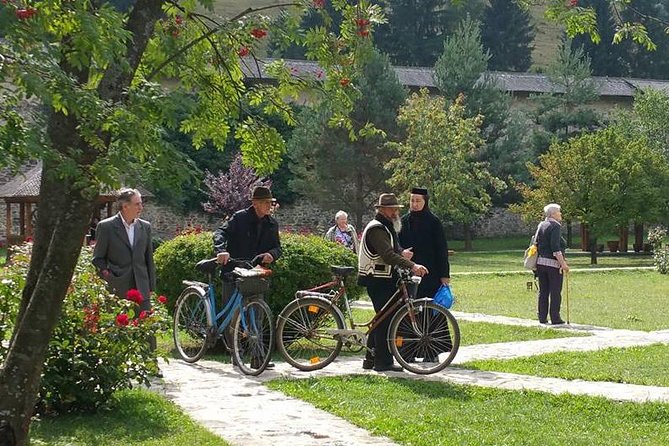
Day 6 is a strong closing day because it combines a monastery with a defensive site, then returns you to Bucharest. You start back in the Voronet area, then head toward Neamt Monastery and Neamt Fortress in Targu Neamt.
The Neamt Fortress is perched high on a rocky hill and has played a defense role for almost six centuries. That long timeline gives context to why walls and towers mattered so much. Nearby, Neamt Monastery is founded in the 12th century and is described as one of Romania’s oldest and most important religious settlements. It is also described as fortress-like, with high walls and a defense tower, so it keeps the theme tight: spirituality and protection in one place.
After these stops, you transfer back to Bucharest and get dropped off at your hotel.
The main value of Day 6 is pacing. You are not just ending with a long drive with no payoff. You close with two sites that echo what you saw earlier, fortified places that shaped community life.
Price and value: is $1,419.55 per person money well spent?

At $1,419.55 per person for about six days, this is not a budget trip. So the question is value, not just cost. Here is what you are paying for in a real way:
- Private transportation plus hotel pickup and drop-off, which saves you the time and stress of coordinating multiple legs
- A professional guide, who can translate what you are seeing into meaning
- Five nights in 3- or 4-star hotels with breakfast, which reduces the biggest planning headache
- A schedule that hits major sights plus UNESCO sites without you building the route
If you tried to DIY this, the savings might be in lodging and guide costs only. But you would still need to manage driving logistics, timing, and how to fit UNESCO sites without losing half the day. The private format is what buys you that smoother flow, especially when you are moving between Transylvania towns and the Bucovina countryside.
Also, the itinerary timing is efficient: you cover Bran and Rasnov, then Sibiu and Sighisoara, then the scenic gorge drive, then multiple Bucovina monasteries from a base in Voronet. That kind of routing is hard to do well on your own without experience.
What you still need to budget for is straightforward. Entrance fees and photo fees are extra. Lunch and dinner are not included. So in your real trip math, add those costs and you will feel the price make more sense.
Who this private tour suits best, and who should think twice
This tour suits you best if you want a strong “best of” while keeping control of comfort. If you hate planning, the private approach is the point. You will like it if you enjoy medieval towns, castles, and UNESCO sites, but you also want the human story connected to each place.
It is also a good fit if you are traveling with a small group that wants to move together. The tour is private, so only your group participates, and that makes it easier to keep your own pace.
Think twice if you are very sensitive to early mornings, long drives, or lots of walking. The tour requires moderate physical fitness, and the itinerary includes steps, historic town streets, and monastery paths.
Finally, if you are strictly budget-first, this may feel heavy. But if you value time, convenience, and a guide who can make sites click, it is a fair trade.
Should you book this Transylvania and Bucovina private tour?
If you want a week that feels organized but still feels like Romania, I would lean yes. This is one of the smarter ways to see Transylvania and then switch gears to Bucovina’s UNESCO painted monasteries without getting lost in logistics.
Book it if these are your priorities:
- UNESCO across both regions, not just one day of it
- Major icons like Bran and Peles, plus real medieval town stops
- A guide who can make the stories clear, with Gabriel highlighted as a standout name
Skip it if you want to keep costs as low as possible and you like building routes yourself. Also skip it if you know you struggle with frequent walking or early starts.
FAQ
What time does the tour start?
The meeting time is 7:30 am.
How long is the private tour?
The tour runs for 6 days (approx.).
Where do pickups and drop-offs happen?
The tour includes hotel pickup and drop-off, and the final day includes a return drop-off at your Bucharest hotel.
What is included in the price?
Hotel pickup and drop-off, a professional guide, five nights in 3- or 4-star hotels, breakfast, and fuel surcharge are included. It also uses a mobile ticket.
What is not included?
Entrance fees and photo fees are not included. Lunch and dinner are also not included.
What kind of accommodations will I have?
You will spend five nights in 3- or 4-star hotels, with breakfast included.
Which UNESCO sites are part of the itinerary?
The itinerary includes UNESCO sites such as Biertan Fortified Church, Sighisoara, and the painted monasteries of Bucovina, including Voronet, Humor, Sucevita, and Moldovita.
Is the tour physically demanding?
It asks for moderate physical fitness level. You should be prepared for regular walking and time on uneven historic surfaces.
What is the cancellation policy?
This experience is non-refundable and cannot be changed for any reason, and you would not receive a refund if you cancel or ask for an amendment.
If you want, tell me your travel month and your walking comfort level, and I can help you figure out what to pack and how to plan your expectations for each day’s pace.
Latest reviews from around Bucharest
- ATV Adrenaline Race in Carpathian – Private Tour★ 5.0 · 4 reviews
- Private Tour of Jewish Bucharest★ 5.0 · 4 reviews
- In Search of Dracula and the Teutons in Transylvania Full-Day Private Tour★ 5.0 · 4 reviews
- Bulgaria One Day Private Tour from Bucharest★ 5.0 · 4 reviews
- Discover Medieval Transylvania Small Group Tour – 7 days★ 5.0 · 4 reviews
- Private tour: Medieval cities of Transylvania, 2 Days from Bucharest★ 5.0 · 4 reviews
- Bulgaria Day Trip – Private Tour from Bucharest – Veliko Tarnavo & Arbanasi★ 5.0 · 4 reviews
- Black See, Constanta and Mamaia Beach – Day Trip from Bucharest★ 5.0 · 4 reviews
Private, compared.
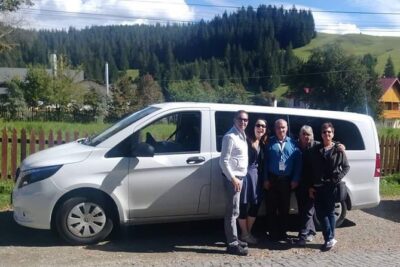
Castles of Transylvania: Private Day Trip from Bucharest
Read our review →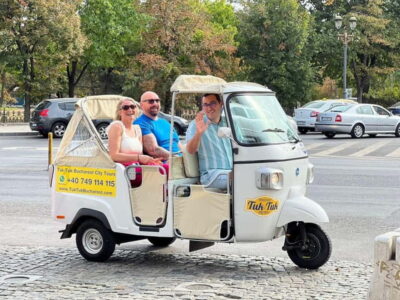
Bucharest: Best of Bucharest Private Tuk-Tuk Tour
Read our review →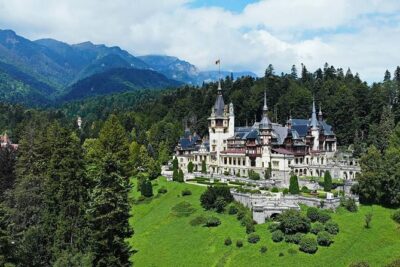
Dracula’s Castle, Peles Castle and Brasov – Private Day Trip from Bucharest
Read our review →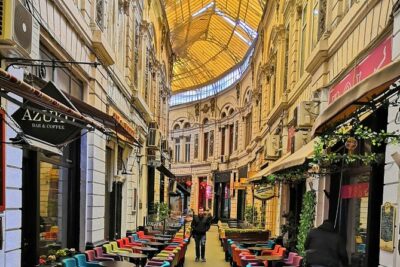
Bucharest Panoramic Sightseeing – Private City Tour
Read our review →
THERME “Take It Easy” Pack: Full Spa Access + Private Transfers
Read our review →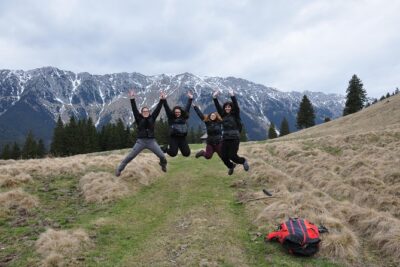
Piatra Craiului National Park Private Hiking Tour from Brasov
Read our review →