
Reviewed · COMMUNIST-ERA BUCHAREST
Bucharest: Communist Bike Tour
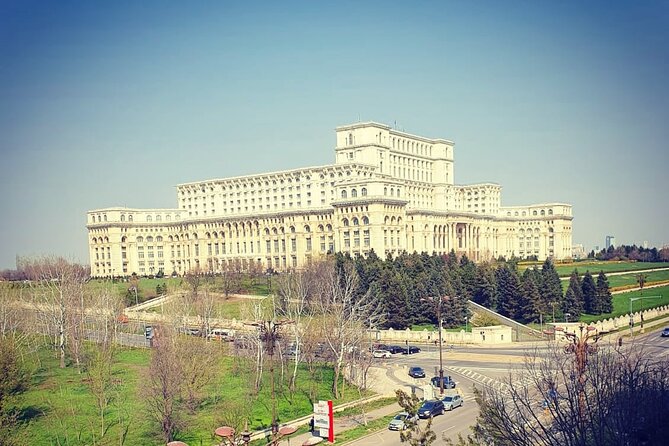
Bucharest’s communist era feels less like a textbook topic on this bike tour and more like something you can point at, pedal past, and measure with your own eyes. I like that the route connects big political moments to specific street corners, and I also like the practical rhythm of a bike that lets you cover a lot in just 4 hours. One thing to consider: this is not a low-effort ride, and it is not recommended if you have limited mobility.
If you get a guide like Horia or Alex, you’ll feel the difference right away. They put the history into context, and the tour stays in English throughout. I also like that the ride includes major waypoints tied to the Revolution of December 1989, so the story doesn’t end in the past.
Key Highlights You’ll Actually Remember
- Cycle to the first Romanian parliament, with the communist-era events that hit it in the early 20th century
- See Revolution Square and trace how public space became a stage for December 1989
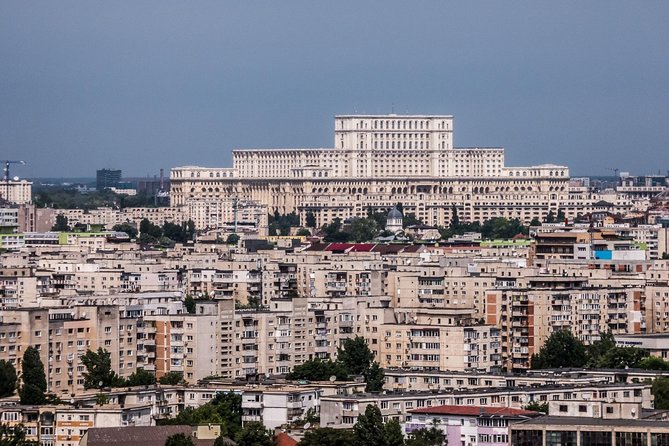
- Spot Casa Radio, the biggest unfinished communist urban project you’ll ride past
- Pass through Stalin-era elite housing, built for the people with power, not the rest of the city
- Stop at the Communist Central Committee area, linked to Ceaușescu’s last speech
- Learn at Coral Temple, where the tour connects community origins to early communist organizing
Start at Hanu’ Berarilor, Then Bike Into the Story
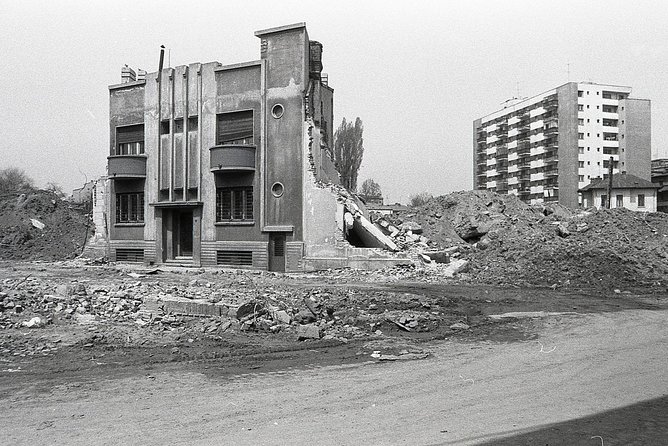
You meet just across from Hanu’ Berarilor at Casa Oprea Soare. That’s a simple start point, and it gets you into Bucharest’s older center fast, where the contrast matters. The tour begins with a quick framing from your guide about how the communist period damaged parts of the historical city fabric, and why that’s still visible today. Then you’re on the move.
You’ll be provided a bike, a helmet, and a bike lock, which is one less thing to worry about. Your part is basic and important: wear comfortable shoes. This is a ride where you’ll likely stop, look, and walk a bit at points, so good footwear keeps the whole experience from turning into a foot-ache contest.
Also, plan your mindset for city cycling. One review noted that the extended action range is worth it if you feel comfortable riding in dense traffic. If you don’t, you can still enjoy the history, but the ride itself becomes the challenge.
More Cycling Tours in Bucharest
- Bucharest: Half Day Bike Tour
★ 4.9 · 379 reviews - Bucharest Half a Day Bike Tour
★ 5.0 · 325 reviews - Bucharest: 2-Hour City Highlights Bike Tour
★ 4.8 · 269 reviews
How the Guide Reads Bucharest’s Old Center for You
The first phase runs through Bucharest’s old city center, and the guide’s job here is not to recite dates. It’s to help you see the scars. You’ll hear about the major role the communist era played in ruining or reshaping historical parts of the city, and you’ll connect those changes to what came next in the decades that followed.
This kind of explanation matters because Bucharest is a city where layers sit close together. When you bike, you experience that layering as movement: you pass from older urban texture into later planning choices, and you start noticing how power tends to redraw streets. The tour also nudges you to look beyond aesthetics. You’re learning what got built, what got ignored, and what got repurposed.
If you enjoy history that has consequences in the real world, this opening sets you up well. If you mainly want museum-style storytelling, you might find the ride is more about understanding the city as evidence, not as a collection of objects.
Coral Temple: A Stop That Adds an Unusual Angle
After the initial old-center context, you head toward Coral Temple. The tour treats this as more than a landmark. It connects the Jewish community to early communist organizing in the 1920s, when some members were among the initiators of the communist movement.
This is a smart inclusion for two reasons. First, it broadens the usual story people expect from a communist tour. Second, it reminds you that political movements are not created in isolation, they come from social networks, communities, and personal choices. In other words, you’re not just hearing about Ceaușescu or Soviet rule. You’re seeing how earlier currents formed the ground that later regimes took advantage of.
If you’re sensitive to heavy political history, it can help to remember the guide’s role here is contextual. You’re not being asked to take sides. You’re learning how different groups and ideas mixed, then were used and reshaped by power.
The Bomb Attack Site and the First Romanian Parliament
One of the most direct waypoints is the site tied to a communist bomb attack against the democratic Romanian government, connected to the first Romanian parliament. You’ll cycle to this area, then hear how the events fit into the larger struggle between democratic government and revolutionary pressure.
What makes this stop valuable is the way it connects ideology to violence, and politics to physical geography. Parliament is the symbol people associate with governance, laws, and legitimate authority. Placing the bomb attack story next to that space makes the conflict feel immediate instead of abstract.
There’s also a practical benefit: this is a moment where your brain naturally shifts into attention mode. You’ll likely slow down mentally and actually read the surroundings differently, because the guide is explaining what that place meant in those years.
The main consideration here is emotional tone. Even if you’re prepared, political violence topics can weigh on you for a bit. Give yourself time afterward, take a breather when the route allows it, and let the ride bring you back to a calmer pace.
More of communist-era Bucharest:
- Bucharest: Communism and History Guided City Walking Tour
★ 4.9 · 918 reviews - The Real tour of Communism
★ 5.0 · 666 reviews - Life under Communism
★ 5.0 · 358 reviews - 3-Hour Guided Tour of Communist Bucharest
★ 4.9 · 303 reviews
Stalin-Era Elite Housing and the Neighborhood of Soviet Rule
The tour moves from earlier communist rise into the era right after World War II, when Romania ended up occupied by the Soviet Union for 12 years. You’ll ride through a neighborhood where Russian army generals who were in charge of ruling the country lived. That’s a powerful detail because it shows the occupation wasn’t just a distant policy. It had an address.
Before that, the tour also includes seeing a neighborhood built for communist elites during the Stalin era. This is where the tour stops being about leaders only and starts being about systems. The built environment tells you who mattered, where resources went, and how daily life was structured for those with authority.
When you connect both stops, you get a clearer picture of how regimes maintain control. They don’t just enforce rules. They shape neighborhoods, assign comfort, and set boundaries between people.
If you like walking city history, you may want to pause longer than the group at points like these. If you’re the type who prefers moving on quickly, the ride pace will keep you from getting stuck.
Revolution Square and the Communist Central Committee
The final political crescendo centers on the Revolution of December 1989. You’ll visit Revolution Square, one of the key public spaces tied to the upheaval. Then the route ends in front of the area associated with the Communist Central Committee, where Ceaușescu held his last speech and where the revolution started.
This part works because it ties the entire tour together. Early moments cover how power challenged democratic governance. Middle stops explain how occupation and elite planning reshaped daily life. Then the last stop links the whole arc to a turning point visible in the modern city.
It also gives you a clean way to remember dates without it feeling like memorization. The guide connects what you’ve seen on the ground to why the square and the committee area matter. Once that clicks, you’ll start spotting the kinds of buildings and open spaces regimes prefer, and how crowds and authority collide in those places.
Practical note: by the time you reach these stops, you’ll likely be tired in a normal, human way. That’s fine. Keep your attention for the guide’s key points, then take a few minutes longer at the square so it lands.
Casa Radio and the National History Museum: Unfinished Ambition in Concrete
Two stops bring a different flavor to communist architecture: planned dreams that never fully became what planners promised.
First, there’s Casa Radio, described as the biggest unfinished communist urban project. Riding past it helps you see the cost of ambition. Unfinished building stories are often about budgets, shifting priorities, and politics changing direction. The effect on the city is tangible: you get a large structure that never completes the idea, but still shapes the neighborhood around it.
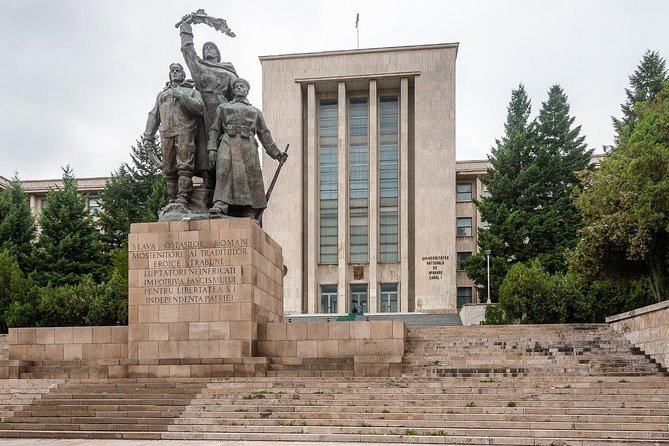
Later, the tour also passes by the National History Museum complex. Here the focus is on how buildings were completely reshaped by the communist regime during their flourishing times. This stop adds meaning to the idea of reshaping history itself. You’re not only seeing physical remodeling. You’re seeing a regime’s attempt to control narratives, including how the past is displayed.
If you’re an architecture fan, this section is a treat because it’s about intent and outcome, not just style. If you’re expecting a classic museum visit, you might find this part more about viewpoint and explanation than interior time.
What You’re Paying For, and Why It Feels Like a Bargain
The price is $53 per person for 4 hours. That’s reasonable for a small-group style city tour where you get a live English guide plus equipment: bike, helmet, and bike lock. In practical terms, you’re paying for two things you’d otherwise have to piece together yourself: a route that links multiple major sites and a guide who can connect them into a storyline.
Food and beverages are not included, so budget for water breaks on your own. For me, that’s actually a good heads-up because it keeps you free to choose what fits your appetite and dietary needs. Just bring a plan. If it’s warm, you’ll want water. If it’s cool, you might still want a snack, even if you don’t eat much.
One more value point comes from the guide quality. Multiple guides are mentioned in the ride’s feedback: Horia, Alex, and Chorea. The common thread is strong context, friendly help, and explanations that go beyond one topic into how the city works.
Who Should Book This Communist Bike Tour?
You’ll enjoy this most if you like city history that has physical proof. This tour works for people who want to understand how political systems show up in street layouts, buildings, and public space. It’s also a good fit as a first big Bucharest outing, because it gives you a framework for what to look for during the rest of your trip.
It is not the best choice if you have limited mobility or need an accessible route. It also helps if you can handle bicycle riding through busy areas and dense traffic. If you’re unsure, choose based on your comfort on a bike in real urban conditions, not on scenic trails.
If you’re traveling with friends and you want a structured way to cover key sites without relying on taxis or public transit, this is a smart option. You’ll get movement, context, and a clean timeline in a short half-day.
Should You Book the Bucharest Communist Bike Tour?
Book it if you want a focused, politically grounded tour that uses Bucharest’s streets as the lesson plan. You’ll pedal past major landmarks connected to the communist era, and you’ll end at Revolution landmarks tied to December 1989. The combination of guides who explain context and a route that covers multiple meaningful sites in 4 hours makes it feel efficient and worth the money.
Skip it if biking in city traffic stresses you out, or if mobility limits make a ride like this hard to manage. In that case, you’ll probably be better with a more accessible walking or transit-based history option.
FAQ
How long is the Bucharest Communist Bike Tour?
The tour lasts 4 hours.
What is included in the price?
You get a live guide, a bike, a helmet, and a bike lock.
Are food and beverages included?
No, food and beverages are not included.
Where is the meeting point?
Meet just across from the restaurant Hanu’ Berarilor (Casa Oprea Soare).
What language is the tour guide?
The tour is guided in English.
Is this tour suitable for people with limited mobility?
No, the tour is not recommended for people with limited mobility, and it is not suitable for mobility impairments.
Latest reviews from around Bucharest
- LiBEARty Brown Bear Sanctuary and the most important castles from Romania★ 5.0 · 4 reviews
- Hike Bulgaria Love Swing, Veliko Tarnovo and Tarevet Fortress★ 5.0 · 4 reviews
- Bucharest Private Tour with Dracula’s Grave and Ceaușescu Mansion★ 5.0 · 4 reviews
- Hiking in Bucegi Mountains in the Carpathians, Private tour★ 5.0 · 4 reviews
- Dracula Experience In Transylvania★ 5.0 · 4 reviews
- Private 6-Day Dracula Tour in Transylvania from Bucharest★ 5.0 · 4 reviews
- Bucharest Sightseeing – Half-Day Private Tour★ 5.0 · 4 reviews
- Bison Sanctuary, Vlad the Impaler Princely Court & Dracula Grave★ 5.0 · 4 reviews
Communist-Era Bucharest, compared.

Bucharest: Communism and History Guided City Walking Tour
Read our review →
Bucharest: Parliament, Ceausescu House & Village Museum Tour
Read our review →
Bucharest Essential Tour: Old Town, Calea Victoriei & Communism
Read our review →
Communism in Bucharest – Landmarks, Museum & Communist Appetizers
Read our review →
Palace of Parliament, Ceausescu House & Village Museum
Read our review →Browse the lists this tour appears in