
Reviewed · COMMUNIST-ERA BUCHAREST
Bucharest Under Communism: Life, Terror & Hope
Bucharest Under Communism is interesting because it shows how politics shaped everyday streets, buildings, and even what faith was allowed to survive. I especially love the way the walk connects big names like Nicolae Ceaușescu to physical places like Revolution Square and the Palace of the Parliament. I also like that guides such as Laura and Tamar bring the era to life with clear explanations and historical photos. One thing to consider: the main landmarks involve long exterior viewpoints and at least one site where admission is not included, so you’ll want to plan for some waiting and ticket choices.
You’ll cover the arc of Romania under communism, from the megalomaniac design plans of the late regime to the protests that ended it in 1989. Expect a focused, 3 hours 30 minutes stroll with a private guide in a group capped at 15, plus mobile tickets. If the weather is bad, the tour may be rescheduled or refunded, so keep that in mind when you pick your day.
Key highlights before you go
- Unirii Square and the Victory of Socialism Boulevard: see how late communism tried to reshape Bucharest’s idea of grandeur
- Palace of the Parliament views and context: understand why this massive structure was built, and at what human cost
- Mihai Voda Monastery’s survival story: notice how some religious sites endured while others were erased
- Revolution Square, Ceaușescu’s balcony, and the end of 1989: learn what happened to the protestors after the speeches stopped
- University Square protests: hear what it meant to demand a free society, and what that cost in lives
The real story behind communist Bucharest, not just monuments
This tour works because it treats buildings like evidence. In Bucharest, you don’t just see “old stuff.” You see decisions made by a system, enforced through planning, shortages, propaganda, and control of public space.
You start in the city center and finish at Revolution Square, so the walk naturally moves from “how the regime wanted Bucharest to look” to “how Bucharest refused to keep playing along.” It is a history lesson with sidewalks, street angles, and the kind of scale that makes an idea feel real.
And I like that it stays balanced. You get the dictator’s imprint, yes. But you also get the long shadow of the Romanian Revolution and the shift from socialism to democracy, without turning the whole thing into a one-sided rant.
More of communist-era Bucharest:
- Bucharest: Communism and History Guided City Walking Tour
★ 4.9 · 918 reviews - The Real tour of Communism
★ 5.0 · 666 reviews - Life under Communism
★ 5.0 · 358 reviews
Starting at Piaţa Sfântul Anton at 4:00 pm: a practical plan
You meet at Piaţa Sfântul Anton 64, București at 4:00 pm. The location is in central Bucharest, so you can get there with public transport and it is straightforward to find. You’ll also end at Revolution Square, which is about 5 minutes from the Old Town, meaning you can roll right into dinner or a late stroll afterward.
Timing matters here. A 4:00 pm start helps you catch the streets in softer light, and you do not feel rushed at each stop. The tour is about 3 hours 30 minutes, with multiple segments that are free to visit and at least one segment where tickets matter.
Also, the experience is designed for most travelers. Service animals are allowed, and the group cap of 15 travelers keeps it from feeling like a stampede. It stays personal, the guide can answer questions, and the pace does not feel like you’re being dragged forward.
Unirii Square and the Victory of Socialism Boulevard: grandeur with teeth
Your first stop is Unirii Square, and it is a smart place to begin. This square was designed during the last phase of Romanian communism, and it gives you a built-in “wow” moment thanks to the fountains and the long sweep of the former Victory of Socialism Boulevard.
Here’s what you’ll learn to look for. Late communism loved big, straight routes because they are perfect for ceremonies and control. When you stroll along that avenue with your guide, you start to see how architecture and planning can act like propaganda. It’s not just a pretty street. It’s a planned stage.
One practical detail: this stop is scheduled for about 30 minutes and the admission ticket is free. That makes Unirii Square a good warm-up. You can get your bearings, tune your brain to the era, and then you’re ready for the heavier subject matter.
Palace of the Parliament: scale, shortages, and the politics of building
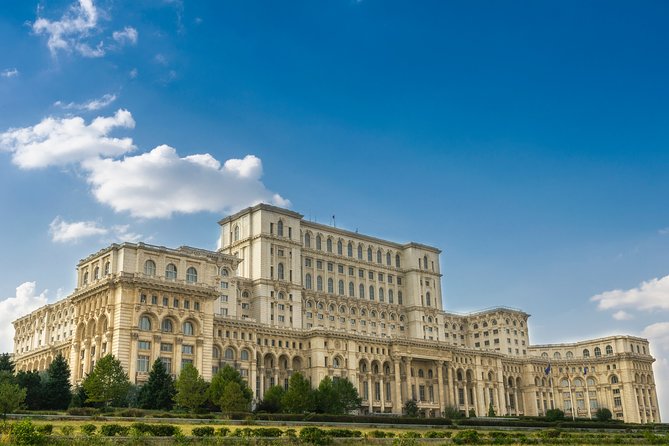
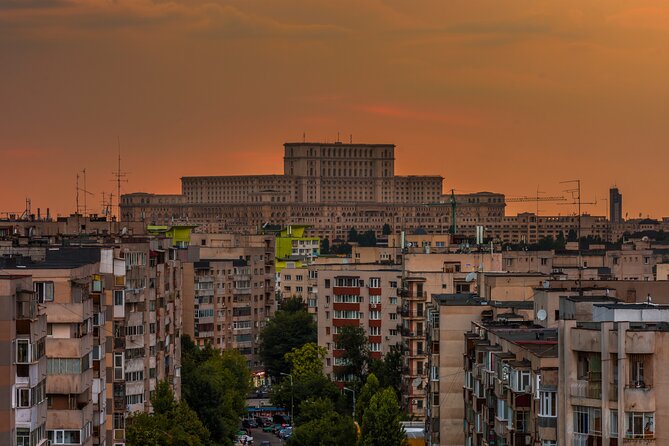
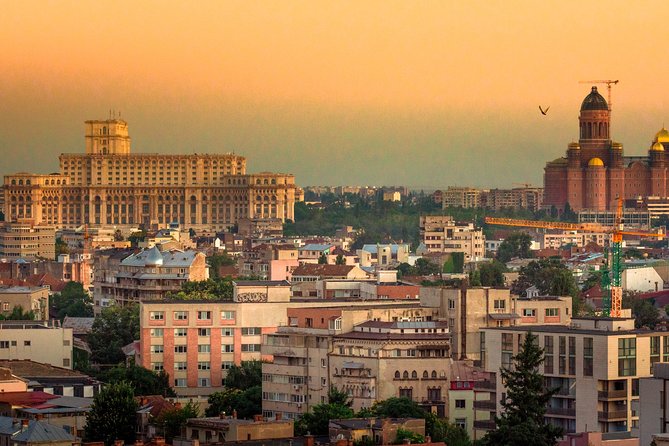
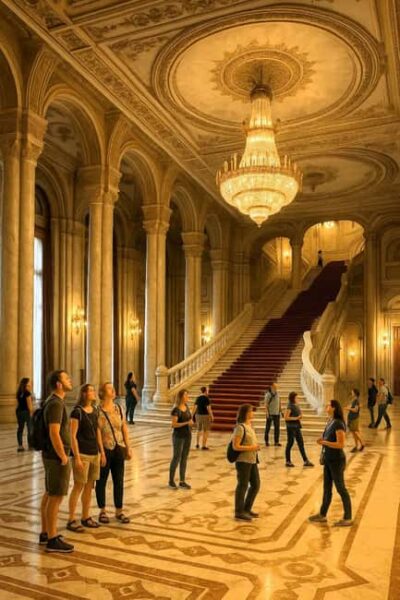
Next comes the Palace of the Parliament, and even before the story starts, you’ll feel its size. It’s described as the second-largest building in the world after the Pentagon, and it is also called the most expensive administrative building. Those are eye-catching numbers, but the tour’s value is in what the guide ties to them.
You’ll hear how vast money, materials, and labor went into the building. And crucially, you’ll also hear that the cost was paid by the Romanian people through shortages of all kinds during the 1980s. That link is what turns “wow, big building” into “why this building should upset you.”
Your viewing experience is also about angles. The tour includes guidance on seeing it from different sides, and it explains what locals think when they look back at it. You’re not just staring at concrete. You’re learning how the building sits in people’s memories.
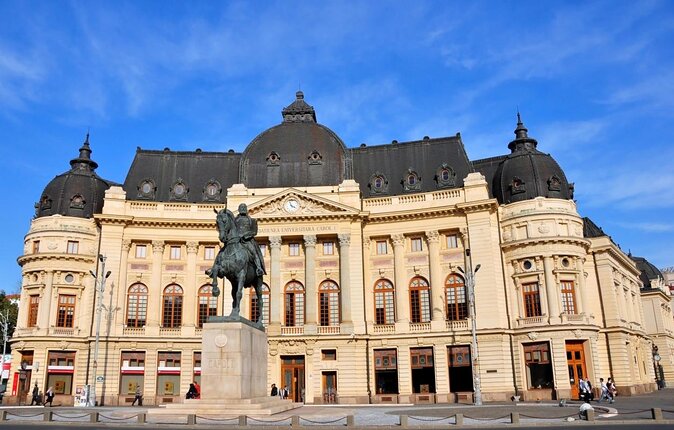
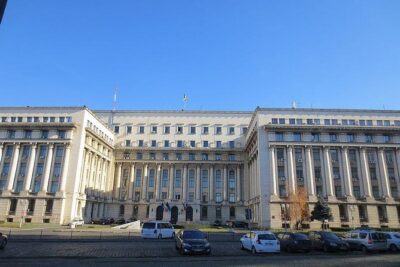
There’s another detail worth paying attention to. Across from it is the Academia Română building, constructed in a similar style. The Palace story also connects to the dictator’s circle, including the intended use of a building associated with Elena Ceaușescu. Even without stepping inside every associated structure, those references help you understand how the regime spread power through both public projects and private influence.
Practical note: this stop is about 1 hour, and admission is not included. So if you’re trying to maximize time inside, confirm what’s actually part of the tour access. If you’re mostly there for viewpoints and explanation, it still works, but keep your expectations aligned with ticket reality.
More Bucharest options to weigh up
- Bucharest: Dracula’s Castle, Peles Castle, & Brasov Old Town
★ 4.5 · 17,858 reviews - Bucharest: Dracula Castle, Peles Castle & Brasov Old Town
★ 4.6 · 10,891 reviews - Bucharest: Dracula’s Castle, Peleș Castle & Brașov Day Trip
★ 4.4 · 6,100 reviews - Bucharest: Palace of Parliament Tickets and Guide
★ 4.3 · 3,182 reviews
Mihai Voda Monastery: why some churches survived
Then you shift from state power to faith and what was allowed to remain. Mihai Voda Monastery introduces the idea that communism did not treat all symbols the same way. Some churches were destroyed. Others were saved in surprising ways.
One striking image you’ll get is of religious spaces that sit hidden behind utilitarian buildings. It sounds odd, but that kind of layout is exactly the point. When a regime wants religion to feel contained, it can surround it with less meaningful, more functional architecture, so the old belief system looks sidelined even when it survives.
At this stop, the Mihai Voda Church itself is described as a Middle Ages religious place that survived the demolition frenzy. That contrast is powerful. You’ll stand somewhere that has existed far longer than the communist era, and you’ll hear how preservation happened despite the pressure to erase.
This is scheduled for about 30 minutes and the admission ticket is free. That free factor is helpful because you get a lighter moment in the middle of the tour, not a forced “pay again” stop.
Revolution Square: the start of the regime and the end of 1989
After the Palace, the story turns sharper. Revolution Square is where the communist regime began and where it ended with protests in 1989. It’s hard to overstate how good it is to hear that timeline while you’re standing in the actual place where key moments unfolded.
You’ll see the building that housed Ceaușescu’s office, plus the balcony where the dictator had his last speech. That balcony detail matters because it turns the revolution from an abstract concept into a sequence of events tied to a specific spot.
Your guide also connects the square to the first mass demonstration in Bucharest. And then you get the follow-up that visitors often miss: what happened to those who demonstrated against totalitarianism, including the story behind the monument dedicated to them and what came afterward.
This stop is scheduled for about 1 hour, and admission is free. Because it is a longer segment and has a lot to explain, it’s also where you’ll likely ask the most questions. It’s the kind of place where you want your guide to slow down and point things out more than once.
University Square: why protest carried real risk
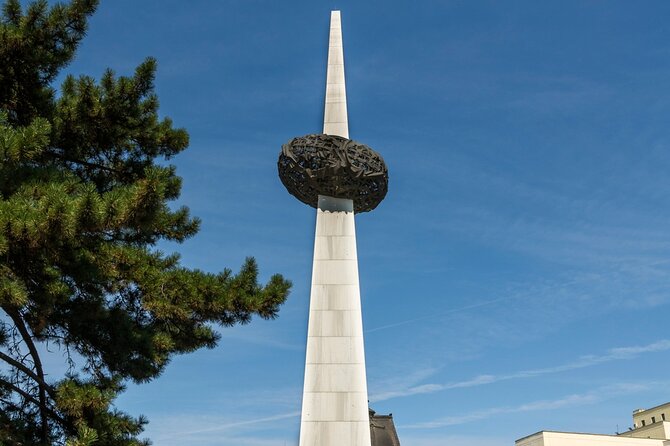
The last themed stop is University Square, scheduled for about 30 minutes. This is where the main protests against communism took place in 1989, with hundreds being massacred for their belief in a free society.
Hearing that while standing in the square is intense. It shifts the whole tour from “history we study” to “history that cost lives.” Even if you are not a politics person, your brain will understand the stakes because the guide frames it as a direct response to totalitarian rule, not just street theater.
Unlike most of the earlier stops, admission is included here. That matters if you care about getting inside something or seeing specific memorial or exhibit components tied to the area. The tour does not frame it as optional trivia. It treats it as part of the story you should not skip.
What makes the guide work: stories, photos, and question time
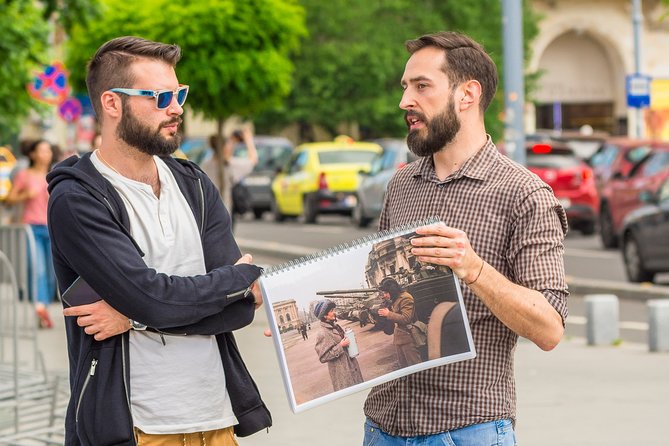
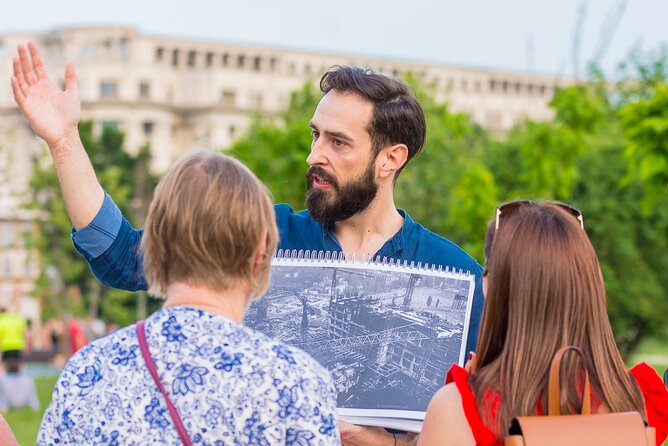
A big reason this tour earns a high rating is how the guide teaches. Multiple guests highlight guides like Laura and Tamar as strong on pacing and clarity, with a good command of English. They also mention the guides pairing explanations with historical photos.
That matters in communist-era tours. When you see real architecture, you need mental images to connect it to what happened there. Photos help your brain bridge the gap between the present street and the regime’s message machine.
You’ll also notice something else in the reviews: guides stay willing to answer questions. And when a topic is emotionally heavy, that kind of patience makes the difference between a lecture and an actual learning experience.
If you’re the type who likes to understand both the buildings and the human angle, this structure fits you well.
Price and tickets: what you’re really paying for
At $23.22 per person for about 3 hours 30 minutes, the price is pretty reasonable for a walking tour that includes major landmarks and a guide. You’re not paying for just “movement,” you’re paying for interpretation, pacing, and a route that links several key sites into one coherent narrative.
Here’s the practical breakdown you can plan around:
- Unirii Square: free, about 30 minutes
- Mihai Voda Monastery: free, about 30 minutes
- Revolution Square: free, about 1 hour
- University Square: admission included, about 30 minutes
- Palace of the Parliament: admission not included, about 1 hour
So the only notable paid admission gap is the Palace. If you want the maximum inside access, treat that as a “check the details” moment before you go. If you’re fine with viewpoint time and strong storytelling around what the Palace represents, the tour still delivers.
Group size is also part of the value equation. Up to 15 travelers keeps it manageable, and the tour is described as private with a guide, which usually means you get more personal attention than the typical large-group model.
Weather, walking pace, and what to wear
This experience requires good weather. If conditions are poor, you can expect the tour to be offered on another date or receive a full refund. Plan for that when you’re picking your Bucharest day, especially if you’re traveling in shoulder seasons.
The route is a walking tour, so wear comfortable shoes with decent grip. Even if each segment is scheduled, you’ll be outside and you’ll spend real time looking up and around, especially near the Palace and its surrounding structures.
Who should book this tour, and who might want a different fit?
Book it if:
- You want a fast, organized way to understand communist Bucharest without piecing together sources yourself
- You care about how politics shaped daily life, not only who ruled
- You like guided walking tours with clear storytelling and room for questions
- You want major landmarks without spending your entire day on museums
You might choose something else if:
- You strongly prefer tours where all major admissions are included in the price
- You get tired easily from extended outdoor standing and looking around large areas
Should you book Bucharest Under Communism?
Yes, I think this is a strong pick for a first serious history tour in Bucharest. For the cost, you get a tight route through the regime’s planned public spaces, the human cost behind the biggest building, and the protest points that ended the era in 1989. The small-group format and guides like Laura and Tamar, with their photos and Q and A time, are exactly what make the information stick.
Just plan for the Palace of the Parliament ticket situation, and pick a day with solid weather. If you do that, you’ll finish the walk with a much clearer sense of how Bucharest became the city it is.
FAQ
How long is the Bucharest Under Communism walking tour?
It lasts about 3 hours 30 minutes.
What is the price per person?
The price is $23.22 per person.
Where is the tour meeting point?
The start is at Piaţa Sfântul Anton 64, București 030167, Romania.
Where does the tour end?
The tour ends at Revolution Square, Piața Revoluției, București, Romania.
What key stops are included?
You visit Unirii Square, the Palace of the Parliament, Mihai Voda Monastery, Revolution Square, and University Square.
Are tickets included for the stops?
Unirii Square and Mihai Voda Monastery are listed as free. The Palace of the Parliament admission is not included. University Square has admission included.
Is this tour private?
You have a private guide, and the maximum group size is 15 travelers.
What time does the tour start?
The listed start time is 4:00 pm.
Is the tour affected by weather?
Yes. It requires good weather. If it’s canceled due to poor weather, you’ll be offered a different date or a full refund.
Are service animals allowed and is it easy to reach by transit?
Service animals are allowed, and it is near public transportation.
Latest reviews from around Bucharest
- LiBEARty Brown Bear Sanctuary and the most important castles from Romania★ 5.0 · 4 reviews
- Hike Bulgaria Love Swing, Veliko Tarnovo and Tarevet Fortress★ 5.0 · 4 reviews
- Bucharest Private Tour with Dracula’s Grave and Ceaușescu Mansion★ 5.0 · 4 reviews
- Hiking in Bucegi Mountains in the Carpathians, Private tour★ 5.0 · 4 reviews
- Dracula Experience In Transylvania★ 5.0 · 4 reviews
- Bucharest Sightseeing – Half-Day Private Tour★ 5.0 · 4 reviews
- Bison Sanctuary, Vlad the Impaler Princely Court & Dracula Grave★ 5.0 · 4 reviews
- Private 6-Day Dracula Tour in Transylvania from Bucharest★ 5.0 · 4 reviews
Communist-Era Bucharest, compared.

Bucharest: Communism and History Guided City Walking Tour
Read our review →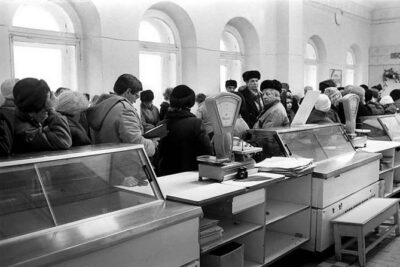
Bucharest: Parliament, Ceausescu House & Village Museum Tour
Read our review →
Bucharest Essential Tour: Old Town, Calea Victoriei & Communism
Read our review →
Communism in Bucharest – Landmarks, Museum & Communist Appetizers
Read our review →
Palace of Parliament, Ceausescu House & Village Museum
Read our review →Browse the lists this tour appears in