
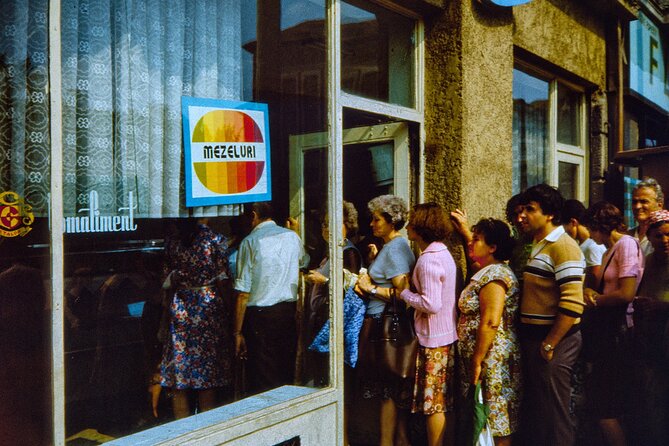
Reviewed · COMMUNIST-ERA BUCHAREST
Communism Walking Tour from Lenin to Ceausescu in Bucharest
Bucharest has a split personality, and this communism-focused walking tour uses the streets to explain how power changed the city. I like how the route stays anchored in big, visible landmarks, so you never feel lost in vague history.
I also like the guide storytelling, with names you may hear like Alex or Lucia, and how they connect buildings to key moments. One possible drawback: the tour is in English, and if your English is shaky, you may miss some of the finer points.
Key highlights you should know

- All the stops are free to enter, so your money goes to the guide and the walking route
- Small group size (max 25) keeps the pace manageable and the Q and A realistic
- A tight 2.5-hour loop from the Palace of Parliament to Revolution Square
- Architecture as a clue at every turn, from the Socialist Victory Boulevard era to Royal buildings repurposed by the state
- A clear focus on cause and effect, not just dates and names
- English-led tour (useful to plan around language comfort)
Why Bucharest’s Communism Tour Works in One Long Walk
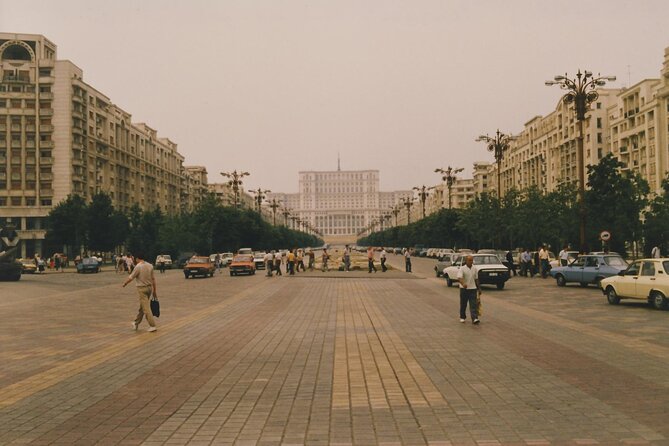
This is the kind of tour that makes you look up and pay attention. You start with one of the most imposing buildings in Bucharest, then you keep moving to squares and landmarks that show how ideology shaped public space.
I like tours where the city does the teaching. Here, each stop is picked because you can actually see the result, even if you only know a little about the era.
And you get that real balance: the good intentions people might have had, and the hard control that followed. It is not only about gloom. It is about how a system left physical fingerprints across everyday life.
More Walking Tours in Bucharest
- Bucharest: City Highlights Guided Walking Tour
★ 4.9 · 1,482 reviews - Bucharest: Communism and History Guided City Walking Tour
★ 4.9 · 918 reviews - Bucharest Highlights Walking Tour
★ 5.0 · 469 reviews
Price and Pace, What $24 Really Buys
At $24 per person, you are paying for a guide-led story through central Bucharest, not for museum tickets. The stops are set up so admission is free at each major stop, which is a big deal in a city where ticket prices can add up quickly.
The tour runs about 2 hours 30 minutes, which means you can fit it into a single morning or early afternoon. The pacing is designed for walking across several key areas, so wear shoes you can trust.
This is not a sit-down, slow museum day. You are outside a lot, using the street layout like a map for the political history.
The Route Layout, From Bulevardul Unirii to Revolution Square
You meet at Bulevardul Unirii 5 in Bucharest (start time 10:30 am) and the tour ends in Revolution Square. That start-to-finish design matters, because you get a true through-line rather than backtracking.
The tour stays near public transportation, which helps if you are combining it with other plans that day. Also, the group is capped at 25 people, so you are not stuck behind a giant crowd moving like a herd.
One other practical win: you use a mobile ticket. Less paper, fewer last-minute hassles.
Stop 1: Palace of Parliament, the Mega Project You See Immediately
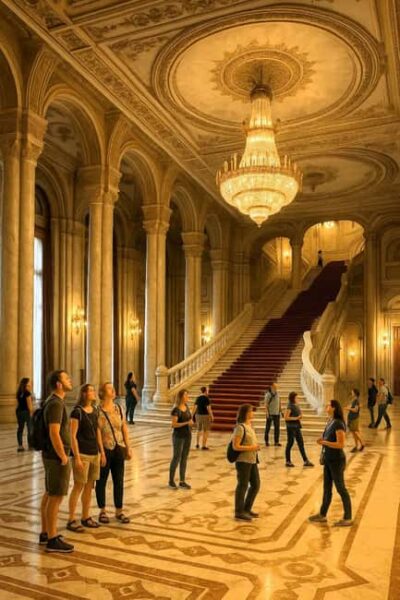
You begin in front of the Palace of Parliament, described as the second biggest administrative building in the world. Even if you have never studied Romanian history, the building itself sets the theme: huge scale, heavy state presence, and a sense of control made literal in stone.
The tour frames it as part of the last megalomaniac communist project. I like that approach because it tells you what to look for right away, not just where to stand for a photo.
There is no admission ticket needed here, which keeps the schedule tight. You get about 20 minutes, so it is enough time to understand what the building represents, without turning this into a long detour.
Possible drawback: this stop is visually intense. If you prefer quieter stories at first, you might feel it is a lot at the start. But that intensity is also why the tour works.
More of communist-era Bucharest:
- The Real tour of Communism
★ 5.0 · 666 reviews - Life under Communism
★ 5.0 · 358 reviews - 3-Hour Guided Tour of Communist Bucharest
★ 4.9 · 303 reviews - Bucharest: Parliament, Ceausescu House & Village Museum Tour
★ 5.0 · 208 reviews
Stop 2: Manastirea Antim and the Old City vs New Plans

Next you head to Manastirea Antim, located in the old city area. This is the stop that helps you feel how the communist era treated the past as something to reshape, not something to protect.
The big idea here is that the site was almost demolished to make space for a major boulevard tied to the socialist period. Even without getting lost in complicated details, the contrast is clear: you have history trying to survive, and you have big planning forces pushing it around.
You spend about 15 minutes, which is short but enough for a guided explanation plus a slow look. Admission is free for the stop, so you are not juggling ticket lines with interpretation.
What I like about this stop is that it breaks the rhythm of only big-government buildings. It reminds you that ideology touched religious and cultural spaces too.
Stop 3: Palatul Patriarhiei, French Inspiration and Political Roots
Then you arrive at Palatul Patriarhiei, a building tied to both architectural inspiration and political shifts. The tour connects it to a style inspired by the Garnier Opera from Paris, which gives you a useful visual reference point.
At the same time, it is linked to the start of democracy in Romania and also to the start of the communist movement. That pairing is the kind of detail that helps you understand transitions, not just outcomes.
You get around 20 minutes here with free admission. This is also a good moment to slow down and notice how different influences can sit inside the same time period.
If you enjoy “how did this place get that look” questions, this is a strong stop. If you want pure communist-only symbolism, you might find the democracy reference shifts your focus, but it makes the story more honest.
Stop 4: Piaka Unirii, Socialist Victory Boulevard and Dancing Fountains
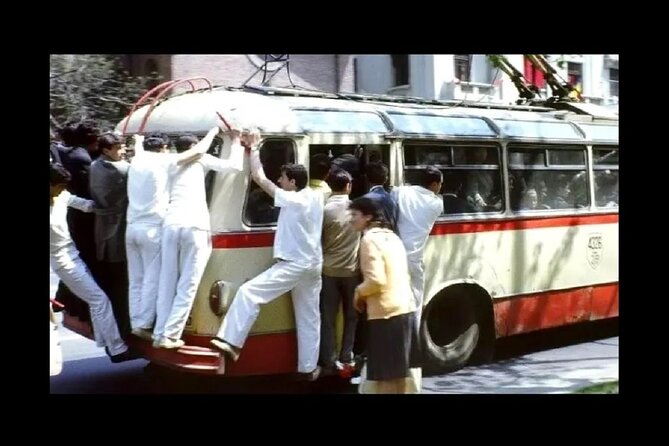
Next comes Piaka Unirii, a landmark built during the 1980s as part of the Socialist Victory Boulevard. This stop helps you see how the system tried to shape modern life through large public projects.
The highlight here is the dancing fountains, which makes the political setting feel strangely playful at first. That contrast is useful. It shows you that even heavy political eras can produce public spectacles designed for everyday enjoyment.
You get about 20 minutes, with free entry. I like this timing because it gives you a breather before you move into the more intense squares later on.
If you are the kind of traveler who enjoys mixing architecture with daily-life details, you will probably have an easier time connecting emotionally to this stop than you would at a purely official-looking site.
Stop 5: Old Town, the Regime Symbol That Went Quiet
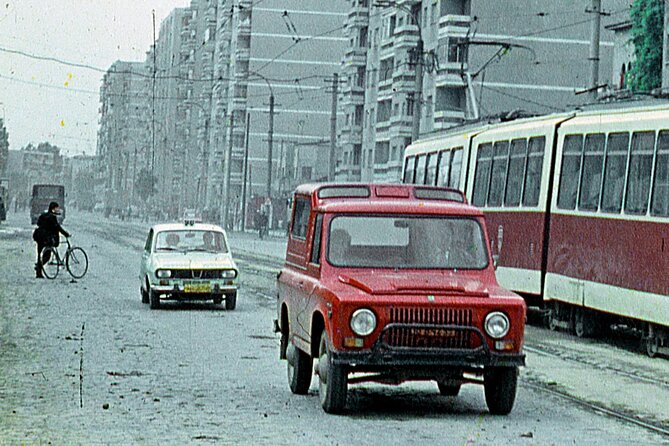
Then you move to the Old Town, described as a symbol of the old regime, and a place that became abandoned during the communist era. This is not only about what communism did to new construction. It is also about what it did to older spaces.
You spend around 15 minutes, and admission is free. The quick timing works because this stop is more about reading the atmosphere and listening closely to what the guide tells you about the shift.
I like that the tour does not keep everything focused on one kind of building. You get a different angle on power through urban neglect and change.
Potential consideration: this stop depends on what you can see in the streets around you at the time you visit. The guide’s narration becomes especially important here, so pay attention and ask questions if anything feels unclear.
Stop 6: University’s Square, Where a Bloody Revolution Hit
You move on to University’s Square, where Romania is described as ending the communist period with a bloody revolution. The tour points out that many victims were shot in this square.
This is where the tone of the walk often turns more serious. I appreciate that the tour does not rush this part into something casual, because the location itself demands respect.
You get about 15 minutes, with free admission. It is short, but the guide context is what makes the time count.
Practical advice: give yourself space to absorb what you are hearing. If your phone distracts you, put it away for a minute.
Stop 7: Palatul Regal/Royal Palace, From Royal Winter Home to Republic Building
Next you reach the Palatul Regal, which is now the National Art Museum. The tour explains it as the winter residence of Romania’s Royal family, and then a turning point: during the first years of communism it became the Palace of the Republic and functioned as a protocol building.
I like this stop because it forces you to think about continuity and rupture. A palace is not just a building. It is a statement about who holds power, where ceremonies happen, and whose image the public is meant to see.
You spend about 15 minutes, with free entry at this stop. The quick timeframe helps you keep momentum while still giving you the key interpretation.
If you enjoy understanding how regime changes reuse old shells, this one lands well. If you prefer only revolutionary-era structures, you might find the Royal context shifts the narrative, but it is part of the story.
Stop 8: Ateneul Roman, the Building That Shows Up on 5 Lei
A small but memorable stop follows: Ateneul Roman. It is described as one of the most representative buildings in Bucharest, and the tour notes it is printed on the 5 lei bill.
This is a clever way to make a landmark feel personal. Seeing it on currency is one thing. Seeing it in person while a guide frames its significance is another.
You only get about 5 minutes here, with free admission, so treat it like a quick visual reset. Look up, check the façade, and let the guide connect it to what symbols mean in public life.
I like that this moment breaks the heavier mood before you head to the most dramatic square in the route.
Stop 9: Piaka Revolukiei (Revolution Square), Party Headquarters and Ceausescu’s Last Speech
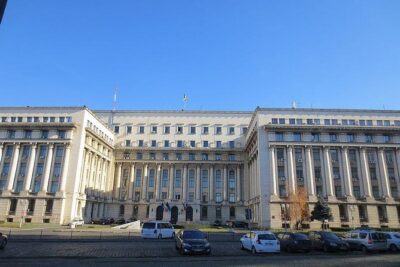
You finish in Piaka Revolukiei, better known as Revolution Square. The tour sets the stage with a direct detail: the main building in the square was the Central Committee of the Communist Party, and Nicolae Ceausescu held his last speech in front of the Romanian people here.
Ending with this location gives the whole route gravity. Everything you have seen before starts to click as part of the same political system, then the system collapses in one of Bucharest’s most visible places.
You get about 25 minutes here, the longest stop after the first one. That extra time matters because it is your wrap-up moment, letting you connect architecture, ideology, and street-level consequences.
If you want to keep exploring after the tour ends, Revolution Square is a practical final point since it is central for transport and onward plans.
Guides: The Real Reason People Rate This 5 out of 5
A lot of tours show buildings. This one tries to show cause and effect, and that mostly comes down to the guide.
In particular, I like what I heard about Alex and Lucia. Both come through as strong storytellers who help you connect the dots, especially between major sites tied to communism and the dramatic end of the era. One guiding style stands out: humor mixed with solid context, and an ability to adapt to the group in real time.
You do not need to be a history expert to enjoy it. If you are the kind of traveler who asks questions in the moment, you will likely get better value because this tour invites conversation rather than one-way lectures.
Language note: since the tour is in English, the quality of interpretation matters. If you rely on translation apps, you might find yourself spending too much time reading instead of listening.
Practical Tips for a Smooth, Enjoyable Walk
Bring comfortable walking shoes. The tour is roughly 2 hours 30 minutes and crosses multiple central areas.
Plan to dress for the weather. You are mostly outside, and several stops are time-limited, so you do not want wind or rain to slow you down more than necessary.
If you care about photos, be strategic. Some stops are best for quick visual snapshots, like Ateneul Roman. Others need your attention more than your camera, like University’s Square.
If you are traveling with family or a mixed-age group, the structure helps. The tour is described as suitable for most travelers and capped at 25 people, so it stays manageable.
Who Should Book This Tour, and Who Might Prefer Another Option
You should book this if you like understanding how politics becomes real in everyday space. If you enjoy architecture, squares, and the logic of city planning, you will get a lot from the sequence.
It is also a good pick if you want a concentrated experience. You get key landmarks in one organized loop without paying for admissions.
You might think twice if language is a concern. One common issue with English-led tours is missing nuance, especially when guides pack in names, dates, and interpretation fast.
Should You Book the Communism Walking Tour in Bucharest?
I recommend it if you want a guided route that makes Bucharest’s communist era feel understandable, not abstract. The price is strong for what you get, because stops are free to enter and you are paying mainly for a guide who can connect scenes into one story.
I would book it early in your trip day if possible. This kind of context makes later sightseeing more meaningful, and finishing in Revolution Square helps you keep momentum.
If English is your weak spot, consider your options carefully and plan for more listening than reading. The tour can still be interesting, but you will enjoy it more if you can follow the guide comfortably.
FAQ
How long is the Communism Walking Tour in Bucharest?
The tour lasts about 2 hours 30 minutes.
What is the price per person?
The price is $24.00 per person.
Where do I meet, and where does the tour end?
You meet at Bulevardul Unirii 5, București and the tour ends in Revolution Square (Piața Revoluției), București.
What time does the tour start?
The start time is 10:30 am.
Is the tour guided, and is food included?
It includes a local guide. Food and drinks are not included.
Is the tour offered in English?
Yes, it is offered in English.
Do I need to pay admission at the stops?
Admission is listed as free for the stops included on the route.
How many people are in the group?
The tour has a maximum of 25 travelers.
Can I get a full refund if I cancel?
Yes. You can cancel up to 24 hours in advance for a full refund. If you cancel less than 24 hours before the start time, the amount paid will not be refunded.
Latest reviews from around Bucharest
- ATV Adrenaline Race in Carpathian – Private Tour★ 5.0 · 4 reviews
- Private Tour of Jewish Bucharest★ 5.0 · 4 reviews
- In Search of Dracula and the Teutons in Transylvania Full-Day Private Tour★ 5.0 · 4 reviews
- Bulgaria One Day Private Tour from Bucharest★ 5.0 · 4 reviews
- Discover Medieval Transylvania Small Group Tour – 7 days★ 5.0 · 4 reviews
- Bulgaria Day Trip – Private Tour from Bucharest – Veliko Tarnavo & Arbanasi★ 5.0 · 4 reviews
- Private tour: Medieval cities of Transylvania, 2 Days from Bucharest★ 5.0 · 4 reviews
- Black See, Constanta and Mamaia Beach – Day Trip from Bucharest★ 5.0 · 4 reviews
Communist-Era Bucharest, compared.

Bucharest: Communism and History Guided City Walking Tour
Read our review →
Bucharest: Parliament, Ceausescu House & Village Museum Tour
Read our review →
Bucharest Essential Tour: Old Town, Calea Victoriei & Communism
Read our review →
Communism in Bucharest – Landmarks, Museum & Communist Appetizers
Read our review →
Palace of Parliament, Ceausescu House & Village Museum
Read our review →Browse the lists this tour appears in