
Reviewed · COMMUNIST-ERA BUCHAREST
Communist Era Bucharest Tour
What makes this tour so compelling is that Bucharest’s communist story is written in the city itself. You start at Unirii and its restored fountains, then move through the broad, Soviet-style streets toward the political architecture people still argue about, finishing at Revolution Square where the 1989 uprising is commemorated.
What I like most is the way the guide ties buildings to real daily life, not just dates and slogans. I also love that you get a tight, private 3-hour walk that hits the key landmarks without making you feel trapped in a classroom.
One thing to consider is that this is mostly street viewing, so if you need museums and interiors to feel satisfied, you might want to pair it with other stops. Also, as with any history tour, interpretation can vary by guide, so come ready with questions if you want a very balanced take.
Quick hits: what you will get on this Communist Bucharest walk
- Private guide, English commentary, and flexible morning or afternoon timing to match your day
- Unirii Square and Unirii fountains, including the restored display and a stretch of the former Socialist Victory Boulevard
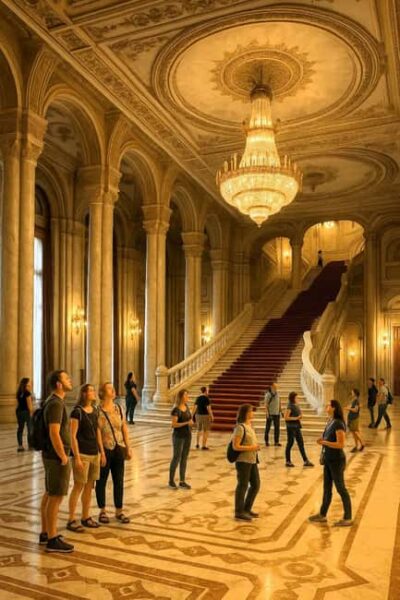
- The huge political presence of Casa Poporului (Parliament Palace), with context on why size mattered under Ceaușescu
- State finance made visible, including the CEC Bank and the National Bank areas you pass by
- Revolution Square photo moments, including the memorials tied to 1989 and Ceaușescu’s final speech balcony
- A discussion-friendly guide style, with time to ask questions, including personal ones, if you want to
Walking the Communist City, one square at a time
Communist-era Bucharest can feel confusing at first glance. A lot of what you see today looks like ordinary city life: shops, banks, hotels, theaters, fountains. But when you walk it with a guide who explains the “why,” you start to notice patterns, like which spaces were meant to impress the state and which were meant for ordinary people.
This tour works because it is built for a sensible flow on foot. You move from symbolic public spaces (squares and fountains) to the oversized power statement of the Parliament area, then toward the emotional turning point at Revolution Square. By the end, the city’s modern layout makes more sense, and you are not just looking at landmarks, you are reading the story behind them.
More of communist-era Bucharest:
- Bucharest: Communism and History Guided City Walking Tour
★ 4.9 · 918 reviews - The Real tour of Communism
★ 5.0 · 666 reviews - Life under Communism
★ 5.0 · 358 reviews
Price and what $30.72 really buys you for 3 hours
At $30.72 per person for about 3 hours, the main value is the private, street-level format. You are not paying mostly for transport or for complicated entry lines, because the stops are mostly free to view from the outside, including Unirii Square and Revolution Square memorial areas where admission is listed as free.
You also get practical extras that matter in a city like Bucharest. Pickup is offered, and the tour uses a mobile ticket. The guide language is English, and the pacing is built around short stop-and-look moments with enough explanation to connect the dots.
If you are only in Bucharest for a short time, this price feels reasonable because it is a concentrated orientation to major communist-era sites, not a random wander.
Meeting at Manuc’s Inn and how the route is designed
The tour starts and ends back at the meeting point, outside the main entrance of Manuc’s Inn (Hanul lui Manuc), Strada Franceză 62 in the Old Centre.
That “back where you started” setup is convenient. It means you can plan lunch or an evening activity without guessing how far you will end up from your base.
You will likely spend most of the time walking through central Bucharest. That is why the tour recommends comfortable shoes and notes a moderate fitness level. The good news is that the itinerary is structured with multiple short viewing stops, including ones that are only about 5 to 10 minutes.
Unirii Square: the communist modernization heart of Bucharest
Your first stop is Piaka Unirii (Piata Unirii), described as the heart of the city, built as part of a Communist planned modernization programme. Today, it has been regenerated into a modern centre, and the fountains here are newly restored.
This is a smart starting point because it shows how communist design could still be repurposed later. A square like this was built for mass visibility, big gatherings, and dramatic public space. Now it is used more like a classic city meeting point, and the restored fountains give it a lively feel without needing you to understand every political nuance right away.
Admission is listed as free here, so you are not paying to stand in a courtyard. You are paying for the explanation that makes the “why” behind the urban design click.
More Bucharest options to weigh up
- Bucharest: Dracula’s Castle, Peles Castle, & Brasov Old Town
★ 4.5 · 17,858 reviews - Bucharest: Dracula Castle, Peles Castle & Brasov Old Town
★ 4.6 · 10,891 reviews - Bucharest: Dracula’s Castle, Peleș Castle & Brașov Day Trip
★ 4.4 · 6,100 reviews - Bucharest: Palace of Parliament Tickets and Guide
★ 4.3 · 3,182 reviews
Bulevardul Unirii: from Socialist Victory to today’s city boulevard
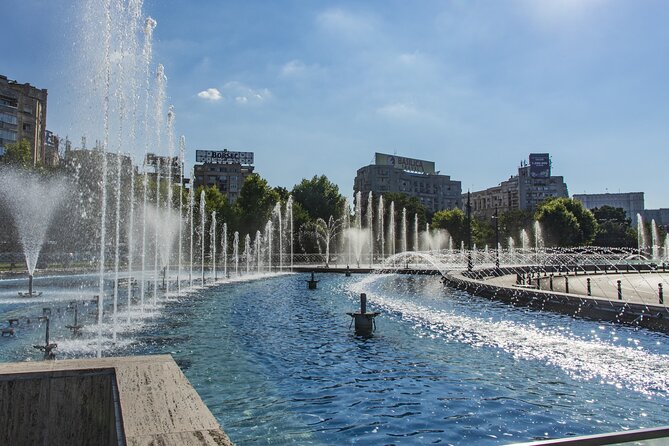
Next comes Bulevardul Unirii, formerly the Boulevard of Socialist Victory, which the tour frames as the Champs-Élysées of Bucharest. Along this stretch you pass 17 artesian fountains, decorated to represent the four seasons.
This section is all about symbolism in plain sight. Under communist regimes, fountains, statues, and ceremonial streets were not just decoration. They were public messaging, a way to project order and progress.
The practical payoff for you is that the guide points out what to look for as you walk. If you have ever wondered why some places feel overly monumental, this boulevard is a clear example.
Casa Poporului (Parliament Palace): the politics of scale under Ceaușescu
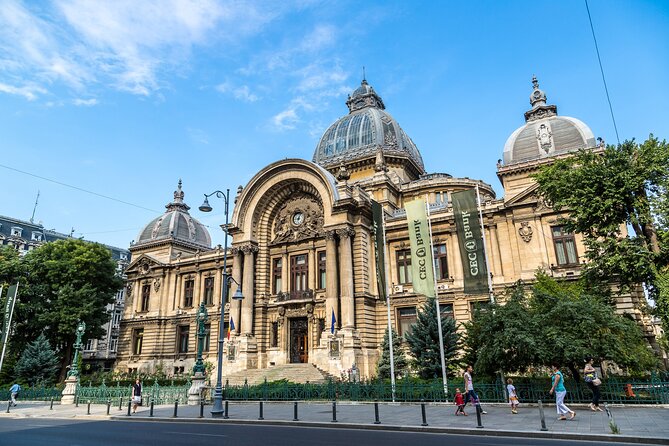
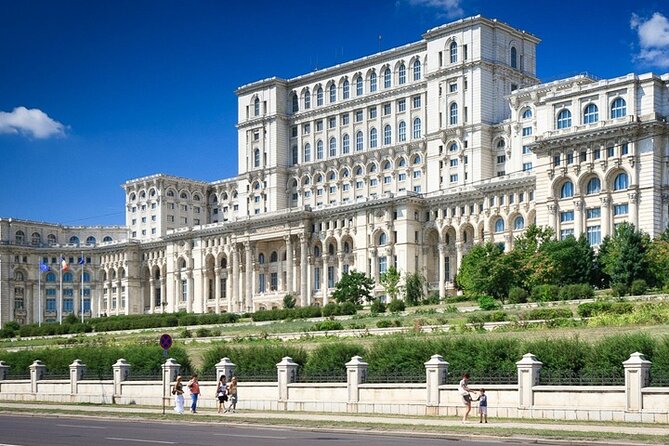
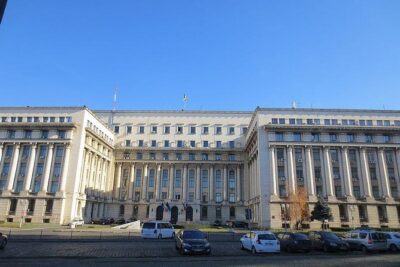
After the fountain streets, the tour turns to one of Bucharest’s most dramatic sights: Nicolae Ceaușescu’s massive parliament building, Casa Poporului.
The big takeaway is not just that it is large. The tour tells you to hear the history of the heaviest building in the world, and to think about the idea behind it, built as the house of the people.
Even if you have seen photos, you will understand it differently at street level. The building looms over the centre, and the sheer scale changes how the surrounding streets feel. It is one of those places where your eyes do the math before your brain catches up.
One note from how these tours tend to be guided: the guide style can be interpretive. In this kind of history talk, you might get more attention on how the system worked for everyday people, including some personal context, not just official facts. If you want the darkest version only, come prepared to ask for specifics and for the impact on ordinary Romanians.
Victoria Avenue and the everyday shops of a planned city
Then you walk along part of Victoria Avenue, lined with shops. Here the tour focus shifts from monuments to the “real life layer” of the communist-era city.
You are learning what it was like during the communist era while looking at what is there today. That contrast is often what makes the era feel real. Places that now seem commercial and casual were once shaped by different rules, priorities, and social expectations.
This is also a good stretch for photos of shopfront streets and old-to-new urban texture, but keep your attention on what the guide points out. The tour is designed so you are not just walking past, you are collecting clues.
CEC Bank and the National Bank area: money, power, and public life
After Victoria Avenue, you stop at the CEC Bank, described as the bank of the people during communist years. From there you see the grandeur of Romania’s National Bank and hear about its history.
If you want a practical way to understand a political system, banks are a great target. They show what the government wanted to control, how financial life was organized, and how institutions were positioned as public-facing.
Even though you are mainly outside and passing by, these stops help you connect the dots between ideology and physical infrastructure. You start to see how communist-era Bucharest made governance look permanent.
University Square, the Intercontinental Hotel, and the city’s shifting identity
At University Square, you see the oldest and largest University in Bucharest and learn about the Intercontinental Hotel Bucharest, completed and opened in 1971.
This is another smart pivot in the route. It is a reminder that communist-era cities were not only about political buildings. They also developed major institutions, education centers, and major hotels that signaled modernity.
Hotels matter in history tours because they reflect who the city expects to host and what it wants to project. The Intercontinental opening date gives you a time anchor, so you can place the hotel in the larger communist timeline instead of treating it as just another landmark.
National Theatre of Bucharest: a building with a changing story
You then pass by the National Theatre of Bucharest, an iconic building with many changes to its design in its short history.
The value here is not the theater itself, it is the idea. When regimes change, buildings often change too, even if the location and public role remain. The theatre is a reminder that Bucharest did not stand still while ideology shifted.
If you are a first-time visitor, this stop helps you understand that the city is layered. You are seeing the past without needing to read a book.
Revolution Square: where 1989 sparked, and where you can see it
The tour’s emotional center is Piaka Revolukiei (Piata Revolutiei), the area where the famous revolution of 1989 started, and where memorials commemorate the turning point.
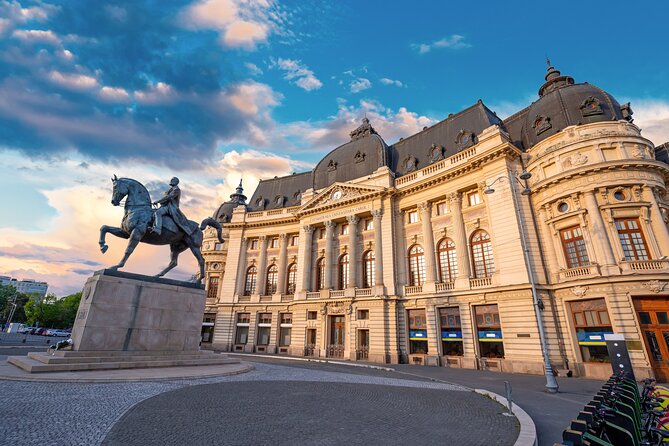
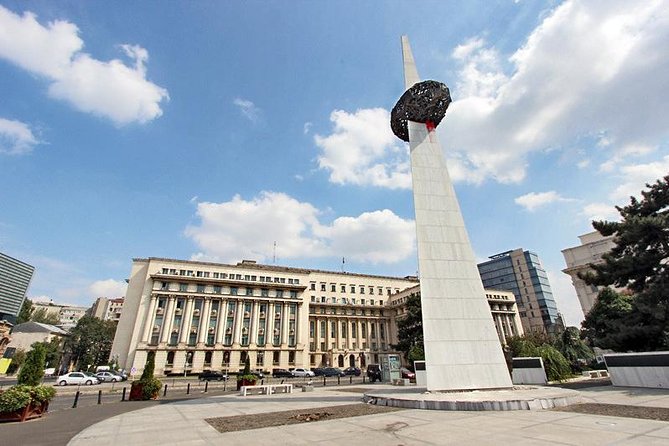
This is where you get the “cinematic” details that make history stick. The balcony where Nicolae Ceaușescu made his final speech is part of what you see. You also look at the former headquarters of the Communist party, the Monument of National Rebirth, King Carol I’s equestrian statue, and the University library.
The tour also flags excellent photo opportunities here. Plan on slowing down. This is not just a quick snapshot moment. The guide’s job is to help you place what you are seeing into the bigger story so the memorials feel meaningful instead of abstract.
Iuliu Maniu statue and Memorial of Rebirth: resistance remembered in stone
From Revolution Square, the route continues with a short stop at the Iuliu Maniu Statue, featuring and explaining his struggle in the early years of communism. The tour notes that he was a three time prime minister, and frames the statue as a key marker for political resistance.
Then you reach the Memorial of Rebirth, a 25 meter high memorial commemorating the struggles and victims of the Romanian Revolution of Christmas 1989.
These are smaller stops, but they matter because they shift the focus from the central power sites to the human cost. You are moving from “what the regime built” to “what it caused,” and that difference is the point.
The final stop: gardens and a historical building built for people
The last part of the walk includes a stop described as built for the people of Bucharest by the people of Bucharest over 100 years ago. You get beautiful gardens and a stunning historical building, plus excellent photo opportunities.
I like ending tours like this with something calmer. It gives your eyes and thoughts a break after the heavier political architecture. You finish with a sense of how Bucharest has tried, across time, to create public space that belongs to real life, not only to political theater.
Your guide matters: what to expect from Claires Bucharest Guided Tours
The tour provider is Claires Bucharest Guided Tours, and the guides named in the experience feedback include Alina and Claire.
In the tone of these guides, you should expect animated storytelling and a strong effort to connect communist-era rules to daily behavior. Several guides are described as sharing personal experiences growing up during the period, not only repeating textbook facts. That can be powerful, because you hear how people navigated restrictions and how they explain what changed after.
At the same time, one experience pointed out that not every person will hear the same balance of good and bad. Another mentioned difficulty understanding the guide and raised concerns about historical framing.
My practical take: history tours work best when you treat them like conversation with a local, not like a sealed document. Bring curiosity. Ask follow-ups. If something feels too soft or too harsh for your taste, say so gently and request more context.
Who should book this Communist Bucharest tour
You will probably love this tour if you:
- Want an on-foot orientation to Bucharest’s central landmarks, with politics explained in everyday terms
- Like history that connects city design to how people lived
- Plan a short Bucharest trip and want a route that hits major stops in about 3 hours
- Enjoy photos, especially around Revolution Square
You might want to think twice if:
- You dislike walking and prefer fewer stops, longer breaks, or mostly indoor sights
- You only want museum-level detail and strict, citation-heavy interpretations
Practical tips to make the most of your 3-hour walk
A few small choices can make this tour much more enjoyable:
- Wear comfortable walking shoes. Even short stops add up when you are moving between squares and avenues.
- Bring a camera, especially for Revolution Square memorial views.
- If you have a question about everyday life, ask it early. The tour is built around connecting buildings to how people lived.
- If you are sensitive to political framing, ask the guide to explain what was good, what was bad, and why, using examples you can point to on the street.
Should you book Communist Era Bucharest Tour?
If you want a focused, private, English-guided walk that explains how communist-era Bucharest is still visible in the city’s most important spaces, this is an easy yes to consider. The route is efficient, the pricing feels fair for a private experience, and the landmarks are meaningful without requiring paid entrances.
My main caution is simple: history interpretation can be emotionally charged. If you want only one-sided messaging, this may not fit. But if you want context, connection, and a local guide willing to answer questions, this tour is one of the better ways to understand Bucharest beyond postcard views.
FAQ
How long is the Communist Era Bucharest Tour?
It runs for approximately 3 hours.
Is this a private tour?
Yes. It is a private tour, with only your group participating.
Is pickup available, and where does the tour start?
Pickup is offered, and you can meet your guide at a centrally located hotel or at the meeting point outside the main entrance of Manuc’s Inn, Strada Franceză 62, in the Old Centre.
What language is the tour offered in?
The tour is offered in English.
Are tickets or entry fees required for the main stops?
Admission is listed as free for the stops where it applies, including Unirii Square and Revolution Square.
Do I need a printed ticket?
No. A mobile ticket is provided.
What should I wear or bring for the walk?
Comfortable walking shoes are recommended.
Is the tour suitable for everyone physically?
It notes a moderate physical fitness level is required.
Are service animals allowed?
Yes, service animals are allowed.
Can I cancel for free?
Yes. Free cancellation is offered, and you can cancel up to 24 hours in advance for a full refund.
Latest reviews from around Bucharest
- LiBEARty Brown Bear Sanctuary and the most important castles from Romania★ 5.0 · 4 reviews
- Hike Bulgaria Love Swing, Veliko Tarnovo and Tarevet Fortress★ 5.0 · 4 reviews
- Bucharest Private Tour with Dracula’s Grave and Ceaușescu Mansion★ 5.0 · 4 reviews
- Hiking in Bucegi Mountains in the Carpathians, Private tour★ 5.0 · 4 reviews
- Dracula Experience In Transylvania★ 5.0 · 4 reviews
- Bucharest Sightseeing – Half-Day Private Tour★ 5.0 · 4 reviews
- Bison Sanctuary, Vlad the Impaler Princely Court & Dracula Grave★ 5.0 · 4 reviews
- Private 6-Day Dracula Tour in Transylvania from Bucharest★ 5.0 · 4 reviews
Communist-Era Bucharest, compared.

Bucharest: Communism and History Guided City Walking Tour
Read our review →
Bucharest: Parliament, Ceausescu House & Village Museum Tour
Read our review →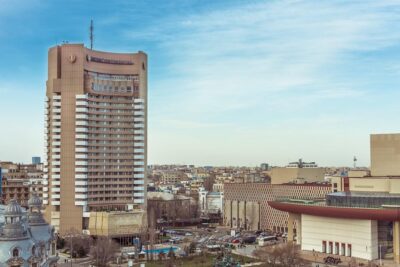
Bucharest Essential Tour: Old Town, Calea Victoriei & Communism
Read our review →
Communism in Bucharest – Landmarks, Museum & Communist Appetizers
Read our review →
Palace of Parliament, Ceausescu House & Village Museum
Read our review →Browse the lists this tour appears in