

Reviewed · COMMUNIST-ERA BUCHAREST
Life in Communism
Bucharest has a second personality from the Communist decades, and you can read it in the streets if someone points the signs out. I love the small-group pace, because questions actually get answered instead of lost in the crowd, and I also love that you get a clear timeline feel with about 15 stops tied to major moments.
I’m especially glad guides like Daniela, Augustin, Andreea, Andrea, and John show up in the feedback, because their stories turn big political terms into real daily life. One drawback to plan for: it’s a mostly outdoor walk for about 3 hours, and the topic can be heavy, so bring a steady head and wear good shoes.
Key Highlights You Should Care About
- About 15 stops tied to the Communist timeline, so you see change, not just buildings
- Guides with strong storytelling, including names like Daniela and Augustin for their nuanced approach
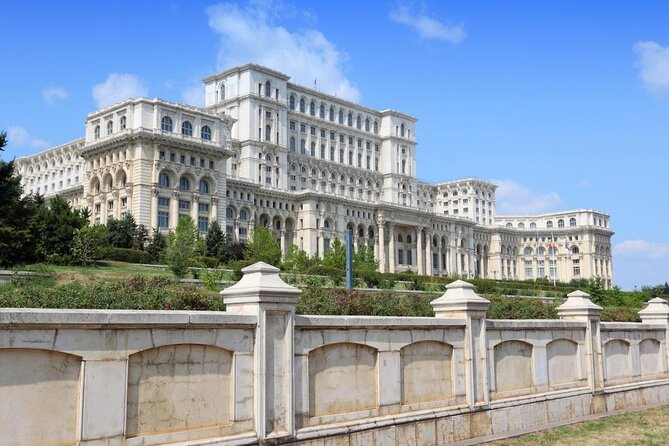
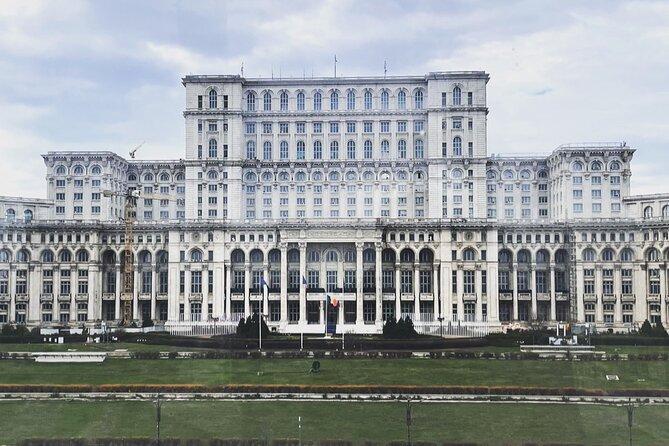
- Palace of Parliament as a major anchor, useful for understanding power and scale
- A short mid-tour break, with drinks available on your own (ideally with cash)
- Maximum 15 travelers, which keeps the walk from turning into a cattle-car history lesson
- Communist-style snacks included, so you get a small break and a taste of the theme
Why Bucharest’s Communist Footprints Still Matter
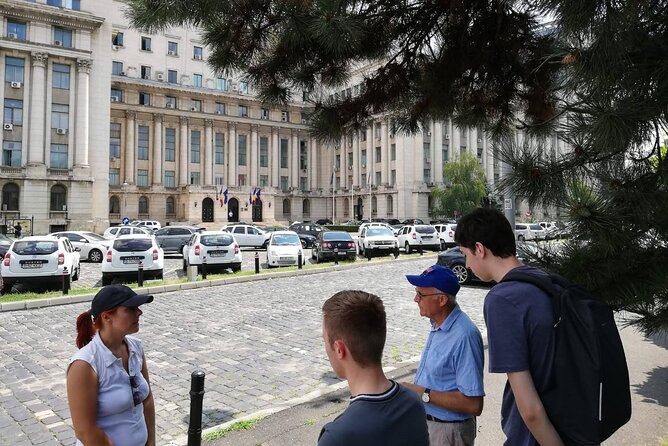
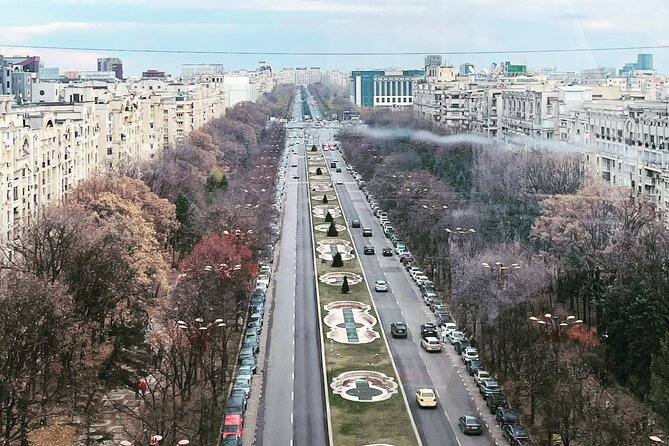
This tour is interesting because it treats Communist-era Bucharest like a living layer of the city, not a closed chapter. The regime changed how property was owned, how people were watched, and what got torn down and rebuilt. When you learn those cause-and-effect links, today’s streets start making sense.
What you’ll like most is the way the walk connects politics to physical space. You’re not just looking at architecture. You’re learning what forces shaped it, and how those forces shaped everyday life.
The second “why it matters” is that this story helps you interpret modern Romania. The tour’s goal is to help you understand the present by seeing the mechanisms behind it. That makes your later wandering feel smarter, and frankly less confusing.
More of communist-era Bucharest:
- Bucharest: Communism and History Guided City Walking Tour
★ 4.9 · 918 reviews - The Real tour of Communism
★ 5.0 · 666 reviews - Life under Communism
★ 5.0 · 358 reviews
Starting Point at Patriarchal Cathedral, Then Into the Power Districts
The tour starts at the Patriarchal Cathedral on Aleea Dealul Mitropoliei 25. That’s a good choice because it puts you near a meaningful, older anchor point before you move into the Communist-era reshaping of the city.
You’ll also finish back at the meeting point. I like this layout because it keeps your day simple. You don’t have to solve a puzzle at the end with transit or walking across town.
Before you set off, remember this is designed for a moderate walking level. It’s not described as a hard hike, but it is still steady walking for around 3 hours. Plan on staying warm if you’re there in colder months, and bring layers.
Palace of Parliament: Scale, Fear, and the Language of Power
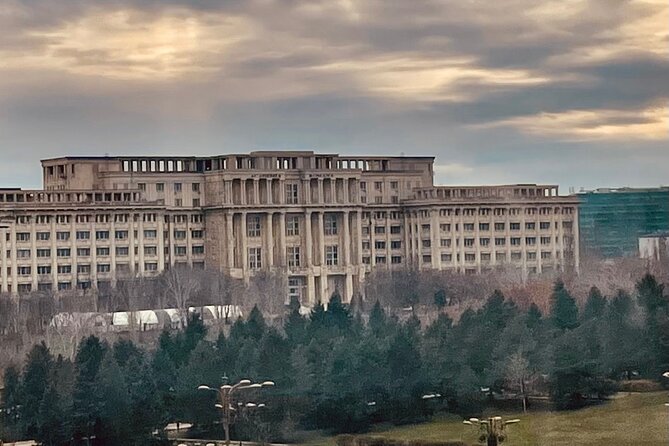
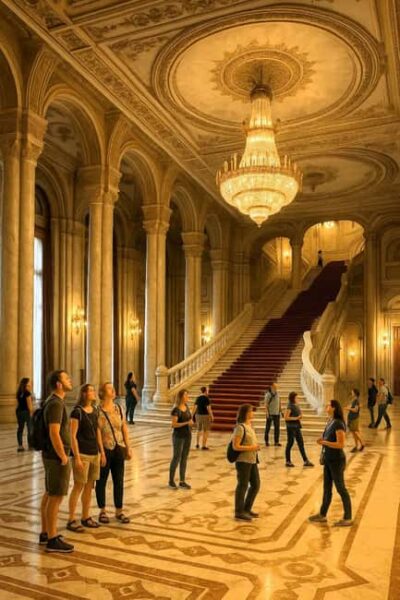
Your first stop is the Palace of Parliament. Even if you only know it from photos, this is the kind of building that explains a lot by itself. Massive public projects like this were not just about government. They were about signaling dominance and controlling what the city would look like.
What I’d watch for here is the contrast between the “official” message of such power and the human reality underneath it. The tour frames the era through nationalization, state control, and the role of the secret police. When you stand near a structure like this, it becomes easier to understand why people might feel watched, pressured, or reshaped by policy.
A practical note: big landmark zones can be busy. The tour is small-group sized, which helps, but you may still need patience if the area is active. If you’re sensitive to crowds, arriving with a calm pace helps.
Calea Victoriei: When Architecture Meets Everyday Contradictions
Next you head to Calea Victoriei. Streets like this matter in Communist-era storytelling because they sit in the overlap between public display and daily movement. People still walked to work, shopped, commuted, and tried to make life function even when the state was rewriting the rules.
This is where you’ll start to feel how political change turns into an ordinary street experience. Nationalization and forced restructuring aren’t abstract when you can connect them to what you see around you.
One thing I appreciate is that the tour isn’t just about one building style. It’s about change over time. So even if Calea Victoriei doesn’t “look” like a single museum exhibit, it can act like a timeline corridor, pointing you toward different phases of the regime and their impact on the city.
More Bucharest options to weigh up
- Bucharest: Dracula’s Castle, Peles Castle, & Brasov Old Town
★ 4.5 · 17,858 reviews - Bucharest: Dracula Castle, Peles Castle & Brasov Old Town
★ 4.6 · 10,891 reviews - Bucharest: Dracula’s Castle, Peleș Castle & Brașov Day Trip
★ 4.4 · 6,100 reviews - Bucharest: Palace of Parliament Tickets and Guide
★ 4.3 · 3,182 reviews
Piața Revoluției: A Turning Point, Not Just a Square
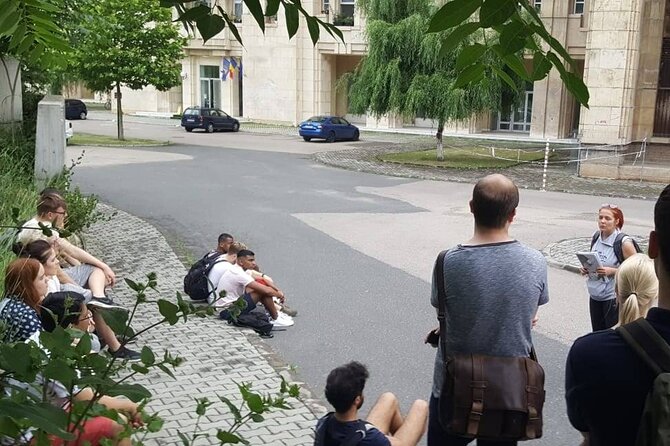
You’ll visit Piața Revoluției (listed as Piaka Revolukiei). Squares like this are powerful because they’re built for public moments, gatherings, and visible shifts in control. During the Communist timeline, that kind of space can carry heavy symbolism even if you’re seeing it years later.
The tour uses this stop to help connect how major events ripple into the physical city. Think of it as the “hinge” in the story, where the era’s pressures and outcomes become easier to grasp on the ground.
If you’re someone who likes historical context that actually affects how you look at a place, this is a good moment to slow down. Look for how the surrounding layout supports a public face. Then connect it back to the tour’s themes, secret police oversight, demolitions, and how the state tried to control what citizens saw and where they could go.
The “Roughly 15 Stops” Approach, and Why It Works
Not every tour does history in a useful order. This one is structured around the Communist regime timeline, with each stop meant to mark a specific moment or change. That’s why the number matters: about 15 objectives over roughly 3 hours gives you a storyline you can remember.
Here’s what that format does for you as a traveler. It keeps the tour from becoming either a random stroll or a lecture that forgets the street exists. You get repeated rhythm: you see a site, you learn what changed, and you understand why it changed.
It also helps when you’re exploring on your own afterward. Instead of a long list of “cool things,” you leave with a framework. You can notice patterns, like how demolition and redevelopment reshaped neighborhoods, or how the state’s control mechanisms influenced daily routines.
The guides seem to lean into this structure strongly. In the feedback, guides like Augustin were highlighted for a nuanced view, which is exactly what you want for a subject that is complicated and emotionally loaded.
Guide Quality That Makes the Story Stick
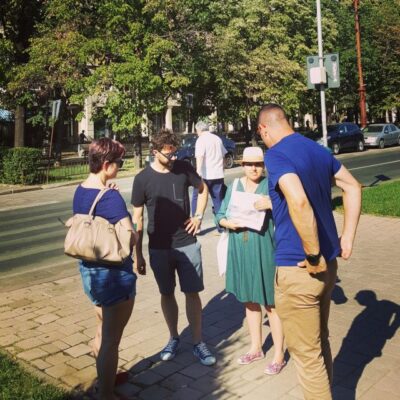
The strongest praise in the reviews is about the guides and the way they explain the era. Names that come up clearly include Daniela, Augustin, Andreea, Andrea, and John. A lot of the comments also point to how detailed the explanations are at each stop, and how the narrative stays clear and engaging.
What I take from that as a visitor is simple: the tour likely works even if you don’t know much about Romanian Communist history going in. The guides are doing the hard part for you, turning the timeline into something you can picture.
I also like the mention that English is easy to follow, and that the guide voice and delivery are comfortable. That matters on walking tours, because if you’re straining to catch words, you lose the site context.
Mid-Tour Break, Snacks, and What to Bring

Included in the experience are snacks described as Communist type of snacks. I treat included snacks as a small but real value boost, because they help you stay focused through the whole walk instead of fading halfway.
There’s also a short break in the middle of the tour. During that break, drinks are self supported, and the note says ideally with cash. I’d follow that advice. Even if you normally rely on card, bring a little cash so you’re not stuck deciding.
From a practical standpoint, this break is also your chance to reset. Use it to warm up if it’s cold, refill water, and regroup mentally. It makes the second half of the tour feel smoother.
Price and Value: What $31.24 Buys You
At $31.24 per person for about 3 hours, this is priced like a serious walking tour. You’re not just paying for someone to point at buildings. You’re paying for a structured timeline experience, small-group format (max 15), and included snacks.
Here’s the value logic that makes sense to me: around 15 stops, all tied to Communist-era change, is the difference between “I saw places” and “I understand a period.” If you care about context, that’s the part you can’t easily recreate on your own without a lot of reading.
The group size also matters. With a max of 15, you’re more likely to ask questions and get direct answers. That turns the tour into something more personal, and less like you’re watching history happen from a distance.
One more useful detail: the average booking is about 22 days in advance. That suggests popular scheduling windows. If your dates are fixed, I’d book sooner rather than later so you get a time that fits your plan.
Getting the Most Out of the Walk (Without Pretending You’re a Scholar)
You’ll enjoy this tour more if you treat it like learning a city code. Here’s how I’d do it while you’re walking:
1) Pick one theme you want to remember, like nationalization or secret police control, and mentally link it to each stop.
2) When you see architecture or redevelopment patterns, ask yourself what problem the regime was trying to solve.
3) During the break, jot down two places that surprised you, then use them later when you explore independently.
A light bit of humor helps too. Think of it as “learning the plot” of Bucharest. Once you know the plot, the city reads faster.
Who This Tour Is Best For
This is ideal if you want a practical grounding before you explore on your own. If you’re planning to wander Bucharest later and you don’t want to rely on luck or guidebook fragments, this walk gives you a map of meaning.
It’s also a strong pick for history-minded travelers who like clear storytelling. The consistent praise for guides and the detailed stop-by-stop explanations suggest this works well for first-time visitors.
If you hate heavy topics or prefer lighter sightseeing only, be careful. The tour focuses on Communist-era control, demolitions, and nationalization. You can still enjoy it, but you should go in ready for emotional and political weight.
Should You Book Life in Communism in Bucharest?
I’d book this tour if you want your first day in Bucharest to feel intentional. For the price, you get a structured timeline, a small-group format, and English-language guidance that seems to land well for visitors.
If you’re the kind of traveler who loves to “understand before you wander,” this is a smart move. It helps you interpret the present by walking the physical evidence of the past.
If you’re short on time or you strongly prefer only positive, scenic stops, you might prefer a lighter theme. But if you want real context for what you see, and you’re okay with the topic being serious, this is a high-confidence choice.
FAQ
How long is the Life in Communism tour in Bucharest?
The tour lasts about 3 hours.
Is the tour offered in English?
Yes, the tour is offered in English.
Where do I meet, and where does the tour end?
You meet at the Patriarchal Cathedral, Aleea Dealul Mitropoliei 25, București, Romania. The tour ends back at the meeting point.
How many people are in the group?
This tour has a maximum of 15 travelers.
What is included in the ticket price?
Snacks described as Communist type of snacks are included.
Are alcoholic beverages included?
No. Alcoholic beverages are not included, and drinks during the break are self supported (ideally with cash).
Is there a break during the tour?
Yes, there is a short break in the middle of the tour. Drinks during that break are on your own.
What fitness level do I need?
The tour lists a moderate physical fitness level. Since it is a walking tour, plan for steady walking for the full duration.
Is there free cancellation if my plans change?
Yes, you can cancel for a full refund up to 24 hours in advance of the experience start time.
Latest reviews from around Bucharest
- LiBEARty Brown Bear Sanctuary and the most important castles from Romania★ 5.0 · 4 reviews
- Bucharest Private Tour with Dracula’s Grave and Ceaușescu Mansion★ 5.0 · 4 reviews
- Hike Bulgaria Love Swing, Veliko Tarnovo and Tarevet Fortress★ 5.0 · 4 reviews
- Dracula Experience In Transylvania★ 5.0 · 4 reviews
- Hiking in Bucegi Mountains in the Carpathians, Private tour★ 5.0 · 4 reviews
- Bucharest Sightseeing – Half-Day Private Tour★ 5.0 · 4 reviews
- Bison Sanctuary, Vlad the Impaler Princely Court & Dracula Grave★ 5.0 · 4 reviews
- Private 6-Day Dracula Tour in Transylvania from Bucharest★ 5.0 · 4 reviews
Communist-Era Bucharest, compared.

Bucharest: Communism and History Guided City Walking Tour
Read our review →

Bucharest: Parliament, Ceausescu House & Village Museum Tour
Read our review →
Bucharest Essential Tour: Old Town, Calea Victoriei & Communism
Read our review →
Communism in Bucharest – Landmarks, Museum & Communist Appetizers
Read our review →
Palace of Parliament, Ceausescu House & Village Museum
Read our review →Browse the lists this tour appears in