
Reviewed · COMMUNIST-ERA BUCHAREST
Private Walking Tour of Communist Bucharest
Communist Bucharest is interesting because it shows how power leaves marks on streets, squares, and buildings. You get a focused route through Revolution-era landmarks and the era’s boldest architecture, and I also like that the pace is private and flexible so you can steer the day toward what you care about. One drawback to plan for: part of the experience is political and emotionally heavy, and some stops require more walking than you might expect for a “walking tour.”
You start early, around 8:30 am, and you’ll spend most of the day outside moving between major sites. If you’re hoping for purely scenic sights, you might find the messaging more intense than you planned, but if you want context for how Romania’s communist years shaped the city, this format is a strong match.
Key things to know before you go
- Private, small-group feel: it is a private tour, meaning only your group participates, with hotel pickup for groups of max 3.
- A guide with serious grounding: the guide has degrees in political science and tourism, which shows in how the day is explained.
- Revolution Square and its twin memorial space: the route pairs Revolution Square with University Square, both tied to December 1989 events.
- Big visual contrast: you move from the ornate cultural landmark Ateneul Roman to the massive House of the People.
- Admission can cost extra: Ateneul Roman and the Palace of Parliament are not included, while several other stops are free.
- Lunch break is built in: you’ll pause midday at a city center restaurant, but food and drinks are not included.
Why this Communist Bucharest route works as a full day
This isn’t just a list of monuments. It is a day built around cause and effect, from the end of communist rule in December 1989 to what came before and what the regime left behind.
The practical win is that the tour is designed as a one-day arc. You start at the places tied directly to the violent events of the Romanian Revolution and then you walk through civic and cultural spaces tied to the communist era’s priorities. That flow helps you remember what you saw, because each stop explains the next one.
And yes, you’ll see the famous building everybody photographs. But you’ll also see the city’s “in-between” spaces, like the communist civic center area, and the churches that survived because they were moved instead of demolished.
More Walking Tours in Bucharest
- Bucharest: City Highlights Guided Walking Tour
★ 4.9 · 1,482 reviews - Bucharest: Communism and History Guided City Walking Tour
★ 4.9 · 918 reviews - Bucharest Highlights Walking Tour
★ 5.0 · 469 reviews
Guide and pacing: what private really changes
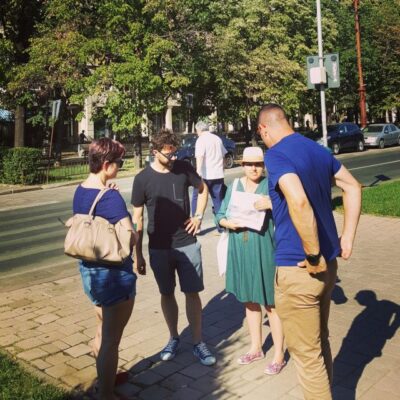
On a private tour, you do not get stuck watching the clock while a bigger group shuffles along. Here, the format is built for your group only, and there is also flexibility to customize the itinerary to your preferences.
That matters most at two moments:
1) when you’re near emotionally loaded sites connected to 1989, and you want more explanation versus just photos, and
2) when you reach the largest, most time-heavy landmark, the Palace of Parliament, where the tour gives you room to focus.
You might also appreciate the way some guides handle the day. In past tours, guides such as Laura and Diana have been singled out for being friendly, professional, and good at making the information click. Laura has also been praised for refusing a tip when it was offered, which tells me the focus stays on the experience, not hard selling.
Expect a moderate walking level. It is still a full-day schedule, so wear comfortable shoes and keep energy for the bigger stops.
Revolution Square and University Square: decoding the December 1989 story
Your first two stops sit in the same emotional neighborhood of the city.
University’s Square
This is the other memorial space near Revolution Square, tied to the violent events that helped lead to the fall of communism in Romania in December 1989. The time you spend here is short, about 30 minutes, but it is an important opener because it frames the day.
What I like about starting with this kind of memorial space is that it sets expectations. You are not just walking past old stones, you’re learning what these places mean and why they’re positioned close to each other.
More of communist-era Bucharest:
- The Real tour of Communism
★ 5.0 · 666 reviews - Life under Communism
★ 5.0 · 358 reviews - 3-Hour Guided Tour of Communist Bucharest
★ 4.9 · 303 reviews - Bucharest: Parliament, Ceausescu House & Village Museum Tour
★ 5.0 · 208 reviews
Piaka Revolukiei (Revolution Square)
This is the core. Revolution Square is described as the place of the Romanian Revolution events in December 1989 and also the setting where two parts of the country’s history clash: the royal past and the communist dictatorship.
You’ll spend about 30 minutes here, and it is the kind of stop where you get more than sightseeing. If you like to understand the “why” behind a location, this is one of the best points in the day.
One consideration: because this is a political narrative anchored to violence and regime change, the tone can feel serious. If you want a lighter day, you may prefer to spend less time on interpretation and more time photographing. The private setup is useful for that.
Ateneul Roman: culture in a city shaped by regimes
Next up is Ateneul Roman, a 19th-century monument that many people treat as a must-see in Bucharest. It is tied to Romania’s love for classical music, and the tour points out a specific visual detail: there is an impressive 75-meter fresco in the concert hall.
Plan on about 30 minutes. Since admission isn’t included, you should budget for entry if you decide to go in. Even if you do not, the exterior and setting still work as a contrast point, especially after the heavy Revolution Square stops.
What you’ll likely feel here is a shift from ideology to identity. The guide’s political-science angle can help you see how cultural landmarks can represent national pride in ways that survive political change.
Ceaușescu Mansion: the former residence as a framing device
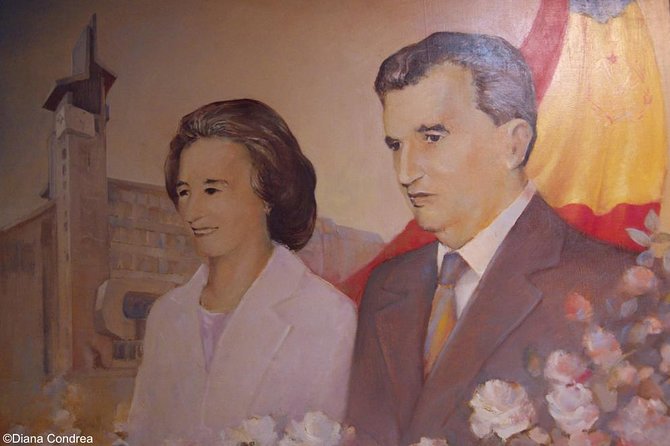
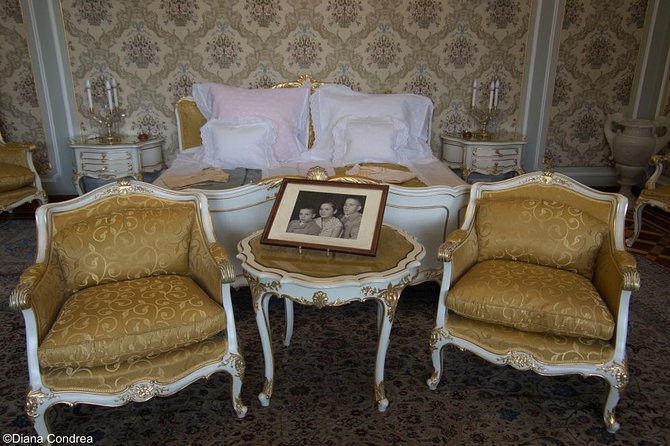
The day then turns toward the personal side of power at the Ceausescu Mansion, described as the former residence of communist dictator Nicolae Ceausescu.
Time here is about 1 hour, and admission is listed as free. That longer stretch makes sense because a residence has different storytelling power than a memorial or a public square. It is easier to imagine daily life inside authority, and that can make the political context more concrete.
If you want to understand how regimes build influence, this is one of the stops that helps you connect the building to the story. Even if you are not a detail person, you will probably appreciate the guided framing.
Palace of Parliament (House of the People): what the scale really means
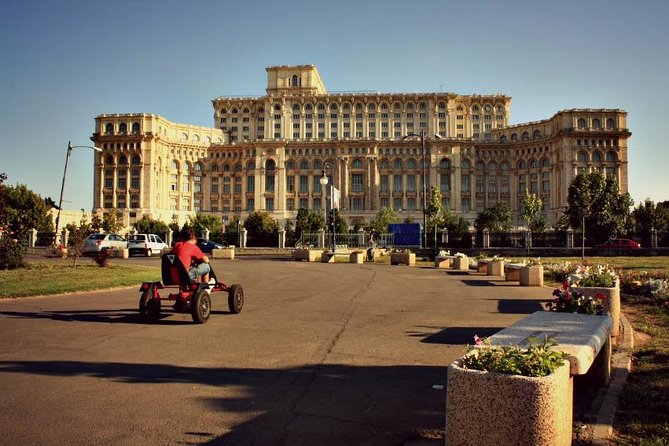
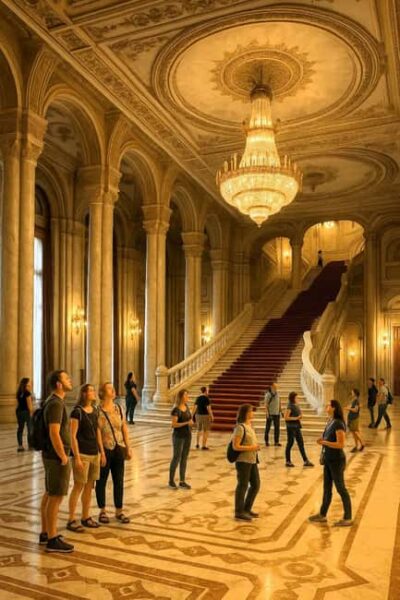
If you only cared about one stop, it would probably be the Palace of Parliament, locally known as the House of the People. This is described as the most famous landmark of Romania’s communist period and also the second-largest administrative building in the world.
It is also the kind of place where facts hit your brain as visuals. You’ll hear that the construction has more than 1,000 rooms, handmade decorations made with high-end materials, and totals like 1 million cubic meters of marble and 3.5 tonnes of crystal.
You’ll spend about 1 hour 30 minutes, and admission is not included. That means you should decide in advance if you want to pay for entry. If you are on a tighter budget, you can still get a lot from the outside, but the whole point of a guided visit is that you understand what those numbers were meant to communicate.
Here’s how I interpret it, in practical terms: when a regime pours resources into a building on this scale, it is not only building offices. It is building an image. The tour’s structure makes the contrast easier, because you came from memorial spaces linked to collapse and then you walk into the architecture of control.
If crowds are a concern, private pacing helps. You won’t be stuck waiting on a tour wave in the same way.
Piaka Constitukiei: the communist civic center heart
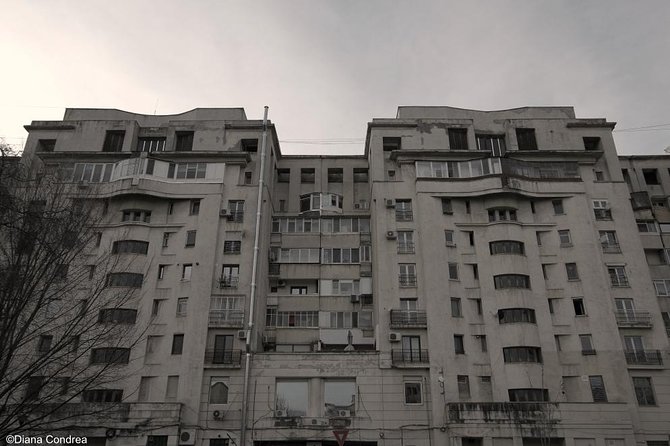
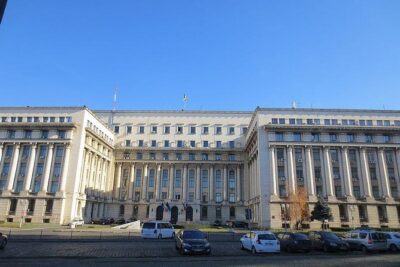
After the big-ticket building, the route shifts to the Piaka Constitukiei, described as the heart of the communist civic center.
Time is about 20 minutes, admission is free, and the stop is short by design. It is there to help you connect the Palace of Parliament to the surrounding civic idea, so the day feels like a route, not separate “checkmarks.”
I like that this is not only about single landmarks. Civic centers are about how power was meant to organize everyday space. A quick but guided window here makes the architecture feel less random.
Two moved churches: Antim and Mihai Voda Monasteries
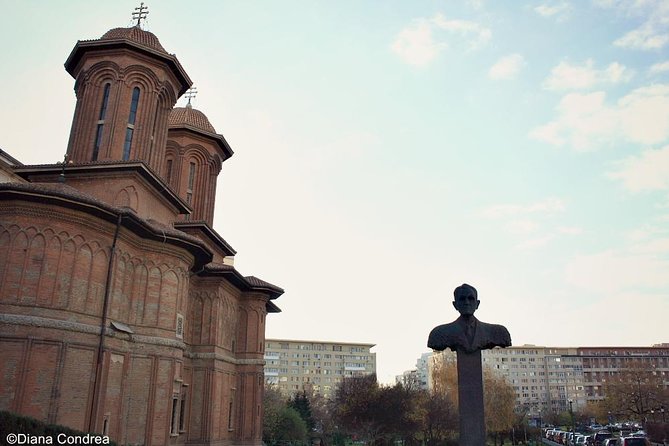
To close the day on something calmer, the tour includes two churches that survived communist demolitions by being moved from their original locations.
Manastirea Antim
You’ll spend about 20 minutes here, admission listed as free. The key fact the tour emphasizes is the church’s survival story: it was one of the churches saved from communist demolitions by being moved.
Mihai Voda Monastery
Then you get a similar 20-minute stop at Mihai Voda Monastery, also listed as free, with the same theme of being saved by relocation.
What makes these stops valuable is not only the architecture itself, but the idea they represent. Even when the regime tried to reshape the city, some cultural and religious landmarks were preserved. That gives you a final lens that is a little more hopeful and less about power.
If you want a day that ends with perspective, this is a strong choice.
Lunch in the middle: how to use the midday break
There is a lunch break midday at a city center restaurant. Food and drinks are not included, so plan to pay for your own meal.
Because you are doing a 7-hour schedule, this break matters more than it sounds. It lets you reset before the biggest segments of the day, and it is also a good time to ask your guide questions that did not fit into earlier stops.
If you have preferences, now is the time to say them. For example, if you want extra time in one section, or you want to reduce time in another due to energy, the guide’s flexibility can help.
Price and value: is $92.19 fair for this day?
At $92.19 per person for about 7 hours, this tour sits in the “worth it if you care about context” category.
Here’s why:
- You get a professional guide with degrees in political science and tourism, which usually means you get clearer explanations than you would on a self-guided route.
- You get a private tour, so you are not sharing a slow queue or waiting for a large group to regroup.
- There’s also transport by private vehicle on some parts of the itinerary. That can save energy for the stops where walking is unavoidable.
- Several key stops have free admission, and only certain entrances are listed as not included.
To be fair, the not-included parts are real: Ateneul Roman and the Palace of Parliament have admission tickets not included, and lunch is also not included. If you add those costs, your total spending may go higher than the base price. The upside is you can choose how much you want to pay for entrances versus time outside.
My practical tip: if you want the best value, make your admission decisions early, before you arrive. That keeps the day smooth and prevents last-minute stress.
Who should book this private Communist Bucharest tour
You’ll probably love this tour if:
- you want a guided explanation of communist-era Bucharest and the transition out of it
- you care about specific political context around December 1989
- you prefer a private format where you can control how much time you spend at each stop
You might think twice if:
- you want a purely light, photo-only day
- you are not comfortable with political narratives anchored to violence
- you have limited stamina for a full-day schedule
Also, if you travel as a small group, the hotel pickup is a plus, especially for groups of max 3.
Should you book it?
I’d book this tour if you want more than landmarks. This is a day that links Revolution Square, the communist civic center, Ceaușescu’s former residence, and the House of the People into one logical storyline.
The two biggest reasons to trust it are the guide quality and the tight private pacing. Guides like Laura and Diana have been praised for being informative and helpful, and the flexibility to customize the day makes it easier to match your interests to the route.
If you do book, plan for entrances at Ateneul Roman and the Palace of Parliament, bring comfortable shoes, and be ready for a serious historical topic that is handled in a structured, guided way.
FAQ
What time does the tour start?
The tour starts at 8:30 am and returns back to the meeting point at the end.
How long is the tour?
It runs for about 7 hours.
Is this tour private?
Yes. It is a private tour/activity, and only your group will participate.
Are entrance tickets included?
Not all of them. Admission for Ateneul Roman is not included, and admission for the Palace of Parliament (House of the People) is not included. Other stops listed are free.
Is lunch included?
Lunch is not included in the tour price. The schedule includes a break for lunch at a city center restaurant, but food and drinks are not included.
Do I need a passport?
Yes. A current valid passport is required on the day of travel.
What is the cancellation policy?
You can cancel for free up to 24 hours in advance of the experience start time for a full refund. If you cancel less than 24 hours before, the amount paid is not refunded.
Latest reviews from around Bucharest
- ATV Adrenaline Race in Carpathian – Private Tour★ 5.0 · 4 reviews
- Private Tour of Jewish Bucharest★ 5.0 · 4 reviews
- In Search of Dracula and the Teutons in Transylvania Full-Day Private Tour★ 5.0 · 4 reviews
- Bulgaria One Day Private Tour from Bucharest★ 5.0 · 4 reviews
- Discover Medieval Transylvania Small Group Tour – 7 days★ 5.0 · 4 reviews
- Bulgaria Day Trip – Private Tour from Bucharest – Veliko Tarnavo & Arbanasi★ 5.0 · 4 reviews
- Private tour: Medieval cities of Transylvania, 2 Days from Bucharest★ 5.0 · 4 reviews
- Black See, Constanta and Mamaia Beach – Day Trip from Bucharest★ 5.0 · 4 reviews
Communist-Era Bucharest, compared.

Bucharest: Communism and History Guided City Walking Tour
Read our review →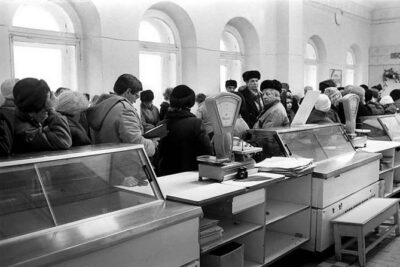
Bucharest: Parliament, Ceausescu House & Village Museum Tour
Read our review →
Bucharest Essential Tour: Old Town, Calea Victoriei & Communism
Read our review →
Communism in Bucharest – Landmarks, Museum & Communist Appetizers
Read our review →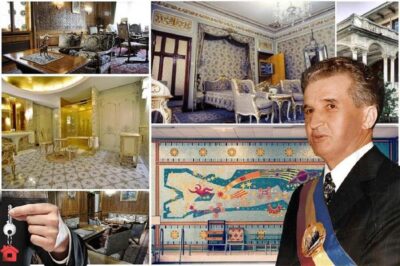
Palace of Parliament, Ceausescu House & Village Museum
Read our review →Browse the lists this tour appears in