
Reviewed · COMMUNIST-ERA BUCHAREST
Footprints of Bucharest: History, Communism & Urban Tales
Bucharest can feel like two cities at once, and a night walk is the easiest way to see both. I like that this tour keeps things small (max 8 people), so your guide can slow down when you want details, or speed up when you want photos.
What really won me over is the storytelling around communism and 1989, from major landmarks to calmer side streets in Old Town. The one catch is simple, this experience depends on good weather, so if Bucharest is doing its rain routine, you may need a backup date.
Key highlights to clock before you go
- Night views of Bucharest’s big monuments: see the city lit up, not just in daylight
- 1989 at Piata Revolutiei: you get the Ceausescu story with photos and video presentations
- A lot of sights are free from the outside: many stops are marked free to enter or view
- Old Town streets plus elegant architecture: Greek-temple style, royal buildings, and old passages
- A guide who makes history personal: names you might meet include Toni and Manuela
Why this Bucharest night walk hits differently
This is the kind of tour that helps you get your bearings fast, especially if you only have a short window in town. Daytime Bucharest is all angles and facades. At night, those same buildings look grander, darker in the corners, and easier to connect to the stories you hear as you walk.
The tour also has a clear theme: how the city’s communist past shaped everyday life, politics, and the built environment you still see today. That means you are not only looking at pretty architecture. You are learning why people feared certain places, why slogans and ceremonies mattered, and how 1989 changed the mood of the streets.
Because the group stays small, you also get a better rhythm. In the guides featured with this company, you can see a pattern: they ask if you want to pause for questions, and they make room for photos without rushing you out of the scene.
More Historical Tours in Bucharest
- Bucharest: Communism and History Guided City Walking Tour
★ 4.9 · 918 reviews - Bucharest: 3-Hour Dark History Tour with a Local
★ 4.9 · 301 reviews - Bucharest: Small Group History, Art & Secrets Tour
★ 4.7 · 152 reviews
Price, value, and what you are really paying for
At $72.25 per person for an experience around 2 to 3 hours, the price makes more sense when you see how many major stops you cover and how much is free to view.
A big part of the value here is that the route includes a stack of landmark exteriors and Old Town streets, and many stops are listed with admission ticket free. You are not paying repeatedly just to stand in front of things. When stops do involve paid entry, the tour clearly flags it, such as the National History Museum (marked ticket not included) and the Romanian National Library (also marked ticket not included). If you want to go inside those, plan for extra time and extra ticket costs.
So you are paying for three things:
- A certified guide who connects the dots between places
- A tight walking route that saves you decision fatigue
- Time in the evening, which makes Bucharest feel more dramatic and memorable
Your walking route, stop by stop, and what to look for
You start at Strada Benjamin Franklin 2 and finish at Piata Unirii, close to the Old Town area. The tour uses a mobile ticket, and it runs in English, with several tour times available so you can fit it into your schedule.
You should expect mostly outdoor walking with a moderate physical fitness level needed. Also, this one depends on good weather, so bring layers if the evening turns chilly.
Ateneul Roman, the Greek-temple vibe, and why it matters
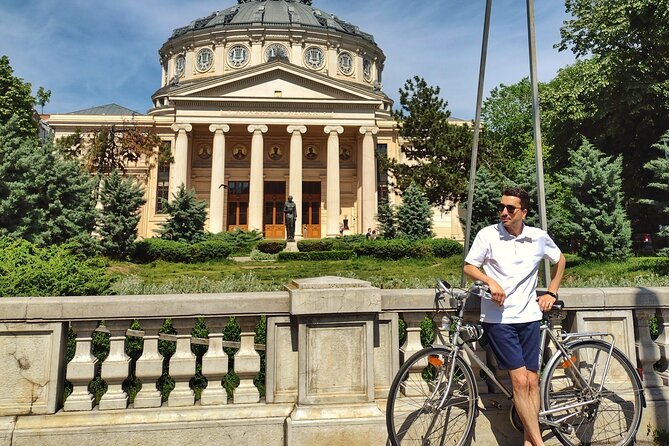
Your first stop is Ateneul Roman. You get about 15 minutes here. The building is one of Bucharest’s most emblematic structures and is often described as resembling an ancient Greek temple.
Even if you do not care about architectural styles, this place is a great “first anchor.” It sets a tone for the rest of the evening. You can look at the classical lines, then contrast that with the later communist-era locations on your route. It is a quick way to understand that Bucharest did not change in one overnight moment. Different eras left their signatures.
Practical tip: take one slow look before you take pictures. From a few angles, the proportions read differently, and it helps you later when you compare “old” versus “new” Bucharest in your photos.
More of communist-era Bucharest:
- The Real tour of Communism
★ 5.0 · 666 reviews - Life under Communism
★ 5.0 · 358 reviews - 3-Hour Guided Tour of Communist Bucharest
★ 4.9 · 303 reviews - Bucharest: Parliament, Ceausescu House & Village Museum Tour
★ 5.0 · 208 reviews
Piata Revolutiei and the 1989 story that hits harder at night
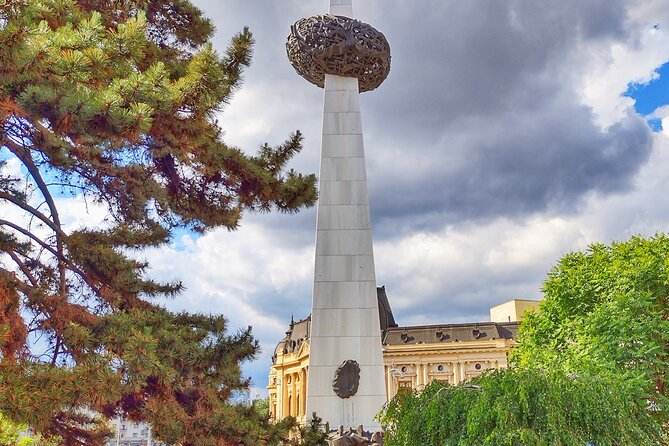
Next comes Piata Revolutiei, with about 45 minutes. This is the place tied to Ceausescu’s last speech in 1989.
What makes this stop more than a quick photo stop is the presentation style. You get pictures and video presentations from the Revolution days, which gives context to what you are seeing in front of you. It turns the square from a name on a map into a moment in time.
Because this is a central, symbolic area, your guide likely connects it to the idea of public life under communism, how control and fear worked, and what the country was going through at the moment the system cracked. At night, with fewer distractions, the square feels more “stage-like,” and that supports the storytelling.
Downside to consider: this is one of the longer stretches. If you tire easily, this is where you will feel it most, but the time is used on history, not just waiting around.
Bucharest’s elegant boulevard stretch, where big buildings line up
After the Revolution square, the walk includes the city’s most elegant avenue, a boulevard lined with major buildings and monuments.
This part is useful for a simple reason: it helps you read Bucharest as a city of planned grandeur. You are moving between neighborhoods, but your eyes keep landing on scale, symmetry, and institutional architecture.
Biblioteca Centrala Universitara and the Carol I connection
At Biblioteca Centrala Universitara, you get about 10 minutes. The library is known for its eclectic style, built by French architect Paul Gottereau, with sponsorship linked to King Carol I. In front of it, you can spot King Carol I’s equestrian statue.
This is a “slow down” stop, even if the time is short. Watch for how the building blends styles instead of staying purely one period. Your guide can connect the sponsorship and the architect to Romania’s links with wider European culture, and then you can contrast that with the communist period later.
Palatul Regal, Queen Maria’s supervision, and the royal layer
Next is the Royal Palace area, described as the winter residence of Romanian kings, dating to 1937. You spend about 10 minutes here, with emphasis on how the palace was built under the direct supervision of Queen Maria and her son, King Carol II.
This stop helps you build a mental timeline. After communism-themed storytelling, it is grounding to see royal power represented through built space. You are looking at how authority tried to look permanent and dignified.
Photo note: palace exteriors can be a bit tricky depending on street angle and lighting. Night walks help because shadows deepen the lines, but still, expect to reposition for good shots.
Old Town on foot: cafes, pubs, 19th-century architecture, and human scale
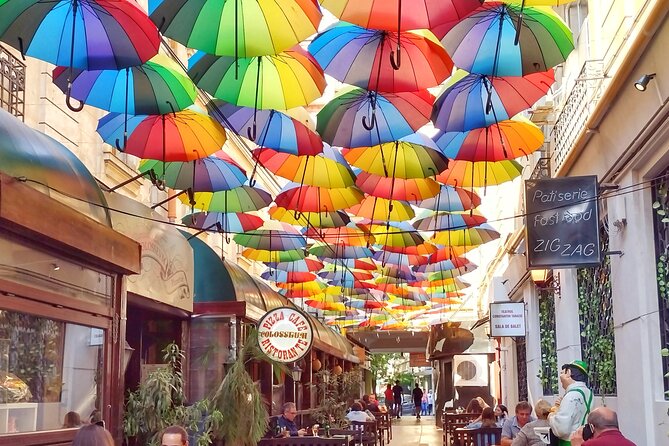
Then you enter Old Town for about 15 minutes. This is not just a scenic detour. It is the part of the walk where Bucharest starts to feel like a city you can live in, with cafes, pubs, and restaurants, plus plenty of 19th-century architecture.
Old Town is also where your guide’s local tips become more useful. You are in the right zone to continue your evening later, and it makes sense to ask what to try next. In one standout example from the guides you might meet, Manuela not only shared history but also gave practical recommendations for where to eat and drink, and even included a local snack.
If you like walking with a purpose, this is a good stretch.
Stavropoleos Monastery: quiet history in a busy area
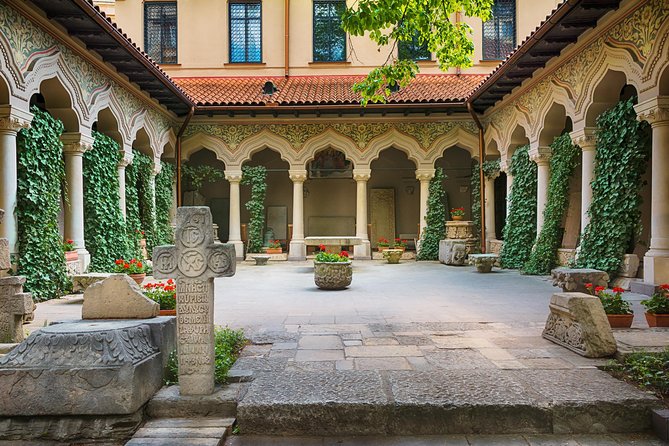
Stavropoleos Monastery is next, with about 10 minutes. It is described as a hidden church area in Old Town and one of the oldest churches in Bucharest, dating to 1724.
This stop is valuable because it breaks the pace. After big civic and royal buildings, the monastery offers a different emotional tone. Even at night, the idea of age and continuity comes through. It is the kind of place where you understand why old streets survive inside modern cities.
Practical caution: monasteries and religious sites can have respectful rules. If you see signs or guidelines, follow them, and keep your voice low.
Palace of the Parliament outside: the weight of power, explained
The route then includes the exterior of Romania’s most famous building, with construction beginning in 1984. This is the Palace of the Parliament area, described as the heaviest building in the world and also the world’s third-largest administrative building. The facts get specific, including that the building’s volume is said to exceed that of the Great Pyramid of Giza by 2%, which is why it is sometimes described as “pharaonic” in scale.
You admire the exterior and hear the story, but you are not here for a long inside visit. That is an important distinction. This stop is about scale, symbolism, and what it meant to build such a monument during the period of the late communist era.
If you love big architecture: you will enjoy this. If you want museum-style time: you might want a separate ticket-based stop later, because your time here is built into a short walking experience.
Macca Villacrosse Passage, glass roof charm, and hookah cafes
Next you walk through Macca Villacrosse Passage for about 5 minutes. It is known for being covered with a glass roof and for hosting hookah cafes.
This is a “blink and you miss it” stop, which is exactly why a guided walk is handy. A covered passage like this is easy to overlook if you are just wandering. It adds variety too, because it is not an official monument. It is a human-scale corridor where people actually hang out.
Lipscani: old street walking and camera opportunities
Then comes Lipscani, with about 10 minutes. This is an old street, and your walk along it is meant to give you the flavor of the Old Town core.
You get a chance to connect the dots between the historical sites and the area’s present-day energy: the restaurants, the street life, and the sense that people keep returning here for years.
If you are using this tour as your first evening out, this is a strong point to remember.
Cărturești Carusel: a renovated bookstore with Romanian gifts
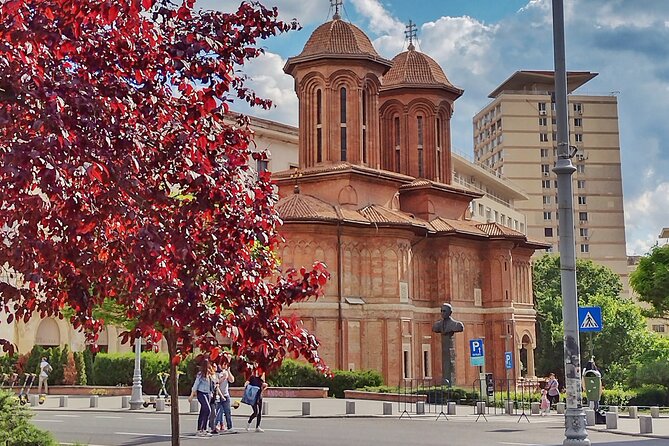
About 10 minutes here at Cărturești Carusel, described as a renovated bookstore full of Romanian souvenirs and gifts.
This is the kind of stop that works even if you are not a big shopper. It helps you pick up something small that feels local rather than generic. Also, it gives your feet a brief break before you continue toward the bigger institutional buildings.
Palatul CEC: 19th-century architecture and statue details
At Palatul CEC, you get about 5 minutes. The building is described as 19th-century architecture with magnificent statues.
This is a classic “look up” moment. Statues are often easy to miss if you keep your eyes on the street level. The short time slot keeps it punchy, and it adds a different kind of artistry to the walk.
Muzeul Național de Arta al României: former Royal Palace energy
Next is Muzeul Național de Arta al României, with about 5 minutes. It is described as the former Royal Palace.
So you get royal symbolism again, this time tied to the idea of art and culture rather than just residence. It is another reminder that Bucharest’s institutions have been reinvented over time.
Muzeul National de Istorie a Romaniei: the Post Office Palace, ticket not included
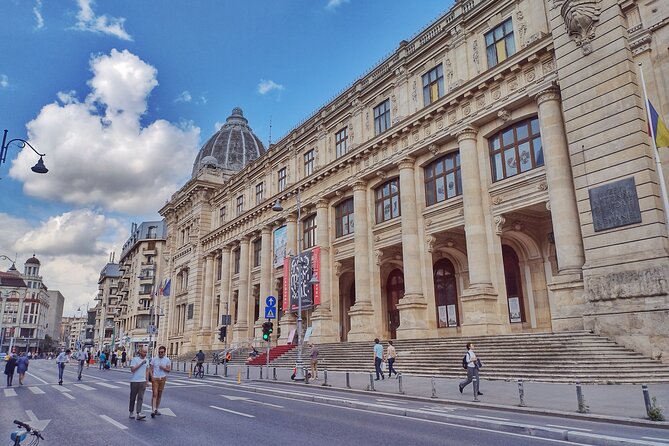
Then you pass Muzeul National de Istorie a Romaniei for about 5 minutes. This building is described as the former Post Office Palace, a 19th-century landmark. Admission here is marked ticket not included.
If your goal is only exteriors, you can still enjoy this stop as part of the walking route. If you want the inside, you will need to plan extra time and purchase whatever ticket applies on your date.
Biblioteca Nationala a Romaniei: a quick exterior look, ticket not included
Finally, there is a brief visit near the Biblioteca Nationala a Romaniei, the Romanian National Library. You get about 5 minutes, and it is marked ticket not included.
Even without going inside, it is an iconic Old Town area stop. It closes the loop from culture to power to post-communist identity, all within a single evening flow.
What you will learn, and why the guides matter
The tour is built around place, but what brings it alive is the guide’s storytelling style. In the experiences shared with this company, guides like Toni and Manuela include personal details from their own memories of communist life, not just textbook summaries.
One memorable example: Toni tied in childhood memories from the communist era, including a story about green bananas as a special treat at Christmas. That kind of detail does something practical. It helps you understand scarcity and everyday life, not only politics and speeches.
Manuela’s style also shows why this tour works for people who like questions. She is described as answering everything, taking time for photos, and adding practical local tips for where to eat and explore. Marius is another name you might see, with good communication before meeting and a flexible approach when situations change, like rain turning a small group situation into something closer to a more private experience.
My advice: when your guide offers to slow down for questions, take it. Bucharest’s communist story is easier to absorb when you can ask what you are wondering, whether it is about symbols on buildings or why certain streets look the way they do.
Practical tips so you enjoy the full 2 to 3 hours
- Wear shoes that handle uneven sidewalks and cobbles, especially in the Old Town stretches.
- Bring a layer for the night. The route is outdoors, and weather is a factor.
- Start this tour early in your trip if you can. It makes the rest of Bucharest easier to navigate, and it helps you choose your next meal spots with more confidence.
- If you care about museums, decide in advance whether you want to buy separate tickets for the two stops marked ticket not included. The walking time is short by design.
Should you book Footprints of Bucharest?
I think you should book this tour if you want a high-structure introduction to Bucharest, where you get both nighttime views and a clear theme about communism and the 1989 era. The small group size and the strong guide presence are also real advantages when you want to ask questions and take photos without feeling rushed.
Skip it or pair it with other plans if you prefer long museum visits or you hate outdoor walking. Also, because it needs good weather, you will want flexibility in your schedule.
If you are on the fence, the easiest decision rule is this: if you want to walk, look up at architecture, and understand the city’s political shifts in one evening, this is a smart use of your time. At $72.25, you get a lot of major stops for one guided session, and the many free-to-view exterior stops help you keep the cost under control.
FAQ
How long is the Footprints of Bucharest tour?
It runs for about 2 to 3 hours.
How many people are in the group?
The maximum group size is 8 travelers.
Is the tour offered in English?
Yes, it is offered in English.
Where do I meet, and where does the tour end?
You meet at Strada Benjamin Franklin 2, București 030167, Romania, and the tour ends at Piața Unirii, close to the Old Town area.
What is included in the tour price?
The tour includes a led visit with a certified guide and printed materials for the tour presentation.
Are entrance fees included?
Entrance fees are not included. Many stops are listed as admission ticket free to view, while the Muzeul National de Istorie a Romaniei and the Biblioteca Nationala a Romaniei are marked as ticket not included.
Does the tour include food or drinks?
No, food or drinks are not included.
Does the tour run in any weather?
This experience requires good weather. If it is canceled due to poor weather, you will be offered a different date or a full refund.
Can I cancel for free?
Yes. You can cancel up to 24 hours in advance for a full refund.
Are service animals allowed?
Yes, service animals are allowed.
Latest reviews from around Bucharest
- LiBEARty Brown Bear Sanctuary and the most important castles from Romania★ 5.0 · 4 reviews
- Hike Bulgaria Love Swing, Veliko Tarnovo and Tarevet Fortress★ 5.0 · 4 reviews
- Bucharest Private Tour with Dracula’s Grave and Ceaușescu Mansion★ 5.0 · 4 reviews
- Hiking in Bucegi Mountains in the Carpathians, Private tour★ 5.0 · 4 reviews
- Dracula Experience In Transylvania★ 5.0 · 4 reviews
- Bucharest Sightseeing – Half-Day Private Tour★ 5.0 · 4 reviews
- Bison Sanctuary, Vlad the Impaler Princely Court & Dracula Grave★ 5.0 · 4 reviews
- Private 6-Day Dracula Tour in Transylvania from Bucharest★ 5.0 · 4 reviews
Communist-Era Bucharest, compared.

Bucharest: Communism and History Guided City Walking Tour
Read our review →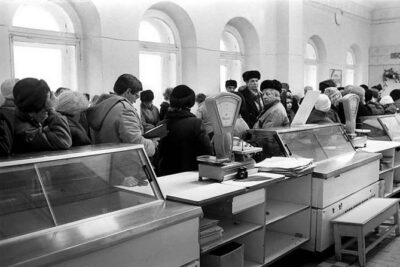
Bucharest: Parliament, Ceausescu House & Village Museum Tour
Read our review →
Bucharest Essential Tour: Old Town, Calea Victoriei & Communism
Read our review →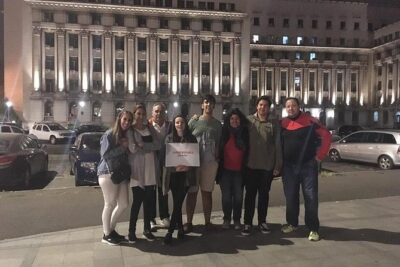
Communism in Bucharest – Landmarks, Museum & Communist Appetizers
Read our review →
Palace of Parliament, Ceausescu House & Village Museum
Read our review →Browse the lists this tour appears in